Electric Bicycle New Inflatable Rubber Tires
CN → US| HS Code | Tariff Rate | Origin | Destination | Doc |
|---|---|---|---|---|
| 8714998000 | 27.5% | CN | US | Official Doc |
| 4011908050 | 38.4% | CN | US | Official Doc |
| 4012904500 | 39.2% | CN | US | Official Doc |
| 4012909000 | 37.7% | CN | US | Official Doc |
| 4011500000 | 35.0% | CN | US | Official Doc |
Product Images
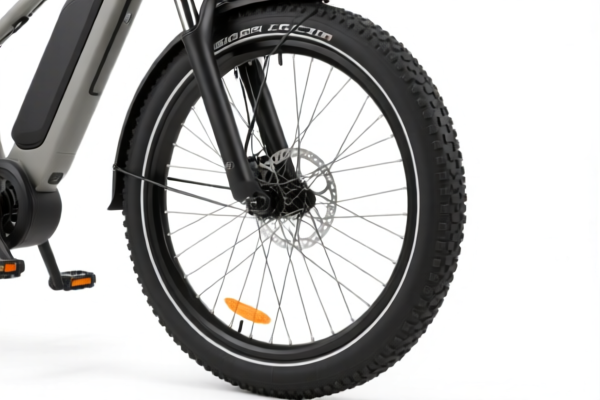
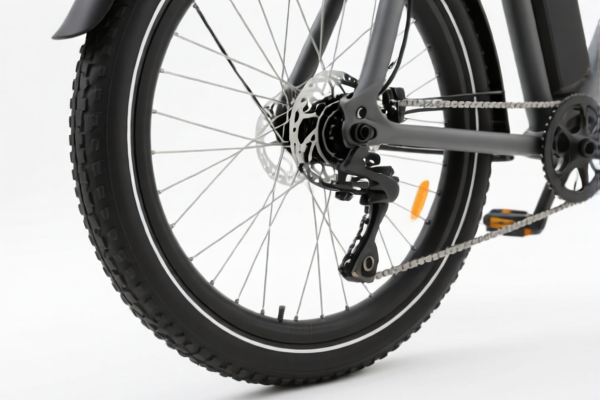
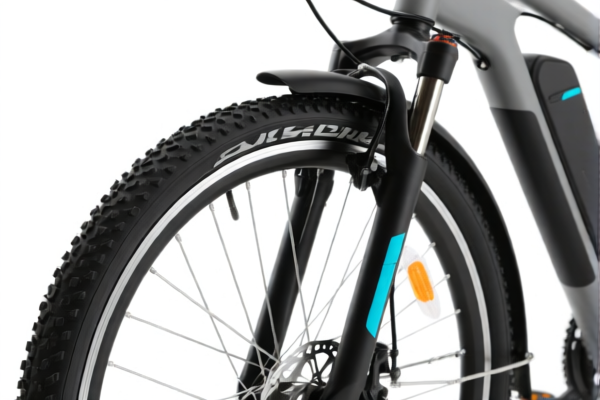
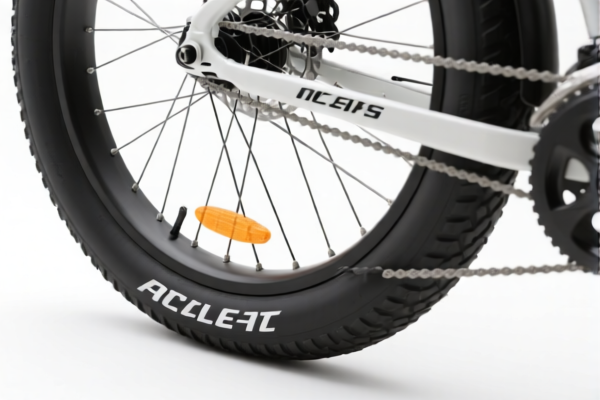
AI Analysis
🚲 Electric Bicycle New Inflatable Rubber Tires
🌐 HS Code Reference & Customs Clearance Guide | 2026 Latest Tariff Analysis | Professional Clearance Strategy
📌 1. Product Definition & Classification: Do You Truly Understand "E-Bike Tires"?
Electric bicycle tires are critical components for mobility, safety, and performance. In international trade, they are strictly categorized based on material, structure (inflatable vs. non-inflatable), and application.
Inflatable Rubber Tires: These are air-filled tires requiring a pump. They provide shock absorption and traction. For electric bicycles, they must meet specific weight and load-bearing standards compared to standard pedal bikes.
⚠️ Key Distinction Point:
- If the tire is inflatable and made of rubber, it falls under Chapter 40 (Rubber and articles thereof).
- If it is non-inflatable (solid) or made of other materials, it falls under Chapter 87 (Vehicles) or Chapter 40 depending on specific construction.
- Electric Bicycles are generally classified under HS 8711 or 8714 (parts), but tires are specifically regulated under Chapter 40 due to their material nature, unless they are specialized non-pneumatic parts.
📦 2. HS Code Classification Details (2026 Latest Tariff Authority)
| HS Code | Product Description | Applicable Scenario | Key Characteristics |
|---|---|---|---|
4011.50.00.00 |
Pneumatic rubber tires, new, of a kind used on bicycles | Standard E-bikes, pedal-assist bikes | Specific to bicycle application; Base Duty 0% |
4011.90.80.50 |
Pneumatic rubber tires, new, other (e.g., small motors, tricycles, non-standard E-bikes) | Heavy-duty E-bikes, trikes, cargo bikes | "Other" category; Base Duty 3.4% |
4012.90.45.00 |
Pneumatic rubber tires, new, falling under other residual categories | Generic industrial E-bike components | Base Duty 4.2% |
4012.90.90.00 |
Pneumatic rubber tires, new, generic/residual | Non-specific pneumatic rubber products | Base Duty 2.7% |
8714.99.80.00 |
Parts and accessories of bicycles, excluding tires (e.g., rims, spokes) | NOT TIRES – Only if misclassified or non-inflatable parts | Base Duty 10% |
🔍 Important Note:
- Tires are almost always classified under Chapter 40 (4011, 4012), NOT Chapter 87 (8714), unless they are non-pneumatic solid tires or accessories like rims.
-4011.50.00.00is the most accurate for standard electric bicycles that fall under the definition of "bicycles."
-4011.90.80.50applies if the E-bike is considered a "motorcycle" or "tricycle" or does not fit the strict "bicycle" definition in the importing country.
💰 3. 2026 Latest Tariff Rate Breakdown (Including Additional Taxes, Policy Add-ons)
✅ Applicable Country: United States (US)
✅ Origin: China (CN)
✅ Effective Date: From November 10, 2025 (including subsequent imports)
🎯 1. 4011.50.00.00 —— Pneumatic Rubber Tires for Bicycles
| Item | Content |
|---|---|
| Base Duty Rate | 0.0% (Ad Valorem) |
| USITC Additional Duty | +25.0% (Under Section 301) |
| 122 Section Duty | +10.0% (Under IEEPA/Emergency Powers) |
| Total Duty Rate | 35.0% |
| Tax Calculation | CIF Value × 35% |
| De Minimis Exemption? | ❌ No (denied) |
| Legal Basis Path | IEEPA:9903.01.24 → USITC:4011.50.00.00 → FOOTNOTE:301 |
📌 Explanation:
- Although the base duty is 0%, the 25% Section 301 and 10% IEEPA 122 tariffs apply heavily.
- Total tax burden is 35%, making cost control essential.
🎯 2. 4011.90.80.50 —— Other Pneumatic Rubber Tires
| Item | Content |
|---|---|
| Base Duty Rate | 3.4% (Ad Valorem) |
| USITC Additional Duty | +25.0% (Under Section 301) |
| 122 Section Duty | +10.0% (Under IEEPA/Emergency Powers) |
| Total Duty Rate | 38.4% |
| Tax Calculation | CIF Value × 38.4% |
| De Minimis Exemption? | ❌ No (denied) |
| Legal Basis Path | IEEPA:9903.01.24 → USITC:4011.90.80.50 → FOOTNOTE:301 |
📌 Explanation:
- Higher base duty (3.4%) pushes the total to 38.4%.
- Suitable for E-bikes that are not strictly "bicycles" (e.g., motorized tricycles).
🎯 3. 4012.90.45.00 —— Other Residual Pneumatic Tires
| Item | Content |
|---|---|
| Base Duty Rate | 4.2% (Ad Valorem) |
| USITC Additional Duty | +25.0% (Under Section 301) |
| 122 Section Duty | +10.0% (Under IEEPA/Emergency Powers) |
| Total Duty Rate | 39.2% |
| Tax Calculation | CIF Value × 39.2% |
| De Minimis Exemption? | ❌ No (denied) |
| Legal Basis Path | IEEPA:9903.01.24 → USITC:4012.90.45.00 → FOOTNOTE:301 |
📌 Explanation:
- Highest base duty among pneumatic tires (4.2%).
- Used for non-standard or generic pneumatic rubber products.
🎯 4. 4012.90.90.00 —— Generic Pneumatic Rubber Tires
| Item | Content |
|---|---|
| Base Duty Rate | 2.7% (Ad Valorem) |
| USITC Additional Duty | +25.0% (Under Section 301) |
| 122 Section Duty | +10.0% (Under IEEPA/Emergency Powers) |
| Total Duty Rate | 37.7% |
| Tax Calculation | CIF Value × 37.7% |
| De Minimis Exemption? | ❌ No (denied) |
| Legal Basis Path | IEEPA:9903.01.24 → USITC:4012.90.90.00 → FOOTNOTE:301 |
📌 Explanation:
- Lower base duty (2.7%) but still high total burden (37.7%).
- Residual category for tires not fitting other specific pneumatic codes.
🎯 5. 8714.99.80.00 —— Parts of Bicycles (Non-Tire Items)
| Item | Content |
|---|---|
| Base Duty Rate | 10.0% (Ad Valorem) |
| USITC Additional Duty | +7.5% (Under Section 301) |
| 122 Section Duty | +10.0% (Under IEEPA/Emergency Powers) |
| Total Duty Rate | 27.5% |
| Tax Calculation | CIF Value × 27.5% |
| De Minimis Exemption? | ❌ No (denied) |
| Legal Basis Path | IEEPA:9903.01.24 → USITC:8714.99.80.00 → FOOTNOTE:301 |
📌 Explanation:
- Misclassification Risk: If you declare tires as "bicycle parts" (8714) instead of "tires" (4011/4012), you might get a lower rate (27.5%).
- ⚠️ WARNING: Customs may reject this classification for inflatable rubber tires as they are explicitly covered under Chapter 40. Misclassification can lead to penalties and delays.
- Only use this code for non-pneumatic accessories (e.g., rims, pedals, seats) or if local law allows tires to be classified as parts (rare).
🛠️ 4. Customs Clearance Practical Advice (Real-World Pitfall Guide)
✅ 1. Required Documentation Checklist (All Mandatory)
| Document | Mandatory | Description |
|---|---|---|
| ✅ Product Specification Sheet | ✔️ | Tire size (e.g., 20x1.95), tread pattern, load index, speed rating |
| ✅ Material Certificate | ✔️ | Confirm 100% rubber composition (natural/synthetic blend) |
| ✅ Photos of Tires & Sidewall | ✔️ | Must show "Pneumatic" or "Inflatable" markings |
| ✅ Commercial Invoice | ✔️ | Clearly state "Pneumatic Rubber Tires for Electric Bicycles" |
| ✅ Packing List | ✔️ | Include weight, dimensions, and unit count |
| ✅ Country of Origin Certificate | ✔️ | Required for Section 301 & IEEPA duties |
✅ 2. Declaration Strategy (Key Mnemonics)
🔥 "Inflatable = Chapter 40, Not Chapter 87!"
| Scenario | Correct HS Code | Wrong Practice |
|---|---|---|
| Standard E-bike tires | 4011.50.00.00 |
Misclassifying as 8714.99.80.00 → Risk of rejection |
| Heavy-duty E-bike/Tricycle tires | 4011.90.80.50 |
Using bicycle code 4011.50 → Potential under-declaration |
| Solid/Non-inflatable tires | 4012.90 or 8714 |
Declaring as "Inflatable" → Major penalty |
| Tires + Rims together | Declare separately | Combined declaration → Complexity and errors |
✅ 3. Special Case Handling
| Scenario | Advice |
|---|---|
| E-bike Classification | If the E-bike exceeds 750W or 20mph, it may be considered a "motorcycle," shifting tires to 4011.90.80.50. Verify local E-bike laws. |
| Mixed Shipments | If shipping tires with complete E-bikes, declare tires separately under Chapter 40. Do not hide them under "Vehicle Parts." |
| US-China Trade Policy | Rates are fixed at 35%-39.2%. No de minimis exemption. Plan for high landed costs. |
| Pre-Ruling | Apply for an Advance Ruling from CBP if unsure about "Bicycle" vs. "Other" classification. |
🌍 5. Global Market Comparison (2026 Latest)
| Country/Region | Recommended HS Code | Tariff (China Origin) | Certification | Notes |
|---|---|---|---|---|
| 🇺🇸 USA | 4011.50.00.00 |
35.0% | None specific | High additional duties. Strict classification. |
| 🇨🇳 China | 4011.50.00.00 |
0% - 5% | CCC (if applicable) | No additional duties. |
| 🇪🇺 EU | 4011.50.00.00 |
0% - 2.5% | CE | No Section 301/IEEPA equivalents. |
| 🇦🇺 Australia | 4011.50.00.00 |
5% | RCM | Moderate duties. |
| 🇯🇵 Japan | 4011.50.00.00 |
0% - 5% | PSE | Low duties. |
📌 Conclusion:
- The USA is the most challenging market due to 35%-39.2% total tariffs.
- European and Asian markets offer significantly lower duties (0%-5%).
- Consider supply chain diversification if targeting the US market heavily.
📌 6. Common Mistakes & Pitfall Guide (Blood & Tears Lessons)
❌ Mistake 1: Declaring tires under 8714.99.80.00 to get 27.5% instead of 35%.
👉 Consequence: Customs will reclassify, charge back taxes + penalties + interest. Do not do this.
❌ Mistake 2: Ignoring the "Inflatable" vs. "Non-Inflatable" distinction.
👉 Consequence: Solid tires (e.g., for maintenance-free E-bikes) may have different HS codes. Misclassification leads to delays.
❌ Mistake 3: Failing to specify "Electric Bicycle" in the description.
👉 Consequence: If the E-bike is deemed a "moped" or "motorcycle," tires may shift from 4011.50 to 4011.90, increasing duty.
❌ Mistake 4: Assuming de minimis exemption applies.
👉 Consequence: No de minimis for rubber tires from China under current US rules. All shipments are taxed.
✅ Correct Practice:
"Pneumatic Rubber Tire, 20x1.95, for Electric Bicycle, Model XYZ, Made in China"
🎯 7. Conclusion: Professional Declaration Saves Money!
🎯 Remember the Mnemonic:
🔹 "Inflatable Rubber = Chapter 40, Not 87."
🔹 "35% is the minimum for bikes, 39% for others. No de minimis!"
🔹 "Check E-bike classification: Bicycle vs. Motorcycle changes HS Code!"
📌 Tips:
- If your E-bike tires are for standard bicycles (pedal-assist, <750W), use 4011.50.00.00 (35%).
- If for motorized or heavy-duty E-bikes, use 4011.90.80.50 (38.4%).
- Avoid 8714.99.80.00 unless you are sure customs accepts tires as "parts" (unlikely for pneumatic tires).
- Pre-emptively apply for an Advance Ruling to avoid post-entry audits.
📣 Immediate Action:
📞 Contact a licensed customs broker + Provide product photos + Request HS Code Advance Ruling
🚀 Ensure your tires, clear customs smoothly, and maximize profit margins!
✨ Professional Clearance Starts with Accurate Classification!
💼 Every Percent Saved is Pure Profit!
Customer Reviews
About HS Code Classification
The Harmonized System (HS) is an internationally standardized nomenclature developed by the World Customs Organization (WCO) to classify traded products. Over 200 countries use the HS system as the basis for customs tariffs, trade statistics, and import/export regulations.
Each HS code follows a hierarchical structure:
- Chapter (2 digits) — Broad category of goods (e.g., Chapter 84: Machinery and Mechanical Appliances)
- Heading (4 digits) — More specific grouping within the chapter
- Subheading (6 digits) — Internationally standardized breakdown, used by all WCO member countries
- National subdivisions (8-10 digits) — Country-specific extensions for further classification, such as US HTSUS 10-digit codes
Correct HS code classification is essential for smooth customs clearance, accurate duty payment, and compliance with trade regulations. Misclassification can lead to customs delays, overpayment of duties, or penalties.
When importing from CN to US, the applicable tariff rates may include:
- Most-Favored-Nation (MFN) rate — The standard duty rate applied to WTO members
- General rate — Applied to countries without trade agreements
- Trade remedy duties — Additional tariffs such as Section 301 (anti-dumping), Section 232 (national security), or countervailing duties
The information provided on this page is for reference purposes only. For official classification, please consult with your local customs authority or a licensed customs broker.