Electric Coffee Grinder
CN → US| HS Code | Tariff Rate | Origin | Destination | Doc |
|---|---|---|---|---|
| 8509400040 | 14.2% | CN | US | Official Doc |
| 8509400025 | 14.2% | CN | US | Official Doc |
| 8438800000 | 35.0% | CN | US | Official Doc |
| 8438909090 | 37.8% | CN | US | Official Doc |
| 8479820080 | 35.0% | CN | US | Official Doc |
Product Images
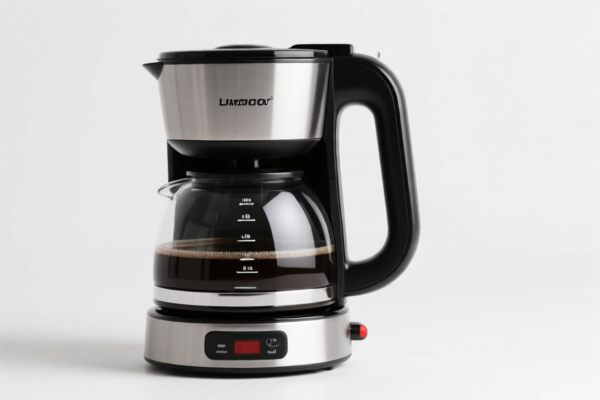
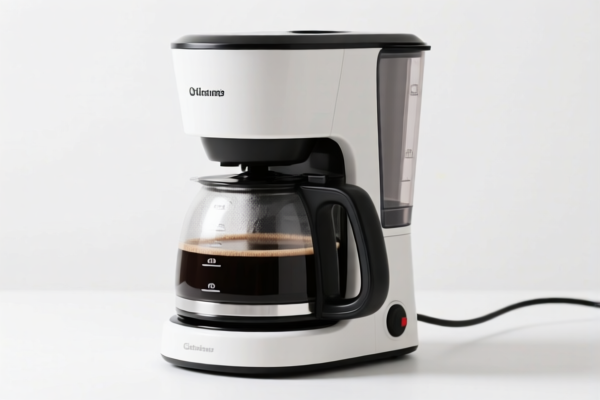
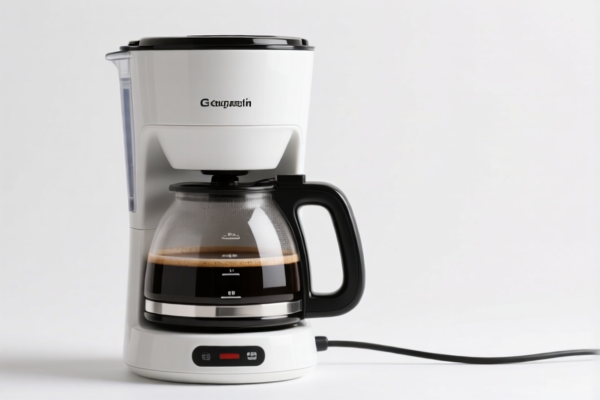
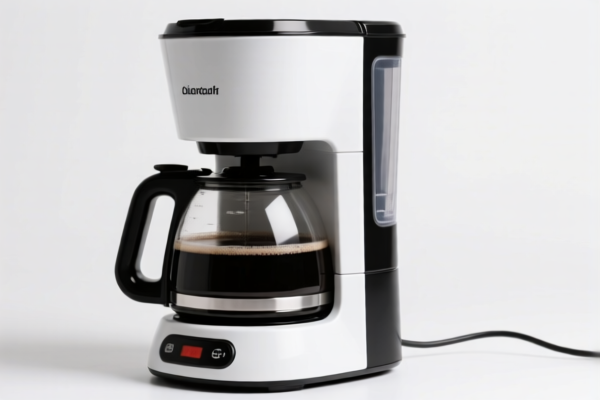
AI Analysis
🏺 Electric Coffee Grinder: HS Code Classification & US Customs Clearance Guide (2026 Update)
🌐 HS Code Reference & Customs Clearance Strategy | 2026 Latest Tariff Analysis | Professional Import Compliance
📌 I. Product Definition & Classification: Understanding the "Grinder"
An Electric Coffee Grinder is a small household or commercial appliance used for grinding roasted coffee beans into powder. In international trade, its classification depends on functional specificity and electrical characteristics. Customs authorities distinguish between general-purpose grinding machinery and specific food-processing appliances.
Key Distinction Criteria: * Specific Food Processing Appliance: Devices designed primarily for food preparation (e.g., blenders, coffee grinders) often fall under Chapter 85 (Electrical Machinery) if they are self-contained electric appliances. * General Purpose Machinery: Machines used for mixing, kneading, crushing, or grinding in a general industrial sense fall under Chapter 84. * Parts: Individual parts are classified separately under 8438.90 or 8479.90.
⚠️ Critical Classification Risk:
- If classified as General Machinery (8479/8438): High punitive tariffs (25% Section 301 + 10% IEEPA) apply due to "China-origin" status.
- If classified as Specific Electrical Appliance (8509): Lower base duties and 0% Section 301 tariff apply, significantly reducing total cost.
- Misclassification Penalty: Incorrectly classifying a specific appliance as general machinery can result in a 25% surcharge on the duty value.
📦 II. HS Code Classification Matrix (2026 Latest Tariff Data)
The following table details the 5 potential HS Codes derived from your data, ranked by cost-efficiency and classification logic.
| HS Code | Product Description / Logic | Total Tax Rate (US from China) | Tariff Breakdown | Classification Rationale |
|---|---|---|---|---|
| 8509.40.00.40 | Electric Coffee Grinder (Specific Appliance) | 14.2% | Base: 4.2% Sec 301: 0% IEEPA: 10% |
BEST OPTION. Specifically covers "food grinders & processors." Self-contained electric motor matches Chapter 85 logic. No 25% punitive tariff. |
| 8438.80.00.00 | Machinery for Food Prep (Industrial/General) | 35.0% | Base: 0.0% Sec 301: 25% IEEPA: 10% |
Classified under "Machinery for preparation of food/drink." Fits general food prep definition but attracts heavy punitive tariffs. |
| 8479.82.00.80 | Mixing/Kneading/Crushing Machines | 35.0% | Base: 0.0% Sec 301: 25% IEEPA: 10% |
Broad category for "other machines with individual functions." Grinding is a function of crushing, but this is a "residual" classification with high tax. |
| 8479.82.00.40 | Machines with Individual Functions (Grinding) | 35.0% | Base: 0.0% Sec 301: 25% IEEPA: 10% |
Named "Grinding" function matches machine description. However, it lacks the specific "food appliance" exemption of Ch. 85, leading to 25% penalty. |
| 8438.90.90.90 | Parts of Food Prep Machinery | 37.8% | Base: 2.8% Sec 301: 25% IEEPA: 10% |
LAST RESORT. Used if the grinder is disassembled or sold as "spare parts." Highest total tax rate due to base duty + punitive tariffs. |
🔍 Key Insight:
- HS Code8509.40.00.40is the only code with 0% Section 301 Tariff.
- All other codes (8438,8479) incur a 25% additional tariff, making them ~20-23% more expensive than the 8509 classification.
- Why? Chapter 85 covers "Electrical machinery and equipment... domestic appliances," while Chapter 84 covers "Nuclear reactors, boilers, machinery... mechanical appliances." Coffee grinders are legally considered domestic electrical appliances rather than general industrial machinery.
💰 III. 2026 Tariff Rate详解 (Detailed Tax Breakdown)
✅ Applicable Country: United States (US)
✅ Origin: China (CN)
✅ Effective Date: Post-2025 Policy Updates (IEEPA + Sec 301)
🎯 1. 8509.40.00.40 —— RECOMMENDED: Electric Food Grinder
| Item | Detail |
|---|---|
| Base Duty | 4.2% (Ad Valorem) |
| Section 301 Tariff | 0.0% (Exempt for specific food appliances in Ch 85) |
| IEEPA Tariff | 10.0% (Additional surcharge on Chinese goods) |
| Total Effective Rate | 14.2% |
| Calculation | (CIF Value) × 14.2% |
| De Minimis Eligibility | ❌ No (Shipments >$800 still subject to entry formalities if classified here, but no extra punitive duties) |
| Legal Basis | HTSUS 8509.40 → IEEPA Order 10% → No Sec 301 Penalty |
📌 Explanation:
- This code recognizes the product as a specific consumer appliance.
- The absence of the 25% Section 301 tariff is the critical cost saver.
- Example: On a $1,000 shipment, duty is $142 vs. $350 for incorrect classification.
🎯 2. 8438.80.00.00 / 8479.82.00.xx —— HIGH COST: General Machinery
| Item | Detail |
|---|---|
| Base Duty | 0.0% (for 8438/8479) or 2.8% (for 8438.90) |
| Section 301 Tariff | +25.0% (Mandatory punitive tariff) |
| IEEPA Tariff | 10.0% |
| Total Effective Rate | 35.0% (or 37.8% for parts) |
| Calculation | (CIF Value) × 35.0% |
| De Minimis Eligibility | ❌ No |
📌 Warning:
- The 25% Section 301 tariff is applied to almost all machinery from China under these chapters.
- Do not use these codes unless you are importing disassembled parts specifically for assembly, and even then, evaluate the cost benefit vs.8509.40.00.40.
🛠️ IV. Customs Clearance Practical Advice (Action Plan)
✅ 1. Documentation Checklist (Must-Haves)
| Document | Required? | Purpose |
|---|---|---|
| ✅ Product Spec Sheet | ✔️ | Must state: "Electric Coffee Grinder," "Model XYZ," "Voltage: 110V," "Wattage: XX W." |
| ✅ Photos (Exterior & Interior) | ✔️ | Show the motor, blades, and hopper. Proves it is a self-contained electric appliance, not an industrial grinder. |
| ✅ Commercial Invoice | ✔️ | CRITICAL: Describe as "Electric Coffee Grinder, Household Use" or "Food Processor/Grinder." Avoid vague terms like "Machinery" or "Grinding Equipment." |
| ✅ User Manual | ✔️ | Confirms intended use is for food preparation (coffee beans), supporting Chapter 85 classification. |
| ✅ Certificate of Origin | ✔️ | Required for IEEPA calculation. |
✅ 2. Classification Strategy (The "Winning" Argument)
🔥 Golden Rule: "Domestic Appliance > General Machinery"
| Scenario | Correct Classification | Reason |
|---|---|---|
| Retail-ready grinder (Boxed, with plug, for home use) | 8509.40.00.40 | It is a specific electric appliance for food. |
| Commercial bulk grinder (Large, industrial) | 8438.80.00.00 | May be considered industrial food prep machinery. Expect 35% tax. |
| Loose motor/blades only | 8438.90.90.90 | If sold as parts, not a complete unit. Expect 37.8% tax. |
✅ 3. Clearance Tips to Avoid Audit
- Naming Matters: On the invoice, use "Electric Coffee Grinder" rather than "Coffee Milling Machine" or "Grinding Motor." The word "Grinder" in the context of small appliances is strongly associated with HS 8509.
- Highlight "Electric": Ensure the description emphasizes that it contains a self-contained electric motor. This anchors it in Chapter 85.
- Avoid "Industrial" Keywords: Do not use words like "Industrial," "Factory," or "Bulk Processing" if it is a consumer product. This triggers Chapter 84 classification.
- Pre-Ruling Request: If importing large volumes, file an HTSUS Advance Ruling with CBP citing the distinction between Chapter 84 (general machinery) and Chapter 85 (electrical appliances). Reference Chapter 85 Note 2.
🌍 V. Global Market Comparison (2026)
| Market | Recommended HS Code | Total Tax (China Origin) | Note |
|---|---|---|---|
| 🇺🇸 USA | 8509.40.00.40 | 14.2% | Best Case. Avoids 25% penalty. |
| 🇺🇸 USA (Wrong) | 8438.80.00.00 | 35.0% | High cost due to Sec 301. |
| 🇪🇺 EU | 8509.40 | ~4% | Low base duty, no punitive tariffs like US. |
| 🇨🇳 China | 8509.40 | ~5-7% | Standard import duty for electrical goods. |
📌 VI. Common Mistakes & Pitfalls (Blood Lessons)
❌ Mistake 1: Classifying as "Grinding Machine" (8479) 👉 Consequence: 25% Surcharge added. Total tax jumps from 14.2% to 35.0%. Loss of ~20% profit margin.
❌ Mistake 2: Using "Coffee Maker" description for a Grinder 👉 Consequence: May be misclassified under 8516 (Coffee Makers), which might have different rules, but if audited, could lead to penalties for false description.
❌ Mistake 3: Ignoring IEEPA
👉 Consequence: Even with 8509.40.00.40, the 10% IEEPA tariff applies. Some importers forget this, leading to underpayment.
✅ Correct Action:
"Electric Coffee Grinder, Model XYZ, 110V, 150W, for household use. HS: 8509.40.00.40."
🎯 VII. Conclusion: Optimize Your Clearance
🎯 Key Takeaway:
🔹 Classify as
8509.40.00.40. It is the only code that avoids the 25% Section 301 penalty.
🔹 Total Tax Savings: ~20.8% on duty value compared to other codes.
🔹 Documentation: Ensure invoices say "Electric Coffee Grinder" and not "Industrial Grinding Equipment."
📌 Pro Tip:
For shipments under $800 (De Minimis), ensure the HS Code is still declared correctly if you want to maintain a clean compliance record for future large shipments. While de minimis often bypasses detailed duty calculation, consistent correct classification prevents audit flags.
📣 Immediate Action:
📞 Verify with your freight forwarder: "Are we classifying this as 8509.40.00.40 to avoid the 25% Sec 301 tariff?"
🚀 Update your Invoice Template: Explicitly state "Electric" and "Coffee Grinder."
✨ Smart Classification = Lower Duties = Higher Profit!
💼 Don't let "Machinery" labels cost you 25% of your revenue!
Customer Reviews
About HS Code Classification
The Harmonized System (HS) is an internationally standardized nomenclature developed by the World Customs Organization (WCO) to classify traded products. Over 200 countries use the HS system as the basis for customs tariffs, trade statistics, and import/export regulations.
Each HS code follows a hierarchical structure:
- Chapter (2 digits) — Broad category of goods (e.g., Chapter 84: Machinery and Mechanical Appliances)
- Heading (4 digits) — More specific grouping within the chapter
- Subheading (6 digits) — Internationally standardized breakdown, used by all WCO member countries
- National subdivisions (8-10 digits) — Country-specific extensions for further classification, such as US HTSUS 10-digit codes
Correct HS code classification is essential for smooth customs clearance, accurate duty payment, and compliance with trade regulations. Misclassification can lead to customs delays, overpayment of duties, or penalties.
When importing from CN to US, the applicable tariff rates may include:
- Most-Favored-Nation (MFN) rate — The standard duty rate applied to WTO members
- General rate — Applied to countries without trade agreements
- Trade remedy duties — Additional tariffs such as Section 301 (anti-dumping), Section 232 (national security), or countervailing duties
The information provided on this page is for reference purposes only. For official classification, please consult with your local customs authority or a licensed customs broker.