Electric Cooking Appliances
CN → US| HS Code | Tariff Rate | Origin | Destination | Doc |
|---|---|---|---|---|
| 8516604070 | 35.0% | CN | US | Official Doc |
| 8516604078 | 35.0% | CN | US | Official Doc |
| 8419819040 | 17.5% | CN | US | Official Doc |
| 8419899560 | 39.2% | CN | US | Official Doc |
Product Images
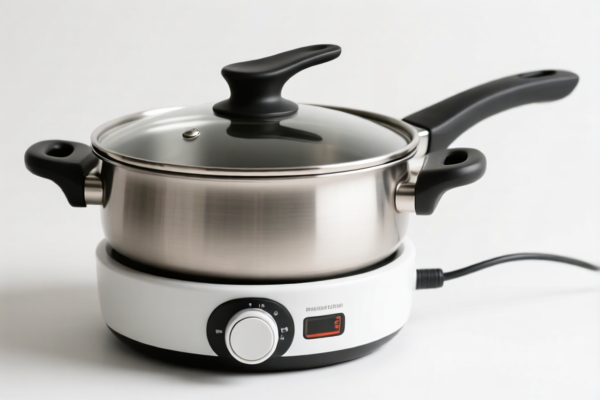
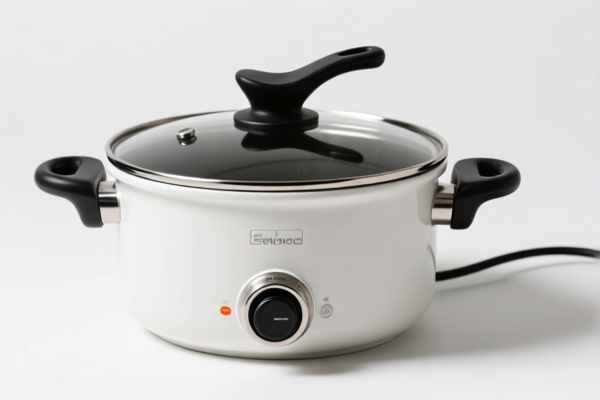


AI Analysis
⚡ Electric Cooking Appliances (e.g., Induction Hobs, Electric Ovens, Hot Plates)
🌐 HS Code Reference & Customs Clearance Guide | 2026 Latest Tariff Analysis | Professional Strategy
📌 One, Product Definition and Classification: Do You Really Understand "Electric Cooking Appliances"?
Electric cooking appliances are devices that use electrical energy to generate heat for preparing food. They are broadly categorized into two main groups based on their function and integration:
1. Surface Cooking Appliances (Cooktops/Hobs):
Devices like induction cooktops, electric radiant hobs, and ceramic hot plates. These are typically installed into a countertop or bench and do not include a complete oven cavity.
2. Complete Cooking Appliances (Ovens/Ranges):
Devices like electric built-in ovens, freestanding electric ranges (stoves), and microwave ovens. These often include the cooking chamber, controls, and sometimes multiple cooking zones.
⚠️ Key Distinction Point:
- If it is just the heating surface (e.g., an induction module) without a full oven cavity or standalone housing → Often classified under 8516.60.
- If it is a complete appliance (e.g., a standalone oven or range) → Also classified under 8516.60, but with specific sub-codes for "Ovens," "Cookers," "Hot Plates," etc.
- Microwave Ovens are distinct: They fall under 8516.50.
📦 Two, HS Code Classification Details (2026 Tariff Authority Reference)
| HS Code | Product Description | Applicable Scenario | Type of Appliance |
|---|---|---|---|
8516.60.10.00 |
Electric Storage Water Heaters (Non-immediate) | Water heaters, boilers (Note: Not for food cooking, but often confused) | Water Heating |
8516.60.20.00 |
Electric Immersion Heaters | Elements immersed in liquid/gas for heating | Heating Element |
8516.60.30.00 |
Electric Cookers, Stoves, Rings, Hot Plates, Grills and Toasters | Freestanding electric ranges, built-in hobs, electric grills, toasters | Core Cooking Appliances |
8516.60.40.00 |
Microwave Ovens | Appliances using microwave radiation to cook/heat food | Microwave Cooking |
8516.60.50.00 |
Electric Radiant Heating Units | Space heaters, patio heaters (Not for food) | Space Heating |
8516.60.90.00 |
Other Electric Heating Appliances | Hair dryers, electric irons (Not for cooking) | Domestic/Personal Care |
8516.72.00.00 |
Parts of Electric Cookers/Ovens | Detachable shelves, knobs, heating elements for repair | Spare Parts |
🔍 Critical Reminder:
- "Electric Cookers, Stoves, Rings, Hot Plates, Grills" (HS 8516.60.30) is the main category for standard electric cooking surfaces and ranges.
- "Microwave Ovens" (HS 8516.60.40) are separate from traditional electric ovens. Do not mix them!
- Induction Hobs are classified as "Hot Plates" under 8516.60.30, not as electronic components.
💰 Three, 2026 Latest Tariff Rate Details (Including Additional Taxes, Policy Surcharges)
✅ Applicable Country: United States (US)
✅ Origin Country: China (CN)
✅ Effective Date: From November 10, 2025 (Including subsequent imports)
🎯 1. 8516.60.30.00 —— Electric Cookers, Stoves, Hot Plates (Traditional Electric)
| Item | Content |
|---|---|
| Base Tariff Rate | 0% (ad valorem) |
| USITC Additional Tax | +25% (from USITC Footnote 9903.88.01) |
| IEEPA Additional Tax | +10% (Targeting China/HK products, from Nov 10, 2025) |
| Total Tariff Rate | 45% |
| Tax Calculation | CIF Value × 45% |
| De Minimis Exemption Available? | ❌ No (deny_de_minimis) |
| Legal Basis Path | IEEPA:9903.01.25 → IEEPA:9903.01.24 → USITC:8516.60.30.00 → FOOTNOTE:9903.88.01 |
📌 Explanation:
- "USITC Additional Tax 25%" comes from the "Section 301" tariffs under the US Trade Act;
- "IEEPA 10%" is the tariff imposed under the International Emergency Economic Powers Act on Chinese imports;
- Total 45%, which is a very high tariff rate. Advance planning is essential!
🎯 2. 8516.60.40.00 —— Microwave Ovens
| Item | Content |
|---|---|
| Base Tariff Rate | 0% |
| USITC Additional Tax | +25% |
| IEEPA Additional Tax | +10% |
| Total Tariff Rate | 45% |
| Tax Calculation | CIF × 45% |
| De Minimis Exemption Available? | ❌ No |
| Legal Basis Path | IEEPA:9901.25 → IEEPA:9903.01.24 → USITC:8516.60.40.00 → FOOTNOTE:9903.88.01 |
📌 Note:
- Like traditional electric cookers, microwave ovens face the same high additional taxes.
- Even "Smart Microwaves" or "Combi-Ovens" (if they primarily use microwave functions) are subject to these rates.
🛠️ Four, Customs Clearance Practical Advice (Practical Pitfall Avoidance Guide)
✅ 1. Preparation Checklist (Must-Haves)
| Document | Must Provide | Description |
|---|---|---|
| ✅ Product Specification Sheet | ✔️ | Dimensions, wattage, voltage, frequency, control type (mechanical vs. digital) |
| ✅ Circuit Diagram / Structure Diagram | ✔️ | To prove it is a "heating appliance" and not a complex electronic device |
| ✅ Product Photos (with Nameplate) | ✔️ | Clear view of model number, brand, input/output parameters, and safety labels |
| ✅ Third-Party Test Reports | ✔️ | UL, ETL, CE, RoHS, Energy Star (if applicable for US market) |
| ✅ Commercial Invoice | ✔️ | Clearly state "Electric Hot Plate" or "Electric Oven," not just "Kitchen Appliance" |
| ✅ Certificate of Origin (CO) | ✔️ | If not China-origin, may qualify for reduced tariffs (e.g., Vietnam, Mexico) |
| ✅ Packing List | ✔️ | Show relationship between main unit and accessories (e.g., grates, pans) to avoid split classification |
✅ 2. Declaration Tips (Key Mnemonics)
🔥 "Whole Unit Not Split, Function Defines Code, Name Precise, Tariff Reduced!"
| Scenario | Correct Declaration Method | Incorrect Practice |
|---|---|---|
| Freestanding Electric Range | 8516.60.30.00 (Electric Cooker) |
Misdeclare as "Refrigerator" or "Heater" → Higher Tariff |
| Induction Cooktop (Bare) | 8516.60.30.00 (Hot Plate) |
Misdeclare as "Electronic Component" → Complex Review |
| Microwave Oven | 8516.60.40.00 |
Misdeclare as "Electric Oven" → Potential Penalty for Misclassification |
| Electric Grill | 8516.60.30.00 |
Misdeclare as "Toaster" → Same code, but be precise |
| Parts (e.g., Heating Element) | 8516.72.00.00 (Parts) |
Misdeclare as "Complete Appliance" → Wrong Duty Rate |
✅ 3. Special Case Handling
| Situation | Handling Suggestion |
|---|---|
| OEM Custom Appliances | Provide client order + design drawings to avoid being deemed "non-standard" |
| Combi-Ovens (Steam + Microwave) | If microwave function is primary, use 8516.60.40.00; if steam/cooking is primary, use 8516.60.30.00. Crucial! |
| Induction vs. Electric Ceramic | Both fall under 8516.60.30.00. No difference in HS code, but ensure specs match. |
| Commercial vs. Domestic | Both generally use 8516.60, but commercial units may have different certification requirements (e.g., NSF). |
🌍 Five, Global Major Markets Clearance Comparison (2026 Latest)
| Country/Region | Recommended HS Code | Tariff | Certification Requirements | Notes |
|---|---|---|---|---|
| 🇺🇸 United States | 8516.60.30.00 / 8516.60.40.00 |
20% (China) | UL/ETL + FCC | 45% includes additional taxes |
| 🇨🇳 China | 8516.60.30.00 |
5% | CCC + RoHS | No additional surcharges |
| 🇪🇺 European Union | 8516.60.30.00 |
0% (if CE certified) | CE + ErP + RoHS | No additional taxes |
| 🇦🇺 Australia | 8516.60.30.00 |
5% | RCM | No additional taxes |
| 🇯🇵 Japan | 8516.60.30.00 |
0% | PSE | No additional taxes |
📌 Conclusion:
- The United States is the only market imposing significant additional tariffs on electric cooking appliances from China.
- High clearance costs for China-origin electric appliances in the US. Consider supply chain adjustments or alternative origins (e.g., Vietnam, Mexico).
📌 Six, Common Errors & Pitfall Avoidance Guide (Lessons Learned)
❌ Error 1: Declaring "Induction Cooktop" as "Electronic Control Panel"
👉 Consequence: Wrong HS code, potential penalty + back taxes!
❌ Error 2: Mixing "Microwave Oven" with "Electric Oven" in one declaration
👉 Consequence: Confusion for customs, delay in clearance. Declare separately!
❌ Error 3: Missing UL/ETL certification for US market
👉 Consequence: Detained by CBP, return or destruction.
❌ Error 4: Using vague terms like "Kitchen Appliance" or "Heater"
👉 Consequence: Customs may assign highest possible tariff rate. Be Specific!
✅ Correct Practice:
"Electric Ceramic Hot Plate, 3000W, 220V, Model XYZ, UL Certified, for Domestic Use"
🎯 Seven, Conclusion: Professional Declaration, Time-Saving, Cost-Effective!
🎯 Remember the Mnemonic:
🔹 "Induction/Hob = 8516.60.30, Microwave = 8516.60.40, Parts = 8516.72.00"
🔹 "Name Precisely, Certify Fully, Tariff Saved!"
📌 Tips:
If your appliances originate from Vietnam, Mexico, Thailand, Malaysia, you may apply for IEEPA Exemption, with rates as low as 0%~5%.
Recommend Advance Ruling application to avoid clearance risks.
📣 Immediate Action:
📞 Contact professional customs broker + Provide product images + Apply for HS Code Advance Ruling
🚀 Let your electric cooking appliances clear customs smoothly, export efficiently, and double profits!
✨ Professional clearance starts with accurate classification!
💼 Every cent of your cost deserves precise calculation!
Customer Reviews
About HS Code Classification
The Harmonized System (HS) is an internationally standardized nomenclature developed by the World Customs Organization (WCO) to classify traded products. Over 200 countries use the HS system as the basis for customs tariffs, trade statistics, and import/export regulations.
Each HS code follows a hierarchical structure:
- Chapter (2 digits) — Broad category of goods (e.g., Chapter 84: Machinery and Mechanical Appliances)
- Heading (4 digits) — More specific grouping within the chapter
- Subheading (6 digits) — Internationally standardized breakdown, used by all WCO member countries
- National subdivisions (8-10 digits) — Country-specific extensions for further classification, such as US HTSUS 10-digit codes
Correct HS code classification is essential for smooth customs clearance, accurate duty payment, and compliance with trade regulations. Misclassification can lead to customs delays, overpayment of duties, or penalties.
When importing from CN to US, the applicable tariff rates may include:
- Most-Favored-Nation (MFN) rate — The standard duty rate applied to WTO members
- General rate — Applied to countries without trade agreements
- Trade remedy duties — Additional tariffs such as Section 301 (anti-dumping), Section 232 (national security), or countervailing duties
The information provided on this page is for reference purposes only. For official classification, please consult with your local customs authority or a licensed customs broker.