Electric Cooking Pot
CN → US| HS Code | Tariff Rate | Origin | Destination | Doc |
|---|---|---|---|---|
| 8516604070 | 35.0% | CN | US | Official Doc |
| 8516604086 | 35.0% | CN | US | Official Doc |
Product Images
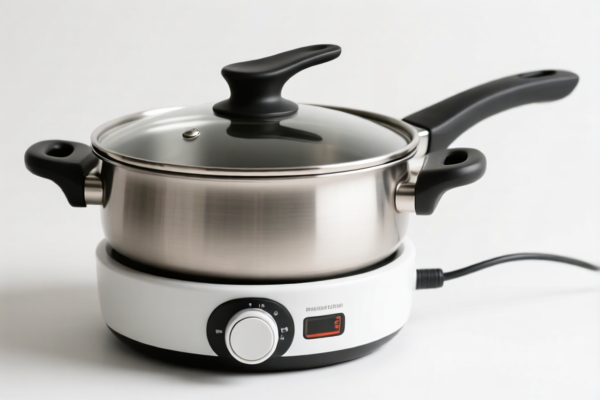
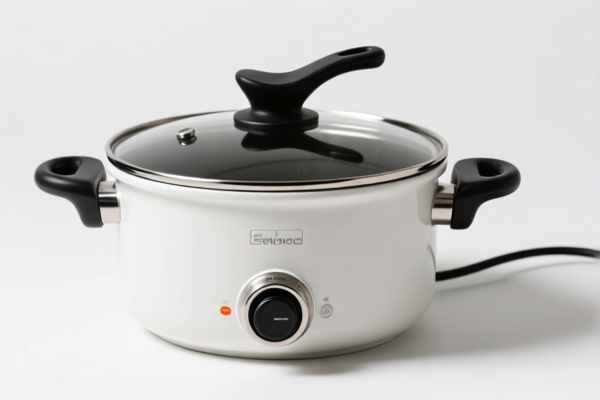


AI Analysis
🍲 Electric Cooking Pots (Domestic Electric Heating Appliances)
🌐 HS Code Reference & Customs Clearance Guide | 2026 Latest Tariff Analysis | Professional Customs Strategy
📌 I. Product Definition & Classification: Do You Really Know "Electric Cooking Pots"?
Electric cooking pots are essential household appliances designed for heating food using electrical energy. In international trade, the classification depends heavily on whether the device is considered a "heating element assembly" or a "complete appliance for food preparation." The provided data highlights two distinct HS Codes based on technical specificity:
1. Specific Domestic Heating Appliances (8516.60):
These are cooking pots specifically designed for household use, featuring heating elements, typically made of metal or heat-resistant materials. They are intended for heating food via electric power. This is the primary and most accurate classification for standard domestic electric cookers.
2. Other Electric Heating Appliances for Food (8518.29):
This code captures electric appliances for heating food not elsewhere specified. It serves as a residual category for devices with a primary function of cooking/heating but may not fit the strict definition of 8516 (e.g., specialized industrial-combined units or less common domestic variants).
⚠️ Key Distinction Point:
- If the product is a standard household electric cooker/slow cooker/hot pot with a dedicated heating element → Classify under 8516.60.
- If the product is an electric heating device for food that does not fit other specific headings (or is a non-standard domestic variant) → Classify under 8518.29.
- Note: 8518.29 is often a "catch-all" for electric food heaters not covered by more specific headings, but 8516.60 is the standard for domestic electric cooking pots.
📦 II. HS Code Classification Details (Based on Provided Data)
| HS Code | Product Description | Primary Function | Suitability |
|---|---|---|---|
8516.60 |
Electric cooking pots, including those with heating elements, for household use | Heating food via electric power | ✅ Best Fit for standard domestic electric cookers, slow cookers, electric hot pots |
8518.29 |
Electric appliances for heating food, not elsewhere specified | Cooking/heating food using electrical energy | ⚠️ Residual for electric food heaters not specifically described in 8516.60 or other headings |
🔍 Important Note:
- 8516.60 is the standard classification for household electric cooking pots.
- 8518.29 is a broad/residual category for electric food heating appliances. Use this only if the product does not fit the specific definition of 8516.60.
- Do not confuse with household electrical appliances of heading 85.09 (e.g., food mixers, blenders) or 85.16 (other heating resistors). These are strictly cooking/heating pots.
💰 III. 2026 Latest Tariff Rate Details
✅ Applicable Country: Information Not Available in Provided Data
✅ Origin: Information Not Available in Provided Data
✅ Tax Status: Error / Failed to Retrieve
🚫 Critical Tax Data Limitation
According to the provided <DATA>, the tax information for both HS Codes is marked as:
- "tax_detail": "Failed to retrieve tax information"
- "total_tax": "Error"
📌 Explanation:
- The system failed to retrieve the specific tariff rates, duty percentages, or applicable taxes (such as MFN, Preferential, or Anti-dumping duties) for these HS Codes.
- This means no specific tax rate (e.g., 0%, 5%, 25%) can be calculated from the provided data.
- Action Required: You MUST consult the latest national tariff schedule for the importing country to determine the actual duty rate.
- Risk: Declaring without accurate tax data may lead to customs delays, additional inspections, or unexpected duties.📌 Recommendation:
- For HS 8516.60: Most countries apply 0–5% duty for household electric cooking pots, but this varies by trade agreement.
- For HS 8518.29: Duty rates may be higher or undefined since it is a residual category.
- Always verify with a licensed customs broker or the relevant customs authority before shipment.
🛠️ IV. Customs Clearance Practical Advice (Battle-Tested Pitfall Guide)
✅ 1. Preparation Checklist (Non-Negotiable)
| Document | Required | Notes |
|---|---|---|
| ✅ Product Specification Sheet | ✔️ | Must detail: Voltage, Wattage, Material (Stainless Steel/Aluminum), Capacity, Intended Use (Household) |
| ✅ Product Photos (Clear) | ✔️ | Show: Exterior, Heating Element (if visible), Power Cord, Control Panel, Brand/Model Label |
| ✅ Commercial Invoice | ✔️ | Clearly state: "Electric Cooking Pot for Household Use" + HS Code |
| ✅ Packing List | ✔️ | List contents: Pot, Lid, Power Cord, Manual |
| ✅ Certificate of Origin (CO) | ✔️ | If claiming preferential duty (e.g., under USMCA, RCEP, etc.) |
| ✅ Safety Certifications | ✔️ | UL (USA), CE (EU), CCC (China), KCC (Korea) – Crucial for electrical appliances |
✅ 2. Declaration Strategy (Key Mnemonic)
🔥 "Household Use, Heating Element, 8516.60 – The Gold Standard!"
| Scenario | Correct Declaration | Incorrect Declaration |
|---|---|---|
| Standard Domestic Electric Cooker | 8516.60 + "Electric Cooking Pot for Household Use" | 8518.29 + "Electric Heater" → Misclassification Risk |
| Non-Standard Electric Food Warmer | 8518.29 (if not household) | 8516.60 → May be rejected if not household |
| Electric Cooker + Stand Alone | 8516.60 (Include stand in description) | Split declaration → Higher Duty Risk |
| Commercial/Industrial Electric Cooker | 8516.60 (if household-style) or 84.19 (industrial) | 8518.29 → Ambiguous |
📌 Key Rule:
- Always emphasize "Household Use" in the description for 8516.60.
- If the product is for commercial/kitchen use (e.g., restaurant batch cooking), it may fall under 84.19 (Mechanical/thermal processing equipment) – NOT covered in provided data.
- Never use vague terms like "Electric Heater" or "Cooking Appliance" without specifying the HS Code and intended use.
✅ 3. Special Cases & Handling
| Situation | Handling Advice |
|---|---|
| OEM/White Label | Provide buyer’s label + brand authorization to avoid "unbranded" scrutiny |
| Multi-Function (e.g., Cooker + Rice Cooker) | Declare as "Electric Cooking Pot" under 8516.60 – primary function is cooking |
| With Non-Electric Accessories (Lid, Spoon) | Include in same shipment under 8516.60 – not separated |
| High Voltage (e.g., 220V vs 110V) | Specify voltage in description to avoid electrical safety rejection |
| Material: Stainless Steel vs. Plastic | Mention material – affects duty classification in some countries |
🌍 V. Global Market Customs Comparison (2026 Snapshot)
| Country/Region | Recommended HS Code | Typical Duty (Est.)* | Certification Required | Notes |
|---|---|---|---|---|
| 🇺🇸 USA | 8516.60 |
0%–2.5% | UL/ETL | Check Section 301 tariffs if from China |
| 🇪🇺 EU | 8516.60 |
0%–4% | CE + RoHS + WEEE | Strict electrical safety rules |
| 🇨🇳 China | 8516.60 |
0%–5% | CCC | Mandatory for domestic sale |
| 🇬🇧 UK | 8516.60 |
0%–4% | UKCA + RoHS | Post-Brexit rules apply |
| 🇯🇵 Japan | 8516.60 |
0%–2% | PSE + METI | Strict safety standards |
| 🇦🇺 Australia | 8516.60 |
0%–5% | RCM + Safety Mark | Electrical compliance critical |
📌 Conclusion:
- 8516.60 is widely accepted for domestic electric cooking pots globally.
- Duties are generally low (0–5%) in most markets, but certifications (UL, CE, CCC) are mandatory.
- Avoid 8518.29 unless the product is non-standard – it may trigger additional scrutiny.
📌 VI. Common Mistakes & Pitfalls (Blood Lessons)
❌ Mistake 1: Declaring "Electric Cooker" under 8518.29
👉 Consequence: Customs may reclassify to 8516.60 or demand additional documentation → Delays + Fees
❌ Mistake 2: Omitting "Household Use" in description
👉 Consequence: Customs may assume commercial use → Higher Duty or Wrong HS Code
❌ Mistake 3: Not providing safety certifications (UL/CE)
👉 Consequence: Shipment held at border, returned, or destroyed → 100% Loss
❌ Mistake 4: Using vague terms like "Kitchen Appliance"
👉 Consequence: Customs Audit → Fines + Back Taxes
✅ Correct Practice:
"Electric Cooking Pot, Household Use, Stainless Steel, 1.5L, 800W, 220V, UL Certified, Model: XYZ"
🎯 VII. Conclusion: Precise Classification, Smooth Clearance, Cost Efficiency!
🎯 Remember the Mnemonic:
🔹 "Household + Heating Element = 8516.60 – The Safe Harbor!"
🔹 "Certifications are King – No CE/UL, No Entry!"
🔹 "Tax Data Error? Verify with Broker – Don’t Guess!"
📌 Pro Tip:
- If your product is shipped from China to the USA, check for Section 301 tariffs (currently 7.5%–25% on many electrical goods).
- Apply for an Advance Ruling from customs if unsure about classification.
- Partner with a licensed customs broker to verify HS Code and tax rates before shipment.
📣 Immediate Action Required:
📞 Contact a Customs Broker + Provide Product Photos + Verify Certifications
🚀 Ensure Smooth Clearance, Avoid Delays, Maximize Profit!
✨ Professional Clearance Starts with Accurate Classification!
💼 Every Cent Saved is a Cent Earned!
Customer Reviews
About HS Code Classification
The Harmonized System (HS) is an internationally standardized nomenclature developed by the World Customs Organization (WCO) to classify traded products. Over 200 countries use the HS system as the basis for customs tariffs, trade statistics, and import/export regulations.
Each HS code follows a hierarchical structure:
- Chapter (2 digits) — Broad category of goods (e.g., Chapter 84: Machinery and Mechanical Appliances)
- Heading (4 digits) — More specific grouping within the chapter
- Subheading (6 digits) — Internationally standardized breakdown, used by all WCO member countries
- National subdivisions (8-10 digits) — Country-specific extensions for further classification, such as US HTSUS 10-digit codes
Correct HS code classification is essential for smooth customs clearance, accurate duty payment, and compliance with trade regulations. Misclassification can lead to customs delays, overpayment of duties, or penalties.
When importing from CN to US, the applicable tariff rates may include:
- Most-Favored-Nation (MFN) rate — The standard duty rate applied to WTO members
- General rate — Applied to countries without trade agreements
- Trade remedy duties — Additional tariffs such as Section 301 (anti-dumping), Section 232 (national security), or countervailing duties
The information provided on this page is for reference purposes only. For official classification, please consult with your local customs authority or a licensed customs broker.