Electric Grinder
CN → US| HS Code | Tariff Rate | Origin | Destination | Doc |
|---|---|---|---|---|
| 8479896500 | 20.3% | CN | US | Official Doc |
| 8460908080 | 39.4% | CN | US | Official Doc |
| 8479820080 | 35.0% | CN | US | Official Doc |
| 8467290035 | 17.5% | CN | US | Official Doc |
Product Images
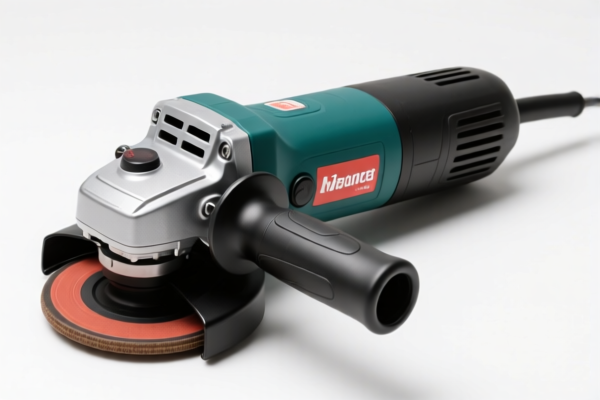
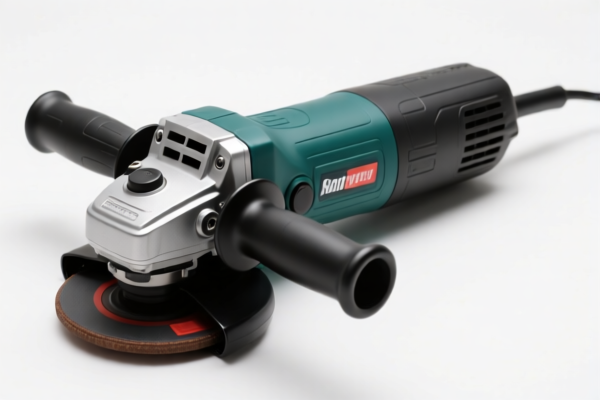
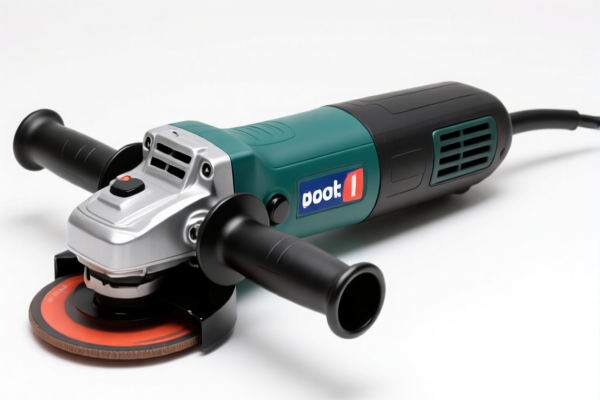
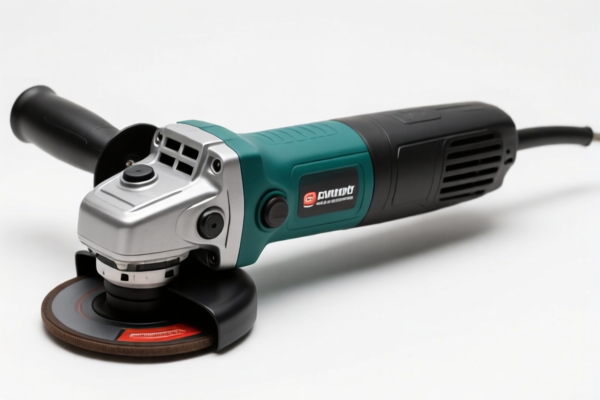
AI Analysis
⚡ Electric Grinders (Power Tools for Surface Finishing)
🌐 HS Code Reference & Customs Clearance Guide | 2026 Latest Tariff Analysis | Professional Clearance Strategy
📌 I. Product Definition & Classification: Do You Really Understand the "Electric Grinder"?
An Electric Grinder is a versatile power tool used for grinding, polishing, deburring, and cutting various materials (metal, stone, wood). In international trade, its classification depends heavily on its specific function, power source integration, and form factor (handheld vs. machine-mounted).
Two Main Categories: 1. Handheld Power Tools (8467): Portable, user-held devices where the motor is part of the tool. 2. Electrical Machines with Individual Functions (8479): Standalone machines that perform specific electromechanical tasks, even if they have motors.
⚠️ Key Distinction Point:
- If it is a hand-held tool driven by a motor → Chapter 8467 (Lower Tax Risk).
- If it is a stationary machine or fits the description of "other electrical machines" → Chapter 8479 or 8460.
- ⚠️ Warning: Misclassification as a Machine Tool (8460) can trigger punitive tariffs.
📦 II. HS Code Classification Details (2026 Latest Tariff Data from Provided Source)
Below are the four valid HS Codes based on the provided data, ranked by tax efficiency and customs risk.
| HS Code | Product Description (from Data) | Total Tax Rate | Key Characteristics | Risk Level |
|---|---|---|---|---|
| 8467.29.00.35 | Hand-held motor-driven grinding/polishing tools | 17.5% | Hand-held, motor-driven, for grinding/polishing | ✅ LOWEST RISK |
| 8479.89.65.00 | Electrical machines with individual functions (self-contained motor) | 20.3% | Self-contained motor, general electrical machinery | ⚠️ MEDIUM RISK |
| 8479.82.00.80 | Mechanical appliances with grinding function | 35.0% | Mechanical, grinding capability, no base tariff | ⚠️ HIGH RISK |
| 8460.90.80.80 | Machine-tools for grinding, polishing, etc. | 39.4% | Classified as a machine tool for precision finishing | 🔴 HIGHEST RISK |
🔍 Critical Insight:
- 8467.29.00.35 is the most favorable code for handheld electric grinders.
- 8460.90.80.80 carries the highest penalty (39.4%) because it is classified as a "machine tool" under Section XI penalties.
- 8479 codes are intermediate options if the tool doesn't fit the strict "hand-held" definition of 8467.
💰 III. 2026 Latest Tariff Rate Breakdown (Including Surcharges & Policy Add-ons)
✅ Applicable Country: United States (US)
✅ Origin: China (CN)
✅ Effective Date: Post-November 2025 (Includes Section 301 & IEEPA)
🎯 1. 8467.29.00.35 —— Hand-held Motor-Driven Grinding/Polishing Tools (RECOMMENDED)
| Item | Detail |
|---|---|
| Base Tariff | 0.0% |
| Additional Tariff (Sec. 301) | +7.5% |
| Section 122 Tariff | +10.0% |
| Total Tax Rate | 17.5% |
| Tax Calculation | CIF Value × 17.5% |
| De Minimis Eligibility | ❌ No (Subject to high tariffs) |
| Legal Basis | USITC Harmonized Tariff Schedule + IEEPA Footnotes |
📌 Why This Code?
- It correctly identifies the product as a hand-held power tool.
- Lowest combined tariff burden.
- Aligns with common consumer/prosumer grinder designs (e.g., Dremel-style).
🎯 2. 8479.89.65.00 —— Electrical Machines with Individual Functions
| Item | Detail |
|---|---|
| Base Tariff | 2.8% |
| Additional Tariff (Sec. 301) | +7.5% |
| Section 122 Tariff | +10.0% |
| Total Tax Rate | 20.3% |
| Tax Calculation | CIF Value × 20.3% |
| De Minimis Eligibility | ❌ No |
| Legal Basis | USITC HTSUS Chapter 84 |
📌 Why This Code?
- Used when the grinder is not hand-held or has a more complex electrical function not covered by 8467.
- "Self-contained electric motor" is the key descriptor.
- Slightly higher tax than 8467 due to the 2.8% base tariff.
🎯 3. 8479.82.00.80 —— Mechanical Appliances with Grinding Function
| Item | Detail |
|---|---|
| Base Tariff | 0.0% |
| Additional Tariff (Sec. 301) | +25.0% |
| Section 122 Tariff | +10.0% |
| Total Tax Rate | 35.0% |
| Tax Calculation | CIF Value × 35.0% |
| De Minimis Eligibility | ❌ No |
| Legal Basis | USITC HTSUS Chapter 84 |
📌 Why This Code?
- Focuses on the mechanical grinding action rather than the electrical nature.
- High surcharge (25%) due to potential Section 301 applicability on broader machinery.
- Avoid if possible unless the device is purely mechanical or fails 8467/8479.89 tests.
🎯 4. 8460.90.80.80 —— Machine-Tools for Grinding, Polishing, Etc. (AVOID)
| Item | Detail |
|---|---|
| Base Tariff | 4.4% |
| Additional Tariff (Sec. 301) | +25.0% |
| Section 122 Tariff | +10.0% |
| Total Tax Rate | 39.4% |
| Tax Calculation | CIF Value × 39.4% |
| De Minimis Eligibility | ❌ No |
| Legal Basis | USITC HTSUS Chapter 84, Section XI |
📌 Why This Code is Dangerous:
- Classified as a "Machine Tool", which is heavily scrutinized and penalized under US trade policy.
- Highest total tax rate in the dataset.
- Only appropriate for large, stationary industrial grinding machines, NOT hand-held tools.
🛠️ IV. Customs Clearance Practical Advice (Battle-Tested Pitfall Guide)
✅ 1. Documentation Checklist (Non-Negotiable)
| Document | Required | Purpose |
|---|---|---|
| ✅ Product Specification Sheet | ✔️ | Must state: "Hand-held," "Motor-driven," "For grinding/polishing." |
| ✅ Technical Drawings/Cutaway | ✔️ | Proves motor is integral to the tool (supports 8467 or 8479). |
| ✅ Product Photos | ✔️ | Show the tool being held in hand (for 8467) or mounted (for 8479/8460). |
| ✅ Commercial Invoice | ✔️ | Description: "Electric Hand-Grounding Tool" or "Power Polisher." Avoid "Machine Tool." |
| ✅ Certifications | ✔️ | UL, CE, or FCC (if electronic) to prove safety compliance. |
✅ 2. Declaration Strategy (The "Golden Rule")
🔥 "Hand-held = 8467; Stationary = 8479/8460. Don't call it a 'Machine Tool' unless it's industrial!"
| Scenario | Correct HS Code | Common Mistake |
|---|---|---|
| Dremel-style rotary tool | 8467.29.00.35 |
Misdeclared as 8460.90.80.80 → 39.4% tax |
| Benchtop grinder with motor | 8479.89.65.00 |
Misdeclared as 8467 → Rejection if not hand-held |
| Large industrial floor grinder | 8460.90.80.80 (or other 8460 subheading) |
N/A (This is correct for industrial) |
| Grinding attachment only | Check if motor is included | If no motor, different code; if motor included, see above |
✅ 3. Special Considerations
| Situation | Recommendation |
|---|---|
| OEM/White Label Products | Ensure the invoice description matches the physical product. If it looks hand-held, declare as hand-held. |
| Combined Sets (Tool + Stand) | If the stand is integral, it may still be 8467. If it's a separate industrial bench, classify separately. |
| Material Specificity | Does not change HS Code. An electric grinder for wood or metal is still 8467.29.00.35. |
| Pre-Ruling Request | Highly recommended for large shipments. Request a Binding Tariff Information (BTI) or HTSUS Pre-Ruling from US CBP. |
🌍 V. Global Customs Comparison (2026 Snapshot)
| Market | Recommended HS Code | Est. Duty | Notes |
|---|---|---|---|
| 🇺🇸 USA | 8467.29.00.35 |
17.5% | Best option for hand-held. Avoid 8460. |
| 🇨🇳 China | 8467.29.00.35 |
~10-15% | Standard import duty for power tools. |
| 🇪🇺 EU | 8467.21.00 |
~2.5-4.5% | No heavy surcharges like US Section 301. |
| 🇬🇧 UK | 8467.29.00 |
~2.5-4.5% | Post-Brexit, similar to EU but no Union tariffs. |
| 🇨🇦 Canada | 8467.29.00 |
~0-5% | Generally favorable for power tools. |
📌 Conclusion:
- The US market is the most expensive due to Section 301 and IEEPA tariffs.
- EU and Asia have much lower barriers.
- Optimizing HS Code to 8467.29.00.35 saves 21.9% in tariffs compared to misclassification as 8460.
📌 VI. Common Errors & Pitfalls (Lessons Learned)
❌ Error 1: Calling a hand-held grinder a "Grinding Machine"
👉 Consequence: CBP may classify it as 8460.90.80.80 → 39.4% tax instead of 17.5%.
👉 Fix: Use "Hand-held Power Tool" or "Electric Polisher/Grinder."
❌ Error 2: Ignoring the Motor Integration
👉 Consequence: If the tool doesn't have a self-contained motor, it may not qualify for 8467.
👉 Fix: Provide technical specs proving the motor is built-in.
❌ Error 3: Splitting Shipment into Parts
👉 Consequence: Separate parts (motor, body, disc) may be taxed differently or attract higher duties on components.
👉 Fix: Declare as a complete assembled unit whenever possible.
✅ Correct Description Example:
"Electric Hand-Held Rotary Grinder with Self-Contained Motor, for Polishing and Surface Finishing, Model XYZ, 120V AC"
🎯 VII. Conclusion: Precision Classification Saves Money!
🎯 Remember:
🔹 "Hand-held = 8467 (17.5%); Machine Tool = 8460 (39.4%)."
🔹 "Tax Difference = 21.9% – Don't let misclassification eat your profit!"
🔹 "Use 'Hand-held Power Tool' in your invoice, not 'Industrial Grinding Machine'."
📌 Pro Tip:
For large volume imports, apply for a US Customs Ruling before shipping. The small cost of a ruling can save thousands in unexpected duties.
📣 Take Action Now:
📞 Consult a licensed customs broker.
🚀 Ship Smart, Pay Less, Clear Faster!
✨ Professional Classification from Day One!
💼 Every Percentage Point Matters in Cross-Border Trade!
Customer Reviews
About HS Code Classification
The Harmonized System (HS) is an internationally standardized nomenclature developed by the World Customs Organization (WCO) to classify traded products. Over 200 countries use the HS system as the basis for customs tariffs, trade statistics, and import/export regulations.
Each HS code follows a hierarchical structure:
- Chapter (2 digits) — Broad category of goods (e.g., Chapter 84: Machinery and Mechanical Appliances)
- Heading (4 digits) — More specific grouping within the chapter
- Subheading (6 digits) — Internationally standardized breakdown, used by all WCO member countries
- National subdivisions (8-10 digits) — Country-specific extensions for further classification, such as US HTSUS 10-digit codes
Correct HS code classification is essential for smooth customs clearance, accurate duty payment, and compliance with trade regulations. Misclassification can lead to customs delays, overpayment of duties, or penalties.
When importing from CN to US, the applicable tariff rates may include:
- Most-Favored-Nation (MFN) rate — The standard duty rate applied to WTO members
- General rate — Applied to countries without trade agreements
- Trade remedy duties — Additional tariffs such as Section 301 (anti-dumping), Section 232 (national security), or countervailing duties
The information provided on this page is for reference purposes only. For official classification, please consult with your local customs authority or a licensed customs broker.