Electric Grinding Pen
CN → US| HS Code | Tariff Rate | Origin | Destination | Doc |
|---|---|---|---|---|
| 9017800000 | 40.3% | CN | US | Official Doc |
| 9017900160 | 0.0% | CN | US | Official Doc |
| 8467290010 | 17.5% | CN | US | Official Doc |
| 8467290015 | 17.5% | CN | US | Official Doc |
| 9608996000 | 17.5% | CN | US | Official Doc |
Product Images
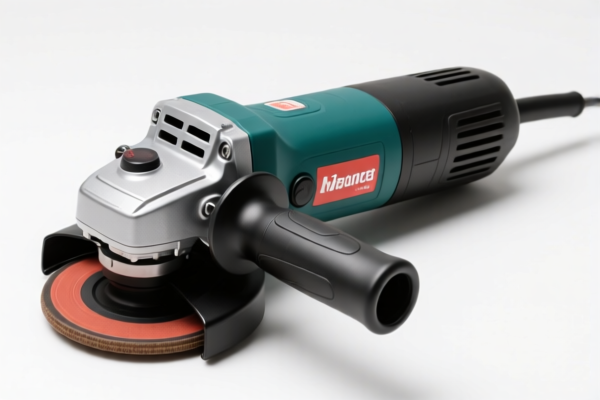
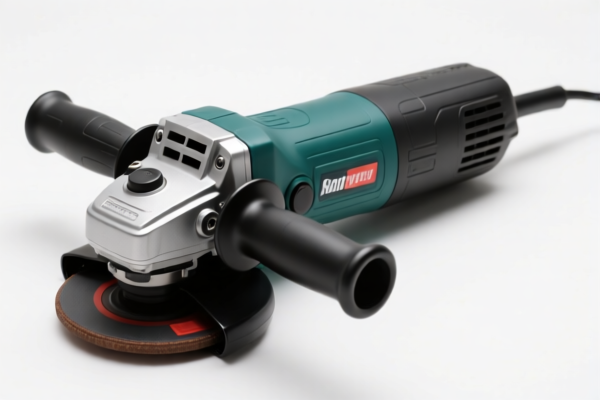
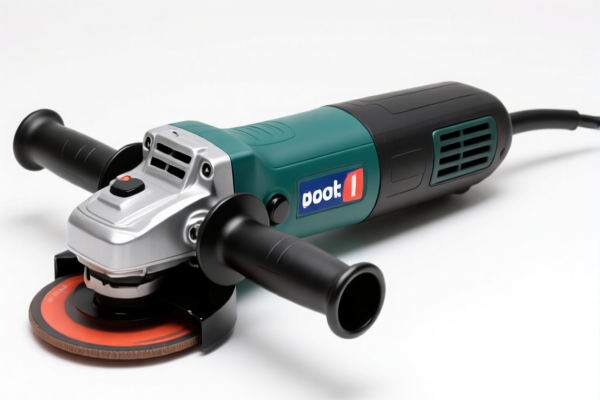
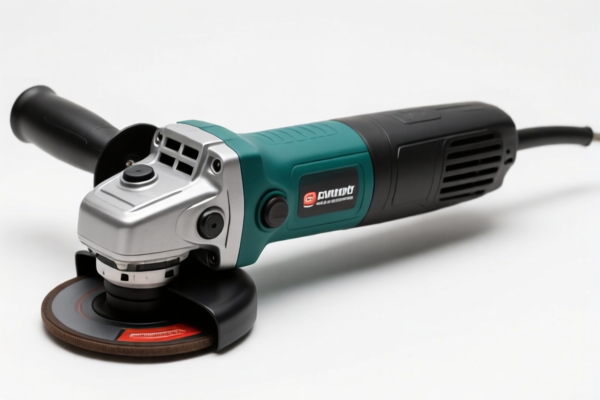
AI Analysis
✍️ Electric Grinding Pen (打磨笔)
🌐 HS Code Reference & Customs Clearance Guide | 2026 Latest Tariff Analysis | Professional Clearance Strategy 📌 I. Product Definition & Classification: Do You Really Understand the "Electric Grinding Pen"?
The Electric Grinding Pen is a specialized handheld tool used for precision grinding, polishing, engraving, and marking in processing or drawing processes. It can be classified into several categories based on its specific mechanical structure and primary function:
1. Precision Instrument Tools: Viewed as a tool for marking, measuring, or precision operations. 2. Accessory for Precision Instruments: Viewed as a part or accessory to other precision instruments. 3. Hand-held Power Tool: Viewed as a grinding/polishing tool similar to angle grinders or sanders. 4. Pen-like Device: Viewed as an electric pen for writing/drawing applications.
⚠️ Key Classification Distinction: - If it is primarily a marking/measuring instrument → Enter 9017.80.00.00 - If it is an accessory/attachment to a larger instrument → Enter 9017.90.01.60 - If it is a handheld power tool for grinding/polishing → Enter 8467.29.00.10 or 8467.29.00.15 - If it is categorized as an electric pen/writing device → Enter 9608.99.60.00
📦 II. HS Code Classification Details (2026 Latest Tariff Authoritative Comparison)
| HS Code | Product Description | Application Scenario | Key Feature |
|---|---|---|---|
9017.80.00.00 |
Other instruments/apparatus (including marking/measuring instruments) | Precision marking, calibration, technical drawing tools | ✅ Treated as precision instrument |
9017.90.01.60 |
Parts and accessories for other instruments | Attachments for precision instruments | ✅ Accessory to main instrument |
8467.29.00.10 |
Hand-held tools for grinding, polishing, etc. (with self-contained electric motor) | High-precision grinding, polishing tasks | ✅ Handheld power tool |
8467.29.00.15 |
Other hand-held tools for grinding/polishing | Sanding/grinding tasks | ✅ Handheld power tool |
9608.99.60.00 |
Parts and accessories of pens/pencils | Electric pens, marking pens, writing/drawing devices | ✅ Pen-like device |
🔍 Key Reminder: - If the device is primarily for industrial grinding/polishing with a motor, classify under 8467; - If it is for precision measurement/marking without heavy-duty grinding, classify under 9017; - If it is marketed as a pen (e.g., electric engraving pen for hobbyists), it may fall under 9608, but customs may scrutinize this classification more strictly.
💰 III. 2026 Latest Tariff Rate Breakdown (Including Additional Taxes & Policy Surcharges)
✅ Applicable Country: United States (US)
✅ Country of Origin: China (CN)
✅ Effective Date: From November 10, 2025 (including subsequent imports)
🎯 1. 9017.80.00.00 —— Other Instruments (Precision/Marking Tools)
| Item | Content |
|---|---|
| Base Tariff | 5.3% (ad valorem) |
| Section 301 Surcharge | +25.0% |
| Section 122 Surcharge | +10.0% |
| Total Tariff Rate | 40.3% |
| Tax Calculation | CIF Value × 40.3% |
| De Minimis Exemption | ❌ Not Eligible (deny_de_minimis) |
| Legal Basis Path | USITC:9017.80.00.00 → SECTION_301:9903.88.01 → SECTION_122:10% |
📌 Explanation: - The 25% Section 301 tariff applies to many precision instruments from China; - The 10% Section 122 tariff is an additional duty on certain imported goods; - Total 40.3% is a high tariff rate, requiring advance planning!
🎯 2. 9017.90.01.60 —— Parts and Accessories of Other Instruments
| Item | Content |
|---|---|
| Base Tariff | Same as the principal article (variable, typically 5.3%-8.9%) |
| Section 301 Surcharge | +25.0% |
| Section 122 Surcharge | +10.0% |
| Total Tariff Rate | Base Rate + 35.0% |
| Tax Calculation | CIF Value × (Base Rate + 35%) |
| De Minimis Exemption | ❌ Not Eligible |
| Legal Basis Path | USITC:9017.90.01.60 → SECTION_301:9903.88.01 → SECTION_122:10% |
📌 Note: - The base tariff depends on the main instrument it belongs to; - If the main instrument has a 5.3% base tariff, the total is 40.3%; - If the main instrument has a higher base tariff, the total will be even higher.
🎯 3. 8467.29.00.10 & 8467.29.00.15 —— Hand-held Power Tools for Grinding/Polishing
| Item | Content |
|---|---|
| Base Tariff | 0.0% (ad valorem) |
| Section 301 Surcharge | +7.5% |
| Section 122 Surcharge | +10.0% |
| Total Tariff Rate | 17.5% |
| Tax Calculation | CIF Value × 17.5% |
| De Minimis Exemption | ❌ Not Eligible |
| Legal Basis Path | USITC:8467.29.00.10/15 → SECTION_301:9903.88.01 → SECTION_122:10% |
📌 Explanation: - Base tariff is 0%, making it competitive compared to other classifications; - Section 301 surcharge is only 7.5% (lower than 25% for instruments); - Section 122 surcharge is 10%; - Total 17.5% is significantly lower than the 40.3% for precision instruments.
🎯 4. 9608.99.60.00 —— Parts and Accessories of Pens
| Item | Content |
|---|---|
| Base Tariff | 0.0% (ad valorem) |
| Section 301 Surcharge | +7.5% |
| Section 122 Surcharge | +10.0% |
| Total Tariff Rate | 17.5% |
| Tax Calculation | CIF Value × 17.5% |
| De Minimis Exemption | ❌ Not Eligible |
| Legal Basis Path | USITC:9608.99.60.00 → SECTION_301:9903.88.01 → SECTION_122:10% |
📌 Note: - Base tariff is 0%; - Section 301 surcharge is 7.5%; - Section 122 surcharge is 10%; - Total 17.5% is the same as the hand-held power tool classification.
🛠️ IV. Customs Clearance Practical Advice (Battle-Tested Pitfall Avoidance Guide)
✅ 1. Required Documentation Checklist (All Must Be Provided)
| Document | Mandatory | Description |
|---|---|---|
| ✅ Product Specification Sheet | ✔️ | Includes size, weight, power input, motor type, usage purpose |
| ✅ Product Photos (with Label) | ✔️ | Clear display of model, brand, input/output parameters |
| ✅ Circuit Diagram/Structure Diagram | ✔️ | To determine if it contains a motor or is purely mechanical |
| ✅ Third-party Test Report | ✔️ | FCC, CE, RoHS, UL (if applicable) |
| ✅ Commercial Invoice | ✔️ | Clearly mark "Electric Grinding Pen" or "Hand-held Power Tool" |
| ✅ Packing List | ✔️ | Explain the relationship between the main unit and accessories |
| ✅ Certificate of Origin (CO) | ✔️ | If not Chinese origin, preferential tariffs may apply |
✅ 2. Declaration Tips (Key Mantras)
🔥 "Motor Defines Tool, No Motor Defines Instrument, Name Accurate, Tariff Halved!"
| Scenario | Correct Declaration | Wrong Practice |
|---|---|---|
| Hand-held power tool with motor | 8467.29.00.10 or 8467.29.00.15 |
Misclassified as "instrument" → 40.3% |
| Precision marking pen without motor | 9017.80.00.00 |
Misclassified as "power tool" → 17.5% (but may be rejected) |
| Electric pen for writing/drawing | 9608.99.60.00 |
Misclassified as "power tool" → 17.5% (but may be rejected) |
| Accessory/attachment | 9017.90.01.60 |
Misclassified as "main instrument" → Variable |
✅ 3. Special Case Handling
| Scenario | Handling Advice |
|---|---|
| OEM Custom Grinding Pen | Provide customer order + design drawings to avoid being classified as "non-standard" |
| Grinding Pen with Touch Screen | Still classify as 8467.29.00.10 or 9608.99.60.00, not 9013.90.80.00 |
| Grinding Pen for Medical Use | If for specialized medical use, apply for "non-commercial" exemption, but provide proof |
| Grinding Pen for Military/Aerospace | Apply for "special purpose" declaration, tariff may be reduced, communicate in advance |
🌍 V. Global Major Markets Customs Clearance Comparison (2026 Latest)
| Country/Region | Recommended HS Code | Tariff | Certification Requirements | Remarks |
|---|---|---|---|---|
| 🇺🇸 USA | 8467.29.00.10 |
17.5% (China origin) | FCC + RoHS | 40.3% if classified as instrument |
| 🇨🇳 China | 8467.29.00.10 |
0% - 5% | CCC + RoHS | No additional surcharges |
| 🇪🇺 EU | 8467.29.00.10 |
0% (if CE compliant) | CE + ErP | No surcharges |
| 🇦🇺 Australia | 8467.29.00.10 |
5% | RCM | No surcharges |
| 🇯🇵 Japan | 8467.29.00.10 |
0% | PSE | No surcharges |
📌 Conclusion: - USA is the only market imposing high additional tariffs on Chinese goods; - Chinese origin grinding pens have high clearance costs in the US,建议提前评估是否转产或调整供应链 (recommend evaluating alternative production or supply chain adjustments in advance); - Classification as "Hand-held Power Tool" (8467) is more cost-effective than "Precision Instrument" (9017).
📌 VI. Common Errors & Pitfall Avoidance Guide (Blood-Tested Lessons)
❌ Error 1: Declaring a "hand-held power tool" as "precision instrument" 👉 Consequence: Tariff jumps from 17.5% to 40.3% → Additional tax of 22.8%!
❌ Error 2: Declaring a "pen" as "power tool" without proof 👉 Consequence: Customs rejects classification → Delay or return!
❌ Error 3: Not providing circuit diagrams, only writing "grinding pen" 👉 Consequence: Customs cannot determine if it contains a motor → Delayed release or reclassification
❌ Error 4: Using "Grinding Pen" as the only description without specifying motor vs. non-motor 👉 Consequence: Classification error → Back taxes + late fees!
✅ Correct Practice:
"Electric Grinding Pen, 24V, Hand-held Power Tool with Self-contained Electric Motor, for Precision Polishing, Model XYZ, FCC & RoHS Certified"
🎯 VII. Conclusion: Professional Declaration, Time-Saving, Cost-Effective!
🎯 Remember the Mantra:
🔹 "Motor = Power Tool (17.5%), No Motor = Instrument (40.3%), Name Accurate, Tariff Halved!"
🔹 "HS Code Determines Life or Death, Tariff Difference 25 Points, One Step Wrong, Thousands in Back Taxes!"
📌 Pro Tip:
If your grinding pen is originated from Vietnam, Mexico, Thailand, or Malaysia, you may apply for IEEPA Exemption, with tariffs as low as 0%~5%;
It is recommended to apply for Advance Ruling to avoid clearance risks.
📣 Take Action Now:
📞 Contact Professional Customs Broker + Provide Product Photos + Apply for HS Code Advance Ruling
🚀 Let your Electric Grinding Pen Clear Customs Smoothly, Export Efficiently, and Double Profits!
✨ Professional Clearance Starts with Accurate Classification!
💼 Every Penny of Your Cost Deserves Precise Calculation!
Customer Reviews
About HS Code Classification
The Harmonized System (HS) is an internationally standardized nomenclature developed by the World Customs Organization (WCO) to classify traded products. Over 200 countries use the HS system as the basis for customs tariffs, trade statistics, and import/export regulations.
Each HS code follows a hierarchical structure:
- Chapter (2 digits) — Broad category of goods (e.g., Chapter 84: Machinery and Mechanical Appliances)
- Heading (4 digits) — More specific grouping within the chapter
- Subheading (6 digits) — Internationally standardized breakdown, used by all WCO member countries
- National subdivisions (8-10 digits) — Country-specific extensions for further classification, such as US HTSUS 10-digit codes
Correct HS code classification is essential for smooth customs clearance, accurate duty payment, and compliance with trade regulations. Misclassification can lead to customs delays, overpayment of duties, or penalties.
When importing from CN to US, the applicable tariff rates may include:
- Most-Favored-Nation (MFN) rate — The standard duty rate applied to WTO members
- General rate — Applied to countries without trade agreements
- Trade remedy duties — Additional tariffs such as Section 301 (anti-dumping), Section 232 (national security), or countervailing duties
The information provided on this page is for reference purposes only. For official classification, please consult with your local customs authority or a licensed customs broker.