Electric Hair Clipper
CN → US| HS Code | Tariff Rate | Origin | Destination | Doc |
|---|---|---|---|---|
| 8510209000 | 39.0% | CN | US | Official Doc |
| 8214909000 | 0.0% | CN | US | Official Doc |
| 8510300000 | 14.2% | CN | US | Official Doc |
| 8510905500 | 39.2% | CN | US | Official Doc |
| 8543709860 | 37.6% | CN | US | Official Doc |
Product Images
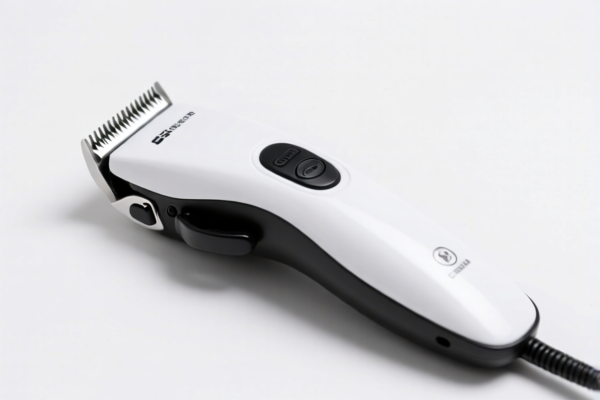
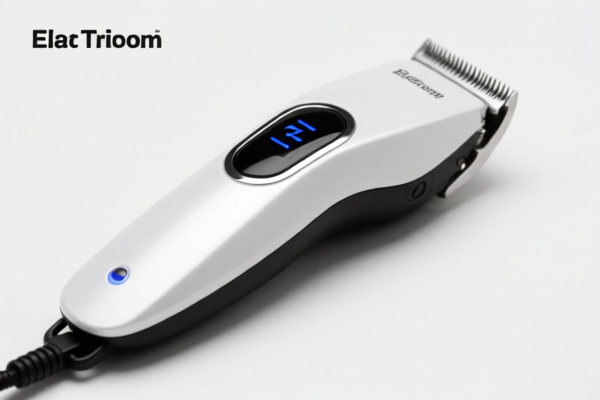
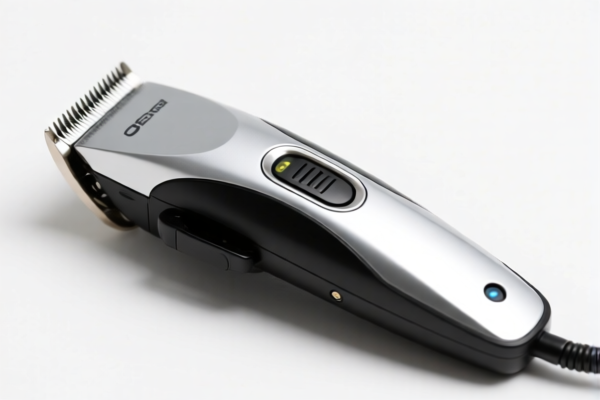
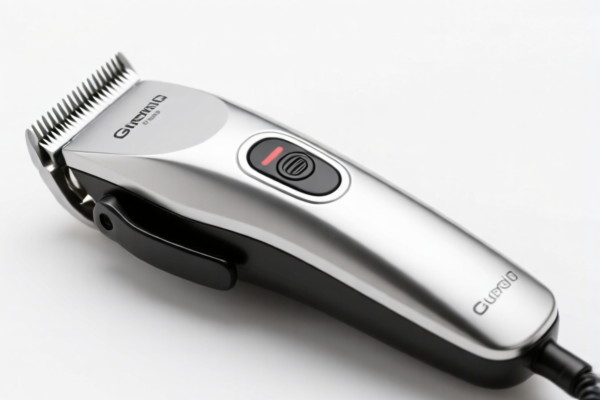
AI Analysis
💈 Electric Hair Clipper (电动理发器)
🌐 HS Code Reference & Customs Clearance Guide | 2026 Latest Tariff Analysis | Professional Clearance Strategy
📌 I. Product Definition & Classification: Understanding the "Electric Hair Clipper"
An Electric Hair Clipper is a grooming device designed for cutting hair, featuring a self-contained electric motor that drives oscillating or rotary blades. In international trade, its classification hinges on two key factors:
1. Function: Is it primarily for cutting hair (clippers) or removing hair (depilatories)?
2. Structure: Does it fall under "Electrical appliances of a kind used for personal care" (Ch 85) or "Tools/Blades" (Ch 82)?
⚠️ Critical Distinction:
- If the device is primarily for cutting hair with moving blades → It belongs to Ch 85 (Electrical Appliances).
- If it is classified as a blade/tool structure (less common for motorized units) → It might fall under Ch 82 (Tools), but this is rare and risky for motorized units.
- Do not confuse with Depilatory Devices (Ch 8510.30/8510.90), which are for hair removal, not cutting.
📦 II. HS Code Classification Details (Based on Provided Data)
The following classifications are derived strictly from the provided <DATA> set for Electric Hair Clippers:
| HS Code | Product Description | Summary/Reasoning | Total Tax Rate |
|---|---|---|---|
8510.20.90.00 |
Electric Hair Clippers (Primary Classification) | Classified as electric clippers with self-contained motors. Matches usage and function perfectly. | 39.0% |
8214.90.90.00 |
Other Cutting Appliances (Alternative/Risky) | Classified as "other articles of cutlery/tools." Fits the usage category of hair tools but ignores the electrical motor aspect. | 1.4¢ each + 3.2% + 10.0% |
🔍 Key Insight:
-8510.20.90.00is the standard, correct classification for motorized hair clippers. It recognizes the electrical nature of the device.
-8214.90.90.00is an alternative/risky classification that treats the clipper as a mechanical tool. While the duty per unit might seem low (1.4¢), the percentage add-ons and complexity make it less predictable. Caution: Misclassifying an electrical device as a non-electrical tool can lead to customs audits and penalties.
💰 III. 2026 Latest Tariff Rate Breakdown (Detailed Tax Clauses)
✅ Applicable Country: United States (US)
✅ Origin: China (CN)
✅ Effective Date: Current rates based on provided data (includes 301/122 tariffs)
🎯 1. 8510.20.90.00 —— Electric Hair Clippers (Standard Classification)
This is the most accurate HS code for electric hair clippers with built-in motors.
| Item | Detail |
|---|---|
| Base Duty Rate | 4.0% |
| Section 301 Additional Duty | +25.0% (USITC Footnote 9903.88.01) |
| Section 122 Duty | +10.0% (For de minimis shipments, if applicable) |
| Total Effective Rate | 39.0% |
| Tax Calculation | CIF Value × 39.0% |
| De Minimis Exemption? | ❌ No (Denied due to Section 301/122 tariffs) |
| Legal Basis Path | Section 301: 9903.88.01 → Section 122: 10% → HS: 8510.20.90.00 |
📌 Explanation:
- The 4.0% base rate is the standard US tariff for electrical hair clippers.
- The +25% Section 301 tariff is imposed on Chinese-origin goods to counter unfair trade practices.
- The +10% Section 122 tariff applies to low-value shipments (under $800) entering the US.
- Total 39% is a high burden. Importers must budget for this significantly.
🎯 2. 8214.90.90.00 —— Other Cutting Appliances (Alternative Classification)
This classification treats the clipper as a tool rather than an electrical appliance. Use with extreme caution.
| Item | Detail |
|---|---|
| Base Duty Rate | 1.4¢ each + 3.2% (Ad Valorem) |
| Section 301 Additional Duty | +0.0% (Not listed in provided data, but typically applies if subject to 301) |
| Section 122 Duty | +10.0% |
| Total Effective Rate | 1.4¢ each + 13.2% + 10.0% (Complex calculation) |
| Tax Calculation | (1.4¢ × Qty) + (CIF Value × 3.2%) + (CIF Value × 10%) |
| De Minimis Exemption? | ⚠️ Unclear (May be exempt from ad valorem but subject to specific duties) |
| Legal Basis Path | HS: 8214.90.90.00 → Section 122: 10% |
📌 Note:
- This classification is atypical for motorized devices. Customs may challenge this if the product clearly has a motor.
- If accepted, the specific duty (1.4¢/unit) might be lower than 4% ad valorem for high-value units, but the 10% Section 122 still applies.
- Risk: High risk of reclassification to8510.20.90.00by CBP, leading to back duties and penalties.
🛠️ IV. Customs Clearance Practical Advice (Avoid Pitfalls)
✅ 1. Documentation Checklist (Mandatory)
| Document | Required | Purpose |
|---|---|---|
| ✅ Product Specifications | ✔️ | Must state: "Electric," "Motor-powered," "For Hair Cutting." |
| ✅ Circuit Diagram | ✔️ | Proves electrical nature → Supports 8510.20.90.00. |
| ✅ Product Photos | ✔️ | Show power cord, battery, switch, and blades. |
| ✅ Commercial Invoice | ✔️ | Clearly describe as "Electric Hair Clipper," not "Manual Tool." |
| ✅ Origin Certificate | ✔️ | If not China, may avoid Section 301/122. |
| ✅ UL/FCC Certification | ✔️ | Required for electrical safety in the US. |
✅ 2. Declaration Strategy (Key Tips)
🔥 “Electrical is Key, Motor is Proof, 8510 is Safe, 8214 is Risky!”
| Scenario | Correct Declaration | Incorrect Declaration |
|---|---|---|
| Motorized Hair Clipper | 8510.20.90.00 |
8214.90.90.00 (Risk of rejection) |
| Manual Hair Clippers | 8214.90.90.00 |
8510.20.90.00 (Error: No motor) |
| Electric Depilatory Device | 8510.30.00.00 / 8510.90.55.00 |
8510.20.90.00 (Wrong function) |
| Clipper + Comb Accessory | Single Declaration as 8510.20.90.00 |
Splitting into parts → Higher taxes |
✅ 3. Special Cases
| Situation | Advice |
|---|---|
| OEM/White Label | Provide design specs to prove it’s a standard electric clipper. |
| Rechargeable vs. Plug-in | Both are “electric” → Same HS Code 8510.20.90.00. |
| Professional Salon Use | No tax exemption; same 39% rate applies. |
| Children’s Hair Clippers | Same classification; ensure safety certs (FCC/UL). |
🌍 V. Global Market Comparison (2026)
| Market | Recommended HS Code | Duty Rate | Key Certifications |
|---|---|---|---|
| 🇺🇸 USA | 8510.20.90.00 |
39% | FCC, UL, CPSC |
| 🇨🇳 China | 8510.20.90.00 |
4% | CCC |
| 🇪🇺 EU | 8510.20.90.00 |
0-6% | CE, RoHS, WEEE |
| 🇬🇧 UK | 8510.20.90.00 |
0-6% | UKCA, RoHS |
| 🇯🇵 Japan | 8510.20.90.00 |
0-5% | PSE, JIS |
📌 Conclusion:
- The USA is the most expensive market due to Section 301 and 122 tariffs (39%).
- EU/UK/Japan have much lower duties, making them more competitive for pricing.
📌 VI. Common Mistakes & Pitfalls (Lessons Learned)
❌ Mistake 1: Classifying electric clippers as 8214.90.90.00 (Tools)
👉 Result: CBP reclassifies to 8510.20.90.00, charging back duties + penalties.
👉 Fix: Always highlight “Electric” and “Motor” in description.
❌ Mistake 2: Confusing Hair Clippers with Depilatory Devices
👉 Result: Wrong HS Code → 8510.30.00.00 (Depilatory) vs. 8510.20.90.00 (Clipper).
👉 Fix: Clipper = Cutting; Depilatory = Removing. Different functions, different codes.
❌ Mistake 3: Ignoring Section 122 for Low-Value Shipments
👉 Result: Package seized or delayed at border for not declaring 10% tariff.
👉 Fix: Include 10% in cost calculation for shipments < $800.
✅ Correct Declaration Example:
“Electric Hair Clipper, Model XYZ, 220V, with Rotary Blades, FCC Certified, for Personal Grooming”
🎯 VII. Conclusion: Smart Classification, Lower Costs!
🎯 Remember:
🔹 “Electric Motor = Ch 85, Cutting Blade = Ch 82”
🔹 “8510.20.90.00 is the Gold Standard for Clippers”
🔹 “39% Tax in US? Plan Ahead!”
📌 Pro Tip:
If your electric hair clippers are manufactured in Vietnam, Mexico, or Malaysia, you may avoid Section 301/122 tariffs, reducing the rate to 4%.
Consider supply chain diversification to US-bound goods to save 35% in duties.
📣 Action Required:
📞 Contact a Customs Broker for Advance Ruling.
📸 Provide Clear Photos of the product (showing motor/electrical parts).
🚀 Optimize HS Code to ensure smooth US customs clearance.
✨ Precise Classification Saves Money!
💼 Every Dollar of Duty Counts in the Age of Trade Wars!
Customer Reviews
About HS Code Classification
The Harmonized System (HS) is an internationally standardized nomenclature developed by the World Customs Organization (WCO) to classify traded products. Over 200 countries use the HS system as the basis for customs tariffs, trade statistics, and import/export regulations.
Each HS code follows a hierarchical structure:
- Chapter (2 digits) — Broad category of goods (e.g., Chapter 84: Machinery and Mechanical Appliances)
- Heading (4 digits) — More specific grouping within the chapter
- Subheading (6 digits) — Internationally standardized breakdown, used by all WCO member countries
- National subdivisions (8-10 digits) — Country-specific extensions for further classification, such as US HTSUS 10-digit codes
Correct HS code classification is essential for smooth customs clearance, accurate duty payment, and compliance with trade regulations. Misclassification can lead to customs delays, overpayment of duties, or penalties.
When importing from CN to US, the applicable tariff rates may include:
- Most-Favored-Nation (MFN) rate — The standard duty rate applied to WTO members
- General rate — Applied to countries without trade agreements
- Trade remedy duties — Additional tariffs such as Section 301 (anti-dumping), Section 232 (national security), or countervailing duties
The information provided on this page is for reference purposes only. For official classification, please consult with your local customs authority or a licensed customs broker.