Electric Heater Heating Element
CN → US| HS Code | Tariff Rate | Origin | Destination | Doc |
|---|---|---|---|---|
| 8516908050 | 85.0% | CN | US | Official Doc |
| 8503009520 | 88.0% | CN | US | Official Doc |
| 8503009580 | 38.0% | CN | US | Official Doc |
| 8516808000 | 35.0% | CN | US | Official Doc |
| 8516909000 | 38.9% | CN | US | Official Doc |
Product Images
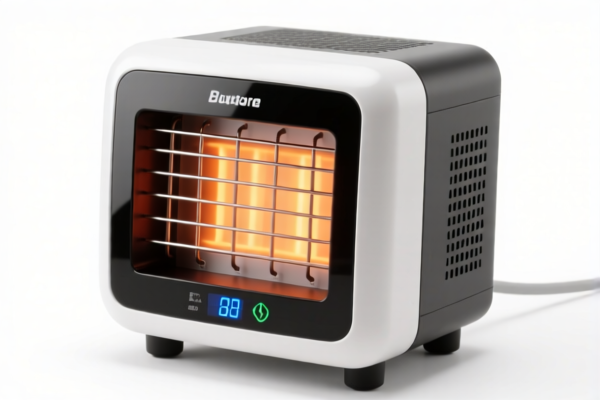
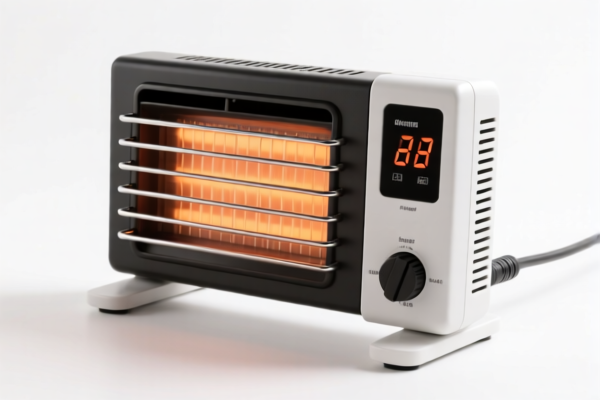
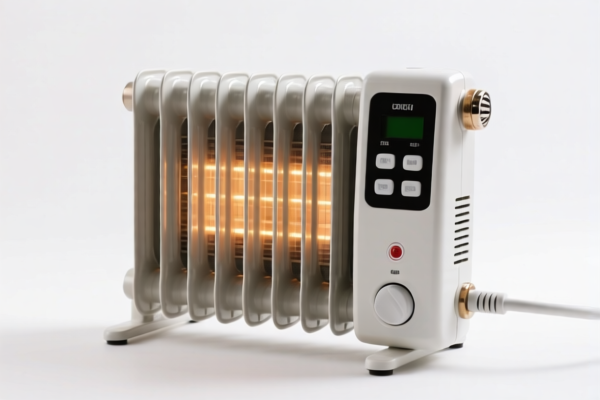
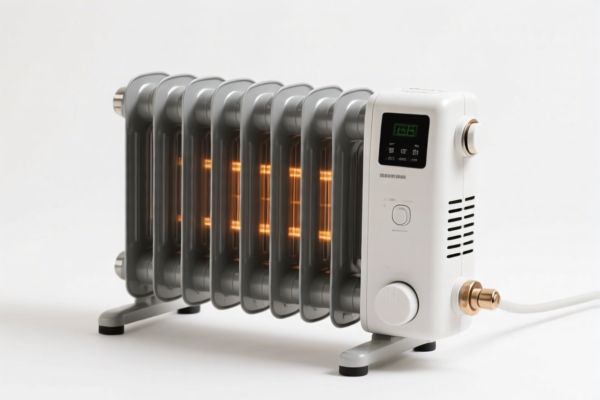
AI Analysis
🔥 Electric Heater Heating Element
🌐 HS Code Reference & Customs Clearance Guide | 2026 Latest Tariff Analysis | Professional Clearance Strategy
📌 I. Product Definition & Classification: Do You Really Understand the "Heating Element"?
The Electric Heater Heating Element is the core component responsible for converting electrical energy into thermal energy in various appliances (e.g., induction cooktops, electric ovens, water heaters, industrial heaters). In international trade, its classification depends heavily on specific appliance integration and functional logic.
⚠️ Key Distinction Points:
- If it is a standalone resistive component not specific to one machine, it may fall under 8516 (Electrical Heating Equipment).
- If it is considered a part of a machine (e.g., induction cooker parts), it may fall under 8503 (Parts of Electric Motors/Generators) or 8516.90 (Parts of Electrical Heating Appliances).
- Misclassification Risk: Declaring a specific appliance part under a general "resistor" code can lead to massive duty hikes due to Section 301 and IEEPA penalties.
📦 II. HS Code Classification Details (2026 Latest Tariff Authority Mapping)
Based on the provided data, here are the potential HS Codes and their logical justifications:
| HS Code | Product Description | Applicability Logic | Total Tax Rate (Est.) |
|---|---|---|---|
8516.90.80.50 |
Parts of Electrical Heating Appliances | Summarized as: Belongs to parts of electrical heating appliances, fitting the logic of electric heating resistors and their components. | 85.0% |
8503.00.95.20 |
Parts of Electric Machines/Equipment | Summarized as: Component of electrical heating equipment, extending the logic of electric motor parts. | 88.0% |
8503.00.95.80 |
Parts of Machines (General) | Summarized as: Machine part, fitting the usage definition of "other machine parts." | 38.0% |
8516.80.80.00 |
Electrical Heating Resistor Elements | Summarized as: Component of electrical heating apparatus, fitting the use of electrical heating resistors. | 35.0% |
8516.90.90.00 |
Other Parts of Electrical Heating Appliances | Summarized as: Constituent part of electrical heating appliances, fitting the description of "other parts." | 38.9% |
🔍 Critical Warning:
- The choice between 8516 (Heating Appliances) and 8503 (Motor/Generator Parts) is the single biggest factor determining your duty rate.
- 8516 codes generally attract higher specific surcharges in some contexts but may have lower base duties.
- 8503 codes are often viewed as "machine parts," which can be subject to different trade remedy duties.
- Do NOT assume "Heating Element" automatically means 8516. If the element is integral to an induction system (which is an electric motor/generator system), customs may argue for 8503.
💰 III. 2026 Latest Tariff Rate Breakdown (Including Additional Taxes, Policy Surcharges)
✅ Applicable Country: United States (US)
✅ Country of Origin: China (CN)
✅ Effective Date: Post-2025/2026 (Reflecting latest Section 301 & IEEPA adjustments)
🎯 1. 8516.90.80.50 —— Parts of Electrical Heating Appliances (High Risk)
| Item | Content |
|---|---|
| Base Duty | 0.0% (ad valorem) |
| Section 301 Surcharge | +25.0% |
| IEEPA Surcharge | +10.0% |
| Section 122 Surcharge (Steel/Aluminum/Copper) | +50.0% |
| Total Effective Rate | 85.0% |
| Tax Calculation | CIF Value × 85% |
| De Minimis Exemption | ❌ Not Applicable (Denied) |
| Legal Basis Path | Section 301: Footnote 9903.88.01 → IEEPA: 9903.01.24 → Section 122: Steel/Al/Cu Products → USITC: 8516.90.80.50 |
📌 Explanation:
- This code carries the highest total burden due to the叠加 (stacking) of Section 122 tariffs on steel/aluminum/copper products.
- If your heating element contains copper coils or aluminum casings, the 50% Section 122 tariff is likely applied.
- Total 85% is catastrophic for margins.
🎯 2. 8503.00.95.20 —— Parts of Electric Machines (Highest Risk)
| Item | Content |
|---|---|
| Base Duty | 3.0% |
| Section 301 Surcharge | +25.0% |
| IEEPA Surcharge | +10.0% |
| Section 122 Surcharge (Steel/Aluminum/Copper) | +50.0% |
| Total Effective Rate | 88.0% |
| Tax Calculation | CIF Value × 88% |
| De Minimis Exemption | ❌ Not Applicable |
| Legal Basis Path | Section 301 → IEEPA → Section 122 → USITC: 8503.00.95.20 |
📌 Warning:
- This is the worst-case scenario. Customs may view induction heating elements as parts of the inverter/motor system (8503).
- The 3% base duty is negligible compared to the 88% total burden.
🎯 3. 8503.00.95.80 —— Other Machine Parts (Moderate Risk)
| Item | Content |
|---|---|
| Base Duty | 3.0% |
| Section 301 Surcharge | +25.0% |
| IEEPA Surcharge | +10.0% |
| Section 122 Surcharge | Not Applicable (Generic part logic) |
| Total Effective Rate | 38.0% |
| Tax Calculation | CIF Value × 38% |
| De Minimis Exemption | ❌ Not Applicable |
| Legal Basis Path | Section 301 → IEEPA → USITC: 8503.00.95.80 |
📌 Strategy:
- If you can successfully argue that the element is a "general machine part" not specifically tied to steel/aluminum/copper components in a way that triggers Section 122, this rate is significantly lower.
- However, this is a high-risk argument that requires strong technical documentation.
🎯 4. 8516.80.80.00 —— Electrical Heating Resistors (Best Base Option)
| Item | Content |
|---|---|
| Base Duty | 0.0% |
| Section 301 Surcharge | +25.0% |
| IEEPA Surcharge | +10.0% |
| Section 122 Surcharge | Not Applicable |
| Total Effective Rate | 35.0% |
| Tax Calculation | CIF Value × 35% |
| De Minimis Exemption | ❌ Not Applicable |
| Legal Basis Path | Section 301 → IEEPA → USITC: 8516.80.80.00 |
📌 Optimization:
- This code has 0% base duty and avoids Section 122 if structured correctly.
- It is classified as an "Electrical Heating Resistor" rather than a generic part or appliance component.
- 35% is the most favorable rate among the options provided, assuming the element fits the "resistor" definition.
🎯 5. 8516.90.90.00 —— Other Parts of Electrical Heating Appliances (Low-Moderate Risk)
| Item | Content |
|---|---|
| Base Duty | 3.9% |
| Section 301 Surcharge | +25.0% |
| IEEPA Surcharge | +10.0% |
| Section 122 Surcharge | Not Applicable |
| Total Effective Rate | 38.9% |
| Tax Calculation | CIF Value × 38.9% |
| De Minimis Exemption | ❌ Not Applicable |
| Legal Basis Path | Section 301 → IEEPA → USITC: 8516.90.90.00 |
📌 Comparison:
- Slightly higher than8516.80.80.00due to the 3.9% base duty.
- Safe and standard for "parts of heating appliances" that don't fit specific resistor sub-headings.
🛠️ IV. Customs Clearance Practical Advice (Real-World Pitfall Avoidance Guide)
✅ 1. Required Documentation List (Missing Any = Delay/Seizure)
| Document | Must Provide | Description |
|---|---|---|
| ✅ Technical Specification Sheet | ✔️ | Material composition (copper/aluminum/resistance wire), voltage, wattage, dimensions. |
| ✅ Circuit Diagram/Structure Drawing | ✔️ | Critical to prove if it's a "resistor" (8516) or "machine part" (8503). |
| ✅ Product Photos (with Nameplate) | ✔️ | Clear view of model number, brand, input/output parameters. |
| ✅ Third-Party Test Report | ✔️ | UL, CE, RoHS, or FCC (if applicable) to prove safety compliance. |
| ✅ Commercial Invoice | ✔️ | Must clearly state "Heating Element for [Appliance]" or "Electrical Heating Resistor." Avoid vague terms like "heater part." |
| ✅ Certificate of Origin (CO) | ✔️ | To determine eligibility for any potential exemptions (though unlikely for CN origin under current tariffs). |
| ✅ Packing List | ✔️ | Clearly separate heating elements from other accessories to avoid "mixed shipment" scrutiny. |
✅ 2. Declaration Strategy (Key Mantra)
🔥 "Material Matters, Function Defines Code, Avoid Section 122 Traps!"
| Scenario | Correct Declaration | Wrong Approach |
|---|---|---|
| Pure Resistive Coil/Wire | 8516.80.80.00 |
Declaring as "Machine Part" → 38%+ or 85%+ |
| Element with Aluminum/Copper Case | High Risk of Section 122 → Try 8516.90.90.00 |
Declaring as 8516.90.80.50 → 85% Total |
| Induction Heater Element | Argue for 8503.00.95.80 (if no Section 122) or 8516.80.80.00 |
Declaring as 8503.00.95.20 → 88% Total |
| Complete Induction Cooktop | 8516.50.00.00 (Appliance) |
Declaring parts separately → Higher cumulative duty |
✅ 3. Special Case Handling
| Situation | Handling Advice |
|---|---|
| OEM Custom Elements | Provide client PO + design specs. Prove it's a "resistor" component, not a general machine part. |
| Elements with Metal Casings | Attempt to classify under 8516.80.80.00 (Resistor) to avoid Section 122. If rejected, 8516.90.90.00 is safer than 8516.90.80.50. |
| Mixed Containers | Ensure HS Codes are itemized correctly. Do not lump high-duty parts with low-duty ones. |
| Pre-Ruling Application | Strongly Recommended. File an Advance Ruling with CBP to lock in 8516.80.80.00 or 8516.90.90.00 and avoid Section 122 assessment. |
🌍 V. Global Market Clearance Comparison (2026 Latest)
| Country/Region | Recommended HS Code | Est. Tariff (CN Origin) | Certification | Notes |
|---|---|---|---|---|
| 🇺🇸 USA | 8516.80.80.00 |
35.0% | UL, FCC | Avoid 8516.90.80.50 (85%) and 8503.00.95.20 (88%). |
| 🇨🇳 China | 8516.80.80.00 |
~3-6% | CCC | No Section 301/IEEPA. Low duty. |
| 🇪🇺 EU | 8516.80.80.00 |
0% (if eligible) | CE, RoHS | No Section 122. Lower burden than US. |
| 🇦🇺 Australia | 8516.80.80.00 |
~5-10% | RCM, C-Tick | No Section 122. |
| 🇯🇵 Japan | 8516.80.80.00 |
0% | PSE | No Section 122. |
📌 Conclusion:
- USA is the most punitive market for heating elements due to Section 301, IEEPA, and Section 122.
- Strategic Goal: Classify under8516.80.80.00(35%) or8516.90.90.00(38.9%) to avoid the 85-88% disaster zones.
- Avoid8516.90.80.50and8503.00.95.20unless you have a strong legal defense against Section 122.
📌 VI. Common Errors & Pitfalls (Blood-Taught Lessons)
❌ Error 1: Declaring "Heating Element" as a generic "Part of Machine" (8503.00.95.20)
👉 Consequence: 88% duty. Bankrupting the shipment!
❌ Error 2: Ignoring Section 122 for copper/aluminum elements (8516.90.80.50)
👉 Consequence: 85% duty. Customs auditors will check material composition.
❌ Error 3: Vague Description: "Heater Part"
👉 Consequence: CBP will use the highest possible duty code (likely 85% or 88%) due to lack of specificity.
❌ Error 4: Assuming "Resistor" means lower duty without checking Section 122
👉 Consequence: Even 8516.80.80.00 might be challenged if it contains significant steel/aluminum/copper parts that trigger Section 122.
✅ Correct Approach:
"Electric Heating Element, Resistance Wire Type, No Metal Casing, For Domestic Water Heater, Model HE-123, UL Certified"
Target HS:8516.80.80.00
🎯 VII. Conclusion: Precision Classification, Cost Efficiency!
🎯 Remember the Mantra:
🔹 "Resistor First (8516.80), Avoid Section 122 (50%), Machine Parts are Traps (88%)."
🔹 "HS Code Determines Survival, 50% Difference is Life or Death in Trade."
📌 Pro Tip:
If your heating elements are sourced from Vietnam, Mexico, Thailand, or Malaysia, you may qualify for IEEPA Exemptions or lower Section 301 rates.
Strongly Recommend: Apply for an Advance Ruling (CBP Form 5535) before shipping to lock in the 35% rate under 8516.80.80.00.
📣 Immediate Action:
📞 Contact a Professional Customs Broker + Provide Material Specs + Apply for HS Code Advance Ruling
🚀 Let your heating elements clear customs smoothly, protect your margins, and boost profits!
✨ Professional Clearance Starts with Precise Classification!
💼 Every Dollar of Duty Saved is Pure Profit!
Customer Reviews
About HS Code Classification
The Harmonized System (HS) is an internationally standardized nomenclature developed by the World Customs Organization (WCO) to classify traded products. Over 200 countries use the HS system as the basis for customs tariffs, trade statistics, and import/export regulations.
Each HS code follows a hierarchical structure:
- Chapter (2 digits) — Broad category of goods (e.g., Chapter 84: Machinery and Mechanical Appliances)
- Heading (4 digits) — More specific grouping within the chapter
- Subheading (6 digits) — Internationally standardized breakdown, used by all WCO member countries
- National subdivisions (8-10 digits) — Country-specific extensions for further classification, such as US HTSUS 10-digit codes
Correct HS code classification is essential for smooth customs clearance, accurate duty payment, and compliance with trade regulations. Misclassification can lead to customs delays, overpayment of duties, or penalties.
When importing from CN to US, the applicable tariff rates may include:
- Most-Favored-Nation (MFN) rate — The standard duty rate applied to WTO members
- General rate — Applied to countries without trade agreements
- Trade remedy duties — Additional tariffs such as Section 301 (anti-dumping), Section 232 (national security), or countervailing duties
The information provided on this page is for reference purposes only. For official classification, please consult with your local customs authority or a licensed customs broker.