Electric Heating Blanket
CN → US| HS Code | Tariff Rate | Origin | Destination | Doc |
|---|---|---|---|---|
| 8516290090 | 38.7% | CN | US | Official Doc |
| 6301100000 | 21.4% | CN | US | Official Doc |
| 8516290060 | 38.7% | CN | US | Official Doc |
Product Images
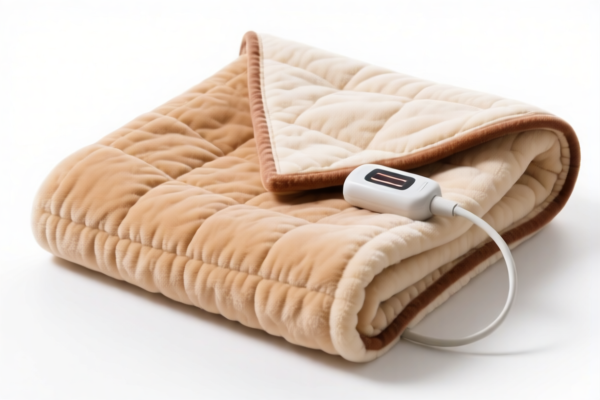
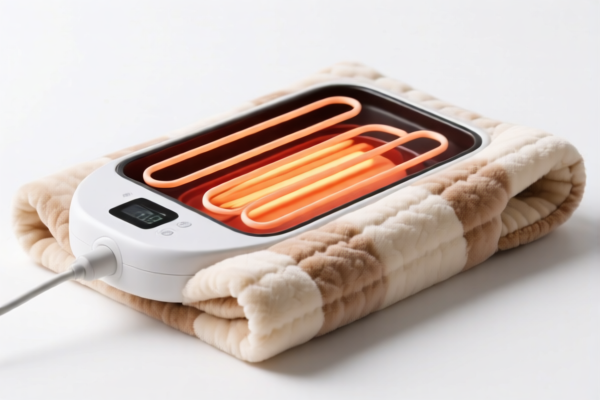
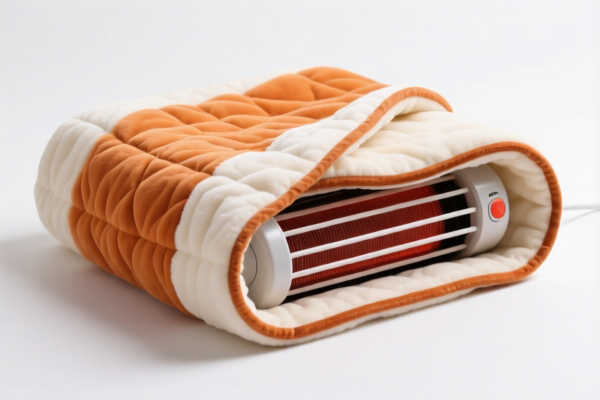
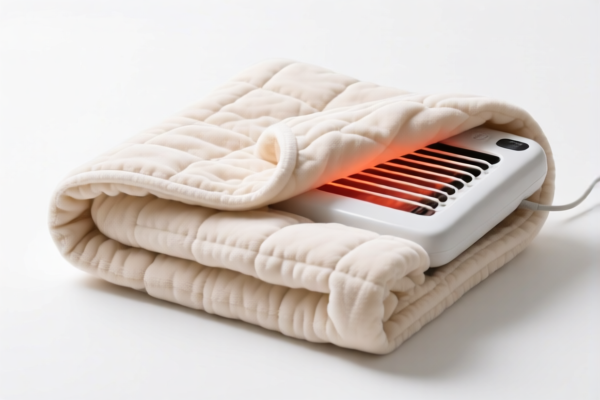
AI Analysis
🛌 Electric Heating Blankets: HS Code Classification & US Customs Clearance Guide (2026)
🌐 HS Code Reference & Clearance Guide | 2026 Latest Tariff Analysis | Professional Strategy for Space Heaters
📌 Part I: Product Definition & Classification: Do You Really Understand "Heating Blankets"?
Electric heating blankets are classified differently based on their primary function, structure, and portability. In international trade, they fall into two main categories:
- Electric Space Heaters (General): Products that primarily heat the ambient air or provide radiant heat, often categorized under Chapter 85 (Electrical machinery and equipment).
- Textile Heating Products: Products where the heating element is embedded in fabric, primarily classified under Chapter 63 (Other made-up textile articles).
⚠️ Key Distinction Point:
- If the product is viewed as a portable electrical appliance that heats the surrounding space (even if flexible) → HS Code 8516
- If the product is viewed primarily as a textile article (bedding) with heating functionality → HS Code 6301
📦 Part II: HS Code Classification Details (2026 Latest Tariff Authority Comparison)
Based on the provided data, here are the three possible HS Code classifications for Electric Heating Blankets and their corresponding tax implications:
| HS Code | Product Description | Logic/Justification | Total Tax Rate (CN Origin to US) |
|---|---|---|---|
8516.29.00.90 |
Other Electric Space Heaters | Heating blankets are considered "electric space heating appliances." They fit the functional attribute of other space heaters not specified elsewhere. | 38.7% |
6301.10.00.00 |
Electric Blankets | The product's use fully complies with the definition of an "electric blanket" (a textile article with heating elements). | 21.4% |
8516.29.00.60 |
Other Electric Heaters (Portable) | Heating blankets are in the category of electric heating appliances, fitting the usage logic of portable space heaters. | 38.7% |
🔍 Critical Insight:
-6301.10.00.00offers the lowest tax burden (21.4%). It relies on the argument that the item is fundamentally a "blanket" (textile) first, and an electric device second. -8516Codes (90and60) carry a higher tax burden (38.7%). They classify the item strictly as an electrical appliance/space heater. - Risk: Misclassification can lead to significant duty differences (~17.3%) and potential customs penalties.
💰 Part III: 2026 Latest Tariff Rate Breakdown (Including Surtaxes & Policy Add-ons)
✅ Applicable Country: United States (US)
✅ Origin: China (CN)
✅ Effective Date: Post-November 2025 (Current Policy)
🎯 1. 8516.29.00.90 & 8516.29.00.60 — Electric Space Heaters
| Item | Detail |
|---|---|
| Base Duty | 3.7% |
| Section 301 Surtax | +25.0% |
| Section 122 Duty | +10.0% |
| Total Effective Rate | 38.7% |
| Tax Calculation | CIF Value × 38.7% |
| De Minimis Eligibility | ❌ Not Eligible (High risk of seizure/rejection under Section 321) |
| Legal Basis Path | USITC:8516.29.00.90 → Section 301: Footnote 9903.88.01 → Section 122: IEEPA Authority |
📌 Explanation:
- The 25% Section 301 tax applies to most Chinese-origin electrical heating appliances. - The 10% Section 122 tax (under IEEPA) is added on top of the base and 301 duties. - These codes are treated as electrical appliances, attracting the highest tier of punitive tariffs.
🎯 2. 6301.10.00.00 — Electric Blankets (Textile Category)
| Item | Detail |
|---|---|
| Base Duty | 11.4% |
| Section 301 Surtax | 0.0% |
| Section 122 Duty | +10.0% |
| Total Effective Rate | 21.4% |
| Tax Calculation | CIF Value × 21.4% |
| De Minimis Eligibility | ❌ Not Eligible (Due to Section 122 and general textile restrictions) |
| Legal Basis Path | USITC:6301.10.00.00 → Section 122: IEEPA Authority |
📌 Note:
- No Section 301 Tax: This is the key advantage. Textile articles (Chapter 63) are generally exempt from the 25% Section 301 tariff that affects Chapter 85 electrical goods. - Section 122 Still Applies: The 10% surtax under Section 122 still applies, but the base rate is lower (11.4% vs 3.7%) and there is no 25% penalty. - Result: This is the most cost-effective classification for importers, saving 17.3% in duties compared to the8516codes.
🛠️ Part IV: Customs Clearance Practical Advice (Pitfall Avoidance Guide)
✅ 1. Required Documentation Checklist (Non-Negotiable)
| Document | Mandatory | Purpose |
|---|---|---|
| ✅ Product Specification Sheet | ✔️ | Must clearly state: Voltage, Wattage, Material Composition (e.g., "Polyester with embedded Ni-Cr heating wires"), and Safety Certifications. |
| ✅ Technical Diagram | ✔️ | Shows the layout of heating elements to prove it is a "blanket" structure, not a standalone heater. |
| ✅ Product Photos | ✔️ | Must show the entire blanket, control box, and tags. Avoid images that look like "heating pads" or "space heaters." |
| ✅ Third-Party Test Report | ✔️ | UL, ETL, or CETL certification is mandatory for US market compliance. Customs may request proof of electrical safety. |
| ✅ Commercial Invoice | ✔️ | Clearly describe as "Electric Blanket, Textile Type" or "Heated Throw, Model XYZ." Avoid vague terms like "Heating Device." |
| ✅ Certificate of Origin (CO) | ✔️ | Required to verify Chinese origin and apply the correct Section 122/301 status. |
✅ 2. Declaration Strategy (Key Mantras)
🔥 "Classify as Textile, Not Appliance; Save 17% Tax!"
| Scenario | Recommended HS Code | Risk if Misclassified |
|---|---|---|
| Product is a blanket with heating wires | 6301.10.00.00 |
If declared as 8516, you pay 38.7% instead of 21.4%. |
| Product is a rigid heating pad/mattress | 8516.29.00.90 |
If declared as 6301, Customs may reject it because it lacks "textile" characteristics. |
| Product is a portable ceramic heater (not blanket) | 8516.29.00.60 |
Do not use 6301. It is purely electrical. |
💡 Pro Tip:
Emphasize the textile nature of the product in the description. Use terms like:
"Heated Throw Blanket, 100% Polyester, with detachable controller, UL Listed"
This supports the6301.10.00.00classification.
✅ 3. Special Circumstances Handling
| Situation | Handling Advice |
|---|---|
| OEM/Custom Brands | Provide the manufacturer's authorization letter. Ensure the product label includes the US importer's name and address. |
| Battery-Powered vs. Plug-in | Plug-in items are clearly 6301 or 8516. Battery-powered heating garments may fall under different headings (e.g., 6117 or 8512), so clarify power source. |
| Commercial vs. Household | 6301 is generally for household use. If sold for industrial heating, 8516 may be more appropriate. |
| Section 122 Compliance | All Chinese-origin electric/textile heating products are subject to the 10% Section 122 tariff. Ensure your broker applies this correctly to avoid underpayment penalties. |
🌍 Part V: Global Market Comparison (2026 Update)
| Market | Recommended HS Code | Tariff Rate (CN Origin) | Key Certification | Notes |
|---|---|---|---|---|
| 🇺🇸 USA | 6301.10.00.00 |
21.4% | UL/ETL + RoHS | Avoid 8516 to save 17.3%. Section 122 applies. |
| 🇨🇳 China | 6301.10.00.00 |
11.4% | CCC | No additional surtaxes for domestic sale. |
| 🇪🇺 EU | 6301.10.00.00 |
~10-12% | CE + RoHS | Lower tariffs, but strict safety standards for electrical textiles. |
| 🇬🇧 UK | 6301.10.00.00 |
~10-12% | UKCA | Post-Brexit, check for specific textile regulations. |
| 🇯🇵 Japan | 6301.10.00.00 |
~10-12% | PSE | PSE certification is mandatory for heating elements. |
📌 Conclusion:
- The US market is the most complex due to Section 301 and Section 122 tariffs. - Classifying as6301is the optimal strategy for electric blankets in the US, reducing the tax burden significantly. - Always prioritize electrical safety certifications (UL/ETL) for US customs clearance.
📌 Part VI: Common Mistakes & Pitfall Guide (Blood Lessons)
❌ Mistake 1: Classifying Electric Blankets under 8516 without justification.
👉 Consequence: Paying 38.7% tax instead of 21.4%. Loss of profit margin.
❌ Mistake 2: Omitting the UL/ETL certification number on the invoice.
👉 Consequence: Customs detention, refusal of entry, or forced return. Electrical products require proof of safety.
❌ Mistake 3: Describing the product as "Heating Pad" or "Space Heater."
👉 Consequence: Customs will assign 8516 automatically based on the name. Use "Blanket" or "Throw."
❌ Mistake 4: Ignoring Section 122 (10% surtax).
👉 Consequence: Underpayment of duties, leading to penalties and interest. It applies to both 6301 and 8516.
✅ Correct Approach:
"Electric Blanket, Polyester, 60x80 inches, 120V, UL Listed, Model ABC, Origin China"
🎯 Part VII: Conclusion: Professional Classification, Cost Savings, Smooth Clearance!
🎯 Remember the Key Rule:
🔹 "Textile First, Electrical Second → HS 6301 → 21.4% Tax"
🔹 "Appliance First → HS 8516 → 38.7% Tax"
🔹 "Always Include UL/ETL & Declare Section 122!"
📌 Tips:
- If your product is battery-powered, re-evaluate classification (may be 6117 or 8512).
- For large commercial heating mats, 8516 may be more appropriate if they are not "blankets" in the traditional sense.
- Always apply for a Pre-Ruling from CBP if the product is ambiguous.
📣 Immediate Action:
📞 Contact your customs broker + Provide UL Certificate + Use "Electric Blanket" in Description
🚀 Reduce Tax Cost by 17.3%, Ensure Smooth US Entry!
✨ Professional Clearance Starts with Accurate Classification!
💼 Every Percent Saved is Profit Earned!
Customer Reviews
About HS Code Classification
The Harmonized System (HS) is an internationally standardized nomenclature developed by the World Customs Organization (WCO) to classify traded products. Over 200 countries use the HS system as the basis for customs tariffs, trade statistics, and import/export regulations.
Each HS code follows a hierarchical structure:
- Chapter (2 digits) — Broad category of goods (e.g., Chapter 84: Machinery and Mechanical Appliances)
- Heading (4 digits) — More specific grouping within the chapter
- Subheading (6 digits) — Internationally standardized breakdown, used by all WCO member countries
- National subdivisions (8-10 digits) — Country-specific extensions for further classification, such as US HTSUS 10-digit codes
Correct HS code classification is essential for smooth customs clearance, accurate duty payment, and compliance with trade regulations. Misclassification can lead to customs delays, overpayment of duties, or penalties.
When importing from CN to US, the applicable tariff rates may include:
- Most-Favored-Nation (MFN) rate — The standard duty rate applied to WTO members
- General rate — Applied to countries without trade agreements
- Trade remedy duties — Additional tariffs such as Section 301 (anti-dumping), Section 232 (national security), or countervailing duties
The information provided on this page is for reference purposes only. For official classification, please consult with your local customs authority or a licensed customs broker.