Electric Knife Sharpener
CN → US| HS Code | Tariff Rate | Origin | Destination | Doc |
|---|---|---|---|---|
| 8424899000 | 36.8% | CN | US | Official Doc |
| 8509805040 | 14.2% | CN | US | Official Doc |
| 8467290010 | 17.5% | CN | US | Official Doc |
| 8467290035 | 17.5% | CN | US | Official Doc |
| 8424209000 | 35.0% | CN | US | Official Doc |
Product Images
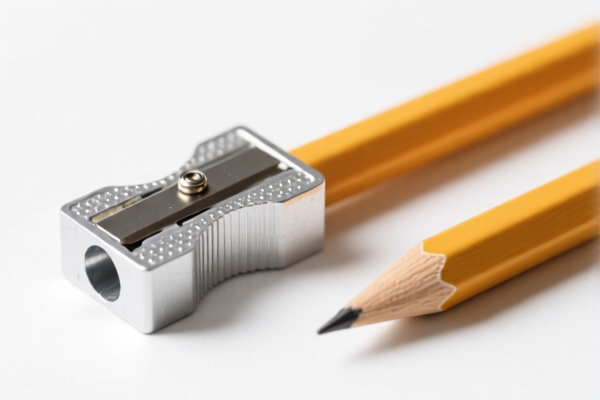
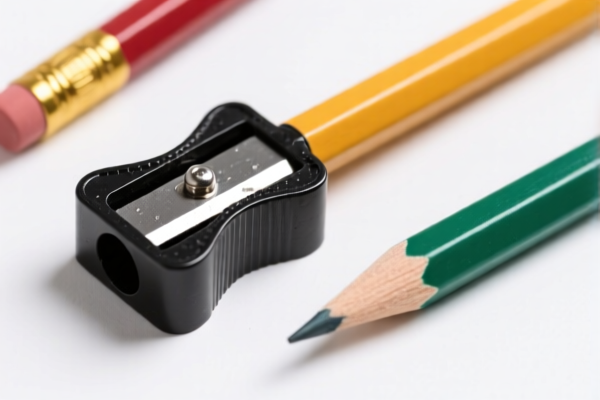
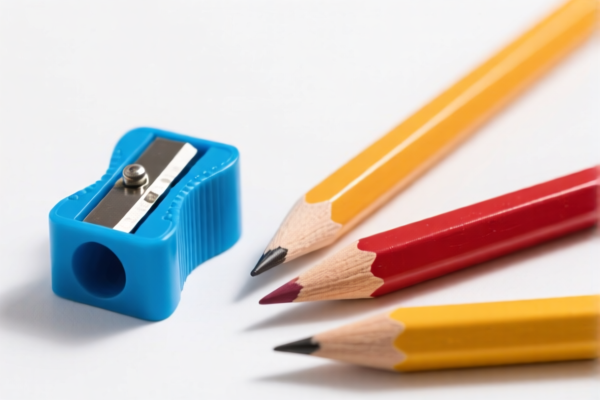

AI Analysis
🔪 Electric Knife Sharpener | Precision Edge Maintenance Tool
🌐 HS Code Reference & Customs Clearance Guide | 2026 Latest Tariff Analysis | Professional Clearance Strategy 📌 I. Product Definition & Classification: Do You Really Understand "Electric Knife Sharpener"?
The Electric Knife Sharpener is a household or professional appliance designed to restore the sharpness of kitchen blades using rotating abrasive wheels or diamond-coated discs. In international trade, it is primarily classified under two distinct categories depending on its motor configuration and intended function:
1. Mechanical Spraying/Sprinkling/Dispensing Machinery (Chapter 84): Many sharpeners are classified here if they utilize mechanical means to process objects (blades) via abrasive action, falling under "similar machines" for spraying or dispensing liquids/powders, or general mechanical processing tools. This is a common catch-all for mechanical appliances.
2. Electrical Home Appliances (Chapter 85): If the device is explicitly defined as a household appliance with a self-contained electric motor, it may fall under electrical machines and apparatus having individual functions, specifically "other household appliances."
⚠️ Key Distinction Point: - If classified as a mechanical processing tool (often due to broad interpretation of "mechanical treatment of objects") → Chapter 84 (Higher tariffs, complex structure). - If classified as a standard electrical home appliance (consumer goods category) → Chapter 85 (Lower tariffs, simpler structure). - Note: The provided data suggests a split in classification logic, leading to significantly different tax burdens.
📦 II. HS Code Classification Details (2026 Latest Tariff Authority对照)
Based on the provided data, here are the specific HS Codes, summaries, and tax details.
| HS Code | Summary / Logic | Total Tax | Tax Breakdown |
|---|---|---|---|
8424.20.90.00 |
Mechanical/General Category: Fits the "catch-all" principle for similar devices under machinery for spraying/dispensing liquids or powders. | 35.0% | Base: 0.0% Add-on: 25.0% Section 122: 10% |
8509.80.50.95 |
Electrical Home Appliance: Belongs to household appliances with self-contained electric motors, not explicitly excluded. Fits general utility description. | 14.2% | Base: 4.2% Add-on: 0.0% Section 122: 10% |
8424.89.90.00 |
Mechanical Processing Tool: Fits the scope of machines for treating objects by mechanical means (spraying/spraying liquids/powders or similar). | 36.8% | Base: 1.8% Add-on: 25.0% Section 122: 10% |
8509.80.50.40 |
Electrical Household Appliance: Falls under electrical household appliances. Form and use fit the "other appliances" category, similar to electric can openers. | 14.2% | Base: 4.2% Add-on: 0.0% Section 122: 10% |
8467.29.00.10 |
Power Tool (Grinding/Polishing): Hand-held tools with self-contained motors for grinding, polishing, etc. Fits the classification logic for abrasive tools. | 17.5% | Base: 0.0% Add-on: 7.5% Section 122: 10% |
🔍 Critical Insight: - Classification Strategy Matters: Choosing between Chapter 84 (Mechanical) and Chapter 85 (Electrical) changes the total tax from ~14% to ~36%. - Section 122 Impact: All codes in the data carry a 10% Section 122 tariff (likely a specific trade remedy or additional duty). - Add-on Variance: Chapter 84 codes often carry a 25% add-on tariff, while Chapter 85 codes have 0% add-on (except
8467which has 7.5%).
💰 III. 2026 Latest Tariff Rate Detailed Explanation (Including Additional Taxes)
✅ Applicable Country: United States (US)
✅ Origin: China (CN)
✅ Effective Date: 2025/2026 (Post-Section 301 & New Trade Policies)
🎯 1. 8424.20.90.00 & 8424.89.90.00 —— Mechanical/General Machinery Category
| Item | Content |
|---|---|
| Base Tariff | 0.0% (8424.20) / 1.8% (8424.89) |
| USITC Add-on Tariff | +25% (Section 301 / Specific Trade Remedy) |
| Section 122 Tariff | +10% (Additional duty on specific imports) |
| Total Tariff | 35.0% (8424.20) / 36.8% (8424.89) |
| Tax Calculation | CIF Value × Total Rate |
| De Minimis Exemption | ❌ Not Applicable (High-value machinery/tools often excluded or threshold limits are strict) |
📌 Explanation: - These codes fall under Chapter 84, which is often targeted by high additional tariffs (25%) due to trade tensions. - The "Section 122" adds a flat 10% on top. - Result: A nearly 2.5x increase in cost compared to electrical appliance classification.
🎯 2. 8509.80.50.95 & 8509.80.50.40 —— Electrical Home Appliances
| Item | Content |
|---|---|
| Base Tariff | 4.2% |
| USITC Add-on Tariff | 0% (No Section 301 add-on for this specific subheading) |
| Section 122 Tariff | +10% |
| Total Tariff | 14.2% |
| Tax Calculation | CIF Value × 14.2% |
| De Minimis Exemption | ❌ Not Applicable (Check latest de minimis rules for consumer goods) |
📌 Explanation: - These codes fall under Chapter 85 (Electrical Machinery). - Crucially, the Add-on Tariff is 0%, making this significantly cheaper than Chapter 84. - Only the base duty (4.2%) and Section 122 (10%) apply. - Result: Massive savings! 14.2% vs 35%+.
🎯 3. 8467.29.00.10 —— Hand-Held Power Tools
| Item | Content |
|---|---|
| Base Tariff | 0.0% |
| USITC Add-on Tariff | +7.5% (Reduced rate compared to general machinery) |
| Section 122 Tariff | +10% |
| Total Tariff | 17.5% |
| Tax Calculation | CIF Value × 17.5% |
📌 Explanation: - Falls under Power Tools (Chapter 84). - While still in Chapter 84, the add-on tariff is lower (7.5% vs 25%). - A middle-ground option if the product is clearly a hand-held tool rather than a general appliance.
🛠️ IV. Customs Clearance Practical Advice (Combat Pitfall Guide)
✅ 1. Essential Documentation Checklist
| Document | Required? | Notes |
|---|---|---|
| ✅ Product Specification Sheet | ✔️ | Must detail voltage, wattage, motor type, and grinding mechanism. |
| ✅ Technical Diagram | ✔️ | Show internal structure to prove it's a "home appliance" vs. "industrial tool." |
| ✅ High-Res Photos | ✔️ | Show brand, model, serial number, and power cord/plug type. |
| ✅ Compliance Certs | ✔️ | UL, ETL, or CSA (Electrical Safety), FCC (EMC). Mandatory for Chapter 85. |
| ✅ Commercial Invoice | ✔️ | Clearly state "Electric Knife Sharpener, Household Use." |
| ✅ Packing List | ✔️ | Include accessories (e.g., screwdrivers, guide blocks). |
✅ 2. Declaration Strategy (Key Mantra)
🔥 "Appliance or Tool? Name it right, save your right!"
| Scenario | Recommended HS Code | Tax Rate | Why? |
|---|---|---|---|
| Home Use, Plug-in, Consumer Brand | 8509.80.50.40 or 8509.80.50.95 |
14.2% | Best rate. Classify as "Household Appliance." Avoid Chapter 84 if possible. |
| Professional/Industrial, Heavy Duty | 8467.29.00.10 |
17.5% | If it's a powerful, professional-grade tool, use Power Tool code. |
| Ambiguous Mechanical Device | 8424.20.90.00 |
35.0% | Avoid if possible. Only use if no electrical classification fits. High tax risk. |
| Non-Electric/Manual Sharpener | (Not in data) | Varies | Not covered in this dataset. Ensure motor is present for these codes. |
📌 Critical Warning: - Do NOT declare an electric appliance as "Mechanical Machinery" (
8424) unless you have no other choice. The 20% tax difference (35% vs 14.2%) is significant. - Ensure your invoice description matches the HS Code logic. If you claim8509, ensure the product is described as a "Household Appliance" and not "Industrial Grinding Equipment."
✅ 3. Special Handling Cases
| Situation | Advice |
|---|---|
| OEM/Private Label | Ensure the product manual and packaging reflect "Household Use" to support 8509 classification. |
| Kit with Accessories | If sold with a knife block or extra stones, declare as a single unit under the main appliance code. |
| Dual-Use (Home/Pro) | If it can be used in both, choose the lower tax rate (8509) if it meets household appliance criteria (safety certs, consumer design). |
🌍 V. Global Market Comparison (2026)
| Market | Recommended HS Code | Est. Tariff (China Origin) | Key Certifications | Notes |
|---|---|---|---|---|
| 🇺🇸 USA | 8509.80.50.40/95 |
14.2% | UL/ETL, FCC | Avoid 8424 (35%+). 8467 is 17.5%. |
| 🇪🇺 EU | 8509.80.00 |
0% | CE, RoHS | No Section 122. VAT applies separately. |
| 🇨🇳 China | 8509.80.00 |
4.2% | CCC | No additional trade tariffs. |
| 🇬🇧 UK | 8509.80.00 |
0% | UKCA | Post-Brexit rules vary; check latest. |
📌 Conclusion: - The US market is the most critical due to the high variance in tariffs based on classification. - Target
8509.80.50for maximum savings (14.2%). - Avoid8424unless the product is strictly non-electric or mechanically distinct in a way that excludes it from Chapter 85.
📌 VI. Common Mistakes & Pitfalls (Lessons Learned)
❌ Mistake 1: Declaring an electric sharpener as "Mechanical Tool" (8424)
👉 Consequence: Pay 35% tax instead of 14.2%. Overpayment of ~21%!
❌ Mistake 2: Missing UL/ETL Certification for US Import 👉 Consequence: Customs seizure or refusal of entry. Electrical appliances require safety proof.
❌ Mistake 3: Vague Invoice Description ("Sharpener") 👉 Consequence: Customs may assign a default higher rate or request extensive documentation for re-classification.
✅ Correct Practice:
"Electric Knife Sharpener, Household Use, 110V, Model XYZ, UL Certified"
🎯 VII. Conclusion: Precision in Classification, Profit in Clearance
🎯 Remember the Mantra:
🔹 "Appliance = 14.2%, Mechanical = 35%, Tool = 17.5%. Pick wisely!" 🔹 "Classify as Household Appliance (
8509) to save 20% in tariffs."
📌 Pro Tip:
If your electric knife sharpener is made in Vietnam, Mexico, or Thailand, check for preferential trade agreements (USMCA, etc.) which may reduce or eliminate the Section 122 or base tariffs.
Always apply for a Pre-Ruling (Advance Ruling) from US Customs (CBP) to lock in the 8509 classification and avoid post-clearance audits.
📣 Action Required:
📞 Consult a licensed customs broker. 📝 Prepare UL/ETL reports and technical specs. 🚀 Optimize your supply chain with accurate HS Codes!
✨ Professional Clearance, Start with Accurate Classification! 💼 Every percentage point saved is pure profit!
Customer Reviews
About HS Code Classification
The Harmonized System (HS) is an internationally standardized nomenclature developed by the World Customs Organization (WCO) to classify traded products. Over 200 countries use the HS system as the basis for customs tariffs, trade statistics, and import/export regulations.
Each HS code follows a hierarchical structure:
- Chapter (2 digits) — Broad category of goods (e.g., Chapter 84: Machinery and Mechanical Appliances)
- Heading (4 digits) — More specific grouping within the chapter
- Subheading (6 digits) — Internationally standardized breakdown, used by all WCO member countries
- National subdivisions (8-10 digits) — Country-specific extensions for further classification, such as US HTSUS 10-digit codes
Correct HS code classification is essential for smooth customs clearance, accurate duty payment, and compliance with trade regulations. Misclassification can lead to customs delays, overpayment of duties, or penalties.
When importing from CN to US, the applicable tariff rates may include:
- Most-Favored-Nation (MFN) rate — The standard duty rate applied to WTO members
- General rate — Applied to countries without trade agreements
- Trade remedy duties — Additional tariffs such as Section 301 (anti-dumping), Section 232 (national security), or countervailing duties
The information provided on this page is for reference purposes only. For official classification, please consult with your local customs authority or a licensed customs broker.