Electric Lock
CN → US| HS Code | Tariff Rate | Origin | Destination | Doc |
|---|---|---|---|---|
| 8301406030 | 23.2% | CN | US | Official Doc |
| 8301106080 | 23.6% | CN | US | Official Doc |
| 7326190080 | 87.9% | CN | US | Official Doc |
| 7326908688 | 87.9% | CN | US | Official Doc |
| 8301106080 | 23.6% | CN | US | Official Doc |
Product Images
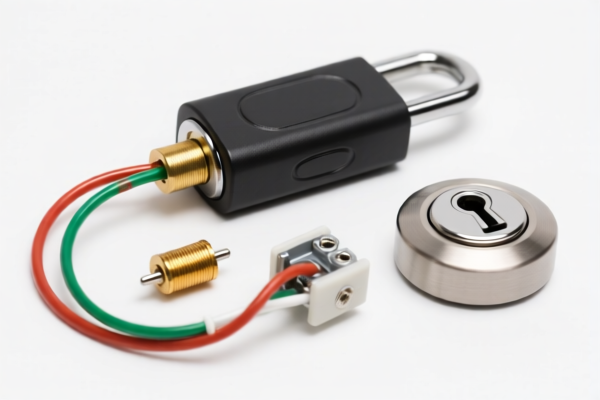
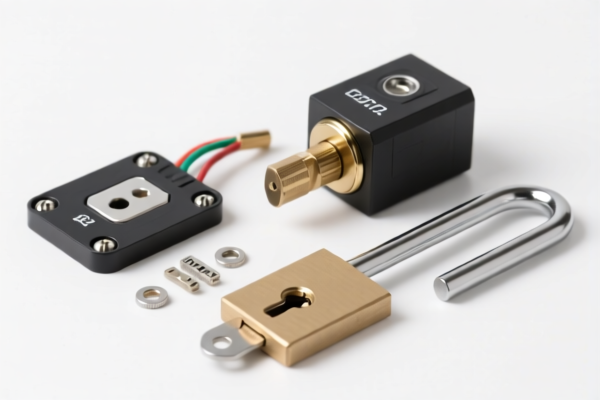
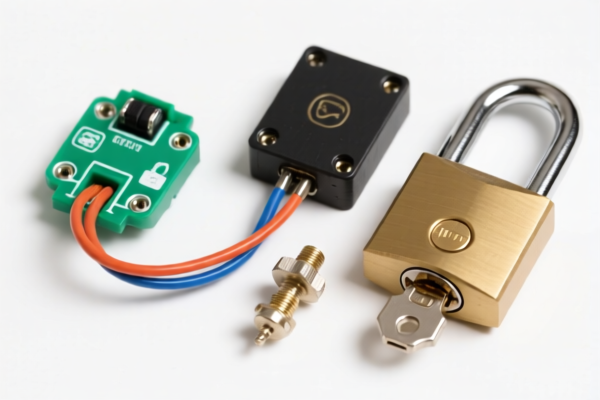
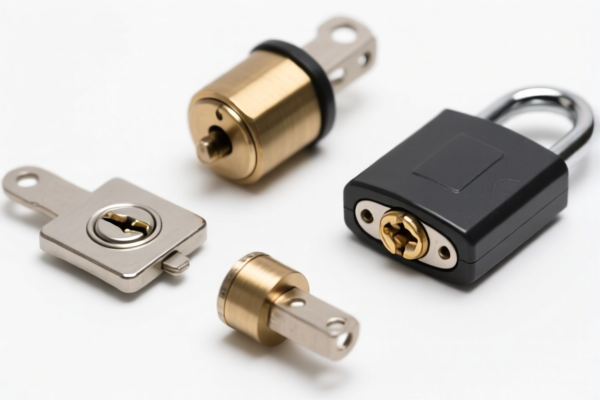
AI Analysis
🔐 Electric Locks (Electronic Locks & Security Latches)
🌐 HS Code Reference & Customs Clearance Guide | 2024/2025 Latest Tariff Analysis | Professional Clearance Strategy
📌 I. Product Definition & Classification: Do You Really Understand "Electric Locks"?
Electric locks are automated locking mechanisms used in security systems, access control, and smart home/office solutions. In international trade, classification depends heavily on material composition, functionality (whether it is a standalone lock or part of a system), and operating mechanism (electric vs. mechanical).
Based on the provided data, these products fall into two main categories: 1. Integrated Electronic Locks (HS 8301): Finished goods specifically designed as electric/solenoid locks. 2. Metal Lock Components/General Hardware (HS 7326): Locks that may lack specific electronic integration classification or are classified as general steel/iron articles if not strictly defined as "locks" in Chapter 83, or if classified under "other articles of iron/steel."
⚠️ Key Distinction Point:
- If the product is a complete electric locking assembly (with solenoid/actuator + housing), it typically falls under HS 8301.
- If the product is a metal lock body without clear electronic classification, or classified as "other steel articles," it may fall under HS 7326.
- Warning: Misclassification can lead to drastically different tariff rates (e.g., 23.2% vs. 87.9%).
📦 II. HS Code Classification Details (Latest Tariff Schedule)
| HS Code | Product Description | Application Scenario | Material/Function |
|---|---|---|---|
8301.40.60.30 |
Electric Locks, specifically classified under electric locks | Solenoid locks, magnetic locks for doors/gates | Base: Base Metal |
8301.10.60.80 |
Electric or Security Locks (Hanging/Padlock type inferred from metal material) | Padlocks with electronic elements, security latches | Base: Base Metal |
7326.19.00.80 |
Other articles of iron or steel (Security Locks inferred as steel products) | Steel-based locks not clearly classified under 8301, or industrial lock components | Base: Steel/Iron |
7326.90.86.88 |
Other articles of iron or steel (General category) | General metal lock bodies, industrial hardware | Base: Iron/Steel |
🔍 Important Note:
- HS 8301 is the primary category for "Locks of base metal." If the lock is electrically operated, it belongs here.
- HS 7326 applies if the product is deemed a "general article of iron/steel" rather than a specific lock, or if customs authorities classify it under general metal goods due to ambiguity. This often happens with heavy-duty industrial latches or components.
- The total tax rate difference between these categories is significant (23.2% vs. 87.9%), making accurate classification critical.
💰 III. 2024/2025 Latest Tariff Rate Breakdown (Including Surcharges & Policy Additions)
✅ Applicable Country: United States (US)
✅ Origin: China (CN)
✅ Effective Date: 2024-2025 (Subject to current trade policies)
🎯 1. 8301.40.60.30 — Electric Locks (Base Metal)
| Item | Content |
|---|---|
| Base Tariff | 5.7% (Ad valorem) |
| Section 301 Surcharge | +7.5% (Additional duty under US Trade Law Section 301) |
| Section 122 Tariff | +10% (Specific tariff for certain base metal articles) |
| Total Tax Rate | 23.2% |
| Tax Calculation | CIF Value × 23.2% |
| De Minimis Exemption | ❌ Not Applicable (Deny De Minimis) |
| Legal Basis Path | USITC:8301.40.60.30 → Section 301:7.5% → Section 122:10% |
📌 Explanation:
- This is the most favorable classification for electric locks.
- The total duty of 23.2% includes the base tariff, the Section 301 additional duty, and the Section 122 tariff.
- No 50% steel/aluminum surcharge applies here because it is classified under Chapter 83 (General Items of Base Metal), not Chapter 73 (Articles of Iron or Steel).
🎯 2. 8301.10.60.80 — Security Locks / Electric Padlocks
| Item | Content |
|---|---|
| Base Tariff | 6.1% (Ad valorem) |
| Section 301 Surcharge | +7.5% (Additional duty under US Trade Law Section 301) |
| Section 122 Tariff | +10% (Specific tariff for certain base metal articles) |
| Total Tax Rate | 23.6% |
| Tax Calculation | CIF Value × 23.6% |
| De Minimis Exemption | ❌ Not Applicable |
| Legal Basis Path | USITC:8301.10.60.80 → Section 301:7.5% → Section 122:10% |
📌 Note:
- Slightly higher base tariff (6.1%) compared to8301.40.60.30(5.7%), but the surcharges are the same.
- Suitable for padlocks or hanging locks with electric components.
- Total 23.6% is still significantly lower than the 7326 classification.
🎯 3. 7326.19.00.80 — Other Articles of Iron or Steel (Security Locks)
| Item | Content |
|---|---|
| Base Tariff | 2.9% (Ad valorem) |
| Section 301 Surcharge | +25.0% (Higher additional duty for steel articles) |
| Section 122 Tariff | +10% (Specific tariff) |
| Steel/Aluminum/Copper Surcharge | +50% (Special surcharge for steel products under specific trade measures) |
| Total Tax Rate | 87.9% |
| Tax Calculation | CIF Value × 87.9% |
| De Minimis Exemption | ❌ Not Applicable |
| Legal Basis Path | USITC:7326.19.00.80 → Section 301:25% → Section 122:10% → Steel Surcharge:50% |
📌 Critical Warning:
- This classification incurs a massive 87.9% total tariff.
- The 50% steel surcharge is applied because the product is classified under Chapter 73 (Iron or Steel Articles).
- This rate is prohibitive for most commercial shipments.
- Risk: If customs reclassifies your electric lock from 8301 to 7326, you will owe an additional ~65% in duties.
🎯 4. 7326.90.86.88 — Other Articles of Iron or Steel (General Category)
| Item | Content |
|---|---|
| Base Tariff | 2.9% (Ad valorem) |
| Section 301 Surcharge | +25.0% (Higher additional duty for steel articles) |
| Section 122 Tariff | +10% (Specific tariff) |
| Steel/Aluminum/Copper Surcharge | +50% (Special surcharge for steel products) |
| Total Tax Rate | 87.9% |
| Tax Calculation | CIF Value × 87.9% |
| De Minimis Exemption | ❌ Not Applicable |
| Legal Basis Path | USITC:7326.90.86.88 → Section 301:25% → Section 122:10% → Steel Surcharge:50% |
📌 Note:
- Same as above, this is a high-risk classification.
- Applies if the product is seen as a general steel item rather than a specific lock.
🛠️ IV. Customs Clearance Practical Advice (Avoid Pitfalls Guide)
✅ 1. Documentation Checklist (All Required)
| Document | Mandatory? | Description |
|---|---|---|
| ✅ Product Spec Sheet | ✔️ | Must clearly state: "Electric Lock," voltage, current, material (e.g., "Zinc Alloy with Electronic Component"). |
| ✅ Product Photos | ✔️ | Show the electronic components (solenoid, circuit board) to prove it is an electric lock, not just a steel item. |
| ✅ Commercial Invoice | ✔️ | Describe as "Electric Lock" or "Electronic Security Lock", NOT "Steel Hardware" or "Metal Part." |
| ✅ Packaging List | ✔️ | Indicate quantity, weight, and model numbers. |
| ✅ Function Description | ✔️ | Explain how the lock operates (e.g., "Solenoid-activated, 12V DC"). |
📌 Key Tip:
- Always emphasize the "Electric" or "Electronic" nature of the product.
- Avoid vague terms like "Metal Lock" or "Steel Latch" in the invoice description.
✅ 2. Classification Strategy (Golden Rules)
| Scenario | Recommended HS Code | Reason |
|---|---|---|
| Complete Electric Lock (with solenoid, housing, keys/cards) | 8301.40.60.30 or 8301.10.60.80 |
Classified as "Locks of Base Metal" with electric function. Lower tariff (23-24%). |
| Padlock with Electronic Key/Keypad | 8301.10.60.80 |
Specifically fits "Security Lock" under Chapter 83. |
| Lock Component (e.g., just the steel bolt without electronics) | 7326.19.00.80 |
Risky! Classified as "Other Steel Article." High tariff (87.9%). |
| Industrial Latch without Clear Electric Function | 7326.90.86.88 |
Risky! Classified as "Other Steel Article." High tariff (87.9%). |
🔥 Golden Rule:
"If it has electricity, it’s 8301. If it’s just steel, it’s 7326."
Misclassifying an electric lock as a steel article results in a ~65% tax increase.
✅ 3. Special Cases Handling
| Case | Handling Advice |
|---|---|
| OEM Electric Locks | Provide the OEM manual showing electronic integration. Use the term "Electric Lock" in the invoice. |
| Locks with Multiple Materials | If the main material is base metal and it functions as a lock, stick with 8301. Do not let customs classify it under Chapter 73 due to minor steel parts. |
| Smart Locks (Wi-Fi/BLE) | Still classified under 8301 as they are primarily locking devices. Provide proof of electronic control. |
| Large Industrial Gate Locks | If it’s a heavy-duty steel gate latch, customs may argue for 7326. Provide photos of the actuator/motor to support 8301. |
🌍 V. Global Market Comparison (2024/2025)
| Country/Region | Recommended HS Code | Tariff (China Origin) | Notes |
|---|---|---|---|
| 🇺🇸 USA | 8301.40.60.30 |
23.2% | Avoid 7326 (87.9%). |
| 🇨🇳 China | 8301.40.60.30 |
5-6% | Standard import duty for locks. |
| 🇪🇺 EU | 8301.10.00 |
2-3% | Low duty, no Section 301/122. |
| 🇬🇧 UK | 8301.40.00 |
2-3% | Post-Brexit, similar to EU. |
| 🇯🇵 Japan | 8301.40.00 |
2.5% | Low duty. |
📌 Conclusion:
- USA is the most challenging market due to Section 301 and Section 122 tariffs.
- Accurate classification under Chapter 83 is essential to avoid the 87.9% tariff.
- Other markets have significantly lower tariffs and no additional surcharges.
📌 VI. Common Mistakes & Pitfalls (Lessons Learned)
❌ Mistake 1: Describing the product as "Steel Lock" or "Metal Latch" on the invoice.
👉 Consequence: Customs may classify it under 7326, leading to an 87.9% tariff.
👉 Solution: Use "Electric Lock" or "Electronic Lock."
❌ Mistake 2: Shipping lock components (e.g., steel bolt only) without electronic parts.
👉 Consequence: Even if intended for electric locks, components may be classified as steel articles (7326).
👉 Solution: If possible, ship as complete units. If components, provide clear documentation of their use in electric locks.
❌ Mistake 3: Ignoring the Section 122 tariff.
👉 Consequence: Underestimating costs. Even under 8301, a 10% Section 122 tariff applies.
👉 Solution: Include all surcharges in your cost calculation.
❌ Mistake 4: Assuming all locks are the same.
👉 Consequence: Misclassification between 8301.10.60.80 and 8301.40.60.30 may lead to minor discrepancies (23.2% vs 23.6%).
👉 Solution: Match the HS code precisely to the product type (Padlock vs. Door Lock).
✅ Correct Practice:
"Electric Lock, Zinc Alloy, 12V DC Solenoid, Model XYZ, FCC Certified"
🎯 VII. Conclusion: Precise Classification, Save Costs, Ensure Smooth Clearance!
🎯 Remember the Golden Rules:
🔹 "Electric = 8301 (23%), Steel = 7326 (88%)!"
🔹 "Classify as Lock, Not Steel! Avoid the 65% Penalty!"
🔹 "Invoice Must Say 'Electric Lock'!"
📌 Tips:
- If your locks are shipped from Vietnam or Mexico, they may be exempt from Section 301 and Section 122 tariffs, resulting in 0-5% duty.
- Pre-classification ruling: Consider applying for an Advance Ruling from US Customs to confirm your HS code before shipping large volumes.
📣 Immediate Action:
📞 Contact a professional customs broker.
📸 Provide clear photos of the electronic components.
🚀 Ensure your invoice reads "Electric Lock" to avoid costly reclassifications.
✨ Professional Clearance Starts with Accurate Classification!
💼 Every dollar of duty saved is pure profit!
Customer Reviews
About HS Code Classification
The Harmonized System (HS) is an internationally standardized nomenclature developed by the World Customs Organization (WCO) to classify traded products. Over 200 countries use the HS system as the basis for customs tariffs, trade statistics, and import/export regulations.
Each HS code follows a hierarchical structure:
- Chapter (2 digits) — Broad category of goods (e.g., Chapter 84: Machinery and Mechanical Appliances)
- Heading (4 digits) — More specific grouping within the chapter
- Subheading (6 digits) — Internationally standardized breakdown, used by all WCO member countries
- National subdivisions (8-10 digits) — Country-specific extensions for further classification, such as US HTSUS 10-digit codes
Correct HS code classification is essential for smooth customs clearance, accurate duty payment, and compliance with trade regulations. Misclassification can lead to customs delays, overpayment of duties, or penalties.
When importing from CN to US, the applicable tariff rates may include:
- Most-Favored-Nation (MFN) rate — The standard duty rate applied to WTO members
- General rate — Applied to countries without trade agreements
- Trade remedy duties — Additional tariffs such as Section 301 (anti-dumping), Section 232 (national security), or countervailing duties
The information provided on this page is for reference purposes only. For official classification, please consult with your local customs authority or a licensed customs broker.