Electric Motors and Generators
CN → US| HS Code | Tariff Rate | Origin | Destination | Doc |
|---|---|---|---|---|
| 8502120000 | 37.5% | CN | US | Official Doc |
| 8501318100 | 37.5% | CN | US | Official Doc |
| 8501326100 | 37.0% | CN | US | Official Doc |
Product Images
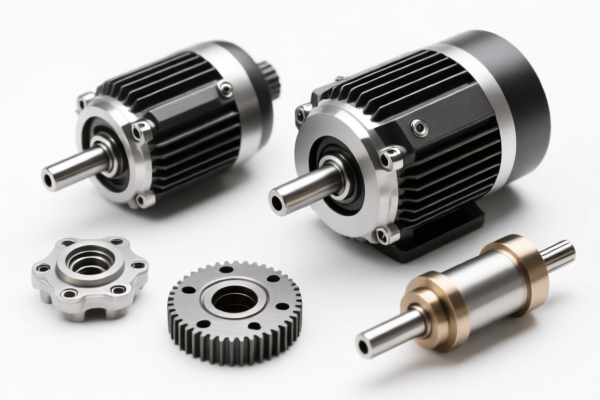
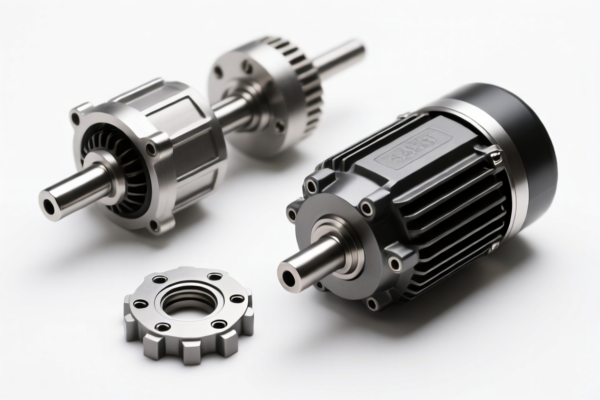
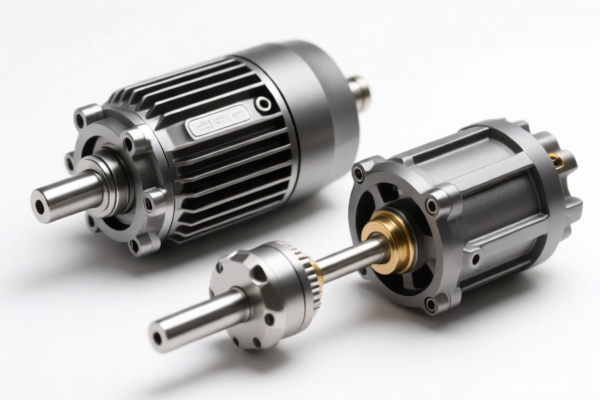
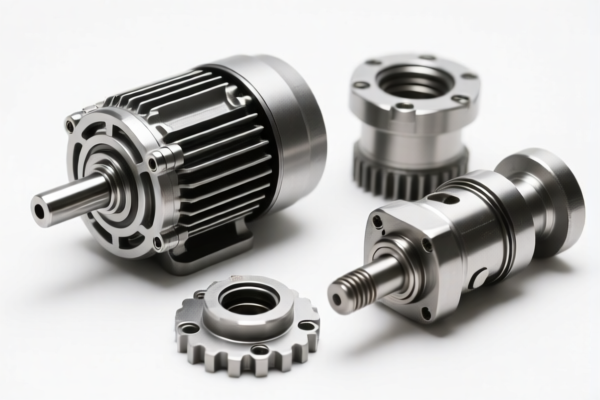
AI Analysis
⚡ Electric Motors & Generators (Power Generation Equipment)
🌐 HS Code Reference & Customs Clearance Guide | 2026 Latest Tariff Analysis | Professional Clearance Strategy
📌 1. Product Definition & Classification: Do You Really Understand "Generators"?
In international trade, "Generators" (often categorized under electric motors/generators) are core power sources for industrial, commercial, and backup systems. They are classified based on power output, drive mechanism, and application purpose.
⚠️ Key Classification Points:
- Standby/Prime Power Generators: Typically fall under 8501 (Electric Motors & Generators, other than generating sets).
- Complete Generating Sets: If the unit includes the engine/motor and the generator and control panels as a single integrated unit, it may fall under 8502 (Electric Generating Sets and Rotary Converters).
- Power Range Matters: Power output (kVA/kW) is the primary determinant for sub-heading selection within HS codes.
📦 2. HS Code Classification Details (2026 Latest Tariff Authority Comparison)
Based on the provided data, the following HS codes are identified for Generators. These codes reflect different power ranges and integration levels.
| HS Code | Product Description | Application Scenario | Key Differentiator |
|---|---|---|---|
8502.12.00.00 |
Electric Generating Sets (Matching core use cases; inferred power range 75 kVA to 375 kVA) | Large commercial backup, industrial prime power, data centers | Integrated Set: Includes engine/motor + generator + frame. Higher power range. |
8501.31.81.00 |
Electric Generators (Directly matches application; no material/form conflict) | Standalone generator units, smaller industrial applications | Standalone Generator: Direct functional match, likely lower power or specific motor-driven generator. |
8501.32.61.00 |
Electric Generators (Identical purpose; fallback to other categories) | General-purpose generators, fallback classification | Alternative Standalone: Same function as above, but classified under a different sub-heading due to specific electrical characteristics or design. |
🔍 Important Reminder:
- 8502 vs. 8501: If the product is a complete generating set (engine + generator + controls in one unit), use 8502. If it is a standalone electric generator (driven by an external motor or engine not included), use 8501.
- Power Range: The8502.12.00.00code explicitly suggests a power range of 75–375 kVA, which is significantly higher than typical standalone8501units. Misclassification here can lead to significant duty discrepancies.
💰 3. 2026 Latest Tariff Rate Breakdown (Including Surtaxes & Policy Surcharges)
✅ Applicable Country: United States (US)
✅ Origin: China (CN)
✅ Effective Date: As of 2026 (includes subsequent imports)
🎯 1. 8502.12.00.00 —— Electric Generating Sets (75–375 kVA)
| Item | Detail |
|---|---|
| Basic Tariff | 2.5% (ad valorem) |
| Section 301 Surtax | +25.0% |
| Section 122 Tariff | +10.0% |
| Total Effective Rate | 37.5% |
| Duty Calculation | CIF Value × 37.5% |
| De Minimis Exemption | ❌ Not Eligible (High value & specific category) |
| Legal Basis Path | USITC:8502.12.00.00 → Section 301: 25% → Section 122: 10% |
📌 Explanation:
- 2.5%: Standard Most Favored Nation (MFN) rate for generating sets.
- 25%: Section 301 tariff on Chinese goods, specifically targeting machinery and electrical equipment.
- 10%: Additional tariff under "Section 122" (likely referring to recent executive orders or trade measures for strategic goods).
- Total 37.5%: This is a very high duty rate. Accurate classification as a "Generating Set" vs. "Generator" is critical, as rates may differ slightly, but both are subject to heavy surcharges.
🎯 2. 8501.31.81.00 —— Electric Generators (Direct Application Match)
| Item | Detail |
|---|---|
| Basic Tariff | 2.5% |
| Section 301 Surtax | +25.0% |
| Section 122 Tariff | +10.0% |
| Total Effective Rate | 37.5% |
| Duty Calculation | CIF Value × 37.5% |
| De Minimis Exemption | ❌ Not Eligible |
| Legal Basis Path | USITC:8501.31.81.00 → Section 301: 25% → Section 122: 10% |
📌 Note:
- Despite being a standalone generator, the surtaxes remain identical to the generating set due to the Section 301 and Section 122 policies targeting Chinese electrical machinery.
- Classification as8501.31.81.00implies a specific sub-category of electric generators, possibly with particular electrical specifications (e.g., synchronous generators).
🎯 3. 8501.32.61.00 —— Electric Generators (Fallback Category)
| Item | Detail |
|---|---|
| Basic Tariff | 2.0% |
| Section 301 Surtax | +25.0% |
| Section 122 Tariff | +10.0% |
| Total Effective Rate | 37.0% |
| Duty Calculation | CIF Value × 37.0% |
| De Minimis Exemption | ❌ Not Eligible |
| Legal Basis Path | USITC:8501.32.61.00 → Section 301: 25% → Section 122: 10% |
📌 Note:
- Slight Savings: This code has a 2.0% basic rate (vs. 2.5%), resulting in a 37.0% total rate.
- Why Choose This?: If the generator does not fit the exact description of8501.31.81.00(e.g., different voltage, frequency, or drive type), this is the fallback classification. The 0.5% difference in basic rate saves 0.5% on the CIF value, but the surtaxes are the same.
🛠️ 4. Customs Clearance Practical Advice (Real-World Pitfall Avoidance)
✅ 1. Preparation Checklist (Non-Negotiable)
| Document | Required | Description |
|---|---|---|
| ✅ Product Specification Sheet | ✔️ | Must include kVA/kW output, voltage, frequency, phase, and dimensions. |
| ✅ Technical Diagram | ✔️ | To prove whether it is a standalone generator (8501) or an integrated set (8502). |
| ✅ Photos (Including Nameplate) | ✔️ | Clear view of model number, brand, input/output ratings, and serial number. |
| ✅ Certifications | ✔️ | UL, CE, ISO, or NEMA ratings (if applicable) to verify safety standards. |
| ✅ Commercial Invoice | ✔️ | Must clearly state "Electric Generator" or "Electric Generating Set", not generic "motor". |
| ✅ Packing List | ✔️ | Detail all components. If it’s a "set," show all parts (engine, alternator, control panel) in one shipment. |
✅ 2. Declaration Strategy (Key Mnemonics)
🔥 "Set vs. Standalone: Check the Engine! Name Precise, Duty Lower!"
| Scenario | Correct Declaration | Mistake |
|---|---|---|
| Complete Unit (Engine + Generator + Controls) | 8502.12.00.00 (Generating Set) |
Misdeclare as 8501 → Potential penalty for misclassification. |
| Standalone Generator (No engine included) | 8501.31.81.00 or 8501.32.61.00 |
Misdeclare as 8502 → Overpayment or rejection. |
| Generator + Frame Only | 8501.31.81.00 |
Include frame in weight/value for 8502 → Wrong rate. |
| Parts (Alternator alone) | 8503.00.00.00 (Parts) |
Declare as full generator → Significant overpayment. |
✅ 3. Special Case Handling
| Scenario | Handling Advice |
|---|---|
| OEM Custom Generators | Provide customer PO + design specs to prove specific power range (75–375 kVA vs. other). |
| Hybrid Units (Diesel Engine + Generator) | If sold as a single unit, must use 8502. If sold separately, 8501 for generator, 8411 for engine. |
| High Voltage Generators | Verify if voltage exceeds standard thresholds; may require additional safety certifications. |
| Used Generators | Provide inspection report to prove condition; some countries restrict used electrical goods. |
🌍 5. Global Market Clearance Comparison (2026 Latest)
| Country/Region | Recommended HS Code | Basic Tariff | Additional Surtaxes | Remarks |
|---|---|---|---|---|
| 🇺🇸 USA | 8502.12.00.00 / 8501.31.81.00 |
2.0–2.5% | 35% (301+122) | High Duty: 37.0–37.5% total. |
| 🇨🇳 China | 8501.31.00.00 / 8502.12.00.00 |
0–2.5% | 0% | Low duty for domestic import/export. |
| 🇪🇺 EU | 8501.31 / 8502.12 |
0–3% | 0% | No surtaxes; requires CE marking. |
| 🇬🇧 UK | 8501.31 / 8502.12 |
0–5% | 0% | Post-Brexit rules; check UK TRQ. |
| 🇻🇳 Vietnam | 8501.31 / 8502.12 |
0–5% | 0% | Potential for RCEP benefits. |
📌 Conclusion:
- USA is the most costly market for Chinese-made generators due to Section 301 and Section 122 tariffs.
- EU and Asia are more favorable, but certification requirements (CE, UKCA) are strict.
- Duty Savings Tip: If possible, source components from non-US-tariff countries (e.g., Vietnam, Thailand) to leverage trade agreements, but ensure Substantial Transformation rules are met.
📌 6. Common Errors & Pitfall Guide (Lessons Learned)
❌ Mistake 1: Declaring a Complete Generating Set as a Standalone Generator
👉 Consequence: Incorrect HS Code → Potential fine or back taxes. Customs may reclassify and apply different inspection requirements.
❌ Mistake 2: Ignoring Section 122 Tariff
👉 Consequence: Underpayment by 10%. Customs will demand back payment + interest.
❌ Mistake 3: Vague Description ("Motor and Generator")
👉 Consequence: Delays for inspection. Customs may seize goods for reclassification.
❌ Mistake 4: Failing to Separate Engine and Generator in Multi-Piece Shipments
👉 Consequence: If sold separately, engine is 8411, generator is 8501. Mixed declaration causes valuation issues.
✅ Correct Practice:
"Electric Generating Set, Diesel Engine, 150 kVA, 3-Phase, 480V, With Automatic Transfer Switch, Model XYZ, UL Listed"
🎯 7. Conclusion: Precise Classification, Cost Control, Smooth Clearance!
🎯 Remember the Mnemonic:
🔹 "Set = 8502, Standalone = 8501. Check Power! 37.5% Duty in USA. Don’t Mix Parts!"
🔹 "HS Code Defines Duty, Surtaxes Add 35%, One Mistake, Cost Spikes!"
📌 Pro Tip:
If your generators are assembled in Vietnam or Mexico, you may apply for IEEPA Exemptions or USMCA Benefits, reducing duties to 0–5%.
Recommendation: Apply for Advance Ruling (R&A) from US Customs (CBP) before shipment to confirm the correct HS Code and duty rate.
📣 Immediate Action:
📞 Contact a licensed customs broker + Provide Tech Specs + Apply for HS Code Pre-Ruling
🚀 Ensure your generators pass through customs smoothly, reduce costs, and boost profits!
✨ Professional Clearance Starts with Accurate Classification!
💼 Every cent in your cost structure deserves precise calculation!
Customer Reviews
About HS Code Classification
The Harmonized System (HS) is an internationally standardized nomenclature developed by the World Customs Organization (WCO) to classify traded products. Over 200 countries use the HS system as the basis for customs tariffs, trade statistics, and import/export regulations.
Each HS code follows a hierarchical structure:
- Chapter (2 digits) — Broad category of goods (e.g., Chapter 84: Machinery and Mechanical Appliances)
- Heading (4 digits) — More specific grouping within the chapter
- Subheading (6 digits) — Internationally standardized breakdown, used by all WCO member countries
- National subdivisions (8-10 digits) — Country-specific extensions for further classification, such as US HTSUS 10-digit codes
Correct HS code classification is essential for smooth customs clearance, accurate duty payment, and compliance with trade regulations. Misclassification can lead to customs delays, overpayment of duties, or penalties.
When importing from CN to US, the applicable tariff rates may include:
- Most-Favored-Nation (MFN) rate — The standard duty rate applied to WTO members
- General rate — Applied to countries without trade agreements
- Trade remedy duties — Additional tariffs such as Section 301 (anti-dumping), Section 232 (national security), or countervailing duties
The information provided on this page is for reference purposes only. For official classification, please consult with your local customs authority or a licensed customs broker.