Electric Rotary Generator Set
CN → US| HS Code | Tariff Rate | Origin | Destination | Doc |
|---|---|---|---|---|
| 8501610100 | 37.5% | CN | US | Official Doc |
| 8501318100 | 37.5% | CN | US | Official Doc |
| 8502390080 | 37.5% | CN | US | Official Doc |
| 8502400000 | 38.0% | CN | US | Official Doc |
| 8501620100 | 37.5% | CN | US | Official Doc |
Product Images
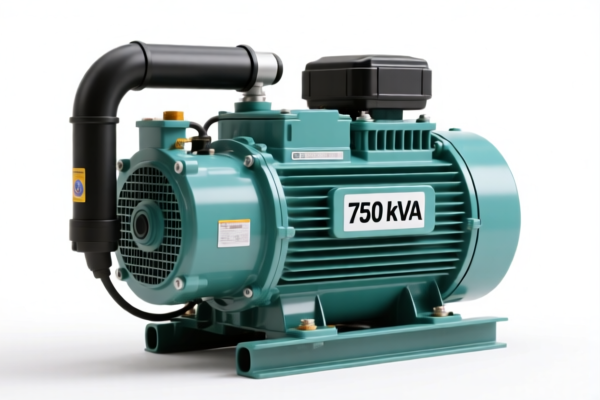
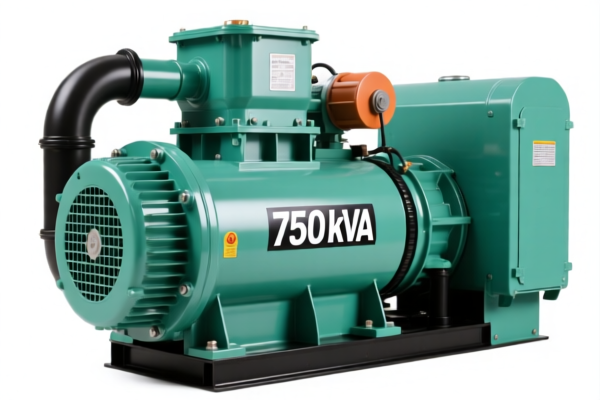


AI Analysis
⚡ Electric Rotary Generator Set
🌐 HS Code Reference & Customs Clearance Guide | 2026 Latest Tariff Analysis | Professional Entry Strategies
📌 I. Product Definition & Classification: Do You Truly Understand "Electric Rotary Generators"?
An Electric Rotary Generator Set is a critical power conversion device in international trade. It primarily converts mechanical energy into electrical energy through electromagnetic induction. In customs classification, these are strictly categorized under Chapter 85 (Electrical Machinery and Equipment).
The core distinction lies in the structure and function: - Stand-alone Generators/Motors (Heading 85.01): Devices that generate electricity or function as motors separately. - Generator Sets/Converting Sets (Heading 85.02): Complete units, often including the prime mover or integrated into a single rotating assembly for specific conversion purposes.
⚠️ Key Distinction Point:
- If the item is a stand-alone rotary generator (e.g., a synchronous or asynchronous generator motor) →归入 8501 subheadings.
- If the item is a rotating electrical converter or a specific generator set assembly intended for power transformation →归入 8502 subheadings.
📦 II. HS Code Classification Details (2026 Latest Tariff Authority Match)
Based on the provided data, here are the matched HS Codes, their matching logic, and applicable tax rates.
| HS Code | Product Description & Matching Logic | Tax Rate (Total) | Tax Breakdown |
|---|---|---|---|
8501.61.01.00 |
Matching Points: Purpose (Generator) and Form (Rotary/Motor) align perfectly; material has no conflicts. | 37.5% | Base: 2.5%, Section 301: 25%, Section 122: 10% |
8501.31.81.00 |
Basis: The term "Generator" in the name aligns with the code's purpose; "Electric Rotary" form falls within the motor/generator category. | 37.5% | Base: 2.5%, Section 301: 25%, Section 122: 10% |
8502.39.00.80 |
Match: "Rotary" and "Electric Generator" attributes fully match the category of "Generator Sets and Rotating Converters." | 37.5% | Base: 2.5%, Section 301: 25%, Section 122: 10% |
8501.62.01.00 |
Match: "Generator" aligns with "Alternating Current Generator"; "Rotary" conforms to the mechanical characteristics of motors/generators. | 37.5% | Base: 2.5%, Section 301: 25%, Section 122: 10% |
8502.40.00.00 |
Match: "Rotary" and "Electric Generator" completely fit the definition of "Electric Rotating Converters." | 38.0% | Base: 3.0%, Section 301: 25%, Section 122: 10% |
🔍 Important Reminder:
- 8501 Codes: Typically apply to stand-alone generators or motors. The tax rate is consistently 37.5% across the matched variants. - 8502 Codes: Apply to generator sets or rotating converters. Note that8502.40.00.00has a slightly higher base tariff, resulting in a total of 38.0%. - All codes listed above include significant additional duties due to trade policies.
💰 III. 2026 Latest Tariff Rate Details (Including Surtaxes & Policy Add-ons)
✅ Applicable Country: United States (US)
✅ Origin: China (CN)
✅ Effective Time: November 10, 2025 onwards (for subsequent imports)
🎯 1. HS Codes 8501.61.01.00, 8501.31.81.00, 8502.39.00.80, 8501.62.01.00
(Standard Rotary Generators & Sets)
| Item | Content |
|---|---|
| Base Tariff Rate | 2.5% (Ad Valorem) |
| Section 301 Surtax | +25.0% (From USITC Footnote for China-origin goods) |
| Section 122 Tariff | +10.0% (Specific provision for Chinese imports) |
| Total Tax Rate | 37.5% |
| Tax Calculation | CIF Value × 37.5% |
| De Minimis Exemption | ❌ Not Eligible (High tariff codes exclude small package exemptions) |
| Legal Basis Path | Base Tariff → Section 301 (25%) → Section 122 (10%) → HS Code |
📌 Explanation:
- The 25% Section 301 tariff is the standard levy on many Chinese electrical machinery items under U.S. Trade Act Section 301. - The 10% Section 122 tariff is an additional specific duty targeting certain imports from China. - Total 37.5% is a high-cost barrier. Accurate classification is vital to avoid overpayment or misdeclaration penalties.
🎯 2. HS Code 8502.40.00.00
(Electric Rotating Converters)
| Item | Content |
|---|---|
| Base Tariff Rate | 3.0% (Ad Valorem) |
| Section 301 Surtax | +25.0% |
| Section 122 Tariff | +10.0% |
| Total Tax Rate | 38.0% |
| Tax Calculation | CIF Value × 38.0% |
| De Minimis Exemption | ❌ Not Eligible |
| Legal Basis Path | Base Tariff → Section 301 (25%) → Section 122 (10%) → HS Code |
📌 Note:
- This code has a higher base rate (3.0%) compared to the 2.5% base for 8501 codes. - Despite being a "rotating converter," it still faces the same surtaxes, leading to the highest total rate in this dataset.
🛠️ IV. Customs Clearance Practical Advice (实战避坑指南)
✅ 1. Required Documentation Checklist (Missing Items Will Cause Delays)
| Document | Mandatory | Description |
|---|---|---|
| ✅ Product Specification Sheet | ✔️ | Must include: Power rating (kW/kVA), Voltage, Frequency, Rotation speed, Phase. |
| ✅ Technical Diagrams | ✔️ | Circuit diagrams or structural drawings to prove it is a "rotary generator" vs. "converter." |
| ✅ Product Photos (with Nameplate) | ✔️ | Clear view of model number, brand, input/output parameters, and safety labels. |
| ✅ Certifications | ✔️ | UL, CE, RoHS, or NEMA standards (if applicable to US market). |
| ✅ Commercial Invoice | ✔️ | Must clearly state "Electric Rotary Generator" or "Rotating Converter." Avoid vague terms like "Motor." |
| ✅ Packing List | ✔️ | Detail all components to prevent claims of missing parts or undeclared accessories. |
✅ 2. Declaration Tips (Key Mantra)
🔥 "Identify Function, Define Form, Declare Accurately, Save Costs!"
| Scenario | Correct Declaration | Wrong Practice |
|---|---|---|
| Stand-alone Generator (Motor) | Use 8501.xxxx codes | Misdeclaring as "Converter" → May trigger audits |
| Integrated Generator Set | Use 8502.39 or 8502.40 | Misdeclaring as "Part" → Lowers declared value → Fraud risk |
| Vague Name "Rotary Machine" | Specify "Electric Rotary Generator" | Ambiguous description → Customs holds for inspection |
| High Base Tariff Code | Verify if 8501 (2.5%) is more appropriate than 8502 (3.0%) | Choosing wrong subheading → +0.5% unnecessary cost |
✅ 3. Special Handling Cases
| Case | Handling Advice |
|---|---|
| OEM Custom Generators | Provide client PO and design specs. Clarify if it's for industrial, marine, or backup power use. |
| Generator + Controller | If the controller is integral, declare as a complete set. If separate, declare separately to avoid over-tariffing if parts have lower rates. |
| Origin Marking | Ensure the product is clearly marked "Made in China" or country of origin. Failure can lead to penalty tariffs. |
| Dual-Use Items | If the generator can be used for military purposes, additional security clearance may be required. |
🌍 V. Global Market Comparison (2026 Latest)
| Country/Region | Recommended HS Code | Tariff (China Origin) | Certification Required | Remarks |
|---|---|---|---|---|
| 🇺🇸 USA | 8501.xxxx or 8502.xxxx |
37.5% - 38.0% | UL/CE + NEMA | Highest due to Section 301 & 122. |
| 🇨🇳 China | 8501.xxxx |
~5-10% (Varies) | CCC | No additional US-style surtaxes. |
| 🇪🇺 EU | 8501.xxxx |
0-4% (if CE certified) | CE + RoHS | Competitive if certified. |
| 🇬🇧 UK | 8501.xxxx |
0-4% | UKCA | Post-Brexit rules apply. |
| 🇦🇺 Australia | 8501.xxxx |
5% | RCM | No major surtaxes. |
📌 Conclusion:
- The USA imposes a heavy burden (37.5%+) on these electrical goods from China. - Cost Optimization: Ensure the correct HS code is selected. For example, choosing8501(37.5%) vs8502.40(38.0%) saves 0.5% on CIF value. While small, it adds up on large shipments.
📌 VI. Common Mistakes & Pitfalls (Lessons Learned)
❌ Mistake 1: Declaring "Generator" as "Electric Motor" to avoid higher duties.
👉 Consequence: If function is generation, not motor, this is misclassification. Customs can assess penalties and back-taxes.
❌ Mistake 2: Ignoring the Section 122 Tariff.
👉 Consequence: Many importers only calculate Section 301 (25%). Forgetting the extra 10% leads to budget shortfalls.
❌ Mistake 3: Vague Description "Rotary Equipment".
👉 Consequence: Customs may classify under a generic "Other Electrical Machinery" code with unknown or higher rates. Always be specific.
✅ Correct Practice:
"Electric Rotary Generator, Synchronous, 50kW, 400V, 50Hz, Industrial Use, Model XYZ, UL Certified, Made in China"
🎯 VII. Conclusion: Precision in Classification Saves Money!
🎯 Remember the Mantra:
🔹 "Function First, Form Second, Tariffs Add Up!"
🔹 "301 is 25%, 122 is 10%, Base is 2-3%, Total is 37-38%!"
📌 Pro Tip:
If your generators are originally from Vietnam, Mexico, or Thailand, you may be eligible for IEEPA Exemptions or lower Section 301 rates.
Recommend applying for an Advance Ruling with US CBP if you are importing large volumes regularly.
📣 Immediate Action:
📞 Contact a licensed customs broker + Provide Technical Specs + Verify HS Code Pre-ruling
🚀 Ensure your Electric Rotary Generator Set clears customs smoothly, efficiently, and cost-effectively!
✨ Professional clearance starts with accurate classification!
💼 Every cent of cost is worth precise calculation!
Customer Reviews
About HS Code Classification
The Harmonized System (HS) is an internationally standardized nomenclature developed by the World Customs Organization (WCO) to classify traded products. Over 200 countries use the HS system as the basis for customs tariffs, trade statistics, and import/export regulations.
Each HS code follows a hierarchical structure:
- Chapter (2 digits) — Broad category of goods (e.g., Chapter 84: Machinery and Mechanical Appliances)
- Heading (4 digits) — More specific grouping within the chapter
- Subheading (6 digits) — Internationally standardized breakdown, used by all WCO member countries
- National subdivisions (8-10 digits) — Country-specific extensions for further classification, such as US HTSUS 10-digit codes
Correct HS code classification is essential for smooth customs clearance, accurate duty payment, and compliance with trade regulations. Misclassification can lead to customs delays, overpayment of duties, or penalties.
When importing from CN to US, the applicable tariff rates may include:
- Most-Favored-Nation (MFN) rate — The standard duty rate applied to WTO members
- General rate — Applied to countries without trade agreements
- Trade remedy duties — Additional tariffs such as Section 301 (anti-dumping), Section 232 (national security), or countervailing duties
The information provided on this page is for reference purposes only. For official classification, please consult with your local customs authority or a licensed customs broker.