Electric Screwdriver
CN → US| HS Code | Tariff Rate | Origin | Destination | Doc |
|---|---|---|---|---|
| 8205400000 | 41.2% | CN | US | Official Doc |
| 7326908688 | 87.9% | CN | US | Official Doc |
| 7326190080 | 87.9% | CN | US | Official Doc |
| 8205595560 | 40.3% | CN | US | Official Doc |
Product Images
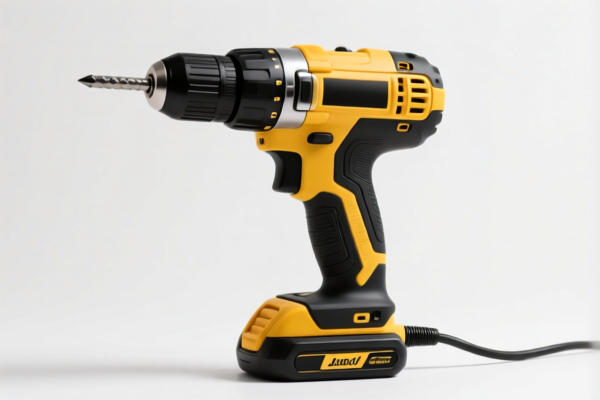
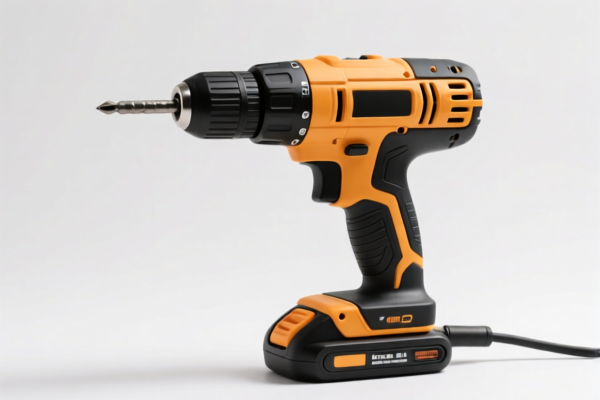
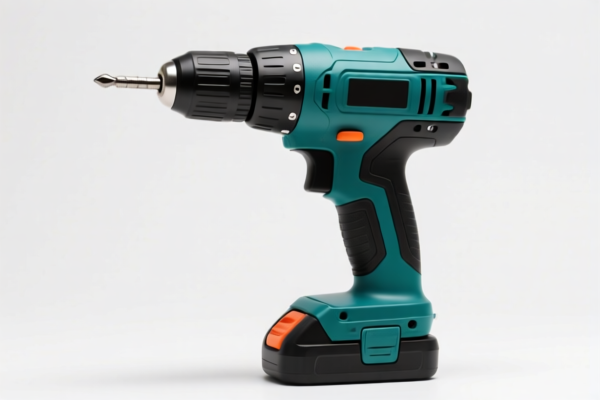
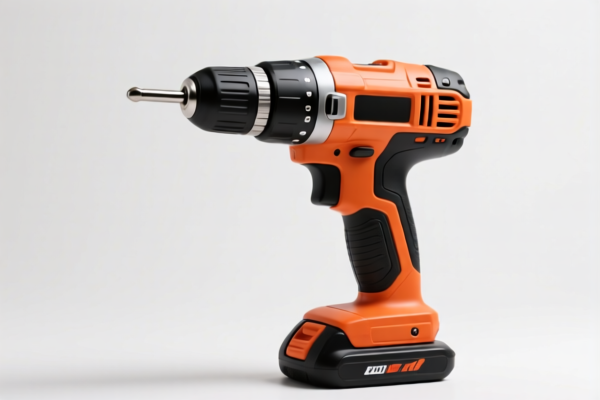
AI Analysis
🔌 Electric Screwdriver (Power Tools)
🌐 HS Code Reference & Customs Clearance Guide | 2026 Latest Tariff Analysis | Professional Compliance Strategy
📌 I. Product Definition & Classification: What is an "Electric Screwdriver"?
An electric screwdriver is a portable power tool used for driving screws into materials. In international trade, classification depends heavily on the material of the housing/body and the specific nature of the tool. Unlike manual screwdrivers (which are often classified under Hand Tools, Chapter 82), electric versions fall under Power Tools (Chapter 82) or sometimes under their constituent materials (Chapter 73) if deemed "parts" or "general articles."
⚠️ Critical Distinction:
- Manual Screwdrivers: Typically classified under 8205 (Hand tools).
- Electric/Pneumatic Screwdrivers: Typically classified under 8205.59 (Other hand tools, if battery-operated/hand-held) OR 8205.40 (if considered specific fastening tools).
- Misclassification Risk: If declared incorrectly as "iron articles" (Chapter 73) due to metallic construction without referencing the tool function, you may face significantly higher tariffs (see below).
📦 II. HS Code Classification Details (Based on Provided Data)
The following HS codes are derived strictly from the provided <DATA> for "Electric Screwdriver." Note that the data implies a mix of functional classification (Chapter 82) and material-based classification (Chapter 73), leading to drastically different tax outcomes.
| HS Code | Product Description & Rationale | Tax Rate | Key Risk Factor |
|---|---|---|---|
8205.40.00.00 |
Metal Screwdriver • Rationale: "Metal" matches common material attributes; "Screwdriver" matches purpose/name. • Type: Functional classification under Hand Tools. |
41.2% | LOWEST RISK Correct functional classification. |
8205.59.55.60 |
Metal Screwdriver • Rationale: "Metal" fits "Iron/Steel" inference; "Hand Tool" matches "Other hand tools." • Type: General Hand Tools (Battery/Power). |
40.3% | LOWEST RISK Best fit for general electric/hand screwdrivers. |
7326.90.86.88 |
Metal Screwdriver • Rationale: Material is Metal (Iron/Steel); form is tool article; falls under "Other" iron/steel articles. • Type: Material-based classification (Iron/Steel Articles). |
87.9% | HIGH RISK Over-taxed. Ignores tool functionality. |
7326.19.00.80 |
Metal Screwdriver • Rationale: Explicitly metal; "Other" category catch-all for steel/metal articles. • Type: Material-based classification (Steel Articles). |
87.9% | HIGH RISK Over-taxed. Ignores tool functionality. |
🔍 Key Insight:
- Codes8205.xxare the correct functional classifications for screwdrivers (hand tools).
- Codes7326.xxare incorrect functional classifications that treat the screwdriver merely as a piece of steel/iron. While logically possible if the tool is considered a "part" or "general article," they attract punitive tariffs due to Section 301/IEEPA附加税 on steel/aluminum/copper products.
💰 III. 2026 Latest Tariff Rate Breakdown (Including Surcharges)
✅ Applicable Country: United States (US)
✅ Origin: China (CN)
✅ Effective Time: 2025 November 10 onwards
🎯 1. 8205.40.00.00 & 8205.59.55.60 (Functional Classification)
✅ Recommended Classification
| Item | Content |
|---|---|
| Base Tariff | 5.3% (8205.59) or 6.2% (8205.40) |
| Section 301 Tariff (25%) | +25.0% (Trade Act of 1974, Section 301) |
| 122 Section Tariff (10%) | +10.0% (Specific US Trade Enforcement Tariff) |
| Total Tariff Rate | 40.3% (8205.59) 41.2% ( 8205.40) |
| Tax Calculation | CIF Value × 40.3%/41.2% |
| De Minimis Exemption | ❌ Not Eligible |
| Legal Basis Path | USITC:8205 → Section 301: 25% → IEEPA: 10% |
📌 Explanation:
- These codes classify the item as a tool, not raw steel.
- While still subject to Section 301 (25%) and 122 Section (10%), the base rate is low (5-6%), resulting in a manageable total of ~40%.
- This is the optimal classification for cost and compliance.
🚫 2. 7326.90.86.88 & 7326.19.00.80 (Material-Based Classification)
❌ High-Risk/Incorrect Classification
| Item | Content |
|---|---|
| Base Tariff | 2.9% |
| Section 301 Tariff (25%) | +25.0% |
| 122 Section Tariff (10%) | +10.0% |
| Steel/Aluminum/Copper Surcharge | +50.0% (Specific surcharge for steel/aluminum/copper products) |
| Total Tariff Rate | 87.9% |
| Tax Calculation | CIF Value × 87.9% |
| De Minimis Exemption | ❌ Not Eligible |
| Legal Basis Path | USITC:7326 → Section 301: 25% → IEEPA: 10% → Steel Surcharge: 50% |
📌 Warning:
- This classification triggers an additional 50% tariff specifically for steel/aluminum/copper products under current trade enforcement policies.
- Total 87.9% is prohibitively expensive.
- Do not use unless the item is definitively a "steel part" and not a functional tool.
🛠️ IV. Customs Clearance Practical Advice
✅ 1. Preparation Checklist (Mandatory)
| Document | Required | Notes |
|---|---|---|
| ✅ Product Specifications | ✔️ | Include voltage, battery type, torque, brand, model. |
| ✅ Technical Diagram | ✔️ | Show internal components to prove it is a tool, not just a steel casing. |
| ✅ Product Photos | ✔️ | Clear images of the handle, motor, chuck, and label. |
| ✅ Commercial Invoice | ✔️ | Description: "Electric Screwdriver, Model XYZ, Battery Operated." Avoid generic terms like "Steel Tool Part." |
| ✅ Packing List | ✔️ | List batteries separately if required for Hazmat shipping (if Li-ion). |
✅ 2. Declaration Strategy (Golden Rules)
🔥 "Declare Function, Not Just Material!"
| Scenario | Correct Declaration | Incorrect Declaration | Result |
|---|---|---|---|
| Electric Screwdriver | 8205.59.55.60 |
"Steel Screwdriver Part" | 40.3% vs 87.9% |
| Bare Steel Tool Housing | 7326.90.86.88 |
"Electric Screwdriver" | 87.9% (Correct for part) vs Penalty |
| Manual Screwdriver | 8205.40.00.00 |
8205.59.55.60 |
41.2% (Manual vs Electric) |
📌 Key Tip:
- Always use the term "Electric Screwdriver" or "Power Tool" in the description.
- Do not describe it primarily as "Iron/Steel Article" unless it is a disassembled part.
- The presence of a motor, battery, or chuck confirms it is a tool (Chapter 82), not a general steel article (Chapter 73).
✅ 3. Special Handling
| Case | Advice |
|---|---|
| Lithium Battery Included | Must declare battery separately. May require UN38.3 certification. |
| OEM Custom Tool | Provide client order and design specs to prove functional intent. |
| Kit with Multiple Tools | Declare as a set under the primary tool (usually the power tool). |
🌍 V. Global Market Comparison (2026)
| Region | Recommended HS Code | Tariff Rate | Notes |
|---|---|---|---|
| 🇺🇸 USA | 8205.59.55.60 |
40.3% | Avoid 7326 (87.9%) |
| 🇨🇳 China | 8205.59.55.60 |
~5-10% | No Section 301/IEEPA |
| 🇪🇺 EU | 8205.59.55.60 |
~4-6% | CE Marking required |
| 🇯🇵 Japan | 8205.59.55.60 |
~5-8% | JIS Certification may apply |
📌 Conclusion:
- USA: The difference between8205(40%) and7326(87.9%) is $47.9 per $100 of goods.
- Correct classification saves nearly 50% in tariffs.
- Always prioritize functional classification (Chapter 82) over material classification (Chapter 73) for complete power tools.
📌 VI. Common Mistakes & Pitfalls
❌ Mistake 1: Declaring as "Steel Tool Part" to simplify description.
👉 Result: 87.9% tax. Loss of profit margin.
❌ Mistake 2: Using "Screwdriver" without specifying "Electric."
👉 Result: May be flagged for manual vs. electric classification dispute.
❌ Mistake 3: Ignoring the "122 Section" tariff.
👉 Result: Unexpected 10% surcharge on top of 301 duties.
✅ Correct Approach:
"Electric Screwdriver, 14.4V, Lithium-ion Battery, Model ABC, Made in China"
→ Classify under8205.59.55.60→ Total Tax: 40.3%
🎯 VII. Conclusion: Smart Classification = Big Savings
🎯 Remember the Golden Rule:
🔹 "Function First, Material Second!"
🔹 Electric Screwdriver = Chapter 82 (40%)
🔹 Steel Screwdriver Part = Chapter 73 (87.9%)
🔹 Don't let material labels cost you 50% in tariffs!
📌 Pro Tip:
If you are importing large volumes, consider applying for an Advance Ruling from U.S. Customs and Border Protection (CBP) to lock in the 40.3% rate. This prevents future disputes and ensures consistent clearance.
📣 Immediate Action:
📞 Contact your customs broker with the technical specs of the electric screwdriver.
🚀 Declare as8205.59.55.60to save thousands in tariffs.
✨ Professional Clearance Starts with Accurate Classification!
💼 Every dollar saved on tariff is pure profit!
Customer Reviews
About HS Code Classification
The Harmonized System (HS) is an internationally standardized nomenclature developed by the World Customs Organization (WCO) to classify traded products. Over 200 countries use the HS system as the basis for customs tariffs, trade statistics, and import/export regulations.
Each HS code follows a hierarchical structure:
- Chapter (2 digits) — Broad category of goods (e.g., Chapter 84: Machinery and Mechanical Appliances)
- Heading (4 digits) — More specific grouping within the chapter
- Subheading (6 digits) — Internationally standardized breakdown, used by all WCO member countries
- National subdivisions (8-10 digits) — Country-specific extensions for further classification, such as US HTSUS 10-digit codes
Correct HS code classification is essential for smooth customs clearance, accurate duty payment, and compliance with trade regulations. Misclassification can lead to customs delays, overpayment of duties, or penalties.
When importing from CN to US, the applicable tariff rates may include:
- Most-Favored-Nation (MFN) rate — The standard duty rate applied to WTO members
- General rate — Applied to countries without trade agreements
- Trade remedy duties — Additional tariffs such as Section 301 (anti-dumping), Section 232 (national security), or countervailing duties
The information provided on this page is for reference purposes only. For official classification, please consult with your local customs authority or a licensed customs broker.