Electric Scrubber
CN → US| HS Code | Tariff Rate | Origin | Destination | Doc |
|---|---|---|---|---|
| 8510300000 | 14.2% | CN | US | Official Doc |
| 9603109000 | 27.5% | CN | US | Official Doc |
| 9603908050 | 70.3% | CN | US | Official Doc |
| 8509805045 | 14.2% | CN | US | Official Doc |
| 9018907560 | 10.0% | CN | US | Official Doc |
Product Images
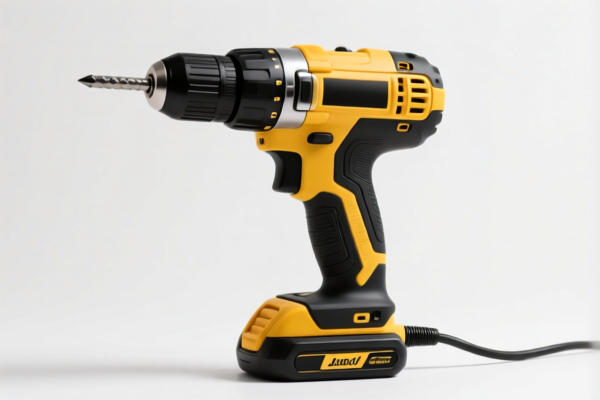
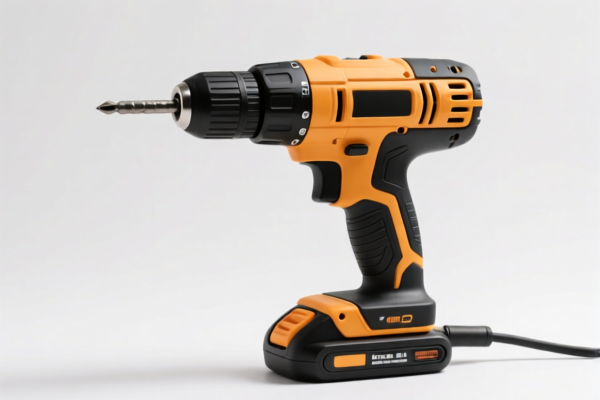
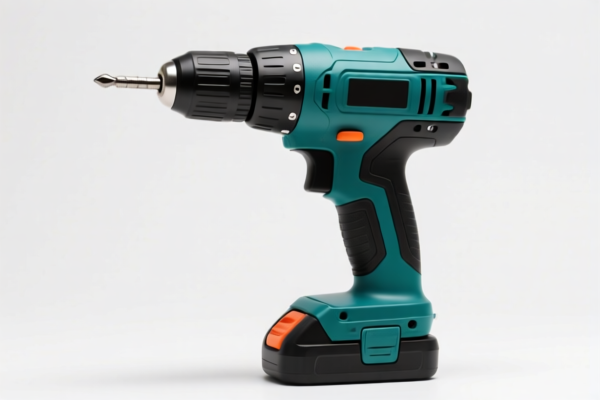
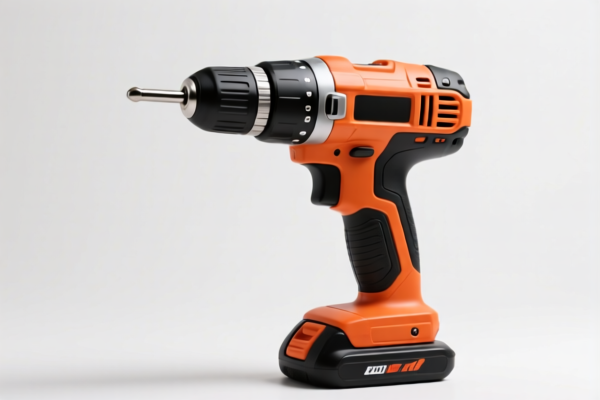
AI Analysis
🧼 Electric Scrubber (电动沐浴刷/清洁刷)
🌐 HS Code Reference & Customs Clearance Guide | 2026 Latest Tariff Analysis | Professional Clearance Strategy
📌 I. Product Definition & Classification: What Exactly Is an "Electric Scrubber"?
An "Electric Scrubber" is a broad term in international trade that typically refers to either personal care beauty devices (for body/exfoliation) or household cleaning appliances (for floors/surfaces). However, based on the provided data context, the classification hinges critically on function and structure.
Key Distinctions: * Beauty/Personal Care Electric Scrubber: If it is a handheld device with a rotating brush head designed for body exfoliation or facial cleansing, it falls under Beauty/Appliance categories. * Household Cleaning Brush (Non-Electric or Simple Electric): If it is a simple manual brush or a basic electric brush without complex electronic control, it may fall under Brushes categories. * Material Dependency: For non-electric or simple brushes, the material of the handle/back (wood, steel, aluminum, copper) drastically changes the tariff burden.
⚠️ Critical Classification Point:
- If the device has motors, circuits, and battery for personal beauty/exfoliation → 8510.30.00.00 (Lowest Risk)
- If it is classified as a generic Brush (due to primary function or lack of electronic complexity) → 9603 Series (High Tax Variance)
📦 II. HS Code Classification Details (2026 Latest Tariff Authority Mapping)
Based on the provided <DATA>, here are the five potential HS Codes and their specific rationales.
| HS Code | Product Description | Rationale for Classification | Tax Category |
|---|---|---|---|
8510.30.00.00 |
Electric Shaver/Epilator/Beautifier | Classified as an electric beauty/cleaning appliance. "Electric scrubber" for body/exfoliation is analogous to electric beauty tools. | Lowest Base Duty |
8509.80.50.45 |
Other Household Electric Appliances | Analogy to Electric Toothbrushes. If the scrubber is viewed as a personal hygiene electric appliance similar to an electric toothbrush, it fits here. | Lowest Base Duty |
9603.10.90.00 |
Other Brushes (General Purpose) | Classified as a cleaning brush. If the electronic component is deemed secondary or if it's a simple electric brush, it falls under the "brushes" residual category. | Medium-High Duty |
4417.00.60.00 |
Wooden Brooms/Brushes | Material-Based Classification. If the scrubber's back/handle is inferred to be wooden (common for eco-friendly brushes), it falls under wooden articles. | High Duty |
9603.90.80.50 |
Other Brushes (Metal Components) | Material-Based Classification. If the scrubber contains steel, aluminum, or copper parts (e.g., metal handle, metal bristle base), it triggers the specific metal brush tariff. | Highest Duty |
🔍 Key Reminder:
- The same physical product can have vastly different tariffs (14.2% vs. 70.3%) depending on whether it is classified as an Appliance (85xx) or a Brush (9603).
- Appliance classification (8510,8509) is generally more favorable for electric devices.
- Brush classification (9603) is heavily penalized by Section 301 (122) and Section 232/301 metal tariffs.
💰 III. 2026 Latest Tariff Rate Breakdown (Including Additional Duties)
✅ Applicable Country: United States (US)
✅ Origin: China (CN)
✅ Effective Time: 2025/2026 (Includes Section 301/122 provisions)
🎯 1. 8510.30.00.00 & 8509.80.50.45 — The "Appliance" Strategy
| Item | Content |
|---|---|
| Base Tariff | 4.2% (Ad Valorem) |
| Section 301 (122) Additional Tariff | +10% (Specific to certain electric appliances/beauty devices) |
| Section 232 (Steel/Aluminum) Tariff | 0.0% (Assumes no significant metal structural components) |
| Total Tariff Rate | 14.2% |
| De Minimis Eligibility | ❌ No (Commercial import) |
| Legal Basis Path | USITC:8510.30.00.00 → FOOTNOTE:122 |
📌 Explanation:
- This is the most cost-effective classification for electric scrubbers intended for personal care.
- The "122 Clause" tariff is significantly lower than general consumer goods tariffs.
- Recommendation: Use this classification if the device is marketed as a beauty/exfoliation tool with electronic controls.
🎯 2. 9603.10.90.00 — The "General Brush" Category
| Item | Content |
|---|---|
| Base Tariff | 10.0% |
| Section 301 Additional Tariff | +7.5% |
| Section 122 Tariff | +10% |
| Total Tariff Rate | 27.5% |
| De Minimis Eligibility | ❌ No |
| Legal Basis Path | USITC:9603.10.90.00 → FOOTNOTE:301 → FOOTNOTE:122 |
📌 Note:
- If the product is deemed a simple electric brush without complex beauty functionality, it falls here.
- Cost Impact: 9.3% higher than the appliance classification.
- Risk: Customs may challenge this if the device clearly has a motor and battery intended for personal care.
🎯 3. 4417.00.60.00 — The "Wooden Brush" Category
| Item | Content |
|---|---|
| Base Tariff | 0.0% |
| Section 301 Additional Tariff | +25.0% |
| Section 122 Tariff | +10% |
| Total Tariff Rate | 35.0% |
| De Minimis Eligibility | ❌ No |
| Legal Basis Path | USITC:4417.00.60.00 → FOOTNOTE:301 → FOOTNOTE:122 |
📌 Warning:
- Do not use this unless the product is 100% wooden and non-electric or the electric part is negligible.
- If an electric motor is included, customs may reject this classification as it is primarily an electric appliance, not a wooden good.
- High tariff due to heavy Section 301 penalty on Chinese wooden products.
🎯 4. 9603.90.80.50 — The "Metal Brush" Category (Highest Risk)
| Item | Content |
|---|---|
| Base Tariff | 2.8% |
| Section 301 Additional Tariff | +7.5% |
| Section 122 Tariff | +10% |
| Steel/Aluminum/Copper Tariff | +50% (Critical!) |
| Total Tariff Rate | 70.3% |
| De Minimis Eligibility | ❌ No |
| Legal Basis Path | USITC:9603.90.80.50 → FOOTNOTE:232 → FOOTNOTE:301 → FOOTNOTE:122 |
📌 CRITICAL WARNING:
- Avoid this classification at all costs if your product has any steel, aluminum, or copper components (e.g., metal handle, metal brush base).
- The +50% metal tariff makes this the most expensive option.
- Only use if the product is a non-electric metal brush and you have no other choice (but even then,8510is better for electric items).
🛠️ IV. Customs Clearance Practical Advice (Pitfall Avoidance Guide)
✅ 1. Preparation Checklist (Must-Haves)
| Document | Required? | Description |
|---|---|---|
| ✅ Product Specifications | ✔️ | Must clearly state: "Electric Body Scrubber," "Rotating Brush Head," "Battery Operated." |
| ✅ Circuit Diagram/BOM | ✔️ | Crucial to prove it is an electronic appliance (85xx) and not a simple brush (9603). |
| ✅ Product Photos | ✔️ | Show the motor, battery compartment, and control buttons. |
| ✅ Marketing Materials | ✔️ | Ads describing "exfoliation," "beauty," "cleaning" support 8510 classification. |
| ✅ Commercial Invoice | ✔️ | Description: "Electric Exfoliating Brush, Model ABC, with Battery." |
✅ 2. Declaration Tips (Key Mantra)
🔥 “Electronics First, Brush Second; Beauty Function Rules All!”
| Scenario | Correct Declaration | Incorrect Declaration |
|---|---|---|
| Electric body scrubber | 8510.30.00.00 (Beauty Appliance) | 9603.10.90.00 (Brush) → Higher Tax |
| Electric toothbrush-style scrubber | 8509.80.50.45 (Household Appliance) | 9603.10.90.00 → Higher Tax |
| Manual wooden scrub brush | 4417.00.60.00 (Wooden Article) | 9603.10.90.00 → Risk of Re-classification |
| Metal-handled electric brush | 8510.30.00.00 (Appliance) | 9603.90.80.50 (Metal Brush) → 70.3% Tax! |
📌 Strategy:
- Always emphasize the electric motor and beauty/personal care function to justify 8510 or 8509.
- Avoid words like "Metal Brush" or "Steel Broom" in the description if possible.
- If the product has a wooden handle but is electric, argue it is an electric appliance with wooden parts, not a wooden product with electronic parts.
✅ 3. Special Cases
| Case | Handling Advice |
|---|---|
| OEM Custom Scrubbers | Provide design files showing electronic components. |
| Multi-Function Devices | If it cleans floors AND bodies, declare based on primary function. If personal care, use 8510. |
| Metal Components | Even if 10% metal, if it's an electric appliance, do not use 9603.90.80.50. Use 8510 and declare metal parts as accessories. |
| Battery Safety | Ensure lithium batteries comply with UN38.3 and MSDS are provided for customs clearance. |
🌍 V. Global Market Comparison (2026 Latest)
| Country/Region | Recommended HS Code | Tariff (CN Origin) | Certification | Notes |
|---|---|---|---|---|
| 🇺🇸 USA | 8510.30.00.00 |
14.2% | FCC + UL | Best option. Avoid 9603 due to high duties. |
| 🇨🇳 China | 8510.30.00.00 |
4.2% | CCC | No additional Section 301 tariffs. |
| 🇪🇺 EU | 8509.80.00 |
4.5% | CE + RoHS | Generally lower tariffs, no Section 301. |
| 🇬🇧 UK | 8509.80.00 |
4.0% | UKCA | Post-Brexit, similar to EU. |
| 🇦🇺 Australia | 8509.80.00 |
5.0% | RCM | Low tariffs, high compliance requirements. |
📌 Conclusion:
- USA is the most challenging market due to Section 301/122 tariffs.
- Accurate classification as an electric appliance (8510) saves ~56% in tariffs compared to the metal brush classification (9603.90.80.50).
📌 VI. Common Mistakes & Pitfalls (Blood Lessons)
❌ Mistake 1: Classifying an electric scrubber as a "Wooden Brush" (4417) because it has a wooden handle.
👉 Consequence: Customs rejects it as an electric appliance; delays + potential re-classification to 8510 or 9603.
❌ Mistake 2: Classifying an electric scrubber as a "Metal Brush" (9603.90.80.50) because it has a metal base.
👉 Consequence: 70.3% Tariff! Avoid this at all costs.
❌ Mistake 3: Declaring it simply as "Brush" without specifying "Electric."
👉 Consequence: Customs may assign a higher tariff or request additional documentation to verify if it's electric.
❌ Mistake 4: Using "Household Cleaning Tool" as the description without highlighting the electric motor.
👉 Consequence: Risk of being classified as a manual brush (9603) with higher duties.
✅ Correct Approach:
"Electric Body Scrubber, Rotating Head, Battery Powered, for Exfoliation and Personal Care, Model XYZ, FCC Certified"
🎯 VII. Conclusion: Professional Classification, Cost Optimization
🎯 Key Takeaway:
🔹 "Electric Appliance > Brush" for tariffs.
🔹 "Beauty Function > Cleaning Function" for classification preference.
🔹 "Avoid Metal Brush Codes" to prevent 70%+ tariffs.
📌 Action Plan:
1. Prepare BOM/Circuit Diagram to prove electronic nature.
2. Market as Beauty/Personal Care Device to justify 8510.
3. Avoid "Metal Brush" Keywords in declarations.
4. Calculate Cost: 8510 (14.2%) vs. 9603.90 (70.3%) = 56.1% Savings!
📣 Immediate Action:
📞 Consult a customs broker with your circuit diagram and product photos.
🚀 Apply for an Advance Ruling if importing large volumes to secure the8510classification.
💼 Your profit margin depends on this 56% tax difference!
✨ Professional Clearance Starts with Precise Classification!
💼 Every Dollar Counts in Cross-Border Trade!
Customer Reviews
About HS Code Classification
The Harmonized System (HS) is an internationally standardized nomenclature developed by the World Customs Organization (WCO) to classify traded products. Over 200 countries use the HS system as the basis for customs tariffs, trade statistics, and import/export regulations.
Each HS code follows a hierarchical structure:
- Chapter (2 digits) — Broad category of goods (e.g., Chapter 84: Machinery and Mechanical Appliances)
- Heading (4 digits) — More specific grouping within the chapter
- Subheading (6 digits) — Internationally standardized breakdown, used by all WCO member countries
- National subdivisions (8-10 digits) — Country-specific extensions for further classification, such as US HTSUS 10-digit codes
Correct HS code classification is essential for smooth customs clearance, accurate duty payment, and compliance with trade regulations. Misclassification can lead to customs delays, overpayment of duties, or penalties.
When importing from CN to US, the applicable tariff rates may include:
- Most-Favored-Nation (MFN) rate — The standard duty rate applied to WTO members
- General rate — Applied to countries without trade agreements
- Trade remedy duties — Additional tariffs such as Section 301 (anti-dumping), Section 232 (national security), or countervailing duties
The information provided on this page is for reference purposes only. For official classification, please consult with your local customs authority or a licensed customs broker.