Electric Shaver Parts
CN → US| HS Code | Tariff Rate | Origin | Destination | Doc |
|---|---|---|---|---|
| 8212900000 | 17.5% | CN | US | Official Doc |
| 8212100000 | 10.0% | CN | US | Official Doc |
| 8510901000 | 35.0% | CN | US | Official Doc |
| 8510902000 | 35.0% | CN | US | Official Doc |
| 8210000000 | 38.7% | CN | US | Official Doc |
Product Images
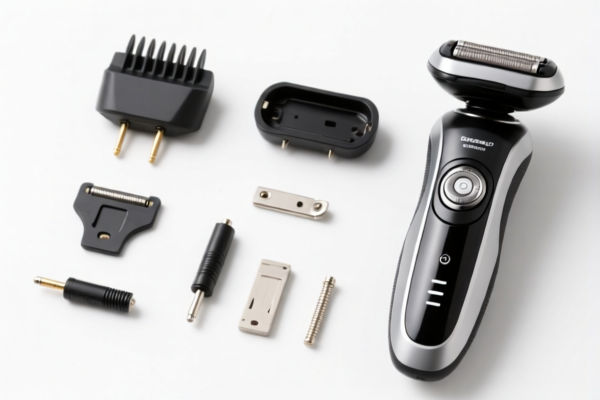
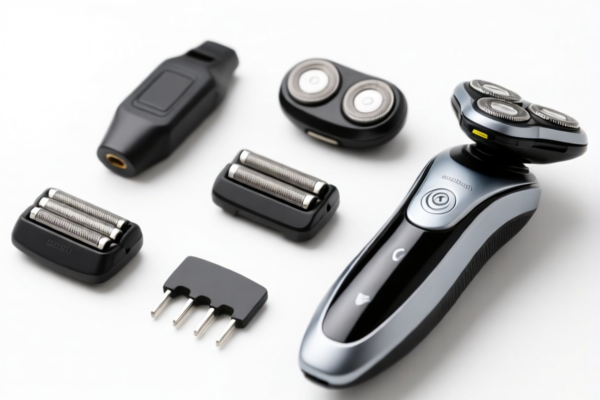
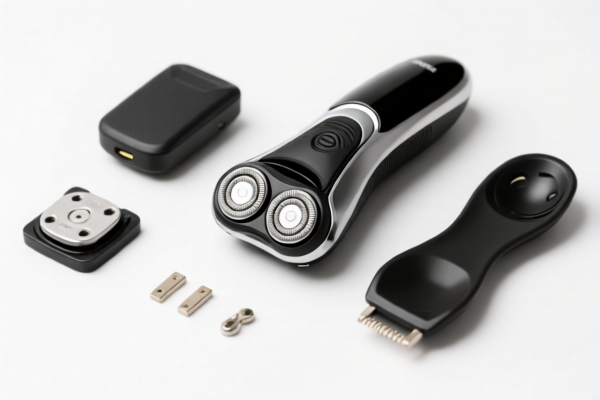
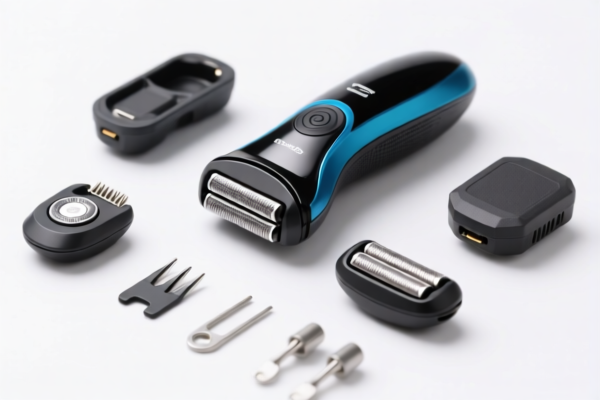
AI Analysis
🪒 Electric Shaver Parts (Razor Accessories)
🌐 HS Code Reference & Customs Clearance Guide | 2026 Latest Tariff Analysis | Strategic Compliance Strategy
📌 I. Product Definition & Classification: Understanding "Shaver Parts"
Electric shaver parts are critical components for personal care appliances. In international trade, classification hinges on whether the part is for an electric device or a manual/mechanical razor, and its material composition.
Two Main Categories: 1. Electric Shaver Parts (8510 Series): Parts belonging to electric razors/shavers with self-contained motor-driven blades. 2. Non-Electric Razor Parts (8212 Series): Parts for manual razors, razor blades, or razor handles (made of base metals).
⚠️ Critical Distinction Point:
- If the part belongs to an electric shaver (has a motor connection or is designed specifically for an electric unit) → Typically falls under 8510.90.
- If the part is a blade or handle for a manual razor (no motor) → Typically falls under 8212.
- Note: Some entries in the provided data suggest alternative classifications based on specific material or functional interpretations (e.g., classifying electric shaver parts under 8212 if viewed strictly as "parts of razors" regardless of power source in certain contexts, or under 8210 if viewed as hand-operated tools). We will analyze all provided HS Codes strictly from the provided data.
📦 II. HS Code Classification Details (Based on Provided Data)
| HS Code | Product Description (From Data) | Application Scenario | Key Classification Logic |
|---|---|---|---|
8212.90.00.00 |
Shaver parts, matching shaver and blade accessory usage, default tendency towards spare parts category | Razor blades, handles, guards | Matches "Parts of Razors" (non-electric or general) |
8212.10.00.00 |
Shaver parts, matching usage and component attributes, within the scope of razors and base metal parts | Razor blades, base metal handles | Fits "Razors and Razor Blades" + Base Metal attributes |
8510.90.10.00 |
Shaver parts, matching usage and form, belonging to electric shavers and their parts | Electric shaver heads, motors, internal mechanisms | Specifically for Electric Shaver parts |
8510.90.20.00 |
Shaver parts, matching usage and category, shaver parts with no material conflict | Electric shaver components | Category-based classification for Electric Shaver parts |
8210.00.00.00 |
Shaver parts, matching spare parts/components logic, consistent with parts of manual/mechanical tools | Hand-held mechanical shaving tools | Viewed as parts of hand-operated tools rather than strict "razor blades" |
🔍 Important Reminder:
- 8510.90.xxxx codes are generally preferred for electric shaver components.
- 8212.xxxx codes are generally for manual razor parts or blades.
- The provided data shows significant tariff differences based on this classification. Misclassification can lead to severe financial penalties.
💰 III. 2026 Latest Tariff Rate Details (Including Surcharges & Policy Add-ons)
✅ Applicable Country: USA (US)
✅ Origin: China (CN)
✅ Effective Time: Current rates as per provided data
🎯 1. 8212.90.00.00 —— Shaver Parts (General Spare Parts)
| Item | Content |
|---|---|
| Base Tariff | 0.0% |
| Section 301 Surcharge | 7.5% |
| 122 Clause Tariff | 10.0% |
| Total Tax Rate | 17.5% |
| Tax Calculation | CIF Value × 17.5% |
| Legal Basis | Based on provided tax detail |
📌 Explanation:
- This is the lowest among the provided options for Chinese origin goods.
- Suitable for generic shaver accessories that do not strongly assert "electric" motor components, or where customs accepts the "part of razor" classification under 8212.90.
🎯 2. 8212.10.00.00 —— Shaver Parts (Base Metal/Razor Blade Category)
| Item | Content |
|---|---|
| Base Tariff | 0.0% |
| Section 301 Surcharge | 0.0% |
| 122 Clause Tariff | 10.0% |
| Total Tax Rate | 10.0% |
| Tax Calculation | CIF Value × 10.0% |
| Legal Basis | Based on provided tax detail |
📌 Explanation:
- This is the most economical classification in the provided data.
- Applies if the product is clearly a razor blade or handle made of base metal, classified under 8212.10.
- Advantage: No Section 301 surcharge, only the 122 Clause tariff.
🎯 3. 8510.90.10.00 —— Electric Shaver Parts (Form-Based)
| Item | Content |
|---|---|
| Base Tariff | 0.0% |
| Section 301 Surcharge | 25.0% |
| 122 Clause Tariff | 10.0% |
| Total Tax Rate | 35.0% |
| Tax Calculation | CIF Value × 35.0% |
| Legal Basis | Based on provided tax detail |
📌 Explanation:
- High tariff rate. Applies to clearly defined electric shaver components.
- Subject to full Section 301 tariffs (25%) due to being an electrical appliance part from China.
🎯 4. 8510.90.20.00 —— Electric Shaver Parts (Category-Based)
| Item | Content |
|---|---|
| Base Tariff | 0.0% |
| Section 301 Surcharge | 25.0% |
| 122 Clause Tariff | 10.0% |
| Total Tax Rate | 35.0% |
| Tax Calculation | CIF Value × 35.0% |
| Legal Basis | Based on provided tax detail |
📌 Explanation:
- Same as8510.90.10.00. Both electric shaver sub-headings attract the same high tariff burden.
- Classification depends on specific product form and customs interpretation of "part."
🎯 5. 8210.00.00.00 —— Shaver Parts (Hand-Operated Tool Logic)
| Item | Content |
|---|---|
| Base Tariff | 3.7% |
| Section 301 Surcharge | 25.0% |
| 122 Clause Tariff | 10.0% |
| Total Tax Rate | 38.7% |
| Tax Calculation | CIF Value × 38.7% |
| Legal Basis | Based on provided tax detail |
📌 Explanation:
- The highest tariff rate in the provided data.
- Applies if the item is classified under 8210 (Hand-operated mechanical appliances) as a spare part, attracting base duty + 301 surcharge + 122 clause.
- Recommendation: Avoid this classification unless absolutely necessary.
🛠️ IV. Customs Clearance Practical Advice (Pitfall Avoidance Guide)
✅ 1. Documentation Checklist (Essential)
| Document | Required | Explanation |
|---|---|---|
| ✅ Product Spec Sheet | ✔️ | Clearly state if electric or manual. List components. |
| ✅ Product Photos | ✔️ | Show entire unit and part separately. Include model numbers. |
| ✅ Declaration of Composition | ✔️ | Specify material (e.g., stainless steel, plastic, electronic components). |
| ✅ Commercial Invoice | ✔️ | Describe accurately as "Shaver Parts" or "Razor Blades" based on HS code. |
| ✅ Packing List | ✔️ | Separate electric vs. non-electric parts if mixed. |
✅ 2. Declaration Strategy (Key Mnemonics)
🔥 "Check Power Source, Check Material, Check Code, Save Money!"
| Scenario | Correct HS Code | Risk if Incorrect |
|---|---|---|
| Manual Razor Blade/Handle | 8212.10.00.00 or 8212.90.00.00 |
Misclassifying as electric (8510) → +25% extra tax |
| Electric Shaver Head/Motor | 8510.90.xxxx |
Misclassifying as manual (8212) → Risk of penalty/fine |
| Generic Spare Part | 8212.90.00.00 |
Too vague → Customs may reclassify to higher duty 8210 or 8510 |
| Base Metal Handle | 8212.10.00.00 |
If it has electronic parts → Rejection |
📌 Pro Tip:
- If your product is strictly manual (no battery, no plug), aggressively support classification under 8212 to benefit from the 10% total rate (8212.10) or 17.5% (8212.90).
- If your product is electric (has a cord, battery, or motor), you must use 8510. Do not attempt to classify electric parts under 8212 to save tax; this is fraud and will be caught during inspection.
✅ 3. Special Circumstances
| Situation | Handling Advice |
|---|---|
| Mixed Shipment (Manual & Electric parts) | Separate Declarations. Do not mix. Use 8212 for manual, 8510 for electric. |
| OEM Custom Parts | Provide contract and design specs. Clarify if they are interchangeable or proprietary. |
| High-Value Components | For expensive electric shaver motors, ensure 8510 classification to avoid future disputes on "electrical nature." |
| Blade Sets | Ensure blades are properly packaged and declared as "Razor Blades" under 8212 if non-electric. |
🌍 V. Global Market Comparison (2026 Overview)
| Market | Recommended HS Code | Approx. Tariff (China Origin) | Notes |
|---|---|---|---|
| 🇺🇸 USA | 8212.10.00.00 (Manual) / 8510.90 (Electric) |
10% (Manual) / 35% (Electric) | High tariffs on electric due to Section 301. |
| 🇨🇳 China (Export) | Depends on Destination | N/A | Standard export declarations. |
| 🇪🇺 EU | 8212 / 8510 | Varies (Usually lower than US) | No Section 301 surcharge. Focus on CE marking. |
| 🇬🇧 UK | 8212 / 8510 | Varies | Post-Brexit rules apply. |
📌 Conclusion:
- The USA is the most challenging market for Chinese-manufactured shaver parts due to the 25% Section 301 tariff on electrical goods.
- Manual shaver parts (8212) enjoy significantly lower tariffs (10-17.5%) compared to Electric shaver parts (8510) (35%).
- Strategy: If possible, design products with modular manual components or clarify non-electric nature to optimize tax burden, while remaining fully compliant.
📌 VI. Common Errors & Pitfalls (Lessons Learned)
❌ Error 1: Declaring Electric Shaver Heads as "Manual Razor Parts"
👉 Consequence: Customs inspection reveals electronic components → Penalty, Back Tax + Interest, Possible Seizure.
❌ Error 2: Using "Shaver Accessory" without specifying Electric/Manual
👉 Consequence: Customs may apply the highest default duty (e.g., 38.7% under 8210) or delay shipment for clarification.
❌ Error 3: Ignoring the 122 Clause Tariff
👉 Consequence: All provided rates include a 10% 122 Clause tariff. Failing to account for this leads to underpayment of duties.
❌ Error 4: Misunderstanding Section 301 Applicability
👉 Consequence: Assuming all parts are exempt. Only 8212.10 avoids the 25% surcharge in the provided data. 8212.90 still has 7.5%. 8510 has 25%.
✅ Correct Approach:
"Electric Shaver Replacement Head, Model XYZ, Compatible with ABC Series, Electronic Component Included" → HS 8510.90
"Stainless Steel Razor Blades, Manual Use, Non-Electric" → HS 8212.10
🎯 VII. Conclusion: Precision Classification for Cost Savings
🎯 Remember the Rule:
🔹 "Electric = 35% (8510)"
🔹 "Manual Blade/Handle = 10% (8212.10)"
🔹 "Manual Spare Part = 17.5% (8212.90)"
🔹 "Avoid 8210 (38.7%)" unless no other fit exists.
📌 Pro Tip:
If your product is borderline (e.g., an electric shaver with detachable manual-style blades), provide detailed technical diagrams to customs to argue for the most favorable classification before shipment. Consider applying for a Binding Tariff Information (BTI) or pre-ruling if the value is high.
📣 Immediate Action:
📞 Verify if your parts are electric or manual.
📦 Choose HS Code8212.10if possible (lowest tax).
🚀 Ensure your commercial invoice matches the HS code description exactly.
✨ Smart Classification, Smarter Savings!
💼 Don't let high tariffs shave your profits!
Customer Reviews
About HS Code Classification
The Harmonized System (HS) is an internationally standardized nomenclature developed by the World Customs Organization (WCO) to classify traded products. Over 200 countries use the HS system as the basis for customs tariffs, trade statistics, and import/export regulations.
Each HS code follows a hierarchical structure:
- Chapter (2 digits) — Broad category of goods (e.g., Chapter 84: Machinery and Mechanical Appliances)
- Heading (4 digits) — More specific grouping within the chapter
- Subheading (6 digits) — Internationally standardized breakdown, used by all WCO member countries
- National subdivisions (8-10 digits) — Country-specific extensions for further classification, such as US HTSUS 10-digit codes
Correct HS code classification is essential for smooth customs clearance, accurate duty payment, and compliance with trade regulations. Misclassification can lead to customs delays, overpayment of duties, or penalties.
When importing from CN to US, the applicable tariff rates may include:
- Most-Favored-Nation (MFN) rate — The standard duty rate applied to WTO members
- General rate — Applied to countries without trade agreements
- Trade remedy duties — Additional tariffs such as Section 301 (anti-dumping), Section 232 (national security), or countervailing duties
The information provided on this page is for reference purposes only. For official classification, please consult with your local customs authority or a licensed customs broker.