Electric Shoe Polisher
CN → US| HS Code | Tariff Rate | Origin | Destination | Doc |
|---|---|---|---|---|
| 8479892000 | 35.0% | CN | US | Official Doc |
| 8479896500 | 20.3% | CN | US | Official Doc |
| 8543709860 | 37.6% | CN | US | Official Doc |
| 8543706000 | 35.0% | CN | US | Official Doc |
| 8509801000 | 10.0% | CN | US | Official Doc |
| 8509805095 | 14.2% | CN | US | Official Doc |
Product Images
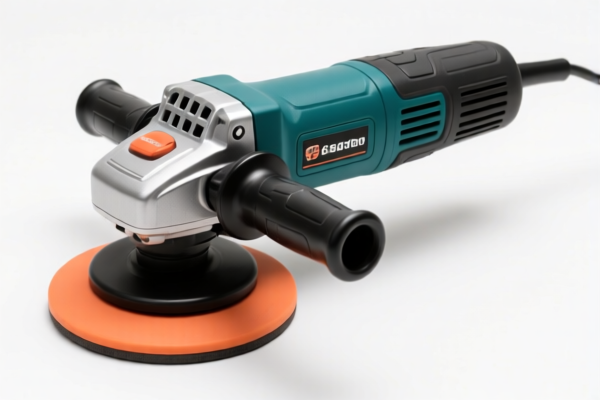
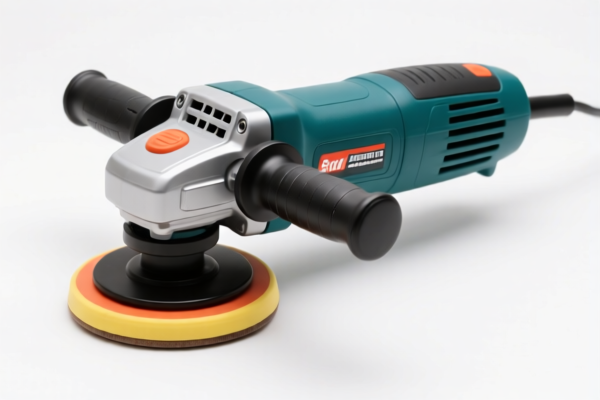
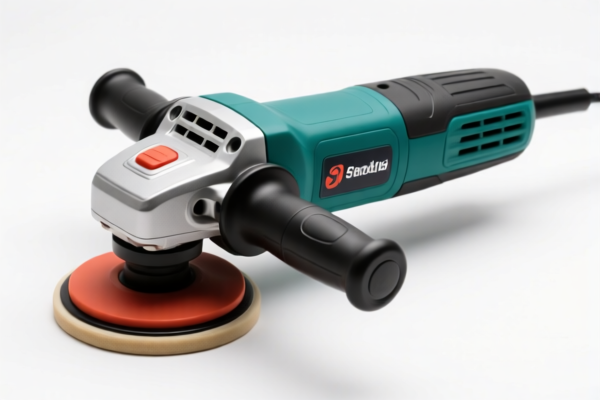
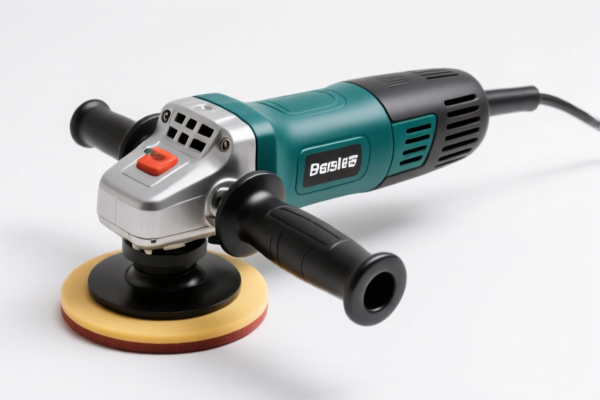
AI Analysis
👟 Electric Shoe Polisher (Floor Polishers & Domestic Appliances)
🌐 HS Code Reference & Customs Clearance Guide | 2026 Latest Tariff Analysis | Professional Clearance Strategy 📌 I. Product Definition & Classification: What Exactly is an "Electric Shoe Polisher"?
In the context of international trade and HS Code classification, the term "Electric Shoe Polisher" is ambiguous and often leads to misclassification. It generally falls into two distinct categories based on usage scenario and technical design:
- Domestic Floor Polishers/Waxers: Small, handheld or upright machines designed for household use to polish wooden or tiled floors. These are considered "Electromechanical domestic appliances" with a self-contained electric motor.
- Industrial Floor Buffers/Polishers: Larger, heavier-duty machines used in commercial or industrial settings. These are classified as "Machines and mechanical appliances having individual functions."
⚠️ Key Distinction Point:
- If the machine is designed for household/domestic use (small capacity, simple controls) → It falls under Chapter 85 (Electrical Machinery).
- If the machine is designed for industrial/commercial use (high torque, large surface area, heavy-duty) → It falls under Chapter 84 (Machinery).
📦 II. HS Code Classification Details (2026 Latest Tariff Authority Cross-Reference)
Based on the provided data, here are the specific HS Codes applicable to devices described as "Shoe Polishers" or "Floor Polishers," along with their tax implications.
| HS Code | Product Description | Application Scenario | Chapter | Tax Rate (Total) |
|---|---|---|---|---|
8509.80.10.00 |
Electromechanical domestic appliances; parts thereof: Other appliances: Floor polishers | Household floor waxers/polishers (Domestic) | 85 | 0.0% |
8509.80.50.95 |
Electromechanical domestic appliances; parts thereof: Other appliances: Other Other | Generic domestic electric appliances (if not explicitly listed as floor polishers) | 85 | 0.0% |
8479.89.20.00 |
Machines and mechanical appliances...: Electromechanical appliances with self-contained electric motor: Floor polishers | Commercial/Industrial floor buffers/polishers (Non-domestic) | 84 | 25.0% |
8479.89.65.00 |
Machines and mechanical appliances...: Electromechanical appliances with self-contained electric motor: Other | Other electromechanical machines not specified (e.g., specialized shoe polishers if considered industrial but not floor polishers) | 84 | 0.0% |
8543.70.60.00 |
Electrical machines...: Articles designed for connection to telegraphic or telephonic apparatus... | Unlikely for shoe polishers, but listed in data | 85 | 25.0% |
8543.70.98.60 |
Electrical machines...: Other Other | Generic catch-all for other electrical machines | 85 | 27.6% |
🔍 Critical Note:
- "Shoe Polisher" is not a direct HS description. Customs officials will look at the primary function and motor type.
- If it is a handheld electric device for polishing shoes, it may be classified under 8509 (Domestic Appliance) if it fits the domestic definition, or 8479 if it is a specialized industrial machine.
- Avoid8543codes unless the device has specific communication/telegraphic functions, which is highly unlikely for a polisher.
💰 III. 2026 Latest Tariff Rate Breakdown (Detailed Tax Clauses)
✅ Applicable Country: USA (US)
✅ Origin: China (CN)
✅ Effective Date: Based on current USITC and Section 301 rulings
🎯 1. Domestic Floor Polishing Appliances (Chapter 85)
A. 8509.80.10.00 – Floor Polishers (Domestic)
| Item | Detail |
|---|---|
| Base Tariff | 0.0% (ad valorem) |
| Additional Tariff (Section 301) | 0.0% |
| Total Tariff | 0.0% |
| Legal Basis | HTSUS 8509.80.10.00 |
| Exemptions | N/A |
📌 Explanation:
- Domestic electric floor polishers are currently exempt from Section 301 tariffs.
- This is a low-risk, low-cost classification for household appliances.
B. 8509.80.50.95 – Other Domestic Appliances
| Item | Detail |
|---|---|
| Base Tariff | 0.0% |
| Additional Tariff | 0.0% |
| Total Tariff | 0.0% |
| Legal Basis | HTSUS 8509.80.50.95 |
| Exemptions | N/A |
📌 Explanation:
- If the device is considered a general "other" domestic electric appliance (not explicitly a floor polisher), it also enjoys 0% total tariff.
🎯 2. Industrial/Commercial Floor Polishing Machines (Chapter 84)
C. 8479.89.20.00 – Electromechanical Floor Polishers (Industrial)
| Item | Detail |
|---|---|
| Base Tariff | 0.0% |
| Additional Tariff (Section 301) | +25.0% |
| Total Tariff | 25.0% |
| Legal Basis | HTSUS 8479.89.20.00 |
| Exemptions | Subject to Section 301 |
📌 Explanation:
- Industrial floor polishers are subject to 25% additional tariff under Section 301.
- While the base tariff is 0%, the 25% surcharge significantly increases the landed cost.
D. 8479.89.65.00 – Other Electromechanical Machines
| Item | Detail |
|---|---|
| Base Tariff | 0.0% |
| Additional Tariff | 0.0% |
| Total Tariff | 0.0% |
| Legal Basis | HTSUS 8479.89.65.00 |
| Exemptions | N/A |
📌 Explanation:
- If the "shoe polisher" is a specialized machine that does not fall under "floor polishers" (8479.89.20) but is still an electromechanical appliance, it may qualify for 0% total tariff.
- This requires careful argumentation that it is not a floor polisher.
🚫 3. High-Risk/Incorrect Classifications (To Avoid)
E. 8543.70.98.60 – Other Electrical Machines
| Item | Detail |
|---|---|
| Base Tariff | 2.6% |
| Additional Tariff | +25.0% |
| Total Tariff | 27.6% |
| Legal Basis | HTSUS 8543.70.98.60 |
📌 Warning:
- Do not classify shoe polishers under Chapter 85 "Other" unless they have no other suitable classification.
- This code attracts a 27.6% total tariff, which is significantly higher than domestic appliance codes.
F. 8543.70.60.00 – Telegraphic/Telephonic Articles
| Item | Detail |
|---|---|
| Base Tariff | 0.0% |
| Additional Tariff | +25.0% |
| Total Tariff | 25.0% |
| Legal Basis | HTSUS 8543.70.60.00 |
📌 Warning:
- Only applicable if the device connects to telegraphic/telephonic networks. Do not use for shoe polishers.
🛠️ IV. Customs Clearance Practical Advice (Battle-Tested Pitfall Guide)
✅ 1. Preparation Checklist (Non-Negotiable)
| Document | Required | Purpose |
|---|---|---|
| ✅ Product Specification Sheet | ✔️ | Must clarify: Voltage, Wattage, Motor Type, Intended Use (Domestic vs. Industrial) |
| ✅ Photos of the Device | ✔️ | Show size, controls, and any branding indicating "Household" or "Commercial" |
| ✅ Circuit Diagram | ✔️ | To prove it is a simple electromechanical appliance (not complex industrial control) |
| ✅ Commercial Invoice | ✔️ | Describe as "Electric Floor Polisher" or "Electric Shoe Polishing Machine" clearly |
| ✅ Certifications | ✔️ | UL/ETL (USA), FCC (if electric) |
✅ 2. Declaration Strategy (Key Mantra)
🔥 "Domestic is 0%, Industrial is 25%. Define usage first!"
| Scenario | Recommended HS Code | Reason |
|---|---|---|
| Small, handheld, home-use shoe/floor polisher | 8509.80.10.00 |
Classified as domestic appliance; 0% tariff |
| Large, walk-behind, commercial floor buffer | 8479.89.20.00 |
Classified as industrial machine; 25% tariff |
| Specialized industrial shoe polishing machine | 8479.89.65.00 |
If not a floor polisher, may qualify for 0% tariff (needs strong justification) |
| Misclassified as "Other Electrical Machine" | 8543.70.98.60 |
AVOID: 27.6% tariff; high audit risk |
✅ 3. Special Case Handling
| Situation | Advice |
|---|---|
| "Shoe Polisher" vs. "Floor Polisher" | If the device is small enough for a home closet, argue for 8509 (Domestic). If it’s large and heavy, expect 8479 (Industrial). |
| OEM/Private Label | Provide original manufacturer’s spec sheet. Do not change the technical description in the invoice. |
| Mixed Shipment | If exporting both domestic and industrial polishers, separate line items in the invoice to allow different HS codes. |
| FCC Certification | Ensure the device has FCC ID if it emits radio frequency interference. Missing certification can delay clearance. |
🌍 V. Global Market Comparison (2026 Latest)
| Country/Region | Recommended HS Code | Tariff (China Origin) | Key Requirement | Note |
|---|---|---|---|---|
| 🇺🇸 USA | 8509.80.10.00 (Domestic) / 8479.89.20.00 (Industrial) |
0% / 25% | FCC, UL | Domestic is tariff-free; Industrial incurs Section 301 |
| 🇨🇳 China | 8509.80.10.00 |
5% (Import) | CCC | Standard import duty applies |
| 🇪🇺 EU | 8509.80.10 / 8479.89.20 |
0% (if EPR compliant) | CE, WEEE | No additional punitive tariffs |
| 🇬🇧 UK | 8509.80.10 |
0% | UKCA | Post-Brexit rules apply |
📌 Conclusion:
- USA is the only major market with Section 301 tariffs on industrial machinery (25%).
- Domestic appliances (8509) are currently tariff-free in the US, making them highly competitive.
- Strategic Tip: If your "shoe polisher" can be reasonably classified as a domestic appliance (8509), emphasize its small size, low power, and household suitability to avoid the 25% industrial tariff.
📌 VI. Common Errors & Pitfalls (Blood Lessons)
❌ Error 1: Declaring an industrial floor buffer as a domestic appliance (8509).
👉 Consequence: Customs audit, reclassification to 8479.89.20.00, 25% tariff + penalties.
❌ Error 2: Declaring a domestic shoe polisher as an industrial machine (8479.89.20.00).
👉 Consequence: Paying 25% tariff unnecessarily when 0% was available.
❌ Error 3: Using vague description "Electric Machine" without specifying "Floor/Shoe Polisher".
👉 Consequence: Customs assigns default high-duty code (e.g., 8543), resulting in 27.6% tariff.
❌ Error 4: Missing FCC ID on the device.
👉 Consequence: FDA/Customs detention, delayed clearance, and potential fines.
✅ Correct Practice:
"Electric Floor Polisher, Household Use, 120V, 500W, with Motor, Model XYZ, FCC Certified"
(Ensure description matches8509.80.10.00intent)
🎯 VII. Conclusion: Professional Declaration, Save Money, Smooth Clearance!
🎯 Remember the Mantra:
🔹 "Domestic is 0%, Industrial is 25%. Define usage first!"
🔹 "HS Code determines cost, 25% difference is huge, declare accurately, save thousands!"
📌 Pro Tip:
If your product is a specialized industrial shoe polishing machine that doesn’t fit 8479.89.20.00, argue for 8479.89.65.00 (0% tariff) by proving it is not a "floor polisher" but a specialized industrial device. Provide technical documents to support this distinction.
📣 Immediate Action:
📞 Consult a licensed customs broker + Provide product specs + Request Advance Ruling if unsure
🚀 Let your electric polisher clear smoothly, minimize costs, and maximize profit!
✨ Professional clearance starts with accurate classification!
💼 Every dollar in tariff savings counts!
Customer Reviews
About HS Code Classification
The Harmonized System (HS) is an internationally standardized nomenclature developed by the World Customs Organization (WCO) to classify traded products. Over 200 countries use the HS system as the basis for customs tariffs, trade statistics, and import/export regulations.
Each HS code follows a hierarchical structure:
- Chapter (2 digits) — Broad category of goods (e.g., Chapter 84: Machinery and Mechanical Appliances)
- Heading (4 digits) — More specific grouping within the chapter
- Subheading (6 digits) — Internationally standardized breakdown, used by all WCO member countries
- National subdivisions (8-10 digits) — Country-specific extensions for further classification, such as US HTSUS 10-digit codes
Correct HS code classification is essential for smooth customs clearance, accurate duty payment, and compliance with trade regulations. Misclassification can lead to customs delays, overpayment of duties, or penalties.
When importing from CN to US, the applicable tariff rates may include:
- Most-Favored-Nation (MFN) rate — The standard duty rate applied to WTO members
- General rate — Applied to countries without trade agreements
- Trade remedy duties — Additional tariffs such as Section 301 (anti-dumping), Section 232 (national security), or countervailing duties
The information provided on this page is for reference purposes only. For official classification, please consult with your local customs authority or a licensed customs broker.