Electric Socket
CN → US| HS Code | Tariff Rate | Origin | Destination | Doc |
|---|---|---|---|---|
| 8536698000 | 37.7% | CN | US | Official Doc |
| 8544429090 | 87.6% | CN | US | Official Doc |
| 8537109170 | 37.7% | CN | US | Official Doc |
| 8537109120 | 37.7% | CN | US | Official Doc |
| 8544429010 | 87.6% | CN | US | Official Doc |
| 8536308000 | 35.0% | CN | US | Official Doc |
Product Images
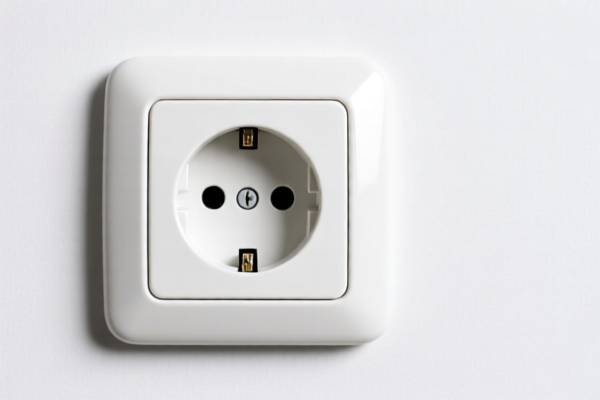
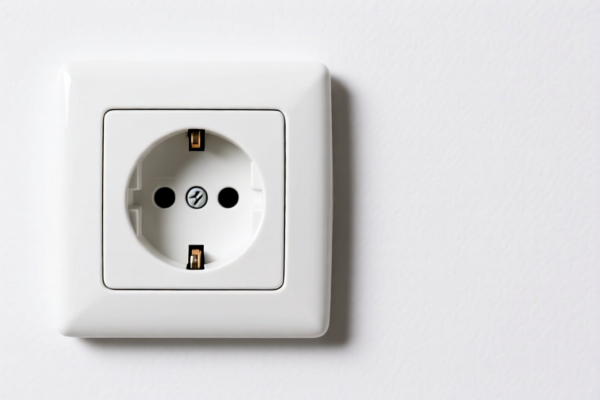
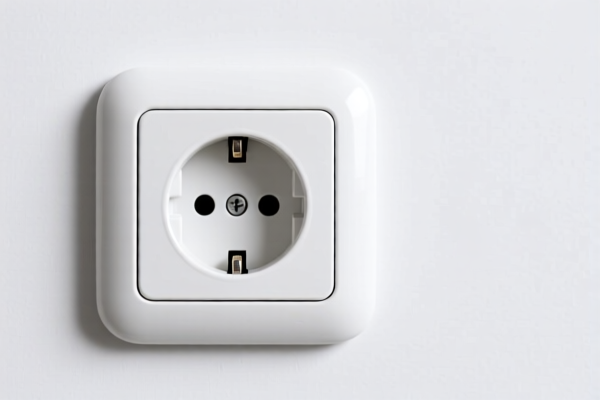
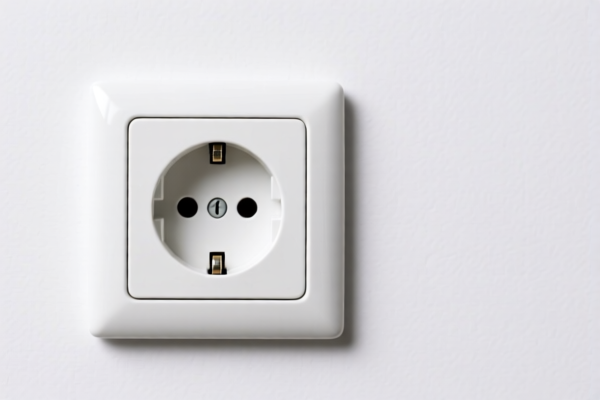
AI Analysis
🔌 Electric Socket (Power Strip/Extension Cord)
🌐 HS Code Reference & Clearance Guide | 2026 Latest Tariff Analysis | Professional Entry Strategy
📌 Part 1: Product Definition & Classification: Do You Truly Understand “Electric Socket”?
An Electric Socket (often referred to as a Power Strip, Extension Cord, or Receptacle in international trade) is a critical component in electrical distribution systems. In the context of US Customs and Border Protection (CBP), it is broadly categorized into two main functional groups:
- Electrical Connectors/Receptacles: Devices designed to plug into a wall outlet to receive power (e.g., the socket itself, often part of a strip).
- Insulated Conductors with Connectors: Cables that include plugs or sockets at the ends for extending power (e.g., extension cords/power strips).
- Power Distribution Boards/Control Panels: Devices used to distribute electricity to multiple circuits within a voltage range of ≤ 1,000V.
⚠️ Critical Distinction Point:
- If the product is a standalone socket or a power strip primarily defined as a connector device made of plastic/metal → Often classified under 8536.69.80.00 or 8537.10.91.x0.
- If the product is explicitly an extension cord/power strip viewed as a "wire with connectors" → Often classified under 8544.42.90.x0.
- Note: Classification heavily depends on the primary function and physical form (board vs. cable).
📦 Part 2: HS Code Classification Details (2026 Latest Tariff Authority)
Based on the provided data, here are the six potential HS Codes for Electric Sockets/Power Strips, along with their specific definitions and tax implications.
| HS Code | Product Description & Summary | Key Characteristics | Total Tax Rate |
|---|---|---|---|
8536.69.80.00 |
Other Connectors: Classified as an electrical device (receptacle type),形态 (form) is "Other Connectors," material is insulation plastic & metal conductive parts. | Focuses on the socket/receptacle aspect as a connector. | 37.7% |
8544.42.90.90 |
Insulated Conductors: Classified as electric conductors equipped with connectors, used for wires/cables in voltage range < 1,000V. | Focuses on the cable/wire aspect (Extension Cord). Higher Tax. | 87.6% |
8537.10.91.70 |
Power Distribution Board: Classified as power distribution equipment, fits the use of distribution boards/panels for voltage ≤ 1,000V. | Focuses on the distribution panel function (e.g., industrial strip or busbar system). | 37.7% |
8537.10.91.20 |
Power Distribution Component: Classified as part of power distribution/control equipment, fits distribution equipment use for voltage ≤ 1,000V. | Similar to above, focuses on component/distribution role. | 37.7% |
8544.42.90.10 |
Conductors with Connectors: Classified as electric conductors (extension cord form) with connectors, fits voltage ≤ 1,000V conductor category. | Explicitly mentions "Extension Cord Form." Highest Tax. | 87.6% |
8536.30.80.00 |
Circuit Connection Equipment: Classified as electrical equipment for circuit connection, fits circuit connection equipment use for voltage ≤ 1,000V. | Focuses on circuit connection function. Lowest base tariff. | 35.0% |
🔍 Key Insight:
- The highest tax rates (87.6%) apply to items classified as conductors/cables (8544.42.90.x0). This is because "extension cords" are often targeted with additional metal/copper tariffs.
- The lowest tax rates (35.0% - 37.7%) apply to items classified as connectors (8536) or distribution panels (8537).
- Material Matters: If classified under 8544, "Steel, Aluminum, Copper products" attract an additional 50% tariff (included in the 87.6% total).
💰 Part 3: 2026 Latest Tariff Rate Breakdown (Including Additional Taxes)
✅ Applicable Country: USA (US)
✅ Origin: China (CN)
✅ Context: Includes Base Tariff, Section 301 Tariff, Section 122 Tariff, and Potential Metal Tariffs.
🎯 1. The "Low Tax" Tier: Connectors & Distribution Panels
HS Codes: 8536.69.80.00, 8537.10.91.70, 8537.10.91.20
Total Tax: 37.7%
| Component | Rate | Source/Description |
|---|---|---|
| Base Tariff | 2.7% | Standard Most Favored Nation (MFN) rate. |
| Section 301 Tariff | 25.0% | Additional tariff on Chinese goods under Trade Act Section 301. |
| Section 122 Tariff | 10.0% | Additional tariff under Section 122 of the Trade Act of 1974. |
| Total | 37.7% | Sum of Base + 301 + 122. |
📌 Explanation:
- These codes are generally viewed as components or distribution equipment rather than simple cables.
- They do NOT incur the additional 50% metal tariff, resulting in a significantly lower total duty burden.
- Strategy: If your product can be reasonably argued as a "connective device" or "distribution board" rather than a "cable," this is the preferred classification for cost-saving.
🎯 2. The "Circuit Connection" Tier
HS Code: 8536.30.80.00
Total Tax: 35.0%
| Component | Rate | Source/Description |
|---|---|---|
| Base Tariff | 0.0% | No base duty for this specific subheading. |
| Section 301 Tariff | 25.0% | Additional tariff on Chinese goods. |
| Section 122 Tariff | 10.0% | Additional tariff under Section 122. |
| Total | 35.0% | Lowest Total Tax Rate. |
📌 Explanation:
- This code offers the lowest total tax rate because the base tariff is 0%.
- It applies to "Circuit Connection Equipment."
- Strategy: Only use this if the product is strictly a circuit connector (e.g., a relay, terminal block, or specific connector module) and not a full power strip with casing and outlets. Misclassification risk is higher here.
🎯 3. The "High Tax" Tier: Insulated Conductors / Extension Cords
HS Codes: 8544.42.90.90, 8544.42.90.10
Total Tax: 87.6%
| Component | Rate | Source/Description |
|---|---|---|
| Base Tariff | 2.6% | Standard MFN rate. |
| Section 301 Tariff | 25.0% | Additional tariff on Chinese goods. |
| Section 122 Tariff | 10.0% | Additional tariff under Section 122. |
| Metal/Copper Surcharge | 50.0% | Crucial: Applied to steel, aluminum, or copper products under this heading. |
| Total | 87.6% | 2.6 + 25 + 10 + 50 = 87.6%. |
📌 Explanation:
- This classification treats the power strip as a cable (insulated conductor).
- The 50% surcharge is the main driver of the high cost. This applies specifically to products containing copper/aluminum conductors.
- Risk: If you declare an extension cord as8544.42.90.90, you will pay 87.6% duty. This is nearly double the cost of classifying it as a connector (8536).
🛠️ Part 4: Clearance Practical Advice (Battle-Tested Tips)
✅ 1. Critical Material Check: Copper vs. Plastic
| Scenario | Classification Risk | Recommendation |
|---|---|---|
| Product is a simple socket/plug only (no long cable) | Low Risk for High Tax | Declare under 8536.69.80.00 (37.7%) or 8536.30.80.00 (35.0%). |
| Product is an extension cord/power strip (with cable) | High Risk for 87.6% | If declared as 8544, expect 87.6%. Try to argue if it can be seen as a "power distribution device" (8537) if it has complex internal switching/distribution features. |
| Product has metal housing | High Risk | Even if classified under 8536, ensure the "metal" aspect doesn't trigger reclassification to 8544 if the primary function is conduction. |
⚠️ Warning:
- Do NOT declare an extension cord as8536.30.80.00(35%) if it is clearly a cable with plugs on both ends. CBP will reclassify it to8544and assess penalties + 87.6% duty.
- Do NOT declare a simple socket as8544.42.90.10(87.6%) if it doesn't have insulated conductors as the primary feature. You will overpay.
✅ 2. Declaration Best Practices
| Item | Recommended Description | Avoid |
|---|---|---|
| Simple Power Strip | "Electrical Connector, Power Strip, Plastic Housing, Metal Contacts, 120V, 15A" | "Extension Cord" (triggers 8544 logic) |
| Industrial Power Distribution Board | "Power Distribution Panel, ≤1000V, For Electrical Circuit Control" | "Socket" or "Strip" |
| Extension Cord | "Insulated Electric Conductor, with Connectors, Voltage < 1000V" | "Power Strip" (if you want to avoid 87.6%, you must argue it's a distribution device, not a simple cord) |
✅ 3. Special Cases
| Situation | Handling Advice |
|---|---|
| OEM Custom Power Strips | Provide detailed schematics. If the internal board does complex distribution, argue for 8537.10.91.70 (37.7%). |
| Product with Smart Features | If it includes a circuit breaker or smart switch, it leans towards 8537 (Distribution/Control) rather than simple 8544 (Conductor). |
| Mixed Shipment | Do not mix 8536 and 8544 items in one line item unless clearly separated. CBP may audit the entire line. |
🌍 Part 5: Global Market Comparison (2026 Latest)
| Market | Recommended HS Code | Estimated Duty (China Origin) | Key Requirements |
|---|---|---|---|
| 🇺🇸 USA | 8536.69.80.00 or 8537.10.91.70 |
37.7% (Avoid 8544 → 87.6%) |
FCC, UL, NRTL Certification |
| 🇨🇳 China | 8536.69.80.00 |
~0-10% (Base) | CCC Certification |
| 🇪🇺 EU | 8536.69.80.00 |
0% (if EPR compliant) | CE, RoHS, REACH |
| 🇬🇧 UK | 8536.69.80.00 |
0% | UKCA |
| 🇯🇵 Japan | 8536.69.80.00 |
0-3% | PSE |
📌 Conclusion:
- USA is the most aggressive market for tariffs on these items due to Section 301 and 122.
- Classification Strategy is Key: Getting the right HS Code can save you ~50% in duties (37.7% vs 87.6%).
- Always prioritize8536or8537if the product can be described as a connector or distribution device, rather than a simple cable (8544).
📌 Part 6: Common Mistakes & Pitfalls (Blood & Tears Lessons)
❌ Mistake 1: Declaring all power strips as "Extension Cords" (8544.42.90.10)
👉 Result: 87.6% Duty. If it’s a standard strip with a hard case and socket array, it might qualify for 8536 (37.7%).
👉 Fix: Consult a customs broker to argue "Connectors" vs "Conductors."
❌ Mistake 2: Ignoring the "Metal Surcharge" under 8544
👉 Result: Surprise 50% additional duty on copper wires.
👉 Fix: Check the material composition. If it's all copper, it's vulnerable.
❌ Mistake 3: Using vague descriptions like "Electric Device"
👉 Result: CBP will assign a code, likely the worst one (often 8544 or 9405).
👉 Fix: Use precise terms: "Power Strip with Connectors" or "Electrical Receptacle."
✅ Correct Approach:
"Power Strip, Electrical Connector, Plastic & Metal, 120V, 15A, With Overload Protection"
→ Target Code:8536.69.80.00(37.7%)
🎯 Part 7: Conclusion: Professional Declaration, Save Cost, Ensure Compliance!
🎯 Remember the Golden Rule:
🔹 "Connectors & Panels = 37.7%"
🔹 "Simple Cords/Extensions = 87.6%"
🔹 "Circuit Connection Equipment = 35.0%" (Use with caution)
🔹 "Don't call an extension cord a cable if it can be a connector!"
📌 Pro Tip:
If your product is a power strip (not just a cable), try to emphasize its role as a distribution device or connector assembly (8536 or 8537) to avoid the punitive 8544 tariffs.
📣 Immediate Action:
📞 Engage a licensed customs broker.
📄 Provide product photos, schematics, and material breakdown.
🚀 Apply for an Advance Ruling from CBP if shipment volume is high to lock in a favorable HS Code.
✨ Professional Clearance Starts with Accurate Classification!
💼 Your Profit Margin Depends on the Decimal Points!
Customer Reviews
About HS Code Classification
The Harmonized System (HS) is an internationally standardized nomenclature developed by the World Customs Organization (WCO) to classify traded products. Over 200 countries use the HS system as the basis for customs tariffs, trade statistics, and import/export regulations.
Each HS code follows a hierarchical structure:
- Chapter (2 digits) — Broad category of goods (e.g., Chapter 84: Machinery and Mechanical Appliances)
- Heading (4 digits) — More specific grouping within the chapter
- Subheading (6 digits) — Internationally standardized breakdown, used by all WCO member countries
- National subdivisions (8-10 digits) — Country-specific extensions for further classification, such as US HTSUS 10-digit codes
Correct HS code classification is essential for smooth customs clearance, accurate duty payment, and compliance with trade regulations. Misclassification can lead to customs delays, overpayment of duties, or penalties.
When importing from CN to US, the applicable tariff rates may include:
- Most-Favored-Nation (MFN) rate — The standard duty rate applied to WTO members
- General rate — Applied to countries without trade agreements
- Trade remedy duties — Additional tariffs such as Section 301 (anti-dumping), Section 232 (national security), or countervailing duties
The information provided on this page is for reference purposes only. For official classification, please consult with your local customs authority or a licensed customs broker.