Electric Spray
CN → US| HS Code | Tariff Rate | Origin | Destination | Doc |
|---|---|---|---|---|
| 8509805080 | 14.2% | CN | US | Official Doc |
| 8424820090 | 37.4% | CN | US | Official Doc |
| 8509805095 | 14.2% | CN | US | Official Doc |
| 8424490000 | 37.4% | CN | US | Official Doc |
Product Images
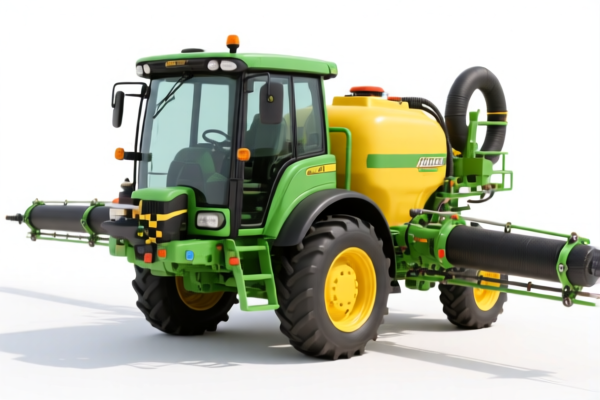
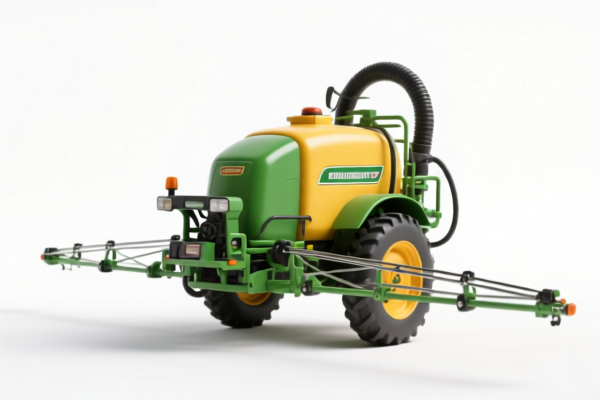
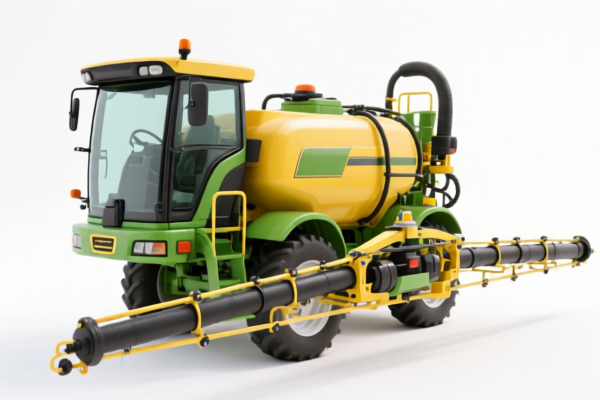
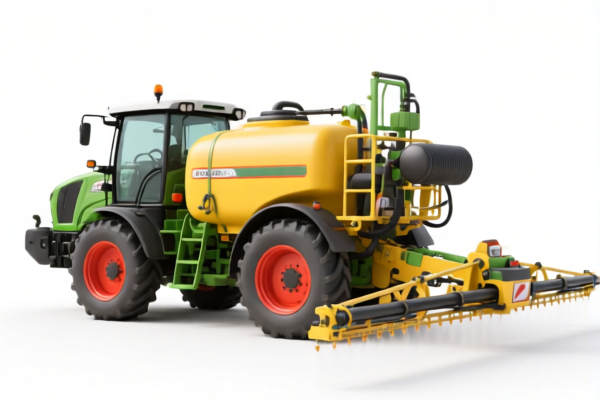
AI Analysis
🌿 Electric Sprayer (Electric Spray)
🌐 HS Code Reference & Customs Clearance Guide | 2026 Latest Tariff Analysis | Professional-Level Strategy
📌 I. Product Definition & Classification: Do You Really Understand “Electric Sprayers”?
The Electric Sprayer is a versatile tool widely used in agriculture, gardening, and household cleaning. In international trade, its classification depends heavily on its primary function (mechanical spraying vs. electrical home appliance) and design structure.
Two main categories compete for classification: 1. Mechanical Spraying Apparatus (Chapter 84): Devices primarily defined by their mechanical function to jet, disperse, or spray liquids/powders, regardless of the power source. 2. Electrical Home Appliances (Chapter 85): Devices defined by their self-contained electric motor and use as household or similar appliances (e.g., humidifiers, sprayers for home care).
⚠️ Key Distinction Point:
- If the device is viewed as a general-purpose mechanical tool for spraying (often agricultural/industrial context) → Likely falls under Chapter 84.
- If the device is viewed as a household electrical appliance (similar to humidifiers, fans, or cleaners) → Likely falls under Chapter 85.
📦 II. HS Code Classification Details (2026 Latest Tariff Authority Comparison)
| HS Code | Product Description | Application Scenario | Primary Basis |
|---|---|---|---|
8509.80.50.95 |
Electrical appliances for mixing, grinding, slicing, etc., n.e.c. (Not elsewhere classified) | Household electric sprayers, non-specific household use | Electrical Home Appliance |
8424.49.00.00 |
Mechanical appliances for projecting, dispersing, or spraying liquids or powders, n.e.c. | General-purpose mechanical sprayers, agricultural/industrial focus | Mechanical Function |
8509.80.50.80 |
Electrical appliances for mixing, grinding, slicing, n.e.c. (Specifically aligned with humidifier functions) | Electric sprayers functioning like humidifiers, home care | Electrical Home Appliance |
8424.82.00.90 |
Agricultural or horticultural machinery/tools, n.e.c. | Sprayers specifically designed for agricultural/gardening use | Mechanical Function (Agri-focus) |
🔍 Key Reminder:
- Chapter 85 codes (8509) generally attract lower tariffs (14.2%) but require the product to be clearly defined as a home appliance. - Chapter 84 codes (8424) generally attract higher tariffs (37.4%) because they are classified as mechanical apparatus, often subject to Section 301 (25%) and Section 122 (10%) additional duties.
💰 III. 2026 Latest Tariff Rate Details (Including Additional Taxes)
✅ Applicable Country: USA (US)
✅ Origin: China (CN)
✅ Effective Time: Ongoing (Based on current Section 301/122 rules)
🎯 1. 8509.80.50.95 & 8509.80.50.80 —— Electrical Home Appliances
| Item | Content |
|---|---|
| Base Duty | 4.2% |
| Section 301 Additional Duty | 0.0% (Exempt from 25% tariff in this specific subheading) |
| Section 122 Duty | 10% (Specific additional duty applicable) |
| Total Tax Rate | 14.2% |
| Tax Calculation | CIF Value × 14.2% |
| De Minimis Eligibility | ❌ Generally subject to full scrutiny due to high volume, but lower rate helps. |
| Legal Basis Path | HTSUS:8509.80.50.95/80 → Section 122 Authority |
📌 Explanation:
- These codes classify the sprayer as an electrical appliance. - The 25% Section 301 tariff does NOT apply to these specific electrical home appliance subheadings, which is a significant advantage. - Only the 10% Section 122 tariff applies on top of the 4.2% base. - Total: 14.2% – Highly Cost-Effective for importers.
🎯 2. 8424.49.00.00 & 8424.82.00.90 —— Mechanical Spraying Apparatus
| Item | Content |
|---|---|
| Base Duty | 2.4% |
| Section 301 Additional Duty | +25.0% (Standard 25% tariff applies) |
| Section 122 Duty | 10% (Specific additional duty applicable) |
| Total Tax Rate | 37.4% |
| Tax Calculation | CIF Value × 37.4% |
| De Minimis Eligibility | ❌ High risk of audit; high duty cost. |
| Legal Basis Path | HTSUS:8424.49.00.00/8424.82.00.90 → Section 301 Footnote → Section 122 Authority |
📌 Explanation:
- These codes classify the sprayer as a mechanical apparatus. - The 25% Section 301 tariff DOES apply because it is a mechanical good from China. - Plus the 10% Section 122 tariff and 2.4% base duty. - Total: 37.4% – High Cost, significantly eroding profit margins.
🛠️ IV. Customs Clearance Practical Advice (Real-World Pitfall Guide)
✅ 1. Documentation Checklist (No Exceptions)
| Document | Required | Note |
|---|---|---|
| ✅ Product Specifications | ✔️ | Must clearly state: "Electric Motor," "Purpose (e.g., Household/Home Use)," "Flow Rate," "Pressure." |
| ✅ Product Photos | ✔️ | Show the electric plug, motor housing, and overall design to prove it's an appliance, not just a manual/mechanical tool. |
| ✅ User Manual | ✔️ | Look for phrases like "For Home Use," "Household Cleaning," or "Humidifying" to support Chapter 85 classification. |
| ✅ Commercial Invoice | ✔️ | Description should match the HS Code logic (e.g., "Electric Home Sprayer" vs. "Agricultural Spray Machine"). |
| ✅ Test Reports | ✔️ | UL, ETL, or FCC reports support the "Electrical Appliance" nature. |
✅ 2. Declaration Strategy (Key Mantra)
🔥 “Appliance over Machine, Home over Agri, Avoid the 37%!”
| Scenario | Correct Declaration | Incorrect Declaration |
|---|---|---|
| Household Garden Sprayer (Plastic bottle, electric pump) | 8509.80.50.95 |
8424.49.00.00 → Save 23% tax! |
| Professional Agricultural Sprayer (Metal tank, high pressure) | 8424.82.00.90 |
8509... → Risk of reclassification |
| Humidifier-like Sprayer | 8509.80.50.80 |
8424... → Save 23% tax! |
📌 Critical Tip:
If your product is marketed for home use (balcony plants, home cleaning, car washing at home), emphasize the electrical home appliance nature. Use terms like "Electric Humidifier," "Home Care Sprayer," or "Household Electric Sprayer" in your documentation to support the 14.2% tariff rate.
✅ 3. Special Cases
| Case | Handling Advice |
|---|---|
| OEM/White Label | Ensure the manual and branding do not strictly limit use to "Commercial Agriculture" if you want to claim Chapter 85. |
| Dual Use (Home & Garden) | If it can be used for both, choose the Chapter 85 code (8509.80.50.95) for cost savings, provided you can justify "home use." |
| High-Pressure Industrial Sprayer | If the device is heavy-duty, metal, and for professional farm use, you must use Chapter 84 (8424...). Do not force Chapter 85 classification. |
🌍 V. Global Main Market Comparison (2026 Latest)
| Country/Region | Recommended HS Code | Tariff Rate | Certification | Note |
|---|---|---|---|---|
| 🇺🇸 USA | 8509.80.50.95 |
14.2% | UL/ETL, FCC | Best Option. Avoid 8424 (37.4%). |
| 🇨🇳 China | 8509.80.50.95 |
5% (approx.) | CCC | Low tariff, high volume. |
| 🇪🇺 EU | 8509.80.50.95 |
0% (Most FTA) | CE, RoHS | Standard electrical appliance. |
| 🇬🇧 UK | 8509.80.50.95 |
0% (Most FTA) | UKCA | Post-Brexit rules apply. |
| 🇦🇺 Australia | 8509.80.50.95 |
5% | RCM | Electrical safety standards. |
📌 Conclusion:
- The US is the critical market where the difference between 14.2% and 37.4% is huge. - Chapter 85 (8509.80) is the strategic winner for electric sprayers intended for general/household use. - Chapter 84 (8424) is a cost trap due to the 25% Section 301 tariff.
📌 VI. Common Errors & Pitfalls (Lessons Learned)
❌ Error 1: Describing the product as "Agricultural Sprayer" in the commercial invoice when it’s a home garden sprayer.
👉 Consequence: Customs may force classification to 8424.82.00.90 (37.4%).
❌ Error 2: Using mechanical-only keywords (e.g., "piston pump," "nozzle assembly") without mentioning "electric motor" or "household use."
👉 Consequence: Risk of being classified as a mechanical apparatus (Chapter 84).
❌ Error 3: Ignoring Section 122.
👉 Consequence: Even for Chapter 85, forget the 10% Section 122 duty. Total is 14.2%, not 4.2%.
❌ Error 4: Confusing with Humidifiers.
👉 Consequence: If it’s a humidifier, use 8509.80.50.80. If it’s a sprayer, use 8509.80.50.95. Both are ~14.2%, but correct description is vital.
✅ Correct Declaration Example:
"Electric Household Sprayer, Model XYZ, 120V, for home gardening and cleaning, equipped with electric motor and plastic tank, UL Certified"
🎯 VII. Conclusion: Smart Classification, Maximum Profit!
🎯 Remember the Mantra:
🔹 "Home Use = 14.2%, Agri/Mech = 37.4%"
🔹 "Don't let a 23% tax difference kill your margin!"
🔹 "Electrical Appliance (8509) is your best friend for Electric Sprayers in the US."
📌 Pro Tip:
- Always provide product images showing the electrical plug and motor.
- Use keywords like "Home," "Household," "Garden," "Cleaner" in your description.
- Avoid keywords like "Industrial," "Commercial Farming," "High Pressure" unless it truly is.
- Apply for a Customs Ruling if your product is borderline, to lock in the 14.2% rate legally.
📣 Immediate Action:
📞 Consult with a licensed customs broker.
📄 Prepare technical specs highlighting "Household Use" and "Electric Motor."
🚀 Secure the 14.2% rate, not the 37.4% penalty!
✨ Professional Customs Clearance Starts with Accurate Classification!
💼 Your Profit Margin Depends on These Two Digits!
Customer Reviews
About HS Code Classification
The Harmonized System (HS) is an internationally standardized nomenclature developed by the World Customs Organization (WCO) to classify traded products. Over 200 countries use the HS system as the basis for customs tariffs, trade statistics, and import/export regulations.
Each HS code follows a hierarchical structure:
- Chapter (2 digits) — Broad category of goods (e.g., Chapter 84: Machinery and Mechanical Appliances)
- Heading (4 digits) — More specific grouping within the chapter
- Subheading (6 digits) — Internationally standardized breakdown, used by all WCO member countries
- National subdivisions (8-10 digits) — Country-specific extensions for further classification, such as US HTSUS 10-digit codes
Correct HS code classification is essential for smooth customs clearance, accurate duty payment, and compliance with trade regulations. Misclassification can lead to customs delays, overpayment of duties, or penalties.
When importing from CN to US, the applicable tariff rates may include:
- Most-Favored-Nation (MFN) rate — The standard duty rate applied to WTO members
- General rate — Applied to countries without trade agreements
- Trade remedy duties — Additional tariffs such as Section 301 (anti-dumping), Section 232 (national security), or countervailing duties
The information provided on this page is for reference purposes only. For official classification, please consult with your local customs authority or a licensed customs broker.