Electric Toy
CN → US| HS Code | Tariff Rate | Origin | Destination | Doc |
|---|---|---|---|---|
| 8543709301 | 10.0% | CN | US | Official Doc |
| 9503000073 | 10.0% | CN | US | Official Doc |
| 8501106080 | 37.8% | CN | US | Official Doc |
| 9503000071 | 10.0% | CN | US | Official Doc |
| 9503000073 | 10.0% | CN | US | Official Doc |
Product Images


AI Analysis
🧸 Electric Toys (电动玩具)
🌐 HS Code Reference & Customs Clearance Guide | 2026 Latest Tariff Analysis | Professional Clearance Strategy
📌 I. Product Definition & Classification: Do You Really Understand "Electric Toys"?
Electric Toys are a broad category of consumer goods that combine mechanical parts with electrical components (batteries, motors, circuits) for entertainment purposes. In international trade, the classification depends heavily on the primary function, complexity of electronics, and specific toy type.
- General Toys (9503): Items where the electric component is auxiliary (e.g., sound, lights) or the device is a simple ride-on toy/model.
- Electronic Educational Devices (8543): Toys with complex interactive electronics, sensors, or specific educational processing functions.
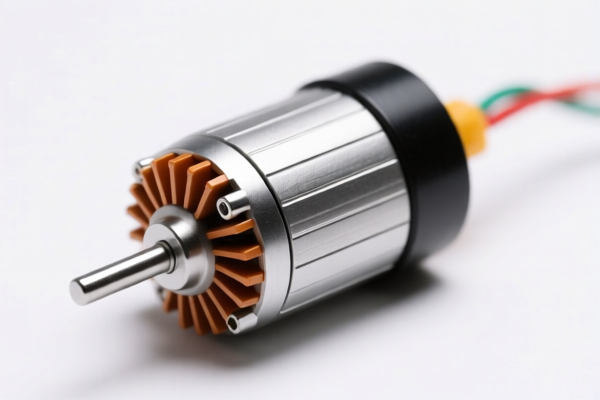
- Motors/Engines (8501): Rarely applicable to finished toys unless the primary value is the motor unit itself (highly unusual for retail toys).
⚠️ Key Distinction Point:
- If it is a standard toy with simple sounds/lights → Chapter 95 (Toys)
- If it is an interactive educational device with specific electronic processing → Chapter 85 (Electrical Machinery)
- If the motor itself is the primary article (e.g., spare part) → Chapter 85
📦 II. HS Code Classification Details (2026 Latest Tariff Authority Comparison)
Based on the provided data, here are the potential HS Codes for Electric Toys, along with their specific justifications and tax implications.
| HS Code | Product Description | Justification from Data | Total Tax Rate |
|---|---|---|---|
8543.70.93.01 |
Interactive Electronic Educational Equipment | "Electric toys are interactive devices with electronic functions, fitting the scope of portable interactive electronic educational equipment." | 10.0% |
9503.00.00.73 |
Toys & Recreational Models | "Electric toys belong to the toy category, fitting the definition of toys and similar recreational models. Material inference has no conflicts." | 10.0% |
8501.10.60.80 |
Electric Motors | "Electric toys contain electric motors as the core power drive, fitting the scope of motors and their applications under other categories." | 37.8% |
9503.00.00.71 |
General Toys (Fallback Category) | "Electric toys are consistent with toy categories like tricycles, scooters, and models, fitting the matching principle of fallback categories." | 10.0% |
9503.00.00.73 |
Electronic Toys (Piano) | "Toy electronic pianos belong to the toy category, with entertainment/toy use, fitting the classification under 9503 for toys and similar recreational models." | 10.0% |
🔍 Critical Reminder:
- Avoid8501.10.60.80for finished toys if possible. This code applies to the motor itself, not the finished toy. Misclassifying a finished toy as a motor results in a massive tariff shock (37.8% vs 10%).
-9503is the Standard: Most electric toys fall under 9503.00.00 (Toys). The specific suffix (71, 73) depends on exact sub-descriptions in local customs databases, but the tax rate remains 10% in this dataset.
-8543is for High-Tech Toys: Only use this if the toy is primarily an electronic educational device with complex interactive capabilities.
💰 III. 2026 Latest Tariff Rate Detailed Breakdown (Including Additional Duties & Policy Surcharges)
✅ Applicable Country: United States (US)
✅ Origin: China (CN)
✅ Effective Time: Includes imports from 2025 onwards
🎯 1. Standard Toy Classification (9503.00.00.71 / 9503.00.00.73)
Most common for ride-on toys, electric cars, simple electronic toys, and toy pianos.
| Item | Detail |
|---|---|
| Base Tariff | 0.0% |
| Section 301 Additional Tariff | 0.0% (Note: Some toy categories may have different statuses, but data shows 0%) |
| Section 122 Tariff (IEEPA) | +10.0% (Targeting Chinese products) |
| Total Effective Rate | 10.0% |
| Tax Calculation | CIF Value × 10% |
| De Minimis Exemption | ❌ Not Applicable (Section 301/122 duties generally apply regardless of de minimis threshold for certain high-risk categories, though de minimis rules vary; data implies full application) |
| Legal Basis | Section 122 Tariff provisions |
📌 Explanation:
- The base tariff for toys is often 0%, but the Section 122 Tariff of 10% significantly increases the cost for Chinese-origin goods.
- This is a moderate tariff level compared to electronics or heavy machinery.
🎯 2. Interactive Electronic Educational Device (8543.70.93.01)
| Item | Detail |
|---|---|
| Base Tariff | 0.0% |
| Section 301 Additional Tariff | 0.0% |
| Section 122 Tariff (IEEPA) | +10.0% |
| Total Effective Rate | 10.0% |
| Tax Calculation | CIF Value × 10% |
| Legal Basis | Section 122 Tariff provisions |
📌 Note: Interestingly, this high-tech category has the same 10% total rate as standard toys in this dataset. However, regulatory requirements (FCC, CPSC) are stricter for
8543than for9503.
🎯 3. Electric Motor Classification (8501.10.60.80)
⚠️ HIGH RISK: Misclassification Danger Zone
| Item | Detail |
|---|---|
| Base Tariff | 2.8% |
| Section 301 Additional Tariff | +25.0% |
| Section 122 Tariff (IEEPA) | +10.0% |
| Total Effective Rate | 37.8% |
| Tax Calculation | CIF Value × 37.8% |
| Legal Basis | Section 301 + Section 122 |
📌 Warning:
- If your product is a finished electric toy (e.g., a remote control car) but is incorrectly declared as an "Electric Motor," you will face a 37.8% tariff instead of 10%.
- Do not use this code for finished toys. Use it only for spare motors sold separately.
🛠️ IV. Customs Clearance Practical Advice (Combat Pitfall Avoidance Guide)
✅ 1. Required Documentation Checklist
| Document | Mandatory | Description |
|---|---|---|
| ✅ Product Specification Sheet | ✔️ | Must detail voltage, battery type, motor power, and materials. |
| ✅ Circuit Diagram / Structure Diagram | ✔️ | Critical to prove whether it's a "Toy (9503)" or "Electronic Device (8543)" or just a "Motor (8501)". |
| ✅ Product Photos (Including Label) | ✔️ | Clear view of model number, brand, and input/output parameters. |
| ✅ Third-Party Test Report | ✔️ | CPSC/CPSIA (US Consumer Product Safety) is mandatory for toys. FCC for electronic components. |
| ✅ Commercial Invoice | ✔️ | Clearly describe as "Electric Toy" or "Toy Car," NOT "Electric Motor." |
| ✅ Packing List | ✔️ | Show relationship between toys and accessories. |
✅ 2. Declaration Tips (Key Mantra)
🔥 “Don’t declare a toy as a motor! Keep it under Chapter 95!”
| Scenario | Correct Declaration | Incorrect Declaration | Consequence |
|---|---|---|---|
| Remote Control Car | 9503.00.00.73 (Toy) |
8501.10.60.80 (Motor) |
Tax jumps from 10% to 37.8% |
| Electric Piano | 9503.00.00.73 (Toy) |
8543.70.93.01 (Elec. Dev.) |
Acceptable, but 9503 is more standard for simple toys. |
| Educational Tablet Toy | 8543.70.93.01 (Elec. Dev.) |
9503.00.00.73 (Toy) |
May trigger higher scrutiny or different regulatory requirements. |
| Spare Motor for Toy | 8501.10.60.80 (Motor) |
9503.00.00.73 (Toy) |
Correct if sold as a part. |
✅ 3. Special Circumstances Handling
| Situation | Handling Advice |
|---|---|
| OEM Custom Toys | Provide customer orders + design drawings. Avoid being classified as "Generic" if specific features justify a different sub-code. |
| Toys with Complex Electronics | If the toy has significant AI/interactive features, consider 8543. But ensure you can prove it’s not just a "toy with sound." |
| Mixed Containers | If shipping toys (9503) and motors (8501) together, separate them on the invoice. Do not mix declarations to avoid penalty for misclassification. |
| Battery Shipment | Electric toys often contain Lithium-ion batteries. Ensure UN38.3 and MSDS are provided for shipping safety. |
🌍 V. Global Market Comparison (2026 Latest)
| Country/Region | Recommended HS Code | Tariff Rate | Certification Requirements | Notes |
|---|---|---|---|---|
| 🇺🇸 USA | 9503.00.00.73 |
10% (Total) | CPSC, CPSIA, FCC (if electronic) | High vigilance on Section 122. |
| 🇨🇳 China | 9503.00.00.00 |
5-10% | CCC (for certain electric toys) | Check specific sub-rates. |
| 🇪🇺 EU | 9503.00.00 |
0-4% | CE, EN71, RoHS | Strict safety standards for electrical parts. |
| 🇬🇧 UK | 9503.00.00 |
0-5% | UKCA, BS EN71 | Post-Brexit rules apply. |
📌 Conclusion:
- The USA imposes a 10% total tariff on electric toys from China, driven by Section 122.
- Misclassification as a motor (8501) is costly (37.8%) and risky.
- Safety Certifications (CPSC/CE) are more critical than tariff optimization for this category.
📌 VI. Common Mistakes & Pitfall Guide (Lessons Learned)
❌ Mistake 1: Declaring a finished Electric Toy as an "Electric Motor" (8501) to try to find a lower rate.
👉 Result: Higher Tax (37.8%) + Potential Customs Penalty for Misclassification.
👉 Why: The motor is just a part; the toy is the whole article.
❌ Mistake 2: Not providing CPSC/CPSIA test reports.
👉 Result: Cargo Detention or Return. Customs will not clear toys without safety proof.
❌ Mistake 3: Vague Description "Electric Toy".
👉 Result: Customs Review Delay. Use specific terms: "Electric Ride-On Car," "Electronic Learning Toy," etc.
❌ Mistake 4: Ignoring Battery Regulations.
👉 Result: Shipping Rejection. Lithium batteries require special handling and documentation.
✅ Correct Approach:
"Electric Ride-On Car, 6V, Battery Powered, Model XYZ, CPSC Certified, HS 9503.00.00.73"
🎯 VII. Conclusion: Precise Classification, Safe Clearance!
🎯 Remember the Mantra:
🔹 "Toy is Toy (9503), Motor is Motor (8501). Don't Mix!"
🔹 "10% is the Target, 37.8% is the Trap!"
🔹 "Safety First: CPSC/CE before Tariffs!"
📌 Pro Tip:
If your electric toy has advanced interactive features (AI, sensors, screen-based learning), consider
8543.70.93.01. While the tariff is the same (10%), it aligns with the product's technical nature and may ease regulatory compliance for "electronic devices."
Always apply for a Pre-Ruling if your product is on the borderline between9503and8543.
📣 Take Action Now:
📞 Contact a Licensed Customs Broker + Provide Product Specs + Get HS Code Pre-Ruling
🚀 Ensure your electric toys clear customs smoothly, comply with safety laws, and maximize profits!
✨ Professional Clearance Starts with Accurate Classification!
💼 Every penny saved counts in global trade!
Customer Reviews
About HS Code Classification
The Harmonized System (HS) is an internationally standardized nomenclature developed by the World Customs Organization (WCO) to classify traded products. Over 200 countries use the HS system as the basis for customs tariffs, trade statistics, and import/export regulations.
Each HS code follows a hierarchical structure:
- Chapter (2 digits) — Broad category of goods (e.g., Chapter 84: Machinery and Mechanical Appliances)
- Heading (4 digits) — More specific grouping within the chapter
- Subheading (6 digits) — Internationally standardized breakdown, used by all WCO member countries
- National subdivisions (8-10 digits) — Country-specific extensions for further classification, such as US HTSUS 10-digit codes
Correct HS code classification is essential for smooth customs clearance, accurate duty payment, and compliance with trade regulations. Misclassification can lead to customs delays, overpayment of duties, or penalties.
When importing from CN to US, the applicable tariff rates may include:
- Most-Favored-Nation (MFN) rate — The standard duty rate applied to WTO members
- General rate — Applied to countries without trade agreements
- Trade remedy duties — Additional tariffs such as Section 301 (anti-dumping), Section 232 (national security), or countervailing duties
The information provided on this page is for reference purposes only. For official classification, please consult with your local customs authority or a licensed customs broker.