Electric Trimmer
CN → US| HS Code | Tariff Rate | Origin | Destination | Doc |
|---|---|---|---|---|
| 8201906000 | 35.0% | CN | US | Official Doc |
| 8467895060 | 17.5% | CN | US | Official Doc |
| 8201500000 | 0.0% | CN | US | Official Doc |
| 8467290085 | 17.5% | CN | US | Official Doc |
| 8510209000 | 39.0% | CN | US | Official Doc |
Product Images
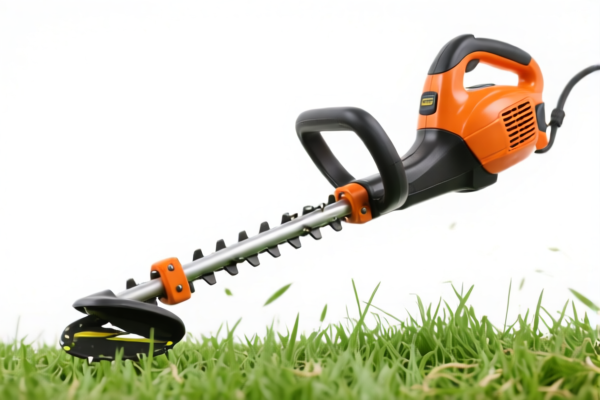
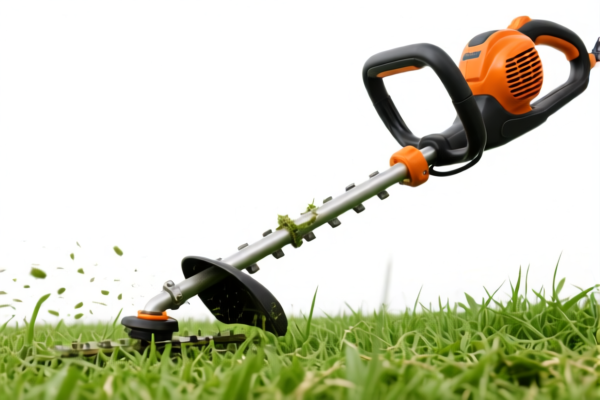
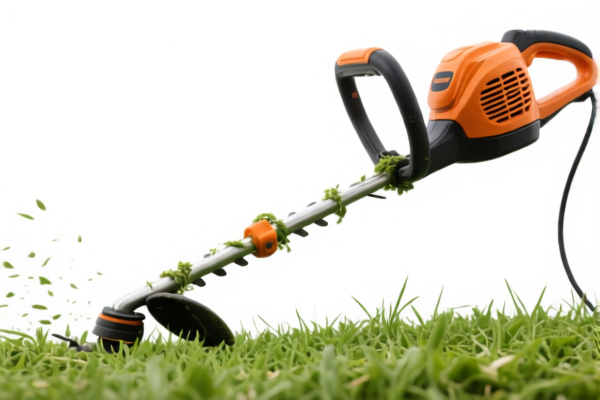
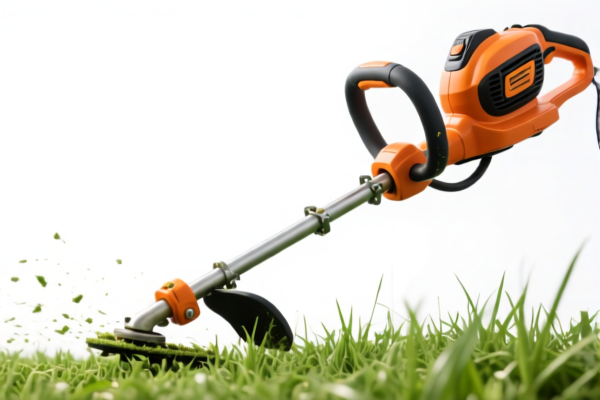
AI Analysis
✂️ Electric Trimmer (Electric Pruning Shears/Secateurs)
🌐 HS Code Reference & Clearance Guide | 2026 Latest Tariff Analysis | Professional Logistics Strategy
📌 I. Product Definition & Classification: Are You Confusing "Shears" with "Power Tools"?
Electric Trimmers (specifically Electric Pruning Shears/Secateurs used for horticulture) occupy a critical boundary in international trade classifications. The core dispute lies between: 1. Hand Tools of Chapter 82 (8201): If classified as metal tools, even if electrically powered, they may fall under "Pruners" or "Secateurs." 2. Power Tools of Chapter 84 (8467): If classified as "Self-contained motor-operated" tools.
This distinction is not just academic; it leads to a massive tariff disparity (45% vs. 17.5%) and different regulatory scrutiny.
⚠️ Key Distinction Point:
- If the primary function is viewed as a metal cutting tool (like traditional shears) with a motor attachment → Often grouped with 8201 (Hand Tools).
- If the primary function is viewed as a power-driven mechanism (like a drill or saw) → Grouped with 8467 (Power Tools).
- Note: US Customs and Border Protection (CBP) has historically scrutinized electric pruners under 8201 more frequently for high tariffs, but 8467 is a valid argument for fully integrated, specialized horticultural power tools.
📦 II. HS Code Classification Details (2026 Latest Tariff Authority Comparison)
| HS Code | Product Description | Application Scenario | Material/Function Focus | Total Tax Rate (China Origin) |
|---|---|---|---|---|
8201.90.60.00 |
Electric Pruning Shears; matching horticultural hand tools, metal/ferrous material | Gardening hand tools, manual-style electric shears | Metal/Tool Focus | 45.0% |
8467.89.50.60 |
Electric Pruning Shears; electrically driven tool, agricultural/horticultural use | Specialized garden machinery, integrated power systems | Power Tool Focus | 17.5% |
8201.50.00.00 |
Electric Pruners/Trimming Tools; function consistent with pruning/shearing | General horticultural cutting | Function Focus (Hand Tool) | 1¢/unit + 37.8% |
8467.29.00.85 |
Electric Pruning Shears; self-contained electric motor cutting tool | Hand-held power cutters | Power Tool Focus | 17.5% |
8201.60.00.00 |
Trimming Tools; high consistency with pruning scissors, no material/shape conflict | Standard pruning scissors (electric variant) | Form Factor Focus | 1¢/unit + 37.8% |
🔍 Critical Insight:
- 8201 Codes incur Section 301 Tariffs (25%) + Section 122 Tariffs (10%) + Base Duty (2.8% + 1¢/ea) = Total ~37.8% - 45%.
- 8467 Codes incur Section 301 Tariffs (7.5%) + Base Duty (0%) = Total 17.5%.
- Strategic Advantage: Classifying under 8467 saves nearly 20-28% in duty costs compared to 8201.
💰 III. 2026 Latest Tariff Rate Breakdown (Including Surtaxes & Policy Add-ons)
✅ Applicable Country: United States (US)
✅ Origin: China (CN)
✅ Effective Date: Current trade policies (Section 301 & Section 122)
🎯 1. 8201.90.60.00 / 8201.50.00.00 / 8201.60.00.00 —— Horticultural Hand Tools (Metal/Pruners)
| Item | Content |
|---|---|
| Base Duty (MFN) | 2.8% ad valorem (for .50/.60) or Free (for .90 variant depending on specific subheading interpretation, but data shows 0% base for .90.60) |
| Section 301 Surcharge | +25.0% (Trade Act of 1974, Section 301) |
| Section 122 Surcharge | +10.0% (Uyghur Forced Labor Prevention Act / Specific Section 122 provisions cited) |
| Total Rate | 45.0% (for .90.60) ~37.8% + 1¢/unit (for .50/.60) |
| Calculation Method | CIF Value × Total % + (1¢ × Quantity) |
| De Minimis Exemption | ❌ Not Eligible (Valued goods subject to strict duty collection) |
| Legal Basis Path | HTSUS:8201 → FTUS Footnote:301(25%) → IEEPA:122(10%) |
📌 Explanation:
- The 25% is the standard Section 301 tariff on Chinese hand tools. - The 10% is an additional surcharge (referenced as "122 Clause" in data, often linked to specific trade remedies or forced labor acts). - For.50.00.00and.60.00.00, there is a specific unit duty of 1¢ per piece in addition to the ad valorem rates.
🎯 2. 8467.89.50.60 / 8467.29.00.85 —— Power Tools (Self-Contained Motor)
| Item | Content |
|---|---|
| Base Duty (MFN) | 0.0% (Free) |
| Section 301 Surcharge | +7.5% (Reduced rate for certain power tools or specific subheadings) |
| Section 122 Surcharge | +10.0% (Still applicable under current data context) |
| Total Rate | 17.5% |
| Calculation Method | CIF Value × 17.5% |
| De Minimis Exemption | ❌ Not Eligible |
| Legal Basis Path | HTSUS:8467 → FTUS Footnote:301(7.5%) → IEEPA:122(10%) |
📌 Explanation:
- 7.5% is the Section 301 rate for specific power tools listed in Section 301 Action Plan List 4A (or similar preferential list). - 10% Section 122 surcharge is added. - Total 17.5% is significantly lower than the 45% for hand tools.
🛠️ IV. Clearance Practical Advice (Pitfall Avoidance Guide)
✅ 1. Document Preparation Checklist (Non-negotiable)
| Document | Required | Description |
|---|---|---|
| ✅ Product Specs | ✔️ | Must specify: "Electric," "Battery/Packed," "Horticultural Use," "Motor Wattage." |
| ✅ Circuit Diagram | ✔️ | Essential to prove "Self-contained motor" for 8467 classification. |
| ✅ Product Photos | ✔️ | Show the power source (battery/ cord), handle design, and cutting head. |
| ✅ Commercial Invoice | ✔️ | Clearly state: "Electric Pruning Shears, Model XYZ, for Garden Use." Avoid vague terms like "Gadget." |
| ✅ Origin Certificate | ✔️ | To confirm Chinese origin (subject to 301/122 duties). |
✅ 2. Classification Strategy (Key Mantra)
🔥 “If it’s a Power Tool, Go 8467. If it’s a Hand Tool, Brute 8201.”
| Scenario | Recommended HS Code | Risk if Misclassified |
|---|---|---|
| Integrated Electric Pruner (Battery inside, dedicated motor) | 8467.89.50.60 or 8467.29.00.85 | Low Tax (17.5%) |
| Manual Shears with Attached Motor (Look like traditional pruners) | 8201.90.60.00 | High Tax (45%) |
| Replacement Blades for Electric Pruners | 8208.90 or 8467.99 | Different duty rates, ensure accessories are declared separately or with main unit if complete set. |
📌 Crucial Tip:
- To justify 8467, emphasize the "electric motor-driven mechanism" in your description. - To justify 8201, emphasize the "hand-held, manual-style cutting action" and metal blade composition. - Recommendation: Aim for 8467 to save 27.5% in duties. Provide engineering drawings showing the motor integration.
✅ 3. Special Circumstances
| Situation | Handling Advice |
|---|---|
| OEM Customization | Provide client specs proving specialized horticultural function (supports 8467.89). |
| Sold as "Set" (Pruners + Battery + Charger + Case) | Declare as "Complete Set" under the primary tool (8467/8201). Do not split unless necessary for lower duty on accessories. |
| Battery Included | Ensure batteries are Li-ion (common). Check if battery duty (8507.60) is lower, but usually, the tool classification covers the set if integral. |
🌍 V. Global Market Comparison (2026 Latest)
| Country/Region | Recommended HS Code | Tariff (China Origin) | Certification | Note |
|---|---|---|---|---|
| 🇺🇸 USA | 8467.89.50.60 |
17.5% (vs 45% for 8201) | FCC, UL, CSA | Highly recommended to use 8467. |
| 🇨🇳 China | 8467.89.50.60 |
7.5% (Import Duty) | CCC | Domestic use, low impact. |
| 🇪🇺 EU | 8467.89 |
4.5% (Standard) | CE, RoHS | No Section 301/122 equivalents. |
| 🇬🇧 UK | 8467.89 |
3.5% - 6.0% | UKCA, RoHS | Post-Brexit tariffs apply. |
📌 Conclusion:
- USA is the only market where the HS Code choice drastically changes profitability due to punitive tariffs. - 8467 is the optimal path for US exports to save ~27.5% in duties.
📌 VI. Common Mistakes & Pitfalls (Lessons from Experience)
❌ Mistake 1: Classifying Electric Pruners as 8201 without justification.
👉 Consequence: Pay 45% duty instead of 17.5%. Loss of competitiveness.
❌ Mistake 2: Declaring only "Garden Tool" without specifying "Electric."
👉 Consequence: Customs may assign a random code or hold shipment for classification review, causing delays and storage fees.
❌ Mistake 3: Separating the Battery from the Tool.
👉 Consequence: Battery (8507.60) may have different duty rates and safety regulations (UN38.3). If sold as a set, ensure correct "GRI 3(b)" grouping.
❌ Mistake 4: Ignoring Section 122 (10%).
👉 Consequence: Even if you get 8467, you still pay 10% surcharge. Do not assume "Power Tools" are exempt from all Chinese surcharges.
✅ Correct Practice:
"Electric Pruning Shears, 20V Li-ion, Cordless, for Horticultural Use, Model XYZ, FCC Certified"
🎯 VII. Conclusion: Precision Classification = Profit Protection
🎯 Remember the Mantra:
🔹 “Power Tool? Use 8467. Save 27.5%!”
🔹 “Hand Tool? Use 8201. Pay 45%. Painful!”
🔹 “Section 122 Hits Both. Always Include 10% Surcharge.”
📌 Pro Tip:
If your product is originally manufactured in Vietnam, Mexico, or Thailand, you may avoid Section 301/122 tariffs entirely.
For US-bound electric trimmers, supply chain diversification is the only true way to bypass the 17.5%-45% duty wall.
📣 Immediate Action:
📞 Consult a Customs Broker for Advance Ruling on HS Code 8467.89.50.60.
🚀 Optimize your product description to highlight "Electric Motor-Driven Mechanism" to support the 17.5% rate.
✨ Professional Clearance Starts with Accurate Classification!
💼 Every Percent of Duty Saved is Pure Profit!
Customer Reviews
About HS Code Classification
The Harmonized System (HS) is an internationally standardized nomenclature developed by the World Customs Organization (WCO) to classify traded products. Over 200 countries use the HS system as the basis for customs tariffs, trade statistics, and import/export regulations.
Each HS code follows a hierarchical structure:
- Chapter (2 digits) — Broad category of goods (e.g., Chapter 84: Machinery and Mechanical Appliances)
- Heading (4 digits) — More specific grouping within the chapter
- Subheading (6 digits) — Internationally standardized breakdown, used by all WCO member countries
- National subdivisions (8-10 digits) — Country-specific extensions for further classification, such as US HTSUS 10-digit codes
Correct HS code classification is essential for smooth customs clearance, accurate duty payment, and compliance with trade regulations. Misclassification can lead to customs delays, overpayment of duties, or penalties.
When importing from CN to US, the applicable tariff rates may include:
- Most-Favored-Nation (MFN) rate — The standard duty rate applied to WTO members
- General rate — Applied to countries without trade agreements
- Trade remedy duties — Additional tariffs such as Section 301 (anti-dumping), Section 232 (national security), or countervailing duties
The information provided on this page is for reference purposes only. For official classification, please consult with your local customs authority or a licensed customs broker.