Electric Trimmer Router
CN → US| HS Code | Tariff Rate | Origin | Destination | Doc |
|---|---|---|---|---|
| 8465920051 | 38.0% | CN | US | Official Doc |
| 8467290090 | 17.5% | CN | US | Official Doc |
| 8467290070 | 17.5% | CN | US | Official Doc |
| 8465920058 | 38.0% | CN | US | Official Doc |
Product Images
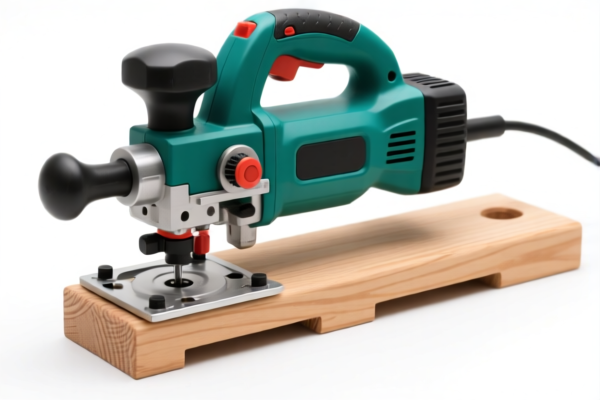
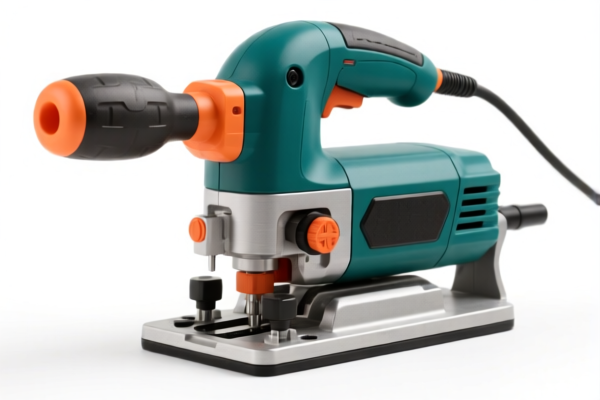
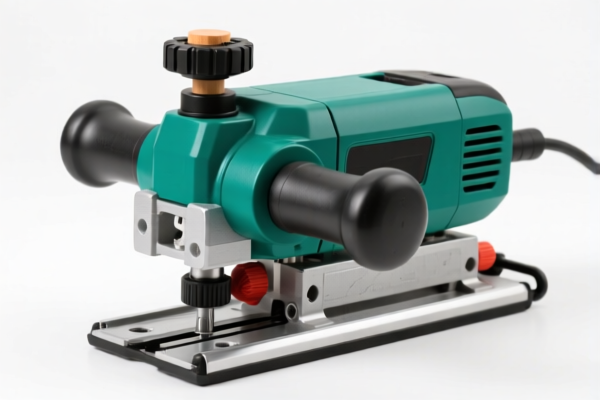
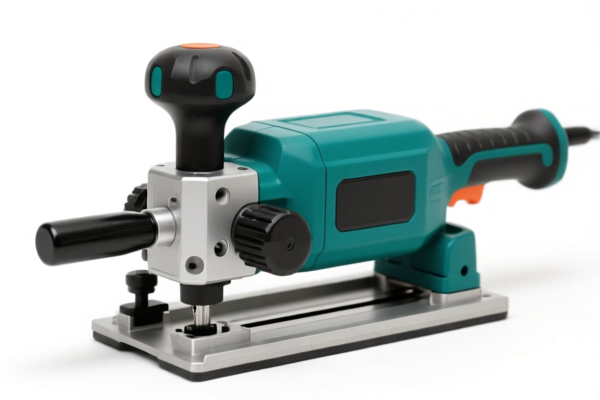
AI Analysis
🛠️ Electric Trimmer Router (Woodworking Engraver)
🌐 HS Code Reference & Customs Clearance Guide | 2026 Latest Tariff Analysis | Professional Clearance Strategy
📌 1. Product Definition and Classification: Do You Really Understand the "Electric Trimmer Router"?
The Electric Trimmer Router is a versatile handheld power tool primarily used for woodworking. It can perform edge trimming, grooving, and engraving tasks. In international trade, its classification depends heavily on its structural design (whether the motor is built-in or external) and its primary function.
⚠️ Key Distinction Point:
- If the tool is designed as a router/engraver for processing hard materials like wood, and functions equivalently to a router, it falls under Chapter 84 (Machinery).
- If the tool is classified as a handheld power tool with a self-contained motor, it falls under Chapter 84 (Machinery) but under a different heading for portable tools.
- Crucial Note: The summary claiming it is "equivalent to a router for data processing" is technically incorrect terminology for woodworking tools; however, the HS Code determination relies on the functional description provided in the data (i.e., "processing wood," "engraving," or "portable tool").
📦 2. HS Code Classification Details (2026 Latest Tariff Authority Comparison)
| HS Code | Product Description | Applicable Scenario | Motor Type / Function |
|---|---|---|---|
8465.92.00.58 |
Electric Trimmer Router | Equivalent to a router for processing hard materials like wood | ✅ Integrated Motor (Machinery Category) |
8465.92.00.51 |
Electric Trimmer Router | Functions equivalent to an engraver/router; conforms to woodworking machinery definition | ✅ Integrated Motor (Machinery Category) |
8467.29.00.90 |
Electric Trimmer Router | Handheld tool with self-contained motor; falls under "other" handheld tools | ✅ Self-Contained Motor (Portable Tool Category) |
8467.29.00.70 |
Electric Trimmer Router | Conform to "trimmer router" definition with self-contained motor | ✅ Self-Contained Motor (Portable Tool Category) |
🔍 Key Reminder:
- Group 1 (8465...): Classified as woodworking machinery accessories/parts. This group typically applies when the tool is viewed as a specialized machine component or a larger woodworking system accessory.
- Group 2 (8467...): Classified as portable power tools. This applies when the device is considered a handheld tool with its own motor, independent of a larger machine base.
- Tax Implication: The classification choice drastically affects the total tax rate (38.0% vs. 17.5%).
💰 3. 2026 Latest Tariff Rate Breakdown (Including Additional Taxes)
✅ Applicable Country: United States (US)
✅ Origin: China (CN)
✅ Effective Time: Includes imports after November 10, 2025 (Subject to ongoing trade policies)
🎯 1. 8465.92.00.58 & 8465.92.00.51 —— Woodworking Machinery Category
| Item | Content |
|---|---|
| Base Tariff | 3.0% (ad valorem) |
| Section 301 Additional Tariff | +25.0% |
| Section 122 Additional Tariff | +10.0% |
| Total Tariff Rate | 38.0% |
| Tax Calculation | CIF Value × 38.0% |
| De Minimis Eligibility | ❌ Not Eligible (High tariff rate excludes small package exemption in many contexts) |
| Legal Basis Path | USITC:8465.92.00.58 → SECTION 301: 25% → SECTION 122: 10% |
📌 Explanation:
- These HS Codes are classified under Chapter 84 (Nuclear reactors, boilers, machinery).
- The 38% total tax is composed of:
1. Base Tariff (3%): Standard Most-Favored-Nation (MFN) rate for woodworking machinery parts.
2. Section 301 Tariff (25%): Imposed on Chinese goods under Trade Act Section 301.
3. Section 122 Tariff (10%): Specific additional levy applied to certain Chinese imports.
- Conclusion: This is a high-cost classification. Importers should verify if the product truly fits "woodworking machinery" rather than "portable tools" to potentially lower costs.
🎯 2. 8467.29.00.90 & 8467.29.00.70 —— Handheld Power Tool Category
| Item | Content |
|---|---|
| Base Tariff | 0.0% (ad valorem) |
| Section 301 Additional Tariff | +7.5% |
| Section 122 Additional Tariff | +10.0% |
| Total Tariff Rate | 17.5% |
| Tax Calculation | CIF Value × 17.5% |
| De Minimis Eligibility | ❌ Not Eligible (Despite lower rate, Section 301 often negates de minimis benefits for Chinese goods) |
| Legal Basis Path | USITC:8467.29.00.90 → SECTION 301: 7.5% → SECTION 122: 10% |
📌 Explanation:
- These HS Codes fall under Chapter 84, Heading 8467 (Tools for working in the hand, with self-contained electric or non-electric motor).
- The 17.5% total tax is significantly lower than the machinery category:
1. Base Tariff (0%): Portable power tools often have zero base duty.
2. Section 301 Tariff (7.5%): A reduced Section 301 rate compared to other categories.
3. Section 122 Tariff (10%): Same additional levy as above.
- Conclusion: This is the preferred classification for cost-saving, provided the product is indeed a handheld tool with a built-in motor.
🛠️ 4. Customs Clearance Practical Advice (Pitfall Avoidance Guide)
✅ 1. Required Documentation List (Missing Any May Cause Delay)
| Document | Mandatory? | Description |
|---|---|---|
| ✅ Product Specification Sheet | ✔️ | Must detail voltage, RPM, power, and motor type (self-contained vs. external). |
| ✅ Technical Diagrams | ✔️ | Show the motor integration. Is it a handheld tool (8467) or a machine part (8465)? |
| ✅ Product Photos | ✔️ | Clear images of the tool, nameplate, and any accessories. |
| ✅ Commercial Invoice | ✔️ | Must clearly state "Electric Trimmer Router" or "Handheld Power Tool" – avoid ambiguous terms like "Router for Data Processing." |
| ✅ Packing List | ✔️ | List all items in the box (e.g., base plate, depth rod). |
| ✅ Origin Certificate | ✔️ | Required for determining Section 301/122 applicability. |
✅ 2. Declaration Tips (Key Mantra)
🔥 "Function Dictates HS Code, Motor Type Determines Rate!"
| Scenario | Correct Declaration | Incorrect Declaration |
|---|---|---|
| Handheld tool with built-in motor | 8467.29.00.70 or 8467.29.00.90 |
Reporting as "Woodworking Machine Part" → 38% Tax |
| Tool used for heavy-duty industrial woodworking | 8465.92.00.51 or 8465.92.00.58 |
Reporting as "Hand Tool" → Risk of Re-classification & Penalties |
| Ambiguous "Router" | Specify "Woodworking Router" | Using "Router" alone → Might be confused with IT hardware (wrong chapter) |
✅ 3. Special Case Handling
| Situation | Recommendation |
|---|---|
| OEM Custom Tools | Provide client order and design specs to prove intended use. |
| Kit Packages | If sold with a base or stand, ensure the main tool is declared correctly. Don't split shipment to avoid higher component rates. |
| Dual-Use Tools | If the tool can be used for both wood and plastic, emphasize woodworking if claiming 8465, or handheld if claiming 8467. |
| USITC Exclusions | Check if your specific HS Code has an exclusion list for Section 301 tariffs. (Currently, most tools do not). |
🌍 5. Global Market Comparison (2026 Latest)
| Country/Region | Recommended HS Code | Tariff Rate (China Origin) | Certification Required | Notes |
|---|---|---|---|---|
| 🇺🇸 USA | 8467.29.00.70 |
17.5% | FCC + UL | Best value; avoid 8465 (38%) unless necessary. |
| 🇺🇸 USA | 8465.92.00.51 |
38.0% | FCC + UL | High cost; only use if defined as machinery part. |
| 🇨🇳 China | 8467.29.00.70 |
~7-10% (Import Duty) | CCC | Lower import duty in China. |
| 🇪🇺 EU | 8467.29.00.70 |
0% | CE + RoHS | No Section 301/122 equivalents in EU. |
| 🇬🇧 UK | 8467.29.00.70 |
0% | UKCA | Post-Brexit trade agreement benefits may apply. |
📌 Conclusion:
- The USA is the most critical market for tariff optimization due to Section 301 and 122 tariffs.
- Choosing8467over8465saves 20.5% in total taxes.
- EU and UK markets offer more favorable rates for these tools.
📌 6. Common Mistakes & Pitfall Guide (Lessons Learned)
❌ Mistake 1: Using "Router" without context, leading to confusion with IT equipment.
👉 Consequence: Customs may misclassify under Chapter 85 (Electrical Machinery) or require clarification, causing delays.
👉 Fix: Always specify "Woodworking" or "Power Tool".
❌ Mistake 2: Declaring a handheld tool as "Machinery Part" (8465).
👉 Consequence: Paying 38% tax instead of 17.5%.
👉 Fix: Verify if the motor is self-contained and the tool is handheld. If yes, use 8467.
❌ Mistake 3: Ignoring Section 122 Tariff.
👉 Consequence: Under-declaring tax liability.
👉 Fix: Account for the additional 10% in all cost calculations for US imports.
✅ Correct Declaration Example:
"Electric Handheld Trimmer Router for Woodworking, Self-Contained Motor, 120V, Model XYZ, FCC Certified"
🎯 7. Conclusion: Professional Declaration Saves Money!
🎯 Remember the Mantra:
🔹 "Handheld & Motor-In → 8467 (17.5%) | Machine Part → 8465 (38%)"
🔹 "Save 20% by Choosing the Right HS Code!"
🔹 "Section 122 is Always On → Plan for 10% Extra!"
📌 Pro Tip:
- If your product is a complete handheld unit, strongly consider 8467.29.00.70 or 8467.29.00.90 for significant tax savings.
- Request an Advance Ruling from CBP (U.S. Customs and Border Protection) if the classification is ambiguous.
- Ensure your Invoice Description matches the HS Code functionality exactly.
📣 Immediate Action:
📞 Consult with a Licensed Customs Broker
📄 Prepare Detailed Technical Specs
🚀 Optimize Your Supply Chain to Avoid the 38% Tax Pitfall!
✨ Professional Clearance Starts with Accurate Classification!
💼 Every Percent Saved is Pure Profit!
Customer Reviews
About HS Code Classification
The Harmonized System (HS) is an internationally standardized nomenclature developed by the World Customs Organization (WCO) to classify traded products. Over 200 countries use the HS system as the basis for customs tariffs, trade statistics, and import/export regulations.
Each HS code follows a hierarchical structure:
- Chapter (2 digits) — Broad category of goods (e.g., Chapter 84: Machinery and Mechanical Appliances)
- Heading (4 digits) — More specific grouping within the chapter
- Subheading (6 digits) — Internationally standardized breakdown, used by all WCO member countries
- National subdivisions (8-10 digits) — Country-specific extensions for further classification, such as US HTSUS 10-digit codes
Correct HS code classification is essential for smooth customs clearance, accurate duty payment, and compliance with trade regulations. Misclassification can lead to customs delays, overpayment of duties, or penalties.
When importing from CN to US, the applicable tariff rates may include:
- Most-Favored-Nation (MFN) rate — The standard duty rate applied to WTO members
- General rate — Applied to countries without trade agreements
- Trade remedy duties — Additional tariffs such as Section 301 (anti-dumping), Section 232 (national security), or countervailing duties
The information provided on this page is for reference purposes only. For official classification, please consult with your local customs authority or a licensed customs broker.