Electric Vegetable Slicer
CN → US| HS Code | Tariff Rate | Origin | Destination | Doc |
|---|---|---|---|---|
| 8509400040 | 14.2% | CN | US | Official Doc |
| 8509400025 | 14.2% | CN | US | Official Doc |
| 8438600000 | 35.0% | CN | US | Official Doc |
| 8438800000 | 35.0% | CN | US | Official Doc |
| 8438800000 | 35.0% | CN | US | Official Doc |
Product Images
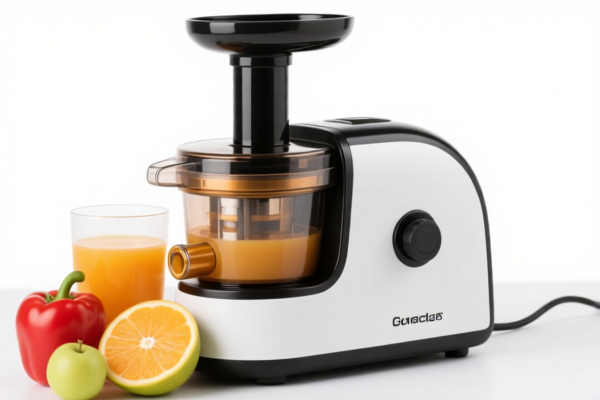
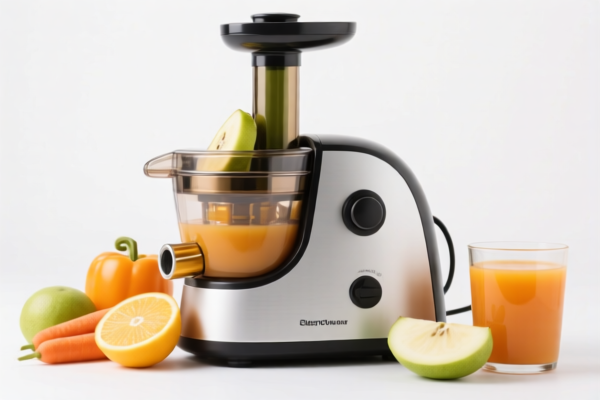
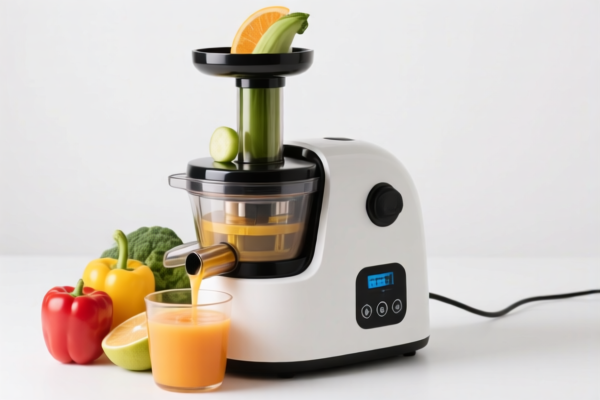
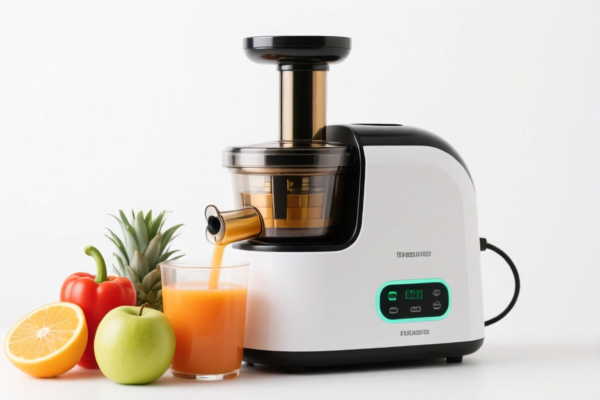
AI Analysis
🥕 Electric Vegetable Slicer (Food Processors & Chopping Machines)
🌐 HS Code Reference & Customs Clearance Guide | 2026 Latest Tariff Analysis | Professional Clearance Strategy
📌 I. Product Definition & Classification: What Exactly Is It?
An Electric Vegetable Slicer is a kitchen appliance designed to chop, slice, or grind vegetables. In international trade, it is generally classified based on its function and power source.
Two Main Classification Paths:
-
Household Electric Appliances (Chapter 85):
If the device is designed for household use (home kitchen), contains an electric motor, and functions as a food processor/chopper, it falls under Heading 8509 (Electromechanical domestic appliances). -
Food Preparation Machinery (Chapter 84):
If the device is considered industrial/commercial grade (high power, heavy-duty) or lacks specific "household" characteristics, it may fall under Heading 8438 (Machinery for the industrial preparation of food/drink).
⚠️ Key Distinction Point:
- Household Use: Small size, plastic/metal mix, low power, standard kitchen plug → 8509.40 (Food Processor)
- Industrial/Commercial Use: Large metal body, high power, industrial plug → 8438.60/8438.80 (Other Food Preparation Machinery)
- Note: The color (e.g., "Green") or minor material variations do not affect classification.
📦 II. HS Code Classification Details (2026 Latest Tariff Authority Comparison)
| HS Code | Product Description | Application Scenario | Classification Logic |
|---|---|---|---|
8509.40.00.40 |
Electromechanical domestic appliances with self-contained electric motor; Food processors | Household electric vegetable slicers, choppers | ✅ Matches "Household Appliance" + "Food Processor" function |
8509.40.00.25 |
Other electromechanical domestic appliances; Food processors/choppers | Household electric slicers (alternative subheading) | ✅ Matches "Electric" + "Chopping/Cutting" function |
8438.60.00.00 |
Machinery for preparing vegetables; Industrial/Commercial | Industrial slicers, heavy-duty commercial choppers | ✅ Matches "Machinery for vegetable preparation" |
8438.80.00.00 |
Other machinery for industrial food preparation | Commercial/Industrial electric slicers | ✅ Matches "Food Prep Machinery" (General Category) |
🔍 Important Reminder:
- Household Slicers: Must be declared under 8509. Misdeclaring a household slicer as industrial machinery (8438) can lead to higher duties and customs inspection delays. - Industrial Slicers: Must be declared under 8438. Misdeclaring as household (8509) may result in rejection if the machine’s power/capacity exceeds household standards.
💰 III. 2026 Latest Tariff Rate Breakdown (Including Additional Taxes & Policies)
✅ Applicable Country: USA (US)
✅ Country of Origin: China (CN)
✅ Effective Date: From November 10, 2025 (and subsequent imports)
🎯 1. 8509.40.00.40 / 8509.40.00.25 —— Household Electric Food Processors/Slicers
| Item | Details |
|---|---|
| Base Tariff Rate | 4.2% (Ad Valorem) |
| USITC Additional Duty | 0.0% |
| Section 301 (IEEPA) Additional Duty | +10% (Targeting China-origin products) |
| Total Tariff Rate | 14.2% |
| Tax Calculation | CIF Value × 14.2% |
| De Minimis Exemption Eligibility | ❌ Not Eligible (Deny de minimis for Section 301 goods) |
| Legal Basis Path | IEEPA:9903.01.25 → USITC:8509.40.00.40/25 |
📌 Explanation:
- Base 4.2%: Standard MFN rate for household electric food processors. - 10% Section 301 Duty: Imposed on Chinese-origin food processors and similar kitchen appliances. - Total 14.2%: This is the effective duty rate for clearance.
- No De Minimis: Packages under $800 (Section 321) cannot be cleared duty-free if classified under these codes due to Section 301 applicability.
🎯 2. 8438.60.00.00 / 8438.80.00.00 —— Industrial/Commercial Food Preparation Machinery
| Item | Details |
|---|---|
| Base Tariff Rate | 0.0% |
| USITC Additional Duty | +25% (Section 301 for certain machinery) |
| Section 301 (IEEPA) Additional Duty | +10% (Targeting China-origin products) |
| Total Tariff Rate | 35.0% |
| Tax Calculation | CIF Value × 35.0% |
| De Minimis Exemption Eligibility | ❌ Not Eligible (Deny de minimis) |
| Legal Basis Path | IEEPA:9903.01.25 → USITC:8438.60.00.00/80.00.00 |
📌 Explanation:
- Base 0%: Industrial machinery often has zero base duty. - 25% USITC Additional: Applies to specific categories of industrial machinery from China. - 10% Section 301: Additional levy on Chinese-origin food prep machinery. - Total 35.0%: Significantly higher than household appliances.
- Risk: If a household slicer is incorrectly declared as industrial machinery, you pay more tax. If an industrial slicer is declared as household, you face misclassification penalties.
🛠️ IV. Customs Clearance Practical Advice (Real-World Pitfall Avoidance)
✅ 1. Required Documentation Checklist (Mandatory)
| Document | Required? | Description |
|---|---|---|
| ✅ Product Specification Sheet | ✔️ | Must include voltage, power (Watts), capacity (L), and speed (RPM) |
| ✅ Product Photos | ✔️ | Clear images of the entire unit, motor, blades, and label |
| ✅ Commercial Invoice | ✔️ | Clearly state: "Electric Vegetable Slicer, Household/Commercial Use" |
| ✅ Packing List | ✔️ | List all components (base, bowl, blades, lid) |
| ✅ FCC Certification | ✔️ | Mandatory for USA. Without it, the shipment will be detained |
| ✅ UL/ETL Report | ✅ Recommended | Safety certification for electrical appliances |
| ✅ HS Code Pre-Ruling | ✅ Optional | Apply for Advance Ruling to confirm 8509 vs. 8438 |
✅ 2. Declaration Tips (Key Mantra)
🔥 “Household vs. Industrial: Define Power & Use. Label Clearly, Avoid Fines!”
| Scenario | Correct Declaration | Wrong Practice |
|---|---|---|
| Home Kitchen Slicer (Low power, plastic body) | 8509.40.00.40 (14.2% tax) |
Declaring as 8438 → Pays 35% tax unnecessarily |
| Commercial Slicer (High power, metal body) | 8438.60.00.00 (35% tax) |
Declaring as 8509 → Misclassification Penalty + Back Taxes |
| Partially Assembled Kit | Declare as Complete Unit | Splitting into "Base" + "Blades" → Higher combined tax |
| Green-Colored Slicer | Ignore color in HS Code | Color does not change classification |
📌 Critical Note:
- FCC ID must be present on the product or packaging.
- Voltage: Ensure 110V-120V for US market. If 220V, it may be rejected as non-compliant.
✅ 3. Special Cases Handling
| Case | Handling Advice |
|---|---|
| OEM White-Label Products | Provide client’s design specs. Same HS code applies (8509). |
| Multi-Function Machines | If it chops, blends, and grinds, still 8509.40 (Food Processor). |
| Accessories Only (Blades, Bowls) | Declare separately. Blades may fall under 8211 (Tools), Bowls under 3924 (Plastics). |
| Samples for Display | If value < $800 and not China-origin, may qualify for de minimis. If China-origin, NO de minimis exemption for 8509/8438. |
🌍 V. Global Market Comparison (2026 Latest)
| Country/Region | Recommended HS Code | Tariff Rate | Certification Required | Notes |
|---|---|---|---|---|
| 🇺🇸 USA | 8509.40.00.40 |
14.2% | FCC + UL/ETL | 35% if misclassified as industrial |
| 🇨🇳 China | 8509.40.00.40 |
5% | CCC | Low tax, high volume |
| 🇪🇺 EU | 8509.40.00.40 |
6% (if origin CN) | CE + RoHS | No Section 301 equivalent |
| 🇨🇦 Canada | 8509.40.00.40 |
0% (if CUSMA eligible) | ICES | Check origin for exemptions |
| 🇬🇧 UK | 8509.40.00.40 |
6% | UKCA | Post-Brexit rules apply |
📌 Conclusion:
- USA is the most critical market due to the 10% Section 301 add-on.
- Misclassification risk is high: Household vs. Industrial distinction is strict.
- Certification is non-negotiable: FCC failure = Seizure.
📌 VI. Common Errors & Pitfalls (Lessons Learned)
❌ Mistake 1: Declaring a Household Slicer as Industrial Machinery (8438)
👉 Result: Pay 35% tax instead of 14.2%. Loss of $20.80 per $100 CIF value.
❌ Mistake 2: Declaring an Industrial Slicer as Household Appliance (8509)
👉 Result: Customs rejects declaration. Penalty + Back Taxes + Interest.
❌ Mistake 3: Missing FCC ID on the product
👉 Result: Shipment detained at US port. Return or destruction. Total loss.
❌ Mistake 4: Assuming De Minimis ($800) applies to China-origin goods
👉 Result: Deny De Minimis for Section 301 goods. You must pay duties even on small parcels.
✅ Correct Approach:
“Electric Vegetable Slicer, Household Use, 300W, 120V, FCC ID: XXXXX, Model XYZ”
🎯 VII. Conclusion: Precise Classification, Cost Savings, Smooth Clearance!
🎯 Remember the Mantra:
🔹 “Household 8509 (14.2%), Industrial 8438 (35%)”
🔹 “FCC is King, Misclassification is Death”
🔹 “No De Minimis for China, Plan Ahead!”
📌 Pro Tip:
- If your product is dual-use (e.g., can be used in small cafes), consider declaring as Household (8509) if it meets household power specs.
- Apply for an FCC ID before shipping.
- For large commercial orders, consult a customs broker to verify if 8438 is truly applicable to avoid over-taxing.
📣 Immediate Action:
📞 Contact a Licensed Customs Broker
📸 Provide Product Photos + Specs
📜 Apply for FCC Certification + HS Code Pre-Ruling
🚀 Ensure Smooth US Clearance & Maximize Profit!
✨ Professional Clearance Starts with Accurate Classification!
💼 Every Cent Counts – Get It Right the First Time!
Customer Reviews
About HS Code Classification
The Harmonized System (HS) is an internationally standardized nomenclature developed by the World Customs Organization (WCO) to classify traded products. Over 200 countries use the HS system as the basis for customs tariffs, trade statistics, and import/export regulations.
Each HS code follows a hierarchical structure:
- Chapter (2 digits) — Broad category of goods (e.g., Chapter 84: Machinery and Mechanical Appliances)
- Heading (4 digits) — More specific grouping within the chapter
- Subheading (6 digits) — Internationally standardized breakdown, used by all WCO member countries
- National subdivisions (8-10 digits) — Country-specific extensions for further classification, such as US HTSUS 10-digit codes
Correct HS code classification is essential for smooth customs clearance, accurate duty payment, and compliance with trade regulations. Misclassification can lead to customs delays, overpayment of duties, or penalties.
When importing from CN to US, the applicable tariff rates may include:
- Most-Favored-Nation (MFN) rate — The standard duty rate applied to WTO members
- General rate — Applied to countries without trade agreements
- Trade remedy duties — Additional tariffs such as Section 301 (anti-dumping), Section 232 (national security), or countervailing duties
The information provided on this page is for reference purposes only. For official classification, please consult with your local customs authority or a licensed customs broker.