Electric Watch
CN → US| HS Code | Tariff Rate | Origin | Destination | Doc |
|---|---|---|---|---|
| 9106908500 | 0.0% | CN | US | Official Doc |
| 9106906500 | 0.0% | CN | US | Official Doc |
| 9102128000 | 17.5% | CN | US | Official Doc |
| 9017208080 | 39.6% | CN | US | Official Doc |
| 9028900040 | 35.0% | CN | US | Official Doc |
Product Images
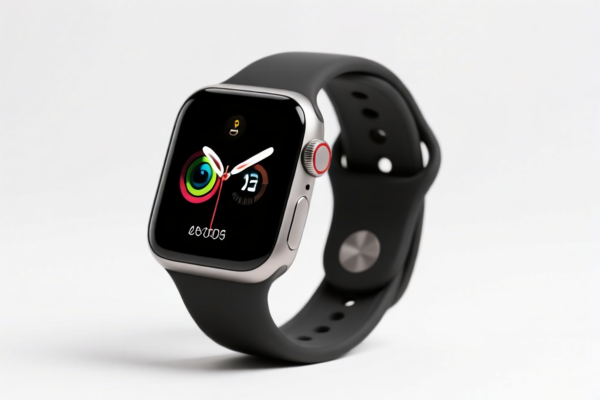
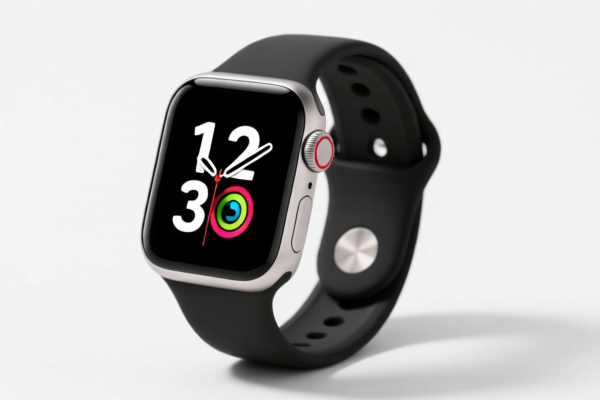
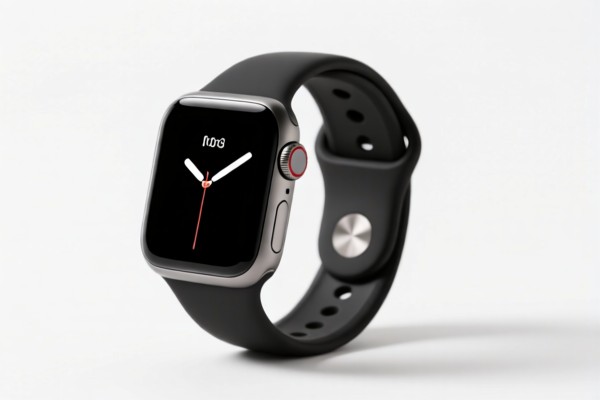
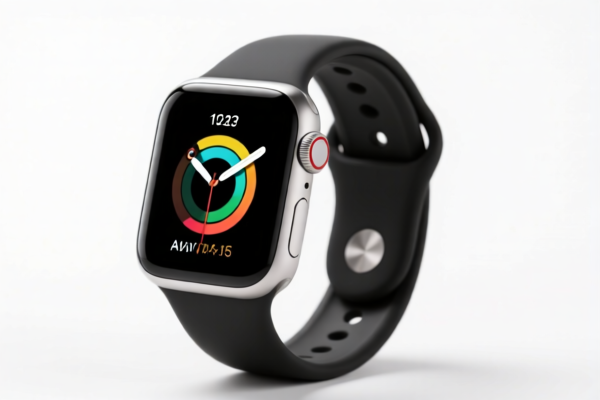
AI Analysis
🕒 Electric Watch (Electronic Timepieces)
🌐 HS Code Reference & Customs Clearance Guide | 2026 Latest Tariff Analysis | Professional Clearance Strategy
📌 I. Product Definition & Classification: Do You Really Understand "Electric Watch"?
An Electric Watch is a timekeeping device that uses an electric power source (typically a battery) to drive its internal mechanism. In international trade, the classification depends heavily on whether the watch is primarily for personal wear or serves a specialized measurement function (like a stopwatch). The provided data highlights four distinct HS Codes, each corresponding to a specific functional nuance.
⚠️ Key Distinction:
- Is it a general-purpose timekeeping instrument measuring intervals? → Look at 9106.
- Does it have analog display features typical of wristwatches/stopwatches? → Look at 9102.
- Is it classified broadly under measuring instruments in a generic category? → Look at 9017.
- Is there a potential confusion with electric meters (misinterpretation risk)? → Look at 9028.
📦 II. HS Code Classification Details (2026 Latest Tariff Authority Comparison)
| HS Code | Product Description | Applicable Scenario | Functional Basis |
|---|---|---|---|
9106.90.85.00 |
Electronic Stopwatch | Specialized timing instruments | Fits the definition of "instruments for recording, indicating, or measuring time intervals." |
9106.90.65.00 |
Electronic Stopwatch (Battery Powered) | Battery-driven time measurement devices | Matches "battery-powered" and "has a clock mechanism (or electronic timing logic)." |
9102.12.80.00 |
Electric Watch with Stopwatch Function | Personal timekeeping with stop function | Classified as "Electric" with "Stopwatch" capability; assumes optoelectronic/analog display characteristics. |
9017.20.80.80 |
Electronic Stopwatch (Measuring Instrument) | General measuring/calculating instruments | Categorized under "drawing, marking, or mathematical calculation instruments" as a measuring tool without material conflict. |
9028.90.00.40 |
Electric Meter (Potential Misclassification) | Electric energy meters | Warning: Based on the term "Meter" (电表) in product names; applies to energy metering, not timekeeping. |
🔍 Critical Reminder:
- 9106 covers specialized timing instruments (stopwatches).
- 9102 covers general electric watches (including those with stopwatch functions).
- 9017 is a broader category for measuring instruments.
- 9028 is for energy meters. If your product is a timepiece, DO NOT use this code unless there is a specific naming error in your documentation.
💰 III. 2026 Latest Tariff Rate Breakdown (Including Surcharges & Policy Add-ons)
✅ Applicable Country: United States (US)
✅ Origin: China (CN)
✅ Effective Time: Post-2025 policies (Section 301 & IEEPA)
🎯 1. 9106.90.85.00 & 9106.90.65.00 —— Electronic Stopwatches (Timing Instruments)
These two codes share the same tariff structure according to the provided data. They apply to devices specifically designed for measuring time intervals.
| Item | Detail |
|---|---|
| Base Tariff | 15¢ each + 2.3% (ad valorem) + 0.8¢ per jewel |
| Section 301 Surcharge | +25.0% |
| IEEPA Surcharge (Section 122/301 related) | +10.0% |
| Total Effective Tax Rate | 35.0% (Calculated on ad valorem part) + Specific fees |
| Tax Calculation Logic | Specific duty (per piece/jewel) + Ad valorem (35% of CIF value) |
| De Minimis Exemption | ❌ Not Applicable (High value/specific goods) |
| Legal Basis Path | USITC:9106.90.85.00 → SECTION301:9903.88.01 (25%) → IEEPA:9903.01.24 (10%) |
📌 Explanation:
- The 35% total rate is derived from the 25% Section 301 tariff + 10% IEEPA tariff applied on top of the base.
- Specific Duties: Note the complex base calculation: 15¢ per unit + 0.8¢ per jewel. This means the tariff is not just a percentage but includes a per-unit component.
- "Jewel" Definition: In electronic watches, "jewels" often refer to synthetic bearings in mechanical parts or equivalent components in high-precision electronic movements. Confirm with your manufacturer if your product has "jewels" counted for duty purposes.
🎯 2. 9102.12.80.00 —— Electric Watch (Personal Timekeeping)
This code applies to electric watches that are more akin to consumer timepieces (e.g., wristwatches with stopwatch functions) rather than industrial timing instruments.
| Item | Detail |
|---|---|
| Base Tariff | 0.0% |
| Section 301 Surcharge | +7.5% |
| IEEPA Surcharge | +10.0% |
| Total Tariff Rate | 17.5% |
| Tax Calculation | CIF Value × 17.5% |
| De Minimis Exemption | ❌ Not Applicable for high-value shipments |
| Legal Basis Path | USITC:9102.12.80.00 → SECTION301 (7.5%) → IEEPA (10%) |
📌 Key Difference:
- This code has a lower total tariff (17.5%) compared to the 9106 series (35%).
- It assumes the watch has an optoelectronic display or fits the "electric" definition for personal timekeeping.
- Why the difference? 9106 is for "instruments" (often industrial/lab grade), while 9102 is for "watches" (consumer goods). Proper classification can save ~17.5% + specific fees.
🎯 3. 9017.20.80.80 —— Electronic Stopwatch (General Measuring Instrument)
A broader classification under measuring instruments. Often used if the stopwatch is part of a larger measuring system or lacks specific "watch" features.
| Item | Detail |
|---|---|
| Base Tariff | 4.6% |
| Section 301 Surcharge | +25.0% |
| IEEPA Surcharge | +10.0% |
| Total Tariff Rate | 39.6% |
| Tax Calculation | CIF Value × 39.6% |
| De Minimis Exemption | ❌ Not Applicable |
| Legal Basis Path | USITC:9017.20.80.80 → SECTION301 (25%) → IEEPA (10%) |
📌 Note:
- This is the highest tariff rate among the timekeeping options.
- Only use if the product is clearly a general measuring instrument and not specifically a "watch" or "timing instrument" under Chapter 91.
🎯 4. 9028.90.00.40 —— WARNING: Potential Misclassification
| Item | Detail |
|---|---|
| Base Tariff | 0.0% |
| Section 301 Surcharge | +25.0% |
| IEEPA Surcharge | +10.0% |
| Total Tariff Rate | 35.0% |
| Product Type | Electric Energy Meter (Not a Watch!) |
| Legal Basis | USITC:9028.90.00.40 → SECTION301 → IEEPA |
🚨 CRITICAL ALERT:
- The summary states: "The term 'electric meter' in the product name matches the usage of 'electricity meter'."
- If your product is an Electric Watch, DO NOT USE THIS CODE.
- Using this code for a timepiece is a customs violation (misdeclaration). It may lead to seizures, fines, and back taxes. This code is for devices that measure electrical energy consumption, not time.
🛠️ IV. Customs Clearance Practical Advice (Field Pitfall Avoidance Guide)
✅ 1. Documentation Checklist (Essential)
| Document | Required | Notes |
|---|---|---|
| Product Specification Sheet | ✔️ | Must clearly state: "Electronic," "Battery-Powered," "Stopwatch Function," or "Timekeeping." |
| Function Description | ✔️ | Differentiate between "Industrial Timing Instrument" (9106) and "Consumer Electric Watch" (9102). |
| Product Photos | ✔️ | Show display type (digital/analog), buttons, and power source. |
| Bill of Lading / Invoice | ✔️ | Use precise English terms: "Electronic Stopwatch, Battery Powered" or "Electric Watch with Stop Function." Avoid generic "Watch" if it triggers 9028 confusion. |
| Certificate of Origin | ✔️ | Required for verifying country of origin for Section 301/IEEPA taxes. |
✅ 2. Declaration Strategy (Key Mantras)
🔥 "Function Defines Code: Timing vs. Energy, Watch vs. Instrument!"
| Scenario | Recommended HS Code | Risk if Wrong |
|---|---|---|
| Industrial Stopwatch / Lab Timer | 9106.90.85.00 or 9106.90.65.00 |
Misclassified as 9102 (17.5%) → Underpayment penalty. Or 9017 (39.6%) → Overpayment. |
| Consumer Electric Watch (with stop function) | 9102.12.80.00 |
Misclassified as 9028 (Energy Meter) → Seizure/Fines. |
| General Measuring Instrument | 9017.20.80.80 |
Only if not clearly a timepiece. High tax (39.6%). |
| Electric Energy Meter | 9028.90.00.40 |
DO NOT USE for watches. Wrong product entirely. |
✅ 3. Special Situations Handling
| Situation | Handling Advice |
|---|---|
| Mixed Shipments | Separate "Watches" (9102) from "Stopwatches" (9106) on the invoice to avoid confusion. |
| "Jewel" Counting | For 9106 codes, verify if your electronic movement has components classified as "jewels." If not, the 0.8¢/jewel fee may be zero, but the 15¢/each fee still applies. |
| Brand New Digital Watches | Ensure they are not labeled as "Electrical Instruments" but as "Timepieces" to potentially qualify for 9102 (lower tax). |
| OEM Custom Stopwatches | Provide design drawings showing the electronic logic board to support 9106 classification. |
🌍 V. Global Market Customs Comparison (2026 Latest)
| Country/Region | Recommended HS Code | Tariff (China Origin) | Certification | Notes |
|---|---|---|---|---|
| 🇺🇸 USA | 9102.12.80.00 |
17.5% | FCC, CE | Lowers cost vs. 9106 (35%). |
| 🇺🇸 USA | 9106.90.85.00 |
35.0% + Specifics | FCC | Higher cost for industrial timing. |
| 🇨🇳 China | 9102.12.80.00 |
~5-10% | CCC | Domestic taxes differ. |
| 🇪🇺 EU | 9102.12.80.00 |
~0-2.7% | CE, RoHS | Generally lower tariffs than US. |
| 🇬🇧 UK | 9102.12.80.00 |
~0-2.7% | UKCA, RoHS | Post-Brexit rules apply. |
📌 Conclusion:
- USA imposes the highest tariffs due to Section 301 and IEEPA.
- Correct classification is critical: Choosing9102(17.5%) over9106(35%) can save nearly half the tax for similar electronic timing devices.
- Never use9028for timepieces.
📌 VI. Common Errors & Pitfalls (Blood Lessons)
❌ Error 1: Calling a "Stopwatch" an "Electric Meter"
👉 Consequence: Customs flags for misdeclaration. Fines + Seizure.
👉 Fix: Use "Electronic Stopwatch" or "Time Interval Measuring Instrument."
❌ Error 2: Classifying a Consumer Watch as 9106 (Industrial)
👉 Consequence: Paying 35% instead of 17.5%.
👉 Fix: Highlight "Wristwear" or "Personal Timepiece" in description.
❌ Error 3: Ignoring the "Specific Duty" in 9106
👉 Consequence: Underpayment. The 15¢/each + 0.8¢/jewel adds up.
👉 Fix: Calculate exact unit cost including specific fees in your profit margin.
❌ Error 4: Using "Watch" for an Energy Meter
👉 Consequence: Complete mismatch of product.
👉 Fix: Use "Electric Meter" only for devices measuring kWh/Watts.
✅ Correct Declaration Example:
"Electronic Stopwatch, Battery Operated, Digital Display, Waterproof, Model XYZ, for Sports Timing"
→ Use9106.90.65.00or9106.90.85.00depending on specific function."Electric Wristwatch with Stopwatch Function, Quartz Movement, Stainless Steel Case"
→ Use9102.12.80.00(Lower Tax: 17.5%).
🎯 VII. Conclusion: Precise Classification Saves Money!
🎯 Remember the Mantra:
🔹 "Timing Instrument = 9106 (35%), Personal Watch = 9102 (17.5%), Energy Meter = 9028 (Don't use for watches!)"
🔹 "HS Code decides tax life. 17.5% vs 35% is a huge difference. Misclassification is risky!"
📌 Pro Tip:
If your product is both a watch and a timing instrument, argue for 9102.12.80.00 if it is primarily for personal use/wear, as it has a significantly lower tax rate (17.5%) compared to the industrial timing instrument code (35%).
📣 Immediate Action:
📞 Consult a Customs Broker + Provide Product Photos + Apply for Advance Ruling
🚀 Ensure your "Electric Watch" or "Stopwatch" is declared correctly to avoid 35% tax traps and 9028 misclassification penalties!
✨ Professional Clearance Starts with Accurate Classification!
💼 Your Every Dollar of Tariff is Worth Calculating!
Customer Reviews
About HS Code Classification
The Harmonized System (HS) is an internationally standardized nomenclature developed by the World Customs Organization (WCO) to classify traded products. Over 200 countries use the HS system as the basis for customs tariffs, trade statistics, and import/export regulations.
Each HS code follows a hierarchical structure:
- Chapter (2 digits) — Broad category of goods (e.g., Chapter 84: Machinery and Mechanical Appliances)
- Heading (4 digits) — More specific grouping within the chapter
- Subheading (6 digits) — Internationally standardized breakdown, used by all WCO member countries
- National subdivisions (8-10 digits) — Country-specific extensions for further classification, such as US HTSUS 10-digit codes
Correct HS code classification is essential for smooth customs clearance, accurate duty payment, and compliance with trade regulations. Misclassification can lead to customs delays, overpayment of duties, or penalties.
When importing from CN to US, the applicable tariff rates may include:
- Most-Favored-Nation (MFN) rate — The standard duty rate applied to WTO members
- General rate — Applied to countries without trade agreements
- Trade remedy duties — Additional tariffs such as Section 301 (anti-dumping), Section 232 (national security), or countervailing duties
The information provided on this page is for reference purposes only. For official classification, please consult with your local customs authority or a licensed customs broker.