Electric Winch
CN → US| HS Code | Tariff Rate | Origin | Destination | Doc |
|---|---|---|---|---|
| 8607995000 | 38.1% | CN | US | Official Doc |
| 8425310100 | 35.0% | CN | US | Official Doc |
| 8708998180 | 12.5% | CN | US | Official Doc |
| 8425390100 | 35.0% | CN | US | Official Doc |
| 8708998160 | 37.5% | CN | US | Official Doc |
Product Images
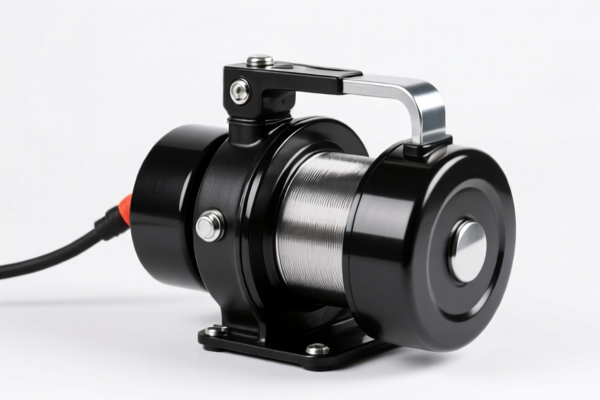
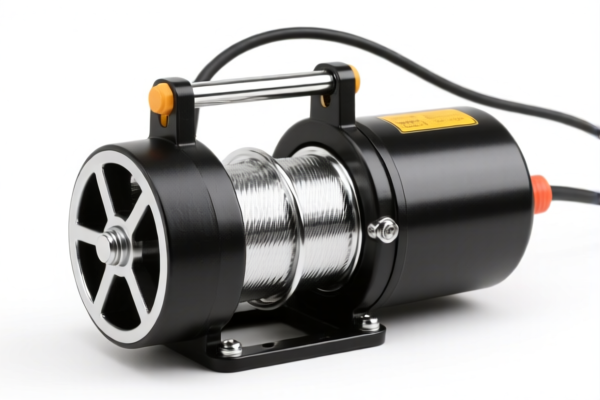
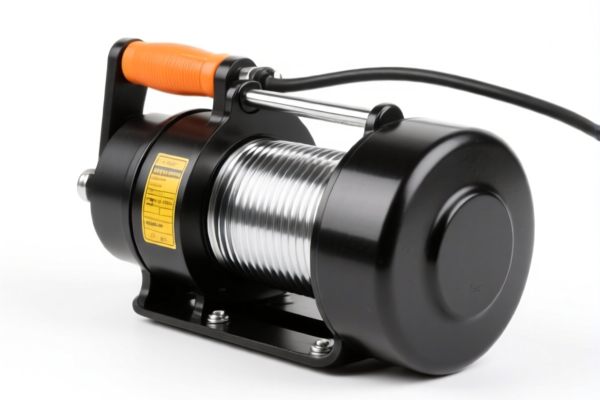
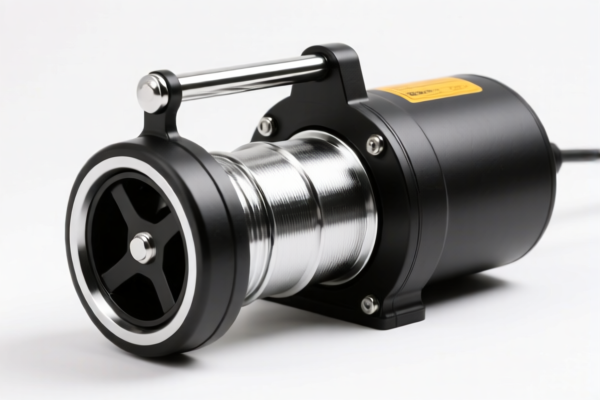
AI Analysis
🚜 Electric Winch (电动绞盘)
🌐 HS Code Reference & Customs Clearance Guide | 2026 Latest Tariff Analysis | Strategic Clearance Strategy
📌 1. Product Definition & Classification: What is an Electric Winch?
An electric winch is a mechanical device that draws in (winds up) or lets out (wins out) or otherwise supports a cable or rope. It typically consists of a spool and a flexible cable (steel, synthetic, or wire) wrapped around the drum. In international trade, classification depends heavily on the intended application (off-road vehicle, railway, general machinery) and structural form (capstan, drum, internal transmission).
⚠️ Key Classification Points:
- If it is a complete unit driven by an electric motor for general lifting/traction → Often 8425.
- If it is explicitly a vehicle accessory/part → Often 8708.
- If it functions as an internal transmission component for rail vehicles → Often 8607.
📦 2. HS Code Classification Details (2026 Latest Tariff Authority Comparison)
Based on the provided data, here are the five potential HS Codes for "Electric Winch" with their specific justifications and tax implications.
| HS Code | Summary Justification | Total Tax Rate | Tax Breakdown |
|---|---|---|---|
| 8425.39.01.00 | Falls under Winches/Capstan Winches. Meets usage and form requirements. No material conflict. | 35.0% | Base: 0.0% Add. Tariff: 25.0% Section 122: 10% |
| 8708.99.81.60 | Functionally a cable traction device; morphologically a vehicle accessory/part. Fits the definition for vehicle parts. | 37.5% | Base: 2.5% Add. Tariff: 25.0% Section 122: 10% |
| 8607.99.50.00 | Inferred as an internal transmission component or structural part of railway vehicles. Falls under "Other" parts for rail vehicles. No material conflict. | 38.1% | Base: 3.1% Add. Tariff: 25.0% Section 122: 10% |
| 8425.31.01.00 | Product name "Electric Winch" perfectly matches "Electric Motor Driven" core usage and "Winch" form. | 35.0% | Base: 0.0% Add. Tariff: 25.0% Section 122: 10% |
| 8708.99.81.80 | Used as a vehicle auxiliary operation equipment. Reasonably inferred as a combination of metal and mechanical parts, fitting "Other" under Auto Parts/Accessories. | 12.5% | Base: 2.5% Add. Tariff: 0.0% Section 122: 10% |
🔍 Critical Observation:
- Codes 8425.39.01.00 & 8425.31.01.00 treat the winch as a standalone lifting machine (General Machinery).
- Codes 8708.99.81.60 & 8708.99.81.80 treat the winch as a part/accessory for vehicles (Automotive).
- Code 8607.99.50.00 treats it as a railway component (Rail Transport).
- Tax Variation: The difference between the highest (38.1%) and lowest (12.5%) is significant. The key differentiator is whether the Section 301/122 add-on tariffs apply or if it qualifies for specific automotive exemptions.
💰 3. 2026 Latest Tariff Rate Details (Including Add-on Taxes)
✅ Applicable Country: USA (US)
✅ Origin: China (CN)
✅ Effective Time: Post-2025 policies (Including subsequent imports)
🎯 1. Classification as General Machinery (HS 8425...)
Codes: 8425.39.01.00 and 8425.31.01.00
Base Tax: 0% (No duty for general lifting machinery in many cases).
Add-on Tariffs:
- Section 301 Add-on: +25%
- Section 122 (IEEPA/HUAA): +10%
- Total Effective Rate: 35.0%
- Legal Path: USITC:8425... → Section 301 Footnote → IEEPA Section 122
📌 Explanation:
- If classified as a standalone machine (not a car part), the base duty is often 0%.
- However, it remains subject to the 25% Section 301 tariff and 10% Section 122 tariff.
- Total: 35%. This is a moderate-to-high tariff burden but stable.
🎯 2. Classification as Vehicle Parts (HS 8708...)
Code A: 8708.99.81.60 (Cable Traction Device)
- Base Tax: 2.5%
- Add-on Tariffs: +25% (Section 301) + +10% (Section 122)
- Total Effective Rate: 37.5%
- Legal Path: USITC:8708... → Section 301 → IEEPA 122
Code B: 8708.99.81.80 (Other Auto Parts/Accessories)
- Base Tax: 2.5%
- Add-on Tariffs: +0% (Exempt from Section 301/25%) + +10% (Section 122)
- Total Effective Rate: 12.5%
- Legal Path: USITC:8708... → IEEPA 122 Only
📌 Explanation:
- Crucial Distinction: Code8708.99.81.80appears to exclude the 25% Section 301 add-on, resulting in a much lower 12.5% total rate.
- Code8708.99.81.60includes the 25% add-on, leading to 37.5%.
- This suggests that specific sub-categories of "Other Auto Parts" may have different trade remedy histories. Verification of the specific sub-code description is vital.
🎯 3. Classification as Railway Parts (HS 8607...)
Code: 8607.99.50.00
- Base Tax: 3.1%
- Add-on Tariffs: +25% (Section 301) + +10% (Section 122)
- Total Effective Rate: 38.1%
- Legal Path: USITC:8607... → Section 301 → IEEPA 122
📌 Explanation:
- This is the highest tax rate (38.1%).
- It implies that if the winch is deemed a railway vehicle part, it faces the full brunt of trade restrictions.
- Avoid this classification unless the product is strictly for railway use.
🛠️ 4. Customs Clearance Practical Advice (Real-World Pitfall Guide)
✅ 1. Documentation Checklist (Must-Haves)
| Document | Required | Description |
|---|---|---|
| ✅ Product Specifications | ✔️ | Must clearly state: Motor type, voltage, lifting capacity, cable length/type. |
| ✅ Application Declaration | ✔️ | Critical: Define the end-use. Is it for an off-road vehicle (UTV/Truck)? A standalone industrial machine? Or a railway component? |
| ✅ Photos (Labeled) | ✔️ | Show the entire unit, motor, drum, and any mounting brackets. |
| ✅ Commercial Invoice | ✔️ | Description must be precise: "Electric Winch for Off-Road Vehicle" vs. "Industrial Lifting Winch." |
| ✅ Origin Certificate | ✔️ | To confirm Country of Origin (China) and apply correct Section 122/301 rates. |
✅ 2. Strategic Classification Tips (Key Formulas)
🔥 "End-Use Determines Duty! Verify Sub-Code!"
| Scenario | Recommended HS Code | Tax Rate | Risk Level |
|---|---|---|---|
| Off-Road Vehicle Accessory (Mounted on Jeep/Truck) | 8708.99.81.80 | 12.5% | ⭐⭐⭐⭐⭐ (Best Case) |
| Standalone Lifting Machine (Industrial/Generic) | 8425.31.01.00 or 8425.39.01.00 | 35.0% | ⭐⭐⭐ (Moderate) |
| Vehicle Part (Generic) | 8708.99.81.60 | 37.5% | ⭐⭐ (High) |
| Railway Component | 8607.99.50.00 | 38.1% | ⭐ (Avoid unless specific) |
📌 Advice:
- If the winch is sold as a kit for vehicles (with mounting hardware), aim for 8708.99.81.80 to benefit from the 12.5% rate.
- Ensure the description on the invoice supports "Vehicle Accessory" rather than "General Machinery."
- Do not use "Railway" terminology unless it is actually for trains, as this triggers the highest rate.
✅ 3. Special Cases
| Case | Handling Suggestion |
|---|---|
| OEM Parts for Vehicle Manufacturers | Provide OEM contracts to prove it is a "part" not a "machine." |
| Complete UTV/Truck with Winch | If the winch is installed on a vehicle, declare as Vehicle (8704/8711) parts, not separate winch. |
| Mixed Shipment | Do not mix "Stand-alone Winches" with "Vehicle Parts" in one HS Code line. Separate declarations are required. |
🌍 5. Global Market Customs Comparison (2026 Latest)
| Country/Region | Recommended HS Code | Est. Duty | Certifications | Notes |
|---|---|---|---|---|
| 🇺🇸 USA | 8708.99.81.80 (Best) |
12.5% | FCC, SAE | 12.5% vs 35%+. Critical to classify correctly. |
| 🇨🇳 China | 8425.31.00.00 |
5-10% | CCC | Import duty varies. No Section 122/301. |
| 🇪🇺 EU | 8425.39.00 |
0-4% | CE | No heavy add-on tariffs like US. |
| 🇦🇺 Australia | 8425.39.00 |
5% | RCM | Standard MFN rates. |
| 🇯🇵 Japan | 8425.39.00 |
0-6% | PSE | Generally low tariffs. |
📌 Conclusion:
- The US market is unique due to the Section 301 and 122 tariffs.
- Classification under 8708.99.81.80 offers a 22.5% savings compared to the general machinery classification.
- Europe, Asia, and Australia do not have these specific punitive tariffs, so the base duty is the main cost.
📌 6. Common Mistakes & Pitfalls (Blood Lessons)
❌ Mistake 1: Declaring a Vehicle Winch as "General Machinery" (8425)
👉 Consequence: Pay 35% tax instead of 12.5%. Unnecessary cost increase.
❌ Mistake 2: Declaring a Standalone Winch as a "Vehicle Part" (8708)
👉 Consequence: Customs may reject the classification if no vehicle is present, leading to delays, reclassification, and fines.
❌ Mistake 3: Ignoring Section 122 (10% IEEPA Tariff)
👉 Consequence: Underpayment of duties. 10% applies to ALL Chinese-origin goods in most categories unless specifically exempted.
❌ Mistake 4: Using Vague Descriptions like "Winch"
👉 Consequence: Customs lacks evidence to choose the lowest tax code. Audit risk increases.
✅ Correct Approach:
"Electric Winch, 12V DC, 12,000 lbs Pull, for Off-Road SUV/UTV, Includes Remote Control and Mounting Hardware. Model XYZ."
🎯 7. Conclusion: Professional Declaration, Save Costs!
🎯 Remember the Formula:
🔹 "Vehicle Accessory = 12.5% (8708.99.81.80)"
🔹 "General Machine = 35.0% (8425)"
🔹 "Railway Part = 38.1% (8607)"
🔹 "Always Add 10% for IEEPA 122!"
📌 Pro Tip:
If your electric winch is originally from Vietnam, Mexico, or Thailand, check for IEEPA exemptions. Some non-China origins may avoid the 10% Section 122 or 25% Section 301 tariffs entirely, potentially reducing costs to 0-2.5%.
Recommend applying for an Advance Ruling (Customs Ruling) if importing large volumes.
📣 Immediate Action:
📞 Contact a professional customs broker.
📸 Provide clear photos and specs.
📝 Declare "For Vehicle Use" if applicable to target 8708.99.81.80.
🚀 Clear customs efficiently, minimize tax, maximize profit!
✨ Professional Customs Clearance Starts with Accurate Classification!
💼 Every Cent of Cost Deserves Precision!
Customer Reviews
About HS Code Classification
The Harmonized System (HS) is an internationally standardized nomenclature developed by the World Customs Organization (WCO) to classify traded products. Over 200 countries use the HS system as the basis for customs tariffs, trade statistics, and import/export regulations.
Each HS code follows a hierarchical structure:
- Chapter (2 digits) — Broad category of goods (e.g., Chapter 84: Machinery and Mechanical Appliances)
- Heading (4 digits) — More specific grouping within the chapter
- Subheading (6 digits) — Internationally standardized breakdown, used by all WCO member countries
- National subdivisions (8-10 digits) — Country-specific extensions for further classification, such as US HTSUS 10-digit codes
Correct HS code classification is essential for smooth customs clearance, accurate duty payment, and compliance with trade regulations. Misclassification can lead to customs delays, overpayment of duties, or penalties.
When importing from CN to US, the applicable tariff rates may include:
- Most-Favored-Nation (MFN) rate — The standard duty rate applied to WTO members
- General rate — Applied to countries without trade agreements
- Trade remedy duties — Additional tariffs such as Section 301 (anti-dumping), Section 232 (national security), or countervailing duties
The information provided on this page is for reference purposes only. For official classification, please consult with your local customs authority or a licensed customs broker.