Electrical Components
CN → US| HS Code | Tariff Rate | Origin | Destination | Doc |
|---|---|---|---|---|
| 8532290040 | 35.0% | CN | US | Official Doc |
| 8532900000 | 35.0% | CN | US | Official Doc |
| 8542900000 | 60.0% | CN | US | Official Doc |
| 8542390090 | 60.0% | CN | US | Official Doc |
| 8544429090 | 87.6% | CN | US | Official Doc |
Product Images
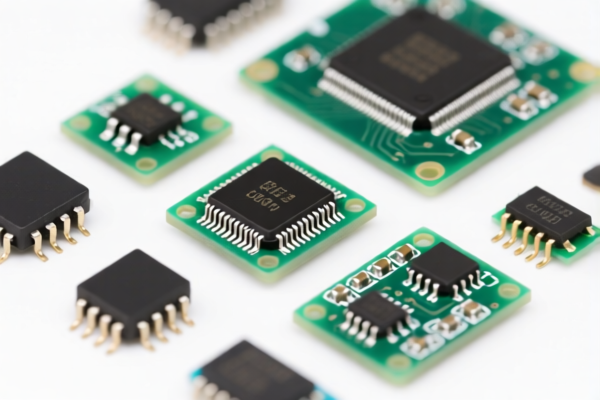
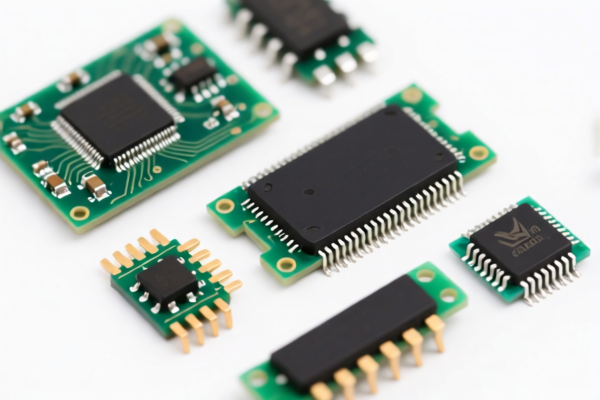
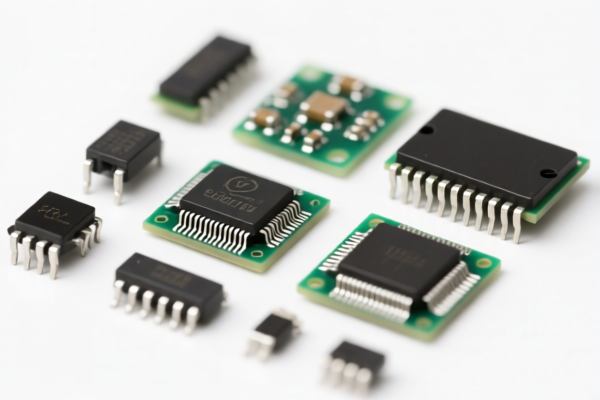
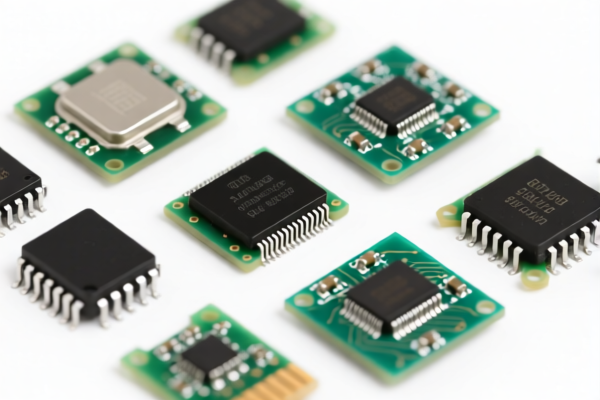
AI Analysis
🔌 Electrical Components (Capacitors & Electronic Parts)
🌐 HS Code Reference & Customs Clearance Guide | 2026 Latest Tariff Analysis | Professional Clearance Strategy
📌 I. Product Definition and Classification: Do You Truly Understand "Electrical Components"?
Electrical Components are the foundational building blocks of modern electronics. In international trade, they are primarily categorized based on their specific function and integration level:
Capacitors (Passive Components): Devices that store electrical energy. They are strictly classified under Chapter 85, specifically heading 8532.
Electronic Integrated Circuits (Active/Passive Parts): If the component is a part of an IC or a specific electronic assembly, it may fall under 8542 or general 8544.
⚠️ Key Distinction Point:
- If the item is a discrete Capacitor (standard electronic component) → Classified under 8532.
- If the item is a Part of an Integrated Circuit or a specialized electronic assembly without a standalone capacitor function → Classified under 8542.
- If the item is a Wire/Cable/Insulated Conductor used as a component → Classified under 8544.
📦 II. HS Code Classification Details (2026 Latest Tariff Authority Comparison)
| HS Code | Product Description | Applicable Scenario | Material/State Conflict? |
|---|---|---|---|
8532.29.00.40 |
Capacitor elements, other | General capacitors, matching success, no material/state conflict. | ❌ None |
8532.90.00.00 |
Parts suitable for use solely or principally with capacitors | Capacitor elements fitting the definition of capacitors, no material/state conflict. | ❌ None |
8542.90.00.00 |
Parts of electronic integrated circuits | Based on component form matching part usage, no material conflict, default tendency for parts. | ❌ None |
8542.39.00.90 |
Other electronic integrated circuits | Capacitor elements belonging to passive components in ICs, fitting catch-all logic for other categories. | ❌ None |
8544.42.90.90 |
Insulated wire, cable and other insulated electric conductors | Electronic equipment parts falling into other catch-all categories, no obvious material conflict. | ❌ None (Steel/Aluminum/Copper surcharge applies) |
🔍 Key Reminder:
- Capacitors (Ch 8532) are the most common classification for discrete "Electrical Components" like resistors, capacitors, and inductors.
- IC Parts (Ch 8542) apply if the component is integral to an integrated circuit logic.
- Wiring/Conductors (Ch 8544) apply if the "component" is actually an insulated cable or connector used in equipment.
💰 III. 2026 Latest Tariff Rate Details (Including Surcharges, Policy Surcharges)
✅ Applicable Country: United States (US)
✅ Origin: China (CN)
✅ Effective Time: 2025/2026 Period (Current Trade Policies)
🎯 1. 8532.29.00.40 & 8532.90.00.00 —— Capacitor Elements/Parts
| Item | Content |
|---|---|
| Base Tariff | 0.0% (ad valorem) |
| Section 301 Surcharge | +25.0% |
| Section 122 Tariff | +10.0% (Specific policy surcharge) |
| Total Rate | 35.0% |
| Tax Calculation | CIF Value × 35% |
| De Minimis Eligibility | ❌ No (Strictly regulated) |
| Legal Basis Path | USITC:8532.29.00.40 → SECTION301:8532 → SECTION122 |
📌 Explanation:
- "Section 301 Surcharge 25%": Comes from the US Trade Act Section 301 list targeting Chinese imports.
- "Section 122 Tariff 10%": A specific statutory surcharge applicable to certain electronic goods.
- Total 35%: This is the standard burden for capacitor elements.
🎯 2. 8542.90.00.00 & 8542.39.00.90 —— Parts of ICs / Other ICs
| Item | Content |
|---|---|
| Base Tariff | 0.0% |
| Section 301 Surcharge | +50.0% |
| Section 122 Tariff | +10.0% |
| Total Rate | 60.0% |
| Tax Calculation | CIF Value × 60% |
| De Minimis Eligibility | ❌ No |
| Legal Basis Path | USITC:8542.90.00.00 → SECTION301:8542 → SECTION122 |
📌 Note:
- These codes carry a much higher Section 301 rate (50%) compared to capacitors (25%).
- Misclassification from "Capacitor" (35%) to "IC Part" (60%) can double your tax burden.
- Even if described as "passive components in ICs," customs may classify them under 8542 if they are integral to the IC structure.
🎯 3. 8544.42.90.90 —— Insulated Conductors/Parts for Electronic Equipment
| Item | Content |
|---|---|
| Base Tariff | 2.6% |
| Section 301 Surcharge | +25.0% |
| Section 122 Tariff | +10.0% |
| Steel/Aluminum/Copper Surcharge | +50.0% (If made of these materials) |
| Total Rate | 87.6% (Max Scenario) |
| Tax Calculation | CIF Value × 87.6% |
| De Minimis Eligibility | ❌ No |
| Legal Basis Path | USITC:8544.42.90.90 → SECTION301 → SECTION122 → SECTION232 (Steel/Al) |
📌 Warning:
- This is the highest risk category. If the component involves Steel, Aluminum, or Copper conductors, the additional 50% surcharge applies.
- Base rate is not zero (2.6%), adding to the burden.
- Only use this code if the item is strictly insulated wire/cable/connector and not a discrete capacitor or IC part.
🛠️ IV. Customs Clearance Practical Advice (Battle-Tested Pitfall Avoidance Guide)
✅ 1. Documentation Checklist (Non-Negotiable)
| Document | Required | Description |
|---|---|---|
| ✅ Product Specification Sheet | ✔️ | Must clearly state "Capacitor," "IC Part," or "Insulated Conductor." |
| ✅ Circuit Diagram/Structure Image | ✔️ | Critical to prove if it's a discrete component (8532) or part of an IC (8542). |
| ✅ Product Photos (Clear Labeling) | ✔️ | Show model number, brand, and technical markings. |
| ✅ Third-Party Test Reports | ✔️ | RoHS, REACH, or other compliance certs. |
| ✅ Commercial Invoice | ✔️ | Accurate description: "Ceramic Capacitor 100uF" vs. "Electronic Part." |
| ✅ Packing List | ✔️ | Detailed breakdown of components to avoid misdeclaration. |
✅ 2. Declaration Tips (Key Mantra)
🔥 “Be Specific, Not Generic: ‘Electrical Component’ is a Red Flag!”
| Scenario | Correct Declaration | Wrong Practice |
|---|---|---|
| Discrete Capacitor | "Ceramic Capacitor, 10uF, 50V" | "Electrical Component" → Risk of 8542/8544 classification (Higher Tax) |
| Part of IC | "Part for Integrated Circuit Model XYZ" | "Capacitor" → Risk of audit, penalty, and back-taxes |
| Insulated Wire | "Insulated Electric Conductor, Copper Core" | "Cable Assembly" → If steel/aluminum content exists, 87.6% tax applies |
| Mixed Shipment | Declare each type separately | Bulk申报 "Electronic Parts" → Customs will pick the highest tax rate for the whole shipment |
✅ 3. Special Case Handling
| Situation | Handling Advice |
|---|---|
| OEM Components | Provide client PO and design drawings. If it's a custom capacitor, stick to 8532. |
| Mixed HS Codes | Never mix 8532 and 8542 in one line item. Declare separately to avoid ambiguity. |
| Material Declaration | For 8544, explicitly state if the conductor is Copper, Aluminum, or Steel. Misstatement triggers penalties. |
| Section 122 Eligibility | Ensure the product qualifies for the specific 10% surcharge rules. Some exemptions may apply based on end-use (verify with customs broker). |
🌍 V. Global Market Customs Comparison (2026 Latest)
| Country/Region | Recommended HS Code | Tariff | Certification | Notes |
|---|---|---|---|---|
| 🇺🇸 USA | 8532.29.00.40 |
35% (Capacitor) | RoHS, FCC | High risk for 8542 (60%) or 8544 (87.6%) |
| 🇨🇳 China | 8532.29.00.40 |
0-5% | CCC (if applicable) | Low tariff, easy clearance |
| 🇪🇺 EU | 8532.29.00.40 |
0% (Most MFN) | CE, RoHS | No Section 301/122 surcharges |
| 🇬🇧 UK | 8532.29.00.40 |
0-5% | UKCA | Post-Brexit rules apply |
| 🇯🇵 Japan | 8532.29.00.40 |
0-5% | PSE | Low barrier |
📌 Conclusion:
- USA is the most challenging market due to multiple layers of surcharges (301 + 122 + Material Surcharges).
- Misclassification between 8532 (35%) and 8542 (60%) or 8544 (87.6%) is the biggest financial risk.
- China-origin goods face significant tariffs in the US, making supply chain diversification (Vietnam, Mexico) a common strategy to mitigate these costs.
📌 VI. Common Mistakes & Pitfalls (Lessons Learned)
❌ Mistake 1: Declaring all capacitors as "Electronic Parts" (Generic)
👉 Consequence: Customs may default to the highest duty rate among potential codes, potentially 87.6%.
❌ Mistake 2: Confusing "Capacitor" with "Part of IC"
👉 Consequence: Tariff jumps from 35% to 60%. Ensure the part is discrete, not integrated into an IC package.
❌ Mistake 3: Ignoring material composition for Wires/Conductors (8544)
👉 Consequence: If steel/aluminum/copper is used and not declared, the 50% additional surcharge is applied, raising the total to 87.6%.
❌ Mistake 4: Assuming "De Minimis" applies
👉 Consequence: Denied. Electronic components from China are strictly excluded from de minimis exemptions under current US trade laws.
✅ Correct Practice:
"Ceramic Disc Capacitor, 100nF, 50V, Through-Hole, Model XYZ, RoHS Compliant"
vs.
"Electronic Component" (Avoid this!)
🎯 VII. Conclusion: Professional Declaration, Save Time, Reduce Costs!
🎯 Remember the Mantra:
🔹 "Be Specific: Capacitor is 35%, IC Part is 60%, Wire is 87.6%."
🔹 "Misclassification Costs Double the Tax. Clarity Saves Money!"
📌 Pro Tip:
If your components are sourced from Vietnam, Mexico, Thailand, or Malaysia, you may qualify for IEEPA Exemptions or lower Section 301 rates.
Recommendation: Apply for an Advance Ruling from US Customs and Border Protection (CBP) if unsure about the classification between 8532, 8542, and 8544.
📣 Take Action Now:
📞 Contact a licensed Customs Broker + Provide Product Specs + Request HS Code Pre-Ruling
🚀 Ensure your electrical components clear smoothly, avoid penalties, and protect your margins!
✨ Professional Customs Clearance Starts with Precise Classification!
💼 Every Percent of Tax Saved is Pure Profit!
Customer Reviews
About HS Code Classification
The Harmonized System (HS) is an internationally standardized nomenclature developed by the World Customs Organization (WCO) to classify traded products. Over 200 countries use the HS system as the basis for customs tariffs, trade statistics, and import/export regulations.
Each HS code follows a hierarchical structure:
- Chapter (2 digits) — Broad category of goods (e.g., Chapter 84: Machinery and Mechanical Appliances)
- Heading (4 digits) — More specific grouping within the chapter
- Subheading (6 digits) — Internationally standardized breakdown, used by all WCO member countries
- National subdivisions (8-10 digits) — Country-specific extensions for further classification, such as US HTSUS 10-digit codes
Correct HS code classification is essential for smooth customs clearance, accurate duty payment, and compliance with trade regulations. Misclassification can lead to customs delays, overpayment of duties, or penalties.
When importing from CN to US, the applicable tariff rates may include:
- Most-Favored-Nation (MFN) rate — The standard duty rate applied to WTO members
- General rate — Applied to countries without trade agreements
- Trade remedy duties — Additional tariffs such as Section 301 (anti-dumping), Section 232 (national security), or countervailing duties
The information provided on this page is for reference purposes only. For official classification, please consult with your local customs authority or a licensed customs broker.