Electrical Connectors and Switches
CN → US| HS Code | Tariff Rate | Origin | Destination | Doc |
|---|---|---|---|---|
| 8535300080 | 37.7% | CN | US | Official Doc |
| 8535908040 | 37.7% | CN | US | Official Doc |
| 8536694020 | 35.0% | CN | US | Official Doc |
| 8536509031 | 35.0% | CN | US | Official Doc |
Product Images
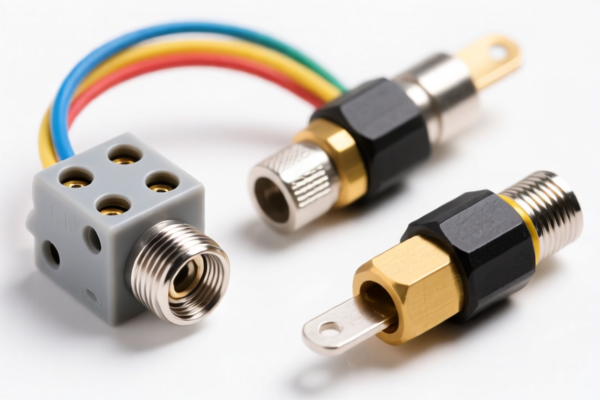
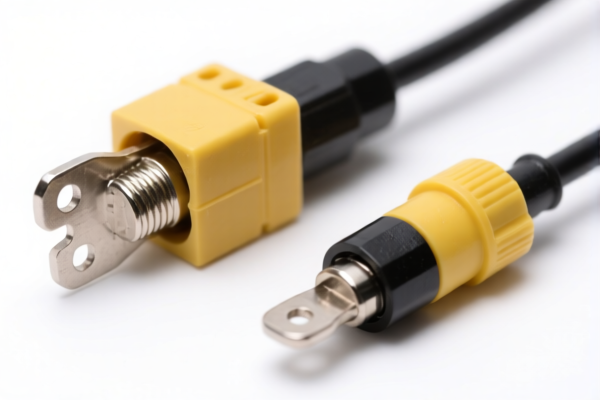


AI Analysis
⚡ Electrical Connectors & Switches (Voltage Classification Guide)
🌐 HS Code Reference & Customs Clearance Guide | 2026 Latest Tariff Analysis | Professional Clearance Strategy
📌 Part 1: Product Definition & Classification: Do You Really Understand "Electrical Connectors and Switches"?
Electrical apparatus for switching, protecting, or connecting electrical circuits are the nervous system of power distribution. In international trade, the critical dividing line is Voltage.
1. High Voltage (> 1,000 V):
Used in industrial power distribution, substations, and heavy infrastructure. Includes isolators, lightning arresters, and high-voltage connectors.
2. Low Voltage (≤ 1,000 V):
Used in consumer electronics, home appliances, and IT equipment. Includes switches, plugs, sockets, and specialized connectors (coaxial, cylindrical, etc.).
⚠️ Key Distinction:
- If voltage exceeds 1,000 V → Group 8535
- If voltage does not exceed 1,000 V → Group 8536
- Do NOT mix these two categories, as tax implications differ significantly!
📦 Part 2: HS Code Classification Details (2026 Latest Tariff Authority Comparison)
Based on the provided data, here are the specific HS Codes, descriptions, and tax implications.
| HS Code | Product Description | Voltage Range | Key Features / Sub-category |
|---|---|---|---|
8535.30.00.80 |
Isolating switches and make-and-break switches | > 1,000 V | Other than fuses/surge suppressors. Used in high-voltage switching. |
8535.90.80.40 |
Other connectors | > 1,000 V | High-voltage connectors not covered by other specific sub-headings. |
8536.69.40.20 |
Cylindrical multicontact connectors | ≤ 1,000 V | Includes coaxial, rack/panel, PCB, ribbon connectors. |
8536.50.90.31 |
Push-button switches (Momentary contact) | ≤ 1,000 V | Rated at not over 5 A. Used in control panels, appliances. |
🔍 Critical Reminder:
- Voltage is King: A connector for 120V is8536...; a similar-looking connector for 10kV is8535....
- Specificity Matters: "Cylindrical multicontact connectors" (8536.69.40.20) is more specific than generic "connectors."
- Switch Type: "Push-button" (8536.50.90.31) is distinct from toggle or rotary switches.
💰 Part 3: 2026 Latest Tariff Rate Details (Including Additional Duties)
✅ Applicable Country: United States (US)
✅ Country of Origin: China (CN)
✅ Effective Date: Current policy applies
🎯 1. 8535.30.00.80 — Isolating/Make-and-Break Switches (> 1,000 V)
| Item | Content |
|---|---|
| Base Tariff | 0.0% |
| Additional Tariff (Section 301) | 0.0% |
| Total Tax Rate | 0.0% |
| Tax Calculation | CIF Value × 0.0% = $0 |
| De Minimis Eligibility | N/A (High-value industrial goods usually require formal entry) |
| Legal Basis | USITC Tariff Schedule 2026, HTSUS 8535.30.00.80 |
📌 Explanation:
- High-voltage switching gear enjoys zero tariff under current trade policies.
- This makes 8535.30.00.80 a highly cost-effective classification for high-voltage equipment importing from China.
🎯 2. 8535.90.80.40 — Other Connectors (> 1,000 V)
| Item | Content |
|---|---|
| Base Tariff | 0.0% |
| Additional Tariff (Section 301) | 0.0% |
| Total Tax Rate | 0.0% |
| Tax Calculation | CIF Value × 0.0% = $0 |
| De Minimis Eligibility | N/A |
| Legal Basis | USITC Tariff Schedule 2026, HTSUS 8535.90.80.40 |
📌 Note:
- Like isolating switches, other high-voltage connectors are also duty-free.
- Ensure the product is indeed > 1,000 V. Misclassifying a 1,000 V connector here could lead to penalties if the lower-voltage category has different rules (though in this dataset, both 8535 codes are 0%).
🎯 3. 8536.69.40.20 — Cylindrical Multicontact Connectors (≤ 1,000 V)
| Item | Content |
|---|---|
| Base Tariff | 0.0% |
| Additional Tariff (Section 301) | +25.0% |
| Total Tax Rate | 25.0% |
| Tax Calculation | CIF Value × 25.0% |
| De Minimis Eligibility | ❌ Not Eligible (Subject to Section 301 tariffs) |
| Legal Basis | IEEPA:9903.01.25 → USITC:8536.69.40.20 → FOOTNOTE:9903.88.01 |
📌 Explanation:
- Although the base tariff is 0%, these low-voltage connectors are subject to a 25% additional tariff under US trade law (Section 301).
- This is a significant cost factor. Many importers overlook this and budget incorrectly.
- Applies to coaxial, cylindrical multicontact, rack/panel, and PCB connectors.
🎯 4. 8536.50.90.31 — Push-Button Switches (≤ 1,000 V, ≤ 5A)
| Item | Content |
|---|---|
| Base Tariff | 0.0% |
| Additional Tariff (Section 301) | +25.0% |
| Total Tax Rate | 25.0% |
| Tax Calculation | CIF Value × 25.0% |
| De Minimis Eligibility | ❌ Not Eligible |
| Legal Basis | IEEPA:9903.01.25 → USITC:8536.50.90.31 → FOOTNOTE:9903.88.01 |
📌 Note:
- Specifically for momentary contact push-button switches.
- Same 25% additional tariff as other low-voltage connectors.
- Ensure the rating is not over 5 A. Higher amperage switches may fall under different sub-codes with potentially different rates.
🛠️ Part 4: Customs Clearance Practical Advice (Battle-Tested Pitfall Avoidance)
✅ 1. Document Preparation Checklist (Mandatory)
| Document | Required | Description |
|---|---|---|
| ✅ Technical Data Sheet | ✔️ | Must clearly state Voltage (V) and Current (A). Crucial for distinguishing 8535 vs 8536. |
| ✅ Product Photos | ✔️ | Clear shots of labels, terminals, and insulation. High-voltage units have thicker insulation and larger gaps. |
| ✅ Circuit Diagram/Structure | ✔️ | Helps customs verify if it’s a simple connector or a complex switch with internal mechanisms. |
| ✅ Commercial Invoice | ✔️ | Must describe items precisely: e.g., "High Voltage Isolating Switch" vs "Low Voltage Cylindrical Connector." |
| ✅ Origin Certificate | ✔️ | To prove Country of Origin (China). |
| ✅ UL/CE Test Reports | ✔️ | Safety certifications often help customs verify product nature and voltage ratings. |
✅ 2. Declaration Tips (Key Mnemonics)
🔥 “High Voltage Zero Duty, Low Voltage Twenty-Five, Check Voltage First, Or Pay Twice!”
| Scenario | Correct Declaration | Wrong Action | Consequence |
|---|---|---|---|
| Switch > 1,000 V | 8535.30.00.80 |
Misclassify as 8536... |
Penalty + Back Taxes (if rates differ) |
| Connector > 1,000 V | 8535.90.80.40 |
Generic "Electrical Part" | Delay + Inspection |
| Cylindrical Connector ≤ 1,000 V | 8536.69.40.20 |
Generic "Connector" | Underpayment of 25% tariff |
| Push-Button Switch ≤ 1,000 V, > 5A | Check other 8536.50... codes |
Assume 8536.50.90.31 |
Wrong Code (Limit is 5A) |
✅ 3. Special Handling Cases
| Situation | Advice |
|---|---|
| Hybrid Voltage Systems | If a device contains both HV and LV components, split the declaration. Do not lump them into one HS code. |
| "Universal" Connectors | If a connector is rated for both 500V and 1500V, declare under the higher voltage (8535) to potentially benefit from 0% duty, but ensure technical specs support >1,000 V operation. |
| OEM Custom Switches | Provide design drawings showing voltage ratings. Customs may request engineering opinions. |
| Bundled Sets | If switches and connectors are sold as a "Kit," declare the principal use. If mostly HV, use 8535. If mostly LV, use 8536. |
🌍 Part 5: Global Market Comparison (2026 Latest)
| Country/Region | Recommended HS Code | Tariff (China Origin) | Key Certification | Notes |
|---|---|---|---|---|
| 🇺🇸 USA | 8535... or 8536... |
0% (HV) / 25% (LV) | UL, CSA | High penalty for misclassification. 25% LV duty is strict. |
| 🇨🇳 China | 8535... or 8536... |
Varies (1-5%) | CCC | Lower duties, but stricter product safety standards. |
| 🇪🇺 EU | 8535... or 8536... |
0% - 2.7% | CE, RoHS | Generally lower tariffs, but high compliance costs. |
| 🇬🇧 UK | 8535... or 8536... |
0% - 2.7% | UKCA | Post-Brexit rules apply. |
| 🇯🇵 Japan | 8535... or 8536... |
0% - 1.5% | PSE | Low duties, high safety scrutiny. |
📌 Conclusion:
- USA is the most complex market due to the 25% additional tariff on LV items.
- High Voltage (>1,000 V) components are tariff-free in the US, making them strategically favorable for import.
- Low Voltage (≤1,000 V) components carry a 25% surcharge, impacting margins significantly.
📌 Part 6: Common Errors & Pitfall Guide (Lessons from the Field)
❌ Error 1: Misidentifying Voltage Rating
👉 Consequence: Declaring a 1,200V connector as 1,000V → Underpayment of duties (if rates differed) or Customs Seizure for false declaration.
✅ Fix: Always use rated operational voltage, not nominal system voltage.
❌ Error 2: Confusing "Connector" Types
👉 Consequence: Declaring a "Cylindrical Multicontact Connector" as a generic "Plug" → Code Misclassification → 25% Penalty + Interest.
✅ Fix: Use precise technical names from datasheets.
❌ Error 3: Ignoring Amperage Limits for Switches
👉 Consequence: Declaring a 10A push-button switch as 8536.50.90.31 (limit ≤5A) → Wrong Code → Delay + Re-classification.
✅ Fix: Verify amperage rating on the label.
❌ Error 4: Bundling HV and LV Items
👉 Consequence: One invoice, one HS Code for mixed goods → Customs Refusal → Return or Repackaging.
✅ Fix: Separate invoices or line items for HV and LV components.
🎯 Part 7: Conclusion: Precision in Classification Saves Money!
🎯 Remember the Mantra:
🔹 “High Voltage > 1kV? Duty Free! Low Voltage ≤1kV? Pay 25%!”
🔹 “Check Voltage First, Then Current, Then Type!”
📌 Pro Tip:
- For High Voltage items, ensure you have UL/IEEE standards documentation to prove >1,000 V rating.
- For Low Voltage items, consider supply chain optimization to absorb or mitigate the 25% tariff, or explore FTZ (Foreign Trade Zone) storage to defer duties.
📣 Immediate Action:
📞 Contact Customs Broker + Provide Voltage Specs + Pre-classify HS Codes
🚀 Avoid 25% Pitfalls, Ensure Smooth Clearance, Maximize Profit!
✨ Professional Customs Clearance Starts with Accurate Classification!
💼 Your Every Dollar of Duty is Worth Calculating!
Customer Reviews
About HS Code Classification
The Harmonized System (HS) is an internationally standardized nomenclature developed by the World Customs Organization (WCO) to classify traded products. Over 200 countries use the HS system as the basis for customs tariffs, trade statistics, and import/export regulations.
Each HS code follows a hierarchical structure:
- Chapter (2 digits) — Broad category of goods (e.g., Chapter 84: Machinery and Mechanical Appliances)
- Heading (4 digits) — More specific grouping within the chapter
- Subheading (6 digits) — Internationally standardized breakdown, used by all WCO member countries
- National subdivisions (8-10 digits) — Country-specific extensions for further classification, such as US HTSUS 10-digit codes
Correct HS code classification is essential for smooth customs clearance, accurate duty payment, and compliance with trade regulations. Misclassification can lead to customs delays, overpayment of duties, or penalties.
When importing from CN to US, the applicable tariff rates may include:
- Most-Favored-Nation (MFN) rate — The standard duty rate applied to WTO members
- General rate — Applied to countries without trade agreements
- Trade remedy duties — Additional tariffs such as Section 301 (anti-dumping), Section 232 (national security), or countervailing duties
The information provided on this page is for reference purposes only. For official classification, please consult with your local customs authority or a licensed customs broker.