Electrical Fittings
CN → US| HS Code | Tariff Rate | Origin | Destination | Doc |
|---|---|---|---|---|
| 8483908080 | 37.8% | CN | US | Official Doc |
| 8483903000 | 39.5% | CN | US | Official Doc |
| 8503009520 | 88.0% | CN | US | Official Doc |
| 8538908180 | 38.5% | CN | US | Official Doc |
| 8503007500 | 41.5% | CN | US | Official Doc |
Product Images
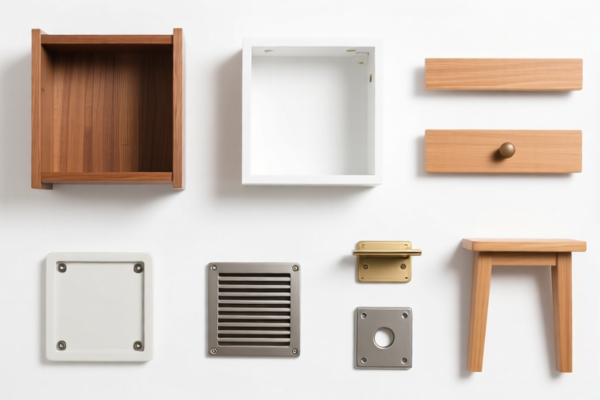


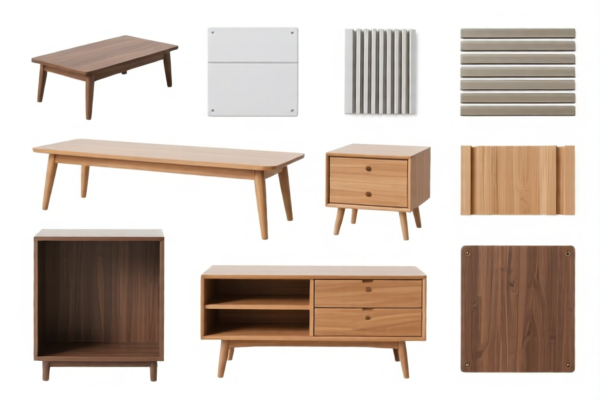
AI Analysis
⚡ Electrical Fittings (Motor Accessories/Parts)
🌐 HS Code Reference & Customs Clearance Guide | 2026 Latest Tariff Analysis | Professional Clearance Strategy
📌 I. Product Definition: What are "Electrical Fittings"?
In international trade, "Electrical Fittings" (often referred to as Motor Accessories or Parts) generally refers to components used in electric motors, generators, or electrical transmission systems. These parts do not function as complete machines but are essential for the operation of the main equipment.
Common examples include: * Fan covers and ventilators for motor cooling. * End bells, shafts, and bearings housings. * Terminal boxes and connection components. * Insulators and mounting brackets.
⚠️ Critical Distinction:
The classification depends heavily on function, material, and compatibility. - If it is a part specifically for a motor (Chapter 85) → 8503 or 8483. - If it is a general mechanical part (Chapter 84) → 8483. - If it is a generic fastener or unclassified part → 8538 or 8483.90.80.80.
📦 II. HS Code Classification Details (2026 Latest Tariff Authorities)
Based on the provided data, here are the 5 most likely HS Codes for "Electrical Fittings/Motor Parts" and the logic for each.
| HS Code | Product Description & Logic | Total Tax Rate | Tax Breakdown |
|---|---|---|---|
8483.90.80.80 |
Motor Accessories (Fallback Category) Classified as spare parts/components. No obvious material conflict; defaults to the "Other" category. |
37.8% | Base: 2.8% Section 301: 25.0% Section 122: 10.0% |
8483.90.30.00 |
Motor Accessories (Transmission Parts) Falls under parts of transmission components. Matches the "other category inference" principle for parts with consistent usage. |
39.5% | Base: 4.5% Section 301: 25.0% Section 122: 10.0% |
8503.00.95.20 |
Motor Accessories (Electric Motor Parts) Specifically fits the usage limit of "parts for electric motors." Classified as parts without material conflict. |
88.0% | Base: 3.0% Section 301: 25.0% Section 122: 10.0% Steel/Alu/Cu Surcharge: 50% |
8538.90.81.80 |
Motor Accessories (Device Parts) Classified as parts/components for devices. Without clear material specs, defaults to matching device parts. |
38.5% | Base: 3.5% Section 301: 25.0% Section 122: 10.0% |
8503.00.75.00 |
Motor Accessories (General Parts) Fits the "parts for use" description. Based on the principle of "no obvious conflict" when power/material is unspecified. |
41.5% | Base: 6.5% Section 301: 25.0% Section 122: 10.0% |
🔍 Key Insight:
-8503.00.95.20has the highest risk due to the 50% additional surcharge on steel/aluminum/copper products. If your fitting is metal, this rate could skyrocket. -8483.90.80.80is the lowest base rate (37.8%) and acts as a safe "fallback" if specific motor compatibility is unclear. - All listed codes are subject to Section 301 (25%) and Section 122 (10%) tariffs for Chinese-origin goods.
💰 III. Detailed Tariff Structure (USA Market)
✅ Applicable Country: United States (US)
✅ Origin: China (CN)
✅ Effective Date: Ongoing (2024-2026)
🎯 1. The "Base + Add-ons" Formula
All 5 HS Codes share a common structure for US imports from China:
| Component | Rate | Description |
|---|---|---|
| MFN Base Rate | 2.8% - 6.5% | Varies by specific subheading (see table above). |
| Section 301 Tariff | +25.0% | Retaliatory tariff on Chinese goods under Trade Act of 1974, Section 301. |
| Section 122 Tariff | +10.0% | Specific tariff provision affecting certain industrial components. |
| Material Surcharge | +50.0% | ONLY applies to HS Code 8503.00.95.20 if made of Steel, Aluminum, or Copper. |
📊 Total Tax Calculation Examples
Scenario A: Plastic/Non-Metal Fittings (e.g., End Caps)
- Recommended HS:
8483.90.80.80 - Calculation: Base (2.8%) + 301 (25%) + 122 (10%) = 37.8%
- Total Tax: CIF Value × 37.8%
Scenario B: Metal Fittings (Steel/Aluminum) - High Risk
- Risk HS:
8503.00.95.20 - Calculation: Base (3.0%) + 301 (25%) + 122 (10%) + Material Surcharge (50%) = 88.0%
- Total Tax: CIF Value × 88.0%
Scenario C: Transmission Parts (Shafts/Bearings)
- Recommended HS:
8483.90.30.00 - Calculation: Base (4.5%) + 301 (25%) + 122 (10%) = 39.5%
- Total Tax: CIF Value × 39.5%
📌 Explanation:
- Section 301 (25%) is the most significant cost driver for Chinese electrical parts. - Section 122 (10%) is a newer/additional layer targeting specific industrial inputs. - Material Surcharge (50%) is a punitive measure for strategic metals. Avoid this classification if possible by proving the part is not primarily structural steel/copper.
🛠️ IV. Customs Clearance Practical Advice
✅ 1. Documentation Checklist (Non-Negotiable)
| Document | Required? | Purpose |
|---|---|---|
| Product Spec Sheet | ✅ Yes | Must detail function, dimensions, and material composition (critical to avoid 50% surcharge). |
| Circuit Diagram/Structure | ✅ Yes | To prove if it's a "part of a motor" (8503) or "general mechanical part" (8483). |
| Commercial Invoice | ✅ Yes | Must state: "Motor Part, Model XYZ, Made in China." |
| Country of Origin Certificate | ✅ Yes | To confirm CN origin and apply/avoid surcharges correctly. |
| Packaging List | ✅ Yes | Show if parts are shipped with the main motor or separately. |
✅ 2. Classification Strategy (The "Safe Path")
| Situation | Recommended HS Code | Why? |
|---|---|---|
| Non-Metal Parts (Plastic, Rubber, Ceramic) | 8483.90.80.80 |
Lowest base rate (2.8%); no material surcharge risk. |
| Metal Parts (Steel/Aluminum) | 8483.90.30.00 or 8538.90.81.80 |
Avoid 8503.00.95.20 to escape the 50% metal surcharge. |
| General Mechanical Parts (Shafts, Gears) | 8483.90.30.00 |
Fits "transmission parts" logic; stable 39.5% rate. |
| Unclear/Universal Parts | 8483.90.80.80 |
"Fallback" category; safest if product purpose is ambiguous. |
✅ 3. Critical Warnings
🔥 "Metal Trap!"
If your electrical fitting is made of Steel, Aluminum, or Copper, DO NOT classify under8503.00.95.20unless absolutely necessary. The 50% additional tariff will destroy your profit margin. Instead, argue for classification under 8483 (Mechanical Parts) where the material surcharge does not apply.🔥 "Don't Split Shipments"
If shipping motor parts with the main motor, declare them together under the motor's HS code if possible. If shipped separately, each part is subject to its own tariff. Ensure the "Part" status is clearly documented.🔥 "Origin Matters"
These high tariffs apply to China (CN) origin. If your parts are assembled in Vietnam, Malaysia, or Mexico with substantial transformation, you may qualify for lower or zero Section 301 tariffs. Ensure proper Certificate of Origin and Bill of Lading reflect the true origin.
🌍 V. Global Market Comparison (2026)
| Region | Recommended HS | Est. Total Duty | Notes |
|---|---|---|---|
| 🇺🇸 USA | 8483.90.80.80 |
37.8% | High due to Sec 301 + 122. Avoid metal surcharges. |
| 🇨🇳 China | 8483.90.80.80 |
~2.8% | Low import duty for foreign parts. No Sec 301/122. |
| 🇪🇺 EU | 8483.90.80.80 |
~1.7% + VAT | No Section 301. Standard EU duty. |
| 🇬🇧 UK | 8483.90.80.80 |
~1.7% + VAT | Post-Brexit tariff schedule similar to EU. |
| 🇯🇵 Japan | 8483.90.80.80 |
~1.5% - 3.0% | CPTPP benefits may apply if from member countries. |
📌 Conclusion:
The USA market is the most challenging due to layered punitive tariffs (301 + 122 + Material Surcharge). For other markets, duties are significantly lower.
📌 VI. Common Mistakes & Pitfalls (Blood Lessons)
❌ Mistake 1: Classifying steel motor brackets under 8503.00.95.20
👉 Consequence: 88.0% tax (3.0% + 25% + 10% + 50% metal surcharge).
✅ Fix: Classify as mechanical parts under 8483.90.30.00 or 8538.90.81.80 for 38.5%-39.5%.
❌ Mistake 2: Vague Description "Electrical Parts"
👉 Consequence: Customs inspection delay, potential re-classification to highest duty rate.
✅ Fix: Use precise terms: "Plastic Fan Cover for Electric Motor, Model XYZ."
❌ Mistake 3: Ignoring Section 122 (10%)
👉 Consequence: Underpayment of duty, leading to penalties and interest.
✅ Fix: Ensure your tariff calculation includes the 10% Section 122 for all 5 listed codes.
🎯 VII. Conclusion: Precision Saves Money
🎯 Key Takeaway:
"Material Matters, Classification is Key!"
- Plastic/Non-Metal → Go for8483.90.80.80(37.8%).
- Metal Parts → Avoid8503.00.95.20at all costs! Use8483or8538(38.5%-39.5%).
- Always Declare "Part of Motor" to qualify for Part-specific rates, not "Motor" rates.
📌 Pro Tip:
If your supply chain allows, consider transshipment or assembly in a third country (e.g., Vietnam) to potentially bypass Section 301 and 122 tariffs. However, ensure substantial transformation occurs to get a new Certificate of Origin.
📣 Immediate Action:
📞 Consult a Customs Broker: Get a Binding Ruling or Pre-Classification for your specific part.
📄 Document Everything: Keep material specs and design drawings handy.
💰 Calculate Total Landed Cost: Include 37.8%-88% duty in your pricing model.
✨ Professional Clearance, Starting with Accurate Classification!
💼 Every percentage point saved is profit earned!
Customer Reviews
About HS Code Classification
The Harmonized System (HS) is an internationally standardized nomenclature developed by the World Customs Organization (WCO) to classify traded products. Over 200 countries use the HS system as the basis for customs tariffs, trade statistics, and import/export regulations.
Each HS code follows a hierarchical structure:
- Chapter (2 digits) — Broad category of goods (e.g., Chapter 84: Machinery and Mechanical Appliances)
- Heading (4 digits) — More specific grouping within the chapter
- Subheading (6 digits) — Internationally standardized breakdown, used by all WCO member countries
- National subdivisions (8-10 digits) — Country-specific extensions for further classification, such as US HTSUS 10-digit codes
Correct HS code classification is essential for smooth customs clearance, accurate duty payment, and compliance with trade regulations. Misclassification can lead to customs delays, overpayment of duties, or penalties.
When importing from CN to US, the applicable tariff rates may include:
- Most-Favored-Nation (MFN) rate — The standard duty rate applied to WTO members
- General rate — Applied to countries without trade agreements
- Trade remedy duties — Additional tariffs such as Section 301 (anti-dumping), Section 232 (national security), or countervailing duties
The information provided on this page is for reference purposes only. For official classification, please consult with your local customs authority or a licensed customs broker.