Electrical Grade Polyamide Raw Material
CN → US| HS Code | Tariff Rate | Origin | Destination | Doc |
|---|---|---|---|---|
| 3908100000 | 41.3% | CN | US | Official Doc |
| 3908902000 | 35.0% | CN | US | Official Doc |
Product Images
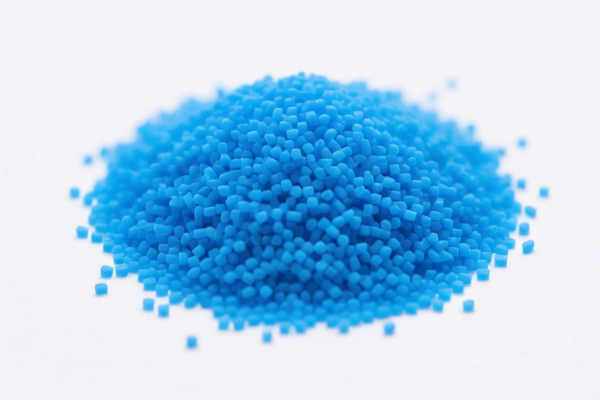
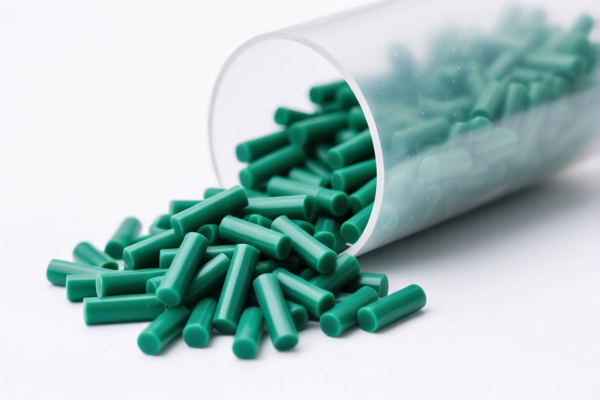
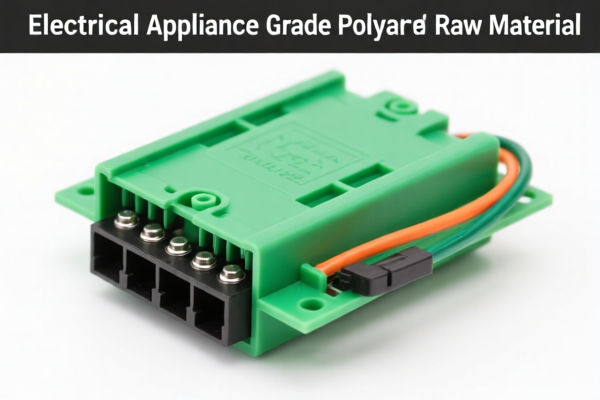
AI Analysis
⚡ Electrical Grade Polyamide Raw Material (Polyamides in Primary Forms)
🌐 HS Code Reference & Customs Clearance Guide | 2026 Latest Tariff Analysis | Professional Clearance Strategy
📌 I. Product Definition & Classification: Do You Really Understand "Polyamide"?
Polyamides (PA), commonly known as Nylons, are high-performance synthetic polymers renowned for their mechanical strength, heat resistance, and chemical stability. In international trade, when the polyamide is in its raw, unprocessed state before being molded into final products, it is classified under Chapter 39 (Plastics and Articles Thereof).
The term "Electrical Grade" typically implies high purity, specific dielectric properties, or specialized formulations (such as copolymers) designed for insulation, connector housings, or circuit breaker components. However, under the Harmonized System (HS), the physical form (primary form: pellets, powder, flakes) takes precedence over the end-use application (electrical) for initial classification.
⚠️ Key Distinction Point:
- If the material is a standard homopolymer (e.g., standard PA6, PA66) in primary forms → It falls under 3908.10.00.00.
- If the material is a specialized copolymer or other specific chemical structure not listed in the main "Polyamide-6/6,6/etc." categories → It falls under 3908.90.20.00.
📦 II. HS Code Classification Details (2026 Latest Tariff Authority Comparison)
| HS Code | Product Description | Applicable Scenario | Composition Type |
|---|---|---|---|
3908.10.00.00 |
Polyamides in primary forms: Polyamide-6, -11, -12, -6,6, -6,9, -6,10 or -6,12 | Standard industrial nylon granules/powder; Most "Electrical Grade" PAs (like standard PA6/PA66) | ✅ Homopolymers of specific listed types |
3908.90.20.00 |
Polyamides in primary forms: Other: Bis(4-amino-3-methylcyclohexyl)methane-isophthalic acid-laurolactam copolymer | Specialized copolymer resins; High-performance electrical insulation materials with complex chemical structures | ✅ Special Copolymers (Not listed in 3908.10) |
🔍 Critical Reminder:
- "Primary Forms" include: Pellets, granules, powders, flakes, and preforms. It does not include finished articles (like connectors or gears).
- If the product is a finished electrical component (e.g., a molded connector), it would likely fall under Chapter 85 or Chapter 90, not Chapter 39. This guide applies only to the raw resin material.
- "Other" in 3908.90 captures any polyamide not explicitly listed in 3908.10. "Electrical Grade" is a performance grade, not a chemical category. If the chemical structure matches PA6 or PA66, use 3908.10. If it is a complex copolymer (like the one listed in 3908.90.20), use 3908.90.
💰 III. 2026 Latest Tariff Rate Details (Including Additional Taxes & Policy Add-ons)
✅ Applicable Country: United States (US)
✅ Origin: China (CN)
✅ Effective Date: Current rates applicable for imports from China.
🎯 1. 3908.10.00.00 —— Standard Polyamides (PA6, PA66, etc.)
| Item | Content |
|---|---|
| Base Duty Rate | 0.0% |
| Section 301 Additional Duty | 0.0% (Excluded/Not Subject to current 301 List for this specific subheading) |
| Total Tariff Rate | 0.0% |
| Tax Calculation | CIF Value × 0% = $0 |
| De Minimis Eligibility | ❌ No (General rule: Primary chemical forms usually require full entry, but rate is 0 so it matters less for cost) |
| Legal Basis | USITC Tariff Schedule, Chapter 39, Heading 3908.10 |
📌 Interpretation:
- This is a duty-free entry for standard polyamides like PA6, PA11, PA12, PA66, etc.
- No Section 301 tariffs are applied to this specific subheading (3908.10).
- Cost Advantage: This is the most favorable tariff classification for standard nylon raw materials.
🎯 2. 3908.90.20.00 —— Other Polyamides (Specific Copolymer)
| Item | Content |
|---|---|
| Base Duty Rate | 0.0% |
| Section 301 Additional Duty | +25.0% |
| IEEPA Additional Duty | N/A (Assumed covered under 301 or separate list; Data specifies total 25%) |
| Total Tariff Rate | 25.0% |
| Tax Calculation | CIF Value × 25% |
| De Minimis Eligibility | ❌ No |
| Legal Basis | USITC Tariff Schedule, Chapter 39, Heading 3908.90; Section 301 List |
📌 Interpretation:
- This specific copolymer (Bis(4-amino-3-methylcyclohexyl)methane-isophthalic acid-laurolactam copolymer) is subject to a 25% additional tariff under Section 301.
- While the base rate is 0%, the 25% penalty makes it significantly more expensive.
- Cost Impact: High. If your "Electrical Grade" material is this specific copolymer, budget for a 25% duty cost.
🛠️ IV. Customs Clearance Practical Advice (Combat Pitfall Guide)
✅ 1. Preparation Checklist (No Exceptions)
| Document | Mandatory? | Explanation |
|---|---|---|
| ✅ Technical Data Sheet (TDS) | ✔️ | Must specify the chemical name and structure (e.g., PA6 vs. Copolymer) to justify HS Code. |
| ✅ Certificate of Analysis (COA) | ✔️ | Confirms purity and grade (e.g., "Electrical Grade" specs like dielectric strength). |
| ✅ Product Photos | ✔️ | Show raw pellets/powder in bags/buckets. Do not show molded parts. |
| ✅ Bill of Lading / Commercial Invoice | ✔️ | Description must match HS Code description precisely. |
| ✅ Origin Certificate | ✔️ | Proof of Chinese origin (triggers the 25% if applicable). |
| ✅ Form 4458 (Optional) | ✔️ | If shipping in own containers, to avoid duties on return. |
✅ 2. Declaration Tips (Key Mnemonics)
🔥 “Form is King, Chemical is Queen, Grade is Just a Label!”
| Situation | Correct Declaration | Incorrect Declaration |
|---|---|---|
| Standard PA6/PA66 pellets | 3908.10.00.00"Polyamide 6 Primary Form" |
"Electrical Plastic" → Too vague, risk of audit |
| Special Copolymer Resin | 3908.90.20.00"Polyamide Copolymer Primary Form" |
"Nylon Pellets" → Misclassification risk |
| Finished Connector/Gear | NOT Chapter 39 (Likely 8536 or 9031) |
Declaring as "Raw Material" → Fraud/Clearance Hold |
| "Electrical Grade" Label | Keep in Description, not HS Code logic | Claiming 0% for all "Electrical" items → Wrong for 3908.90 |
📌 Key Strategy:
- The term "Electrical Grade" describes the performance, not the chemical structure.
- If the chemical structure is PA6, PA66, PA11, PA12, use 3908.10 (0% Tax).
- If the chemical structure is a complex copolymer not listed in 3908.10, it falls to 3908.90. Check if it matches the specific copolymer in 3908.90.20. If yes, 25% Tax. If it's another "Other" polyamide, check the general "Other" rate (often 3.4% base + potential 301). Note: The provided data only lists 3908.90.20 for "Other", implying this specific copolymer is the primary "Other" concern.
✅ 3. Special Case Handling
| Scenario | Handling Advice |
|---|---|
| Mixture of Grades | If shipping PA6 and PA12 together, they share the same HS Code (3908.10). Declare as "Polyamide Blends" or list separately. |
| Custom Synthesized Copolymer | If it’s a new copolymer not listed in 3908.90.20, it may fall under 3908.90.90 (Other). Verify the specific 301 status for 3908.90.90. The data provided only highlights 3908.90.20, but general "Other" often attracts higher scrutiny. |
| Samples | Even samples are subject to duties. If value < $800, use De Minimis (Section 321) if eligible, but note that 3908.90.20 has 25% duty, so de minimis might still apply depending on current rules. |
🌍 V. Global Market Comparison (2026 Latest)
| Country/Region | Recommended HS Code | Duty Rate (China Origin) | Certification | Notes |
|---|---|---|---|---|
| 🇺🇸 USA | 3908.10.00.00 |
0% | - | Best case for standard PAs |
| 🇺🇸 USA | 3908.90.20.00 |
25% | - | High cost for special copolymers |
| 🇪🇺 EU | 3908.10.00 |
0% | REACH | Standard PAs are duty-free |
| 🇨🇳 China | 3908.10.00 |
5-6% (Import) | - | Domestic production is cheaper |
| 🇮🇳 India | 3908.10.00 |
7.5% | - | Higher entry barrier |
📌 Conclusion:
- USA is favorable for standard PAs (3908.10) with 0% duty.
- USA is punitive for specific copolymers (3908.90.20) with 25% duty.
- "Electrical Grade" is not a tax break category. You must identify the chemical structure first.
📌 VI. Common Errors & Pitfall Guide (Lessons from Tears)
❌ Error 1: Assuming "Electrical Grade" = Low Duty
👉 Consequence: If it’s a copolymer (3908.90), you pay 25%. If it’s standard (3908.10), you pay 0%. Don't guess the code.
❌ Error 2: Declaring Finished Parts as Raw Material
👉 Consequence: Customs will detain shipment for misclassification. Finished connectors are Chapter 85, not 39. Fines apply.
❌ Error 3: Ignoring the "Primary Form" Requirement
👉 Consequence: If the material is pre-molded into shapes, it’s not "primary form." HS Code invalid.
✅ Correct Approach:
"Polyamide 6 (PA6) Granules, Electrical Grade, White, 25kg Bag, Model XYZ, CAS No. 24937-76-0"
🎯 VII. Conclusion: Precise Classification, Maximize Profit!
🎯 Remember the Mantra:
🔹 "PA6/66/11/12 = 0% Duty (3908.10)"
🔹 "Special Copolymer = 25% Duty (3908.90.20)"
🔹 "Finished Part ≠ Raw Material"
📌 Pro Tip:
If your material is a new custom copolymer not listed in 3908.90.20, request a Pre-Ruling from US CBP before shipping. The general "Other" category might have different duties. Don't assume it follows 3908.90.20.
📣 Immediate Action:
📞 Contact your supplier for the exact Chemical Structure and CAS Number.
🚀 Verify HS Code based on structure, not just "Electrical" marketing terms.
💼 Save 25% by correctly classifying standard PAs under 3908.10.
✨ Professional Customs Clearance Starts with Accurate Classification!
💼 Your Cost Savings Are Calculated in Every Digit of the HS Code!
Customer Reviews
About HS Code Classification
The Harmonized System (HS) is an internationally standardized nomenclature developed by the World Customs Organization (WCO) to classify traded products. Over 200 countries use the HS system as the basis for customs tariffs, trade statistics, and import/export regulations.
Each HS code follows a hierarchical structure:
- Chapter (2 digits) — Broad category of goods (e.g., Chapter 84: Machinery and Mechanical Appliances)
- Heading (4 digits) — More specific grouping within the chapter
- Subheading (6 digits) — Internationally standardized breakdown, used by all WCO member countries
- National subdivisions (8-10 digits) — Country-specific extensions for further classification, such as US HTSUS 10-digit codes
Correct HS code classification is essential for smooth customs clearance, accurate duty payment, and compliance with trade regulations. Misclassification can lead to customs delays, overpayment of duties, or penalties.
When importing from CN to US, the applicable tariff rates may include:
- Most-Favored-Nation (MFN) rate — The standard duty rate applied to WTO members
- General rate — Applied to countries without trade agreements
- Trade remedy duties — Additional tariffs such as Section 301 (anti-dumping), Section 232 (national security), or countervailing duties
The information provided on this page is for reference purposes only. For official classification, please consult with your local customs authority or a licensed customs broker.