Electrical Insulating Tape
CN → US| HS Code | Tariff Rate | Origin | Destination | Doc |
|---|---|---|---|---|
| 3919102020 | 40.8% | CN | US | Official Doc |
| 3919905030 | 40.8% | CN | US | Official Doc |
| 3926909989 | 22.8% | CN | US | Official Doc |
| 3926904590 | 38.5% | CN | US | Official Doc |
| 3919102020 | 40.8% | CN | US | Official Doc |
Product Images
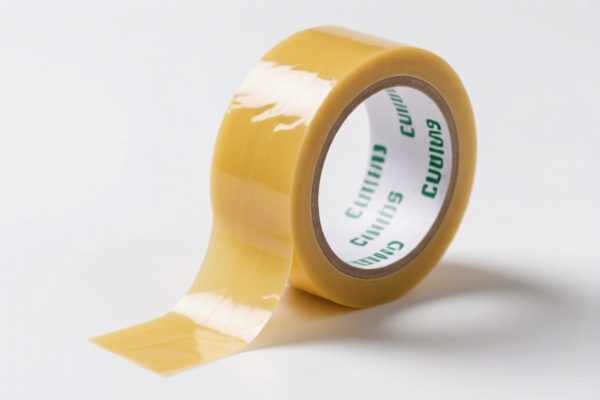
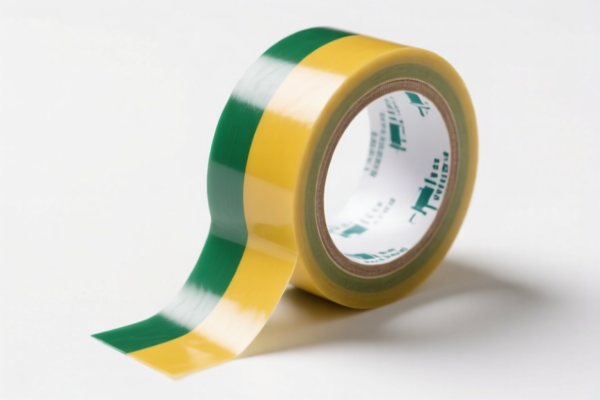
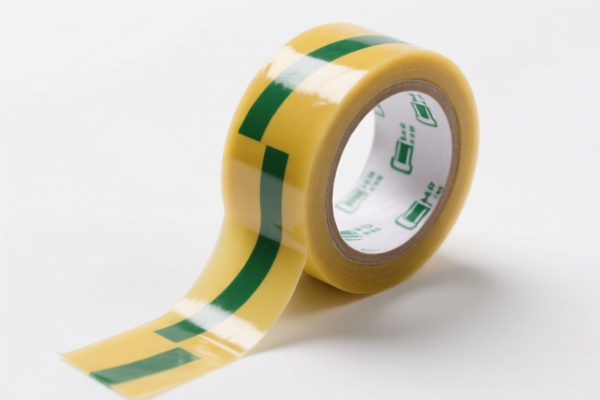
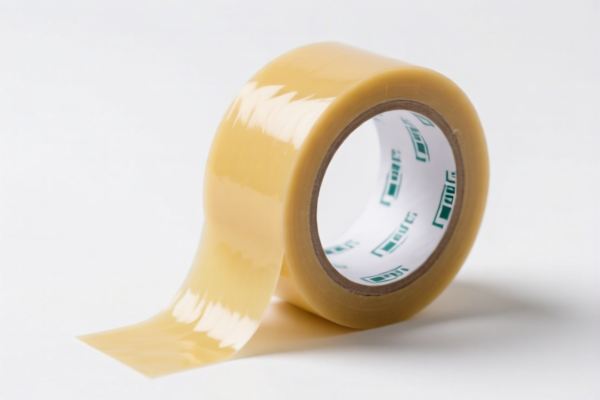
AI Analysis
🛡️ Electrical Insulating Tape (Insulation Tape)
🌐 HS Code Reference & Customs Clearance Guide | 2026 Latest Tariff Analysis | Strategic Classification Strategy
📌 1. Product Definition & Classification: Do You Really Understand "Insulating Tape"?
Electrical Insulating Tape is a critical component in electrical engineering, used for insulation, protection, and marking of wires and cables. In international trade, it is primarily classified under Chapter 39 (Plastics and Articles Thereof), specifically as self-adhesive plastic products or other plastic articles.
The classification hinges on two key factors: 1. Material: Typically PVC (Polyvinyl Chloride), PE, or other polymer films. 2. Form: Self-adhesive rolls, often used for electrical insulation.
⚠️ Key Distinction:
- If the tape is self-adhesive and made of plastic (like PVC), it generally falls under Heading 3919 (Self-adhesive plates, sheets, film, foil, tape, strip and other flat shapes, of plastics).
- If it is not self-adhesive or falls under a specific "other" category not listed elsewhere, it may fall under Heading 3926 (Other articles of plastics).
📦 2. HS Code Classification Details (2026 Latest Tariff Authority Comparison)
Based on the provided data, here are the matched HS Codes and their corresponding rationales:
| HS Code | Product Description | Rationale for Classification | Total Tax Rate |
|---|---|---|---|
3919.10.20.20 |
Self-adhesive plates, sheets, film, foil, tape, strip and other flat shapes, of plastics, of PVC, in rolls of a width not exceeding 20 cm, coated on one side with an adhesive | Match Basis: The product name "Insulating Tape" aligns with the use (electrical insulation) and, by common sense, can be reasonably inferred as a plastic self-adhesive tape, fitting the material attributes of this category. | 40.8% |
3919.90.50.30 |
Other self-adhesive plates, sheets, film, foil, tape, strip and other flat shapes, of plastics | Match Basis: The product name "Insulating Tape" aligns with the use (electrical insulation) and, by common sense, can be reasonably inferred as a plastic self-adhesive tape, fitting the material attributes of this category. | 40.8% |
3926.90.99.89 |
Other articles of plastics and articles of other materials of headings 3901 to 3914 | Match Basis: Based on the product name, it can be inferred that the material is plastic/polymer (insulating tape is often made of PVC etc.), which fits the material characteristic of "other plastic products," and belongs to "other" products not specifically listed in subheadings. | 22.8% |
3926.90.45.90 |
Other articles of plastics: Other | Match Basis: Material inferred as plastic/polymer (insulating tape is usually made of polyvinyl chloride or other plastic films), form belongs to gaskets, seals, and related other plastic products, consistent with the scope of "other plastic products" and "gaskets, washers, and other seals" in the code. | 38.5% |
3919.10.20.20 |
(Duplicate Entry) | Match Basis: The product "Automotive Insulating Tape" falls into the category of "electrical tape" in terms of use, and according to common sense, its material can be reasonably inferred as plastic (PVC etc.), fitting the "plastic self-adhesive" material characteristic. | 40.8% |
🔍 Important Note:
-3919.10.20.20and3919.90.50.30both have a 40.8% total tax rate. -3926.90.99.89offers a lower tax rate of 22.8%, but the classification rationale is broader ("other articles"). -3926.90.45.90has a high tax rate of 38.5%.
💰 3. Detailed Breakdown of 2026 Latest Tariff Rates (Including Surcharges & Policy Additions)
✅ Applicable Country: United States (US)
✅ Origin: China (CN)
✅ Effective Time: From November 10, 2025 (including subsequent imports)
🎯 1. 3919.10.20.20 & 3919.90.50.30 —— Self-Adhesive Plastic Tape
| Item | Content |
|---|---|
| Base Tariff | 5.8% (ad valorem) |
| Section 301 Surcharge | +25.0% |
| 122 Clause Surcharge | +10.0% |
| Total Tax Rate | 40.8% |
| Tax Calculation | CIF Value × 40.8% |
| De Minimis Exemption | ❌ Not Eligible (deny_de_minimis) |
| Legal Basis Path | Base Tariff: 5.8% → Section 301: 25.0% → 122 Clause: 10% |
📌 Explanation:
- The Base Tariff is 5.8%. - The Section 301 Surcharge of 25% applies to many Chinese plastic products. - The 122 Clause Surcharge of 10% is another specific additional duty for Chinese goods. - Total 40.8% is a high tariff rate, requiring advance planning!
🎯 2. 3926.90.99.89 —— Other Plastic Articles
| Item | Content |
|---|---|
| Base Tariff | 5.3% |
| Section 301 Surcharge | +7.5% |
| 122 Clause Surcharge | +10.0% |
| Total Tax Rate | 22.8% |
| Tax Calculation | CIF Value × 22.8% |
| De Minimis Exemption | ❌ Not Eligible (deny_de_minimis) |
| Legal Basis Path | Base Tariff: 5.3% → Section 301: 7.5% → 122 Clause: 10% |
📌 Note:
- This code has a lower total tax rate compared to the self-adhesive tape codes. - However, the classification rationale is broader ("other articles of plastics"), which may require stronger justification that the product does not fit more specific headings like 3919.
🎯 3. 3926.90.45.90 —— Other Plastic Articles (Gaskets/Seals)
| Item | Content |
|---|---|
| Base Tariff | 3.5% |
| Section 301 Surcharge | +25.0% |
| 122 Clause Surcharge | +10.0% |
| Total Tax Rate | 38.5% |
| Tax Calculation | CIF Value × 38.5% |
| De Minimis Exemption | ❌ Not Eligible (deny_de_minimis) |
| Legal Basis Path | Base Tariff: 3.5% → Section 301: 25.0% → 122 Clause: 10% |
📌 Caution:
- Although the base tariff is low (3.5%), the Section 301 surcharge is high (25%), leading to a total of 38.5%. - This code assumes the tape is used as a "gasket" or "seal," which may not accurately reflect its primary function as electrical insulation. Misclassification risk is high.
🛠️ 4. Customs Clearance Practical Advice (Pitfall Avoidance Guide)
✅ 1. Required Documents Checklist (None Can Be Omitted)
| Document | Must Provide | Description |
|---|---|---|
| ✅ Product Specification Sheet | ✔️ | Includes material (PVC/PE), thickness, width, length, adhesive type, insulation rating. |
| ✅ Product Photos (Including Label) | ✔️ | Clear images of the roll, label showing specifications and brand. |
| ✅ Third-Party Test Report | ✔️ | UL, CSA, RoHS, or other insulation performance tests. |
| ✅ Commercial Invoice | ✔️ | Clearly state "Electrical Insulating Tape, PVC, Self-Adhesive." |
| ✅ Packing List | ✔️ | Detail carton contents, weight, dimensions. |
| ✅ Certificate of Origin (CO) | ✔️ | If not China-origin, may apply for preferential rates. |
✅ 2. Declaration Tips (Key Mantra)
🔥 "Material First, Function Second, Name Accurate, Tax Rate Correct!"
| Scenario | Correct Declaration Method | Incorrect Practice |
|---|---|---|
| Standard PVC Self-Adhesive Tape | 3919.10.20.20 or 3919.90.50.30 |
Misclassified as 3926 → Potential audit risk. |
| Automotive Insulating Tape | 3919.10.20.20 |
Misclassified as general plastic film. |
| Non-Self-Adhesive Insulating Tape | 3926.90.99.89 |
Self-adhesive tape declared as non-adhesive → Severe penalty. |
| Tape with Special Coatings | 3919.10.20.20 (if PVC & self-adhesive) |
Over-complex classification → Delayed clearance. |
✅ 3. Special Case Handling
| Scenario | Handling Advice |
|---|---|
| OEM Custom Tape | Provide customer order + design drawings to avoid being classified as "non-standard." |
| Tape with Special Insulation Ratings | Provide UL/CSA test reports to support classification under electrical accessories. |
| Bundled Sales (Tape + Tools) | Declare tape separately; tools should be declared under their own HS codes. |
| High-Performance Insulating Tape | If not PVC, but still self-adhesive plastic, still likely 3919. |
🌍 5. Global Market Customs Clearance Comparison (2026 Latest)
| Country/Region | Recommended HS Code | Tariff Rate | Certification Requirements | Notes |
|---|---|---|---|---|
| 🇺🇸 USA | 3919.10.20.20 / 3919.90.50.30 |
40.8% (China Origin) | UL, RoHS, FCC (if applicable) | High tariff due to Section 301 and 122 Clause. |
| 🇺🇸 USA | 3926.90.99.89 |
22.8% (China Origin) | UL, RoHS | Lower tariff, but stricter classification justification needed. |
| 🇨🇳 China | 3919.10.20.20 |
5.8% | CCC (if applicable) | No additional surcharges. |
| 🇪🇺 EU | 3919.10.20.20 |
0% (if符合 CE) | CE, REACH | No additional surcharges. |
| 🇦🇺 Australia | 3919.10.20.20 |
5% | RCM | No additional surcharges. |
| 🇯🇵 Japan | 3919.10.20.20 |
0% | PSE | No additional surcharges. |
📌 Conclusion:
- The US is the only market imposing high additional surcharges on Chinese-origin plastic tapes. - China-origin insulating tape faces very high clearance costs in the US, suggesting early assessment of supply chain adjustments or origin diversification.
📌 6. Common Errors & Pitfall Guide (Lessons Learned)
❌ Error 1: Declaring self-adhesive tape under 3926 to save taxes.
👉 Consequence: High risk of audit, back taxes, and fines. Customs will verify the self-adhesive nature.
❌ Error 2: Misdeclaring "Automotive Insulating Tape" as general plastic film.
👉 Consequence: Delayed clearance, potential misclassification penalties.
❌ Error 3: Not providing test reports for electrical insulation.
👉 Consequence: Customs may question the product's declared use, leading to further scrutiny.
❌ Error 4: Using vague product names like "Plastic Tape."
👉 Consequence: Unclear classification, potential for incorrect HS code assignment.
✅ Correct Practice:
"Electrical Insulating Tape, PVC, Self-Adhesive, 19mm x 20m, UL Recognized, Model XYZ, RoHS Compliant"
🎯 7. Conclusion: Professional Declaration, Time-Saving, Cost-Efficient!
🎯 Remember the Mantra:
🔹 "Self-Adhesive is 3919, Other Plastic is 3926. USA Tax is High, Plan Ahead!"
🔹 "HS Code Determines Life or Death, Tax Rate Difference is Huge, One Mistake, Thousands in Penalties!"
📌 Tips:
If your insulating tape is originated from Vietnam, Mexico, Thailand, Malaysia, you may apply for IEEPA Exemption, with tax rates as low as 0%~5%.
It is recommended to apply for Advance Rulings to avoid customs clearance risks.
📣 Immediate Action:
📞 Contact a professional customs broker + Provide Product Images + Apply for HS Code Advance Ruling
🚀 Let your insulating tape, pass customs smoothly, efficient export, profit double!
✨ Professional Clearance Starts with Accurate Classification!
💼 Every Cent of Your Cost Deserves Precise Calculation!
Customer Reviews
About HS Code Classification
The Harmonized System (HS) is an internationally standardized nomenclature developed by the World Customs Organization (WCO) to classify traded products. Over 200 countries use the HS system as the basis for customs tariffs, trade statistics, and import/export regulations.
Each HS code follows a hierarchical structure:
- Chapter (2 digits) — Broad category of goods (e.g., Chapter 84: Machinery and Mechanical Appliances)
- Heading (4 digits) — More specific grouping within the chapter
- Subheading (6 digits) — Internationally standardized breakdown, used by all WCO member countries
- National subdivisions (8-10 digits) — Country-specific extensions for further classification, such as US HTSUS 10-digit codes
Correct HS code classification is essential for smooth customs clearance, accurate duty payment, and compliance with trade regulations. Misclassification can lead to customs delays, overpayment of duties, or penalties.
When importing from CN to US, the applicable tariff rates may include:
- Most-Favored-Nation (MFN) rate — The standard duty rate applied to WTO members
- General rate — Applied to countries without trade agreements
- Trade remedy duties — Additional tariffs such as Section 301 (anti-dumping), Section 232 (national security), or countervailing duties
The information provided on this page is for reference purposes only. For official classification, please consult with your local customs authority or a licensed customs broker.