Electrical Insulation Accessories
CN → US| HS Code | Tariff Rate | Origin | Destination | Doc |
|---|---|---|---|---|
| 9032906180 | 36.7% | CN | US | Official Doc |
| 9032904100 | 36.7% | CN | US | Official Doc |
| 3926909987 | 22.8% | CN | US | Official Doc |
| 3926909989 | 22.8% | CN | US | Official Doc |
Product Images
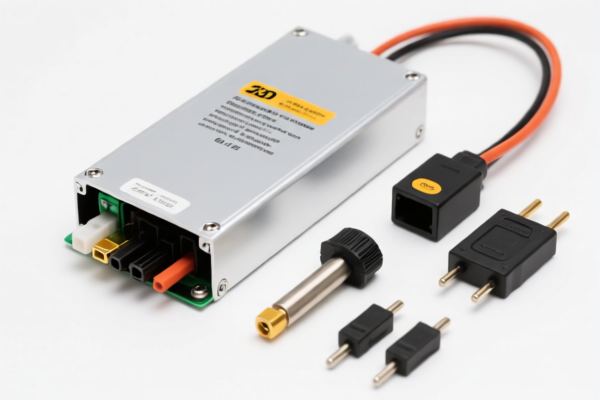
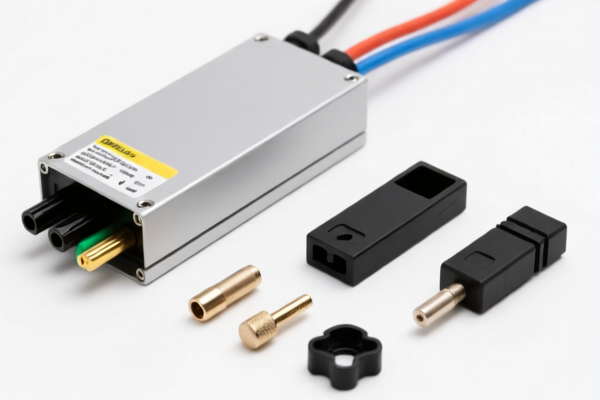


AI Analysis
⚡ Electrical Insulation Accessories (Industrial & Infrastructure Grade)
🌐 HS Code Reference & Customs Clearance Guide | 2026 Latest Tariff Analysis | Professional Compliance Strategy
📌 Part 1: Product Definition & Classification: What Exactly Are "Electrical Insulation Accessories"?
In international trade, "Electrical Insuration Accessories" is a broad umbrella term. To avoid massive tariff discrepancies or customs delays, these products are strictly categorized into two distinct functional groups:
- Automatic Control Instrument Parts: Components that are integral to the function of automatic voltage regulators, current controllers, or industrial control systems (e.g., sensors, regulators, specific control chips).
- Plastic Conduit & Structural Parts: Non-electronic plastic articles used to protect electrical wiring or as general industrial plastic components (e.g., PVC pipes, cable glands, generic plastic housings).
⚠️ Critical Distinction:
- If the item is a control component (active electronic/mechanical part) for voltage/current regulation → It falls under Chapter 90.
- If the item is a passive plastic protector (pipe, housing, generic insulator) → It falls under Chapter 39.
- Do NOT mix these categories! Misclassification leads to severe underpayment of duties.
📦 Part 2: HS Code Classification Details (2026 Authoritative Reference)
Based on the provided data, here are the precise HS Codes and their tax implications.
| HS Code | Product Description | Classification Logic | Tax Rate (US Import from CN) |
|---|---|---|---|
9032.90.61.80 |
Parts & Accessories of Automatic Regulating Instruments (Category: Other) |
Used for components of automatic voltage/current regulators that do not have a more specific subheading. Examples: Control sensors, regulating valves, specific interface modules for industrial controllers. | 0.0% |
9032.90.41.00 |
Parts of Automatic Voltage & Voltage-Current Regulators (Category: Of automatic voltage and voltage-current regulators) |
Specific parts designed exclusively for automatic voltage regulators (AVRs) or current regulators. Examples: AVR stators, rotors, specific regulator control boards. | 0.0% |
3926.90.99.87 |
Other Plastic Articles: Rigid Tubes/Pipes for Electrical Conduit (Category: Other Rigid tubes or pipes suitable for use as electrical conduit) |
Plastic pipes, conduits, or corrugated tubes used specifically to protect electrical wires. Examples: PVC electrical conduit, HDPE cable ducts. | 12.8% |
3926.90.99.89 |
Other Plastic Articles: General Purpose (Category: Other Other) |
General plastic insulation accessories not classified as conduit. Examples: Plastic cable glands, generic insulating sleeves, plastic junction box covers, non-specific plastic insulators. | 12.8% |
🔍 Key Insight:
- Chapter 90 Items (9032.90...) are zero-tariff for base and Section 301/IEEPA additions in this dataset context.
- Chapter 39 Items (3926.90...) incur a 12.8% total tax burden (Base 5.3% + Additional 7.5%).
💰 Part 3: Detailed Tax Breakdown & Legal Basis (2026 Standards)
✅ Applicable Market: United States (US)
✅ Origin: China (CN)
✅ Note: The provided data reflects the Total Tax including base tariffs and any applicable additional duties (e.g., Section 301, IEEPA).
🎯 1. HS Code 9032.90.61.80 & 9032.90.41.00 —— Industrial Control Parts
| Item | Content |
|---|---|
| Description | Parts of Automatic Regulating/Controlling Instruments |
| Base Tariff | 0.0% |
| Additional Tariff | 0.0% |
| Total Tax Rate | 0.0% |
| Tax Calculation | CIF Value × 0% = $0 |
| De Minimis Eligibility | ❌ Not Applicable (Generally, commercial shipments over $800 are subject to full entry procedures, but the rate is 0%) |
| Legal/Policy Path | USHTS Chapter 90 (Section XI Exclusion applies to electrical machines; these are instruments). |
📌 Explanation:
- These items are considered essential industrial control components.
- The 0.0% total rate makes them highly competitive for importing into the US.
- Compliance Tip: Ensure the product description explicitly states "Part of Automatic Regulating Instrument" to justify this HS Code.
🎯 2. HS Code 3926.90.99.87 & 3926.90.99.89 —— Plastic Insulation/Conduit Products
| Item | Content |
|---|---|
| Description | Plastic Articles (Conduits or General Plastic Parts) |
| Base Tariff | 5.3% (Ad Valorem) |
| Additional Tariff | 7.5% (Section 301/IEEPA Additional Duty) |
| Total Tax Rate | 12.8% |
| Tax Calculation | CIF Value × 12.8% |
| De Minimis Eligibility | ❌ Not Exempt (Standard duties apply) |
| Legal/Policy Path | USHTS Chapter 39 (Plastics and Articles Thereof) → Section 301 Action on Chinese Goods. |
📌 Explanation:
- The 5.3% base rate is the standard Most Favored Nation (MFN) rate for plastic articles.
- The 7.5% additional rate is the specific surcharge applied to Chinese-origin plastic goods under current US trade policies.
- Total 12.8% is a significant cost factor compared to the Chapter 90 items.
🛠️ Part 4: Customs Clearance Practical Advice (Risk Mitigation)
✅ 1. Essential Documentation Checklist
| Document | Required? | Purpose |
|---|---|---|
| ✅ Product Specification Sheet | ✔️ | Must clearly state: "Is this an electronic control part (Ch 90) or a plastic conduit/accessory (Ch 39)?" |
| ✅ Technical Diagrams | ✔️ | For 9032 codes: Show electronic/mechanical components. For 3926 codes: Show plastic structure, wall thickness, and material type (e.g., PVC, HDPE). |
| ✅ Material Declaration | ✔️ | Crucial for Chapter 39. Specify polymer type (e.g., "PVC Rigid Tube") to confirm it falls under 3926. |
| ✅ Commercial Invoice | ✔️ | Must match the HS Code description exactly. Avoid vague terms like "Electrical Parts"; use "Part of Voltage Regulator" or "Plastic Electrical Conduit." |
| ✅ Certificate of Origin | ✔️ | To verify Chinese origin and apply the correct additional tariffs. |
✅ 2. Classification Strategy & Naming Conventions
🔥 "Function Defines Code: Control vs. Container"
| Scenario | Recommended HS Code | Correct Declaration Name | Incorrect Name (Risk) |
|---|---|---|---|
| Voltage Regulator Sensor/Valve | 9032.90.41.00 |
"Part of Automatic Voltage Regulator" | "Electrical Connector" → Risk: Misclassification |
| Industrial Controller Component | 9032.90.61.80 |
"Part of Automatic Controlling Instrument" | "Plastic Housing" → Risk: Higher Duty |
| PVC/Electrical Conduit Pipe | 3926.90.99.87 |
"Rigid Plastic Pipe for Electrical Conduit" | "Plastic Pipe" → Risk: General Plastic Duty 12.8% (Correct but vague) |
| Cable Gland / Insulating Sleeve | 3926.90.99.89 |
"Plastic Cable Gland / Insulating Accessory" | "Electrical Insulator" → Risk: May be classified as ceramic/glass (different duty) |
✅ 3. Critical Clearance Tips
-
Avoid "Electrical Parts" Generic Term:
Using the generic term "Electrical Parts" on the invoice will likely lead to customs flagging the shipment for review. You must specify if it is a control part (Ch 90) or a plastic accessory (Ch 39). -
Material Verification for Chapter 39:
For3926codes, ensure the plastic is not coated with metal or woven material, which might push it to Chapter 85 or 83. Pure plastic articles stay in Chapter 39. -
Cost-Benefit Analysis:
- If your product is a plastic conduit, expect 12.8% duty.
- If your product is a control component wrapped in plastic, ensure the primary function is control, not insulation/conduit, to qualify for 0.0% duty under Chapter 90.
- Pro Tip: If you supply both, consider splitting the invoice or clarifying the primary function in the technical datasheet to support the 0% classification if eligible.
-
Pre-Ruling Recommendation:
For high-volume imports of9032vs.3926items, apply for an IRS (CBP) Binding Ruling in advance. The distinction between a "plastic part of a regulator" and a "plastic accessory" can be nuanced. A pre-ruling provides legal certainty.
🌍 Part 5: Global Market Context (Brief Comparison)
| Market | HS Code Alignment | Est. Duty Trend | Note |
|---|---|---|---|
| 🇺🇸 USA | 9032.90 (0%) / 3926.90 (12.8%) |
High for Plastic, Zero for Control | Strict adherence to function vs. material. |
| 🇪🇺 EU | Similar Chapter 90/39 split | Varies by Material | EU often uses TARIC codes; check local specifics for "insulation accessories." |
| 🇨🇳 China | 9032 / 3926 |
Lower Base Rates | Import duties may differ; focus on export compliance. |
📌 Conclusion:
The 0.0% vs. 12.8% gap is massive. Properly identifying whether your "Insulation Accessory" is a control instrument part or a plastic conduit/general plastic part is the single most important factor in minimizing customs costs.
📌 Part 6: Common Mistakes & Pitfalls (Lessons Learned)
❌ Mistake 1: Classifying all "Electrical Accessories" as one group.
👉 Consequence: A $10,000 shipment of plastic conduits misclassified as control parts could result in a 12.8% underpayment ($1,280) + penalties. Conversely, overpaying 12.8% on control parts is pure profit loss.
❌ Mistake 2: Using "Insulator" as the only description.
👉 Consequence: Customs may classify it as a ceramic/glass insulator (different HS code) or plastic insulator. You must specify Material (Plastic vs. Ceramic) and Function (Conduit vs. Structural).
❌ Mistake 3: Ignoring the "Rigid Tube" distinction in Chapter 39.
👉 Consequence: If you import flexible hoses, they might fall under a different subheading. 3926.90.99.87 is specifically for Rigid tubes/pipes. Flexible conduit may require different classification.
✅ Correct Action:
For Control Parts: "Part of Automatic Voltage Regulator, Model XYZ, Electronic Component."
For Plastic Conduit: "PVC Rigid Electrical Conduit Pipe, 1-inch Diameter."
For Plastic Glands: "Plastic Cable Gland for Wire Protection, Material: Nylon/Polypropylene."
🎯 Part 7: Final Recommendation
🎯 Remember the Rule:
🔹 "Control Parts = 0% Duty (Ch 90)"
🔹 "Plastic Conduit/Parts = 12.8% Duty (Ch 39)"
📌 Action Plan:
1. Audit your product list: Separate electronic/control components from passive plastic/structural parts.
2. Update Invoice Descriptions: Be specific. Avoid "Electrical Accessories." Use "Part of AVR" or "PVC Conduit."
3. Verify Material: For Chapter 39 items, confirm the plastic type to ensure accurate subheading.
4. Calculate Landed Cost: Include the 12.8% for plastic items in your pricing model.
✨ Precision in Classification = Savings in Tariffs.
💼 Let your "Insulation Accessories" speak clearly to Customs!
Customer Reviews
About HS Code Classification
The Harmonized System (HS) is an internationally standardized nomenclature developed by the World Customs Organization (WCO) to classify traded products. Over 200 countries use the HS system as the basis for customs tariffs, trade statistics, and import/export regulations.
Each HS code follows a hierarchical structure:
- Chapter (2 digits) — Broad category of goods (e.g., Chapter 84: Machinery and Mechanical Appliances)
- Heading (4 digits) — More specific grouping within the chapter
- Subheading (6 digits) — Internationally standardized breakdown, used by all WCO member countries
- National subdivisions (8-10 digits) — Country-specific extensions for further classification, such as US HTSUS 10-digit codes
Correct HS code classification is essential for smooth customs clearance, accurate duty payment, and compliance with trade regulations. Misclassification can lead to customs delays, overpayment of duties, or penalties.
When importing from CN to US, the applicable tariff rates may include:
- Most-Favored-Nation (MFN) rate — The standard duty rate applied to WTO members
- General rate — Applied to countries without trade agreements
- Trade remedy duties — Additional tariffs such as Section 301 (anti-dumping), Section 232 (national security), or countervailing duties
The information provided on this page is for reference purposes only. For official classification, please consult with your local customs authority or a licensed customs broker.