Electrical Machine Parts
CN → US| HS Code | Tariff Rate | Origin | Destination | Doc |
|---|---|---|---|---|
| 8503009520 | 88.0% | CN | US | Official Doc |
| 8483908080 | 37.8% | CN | US | Official Doc |
| 8483903000 | 39.5% | CN | US | Official Doc |
| 8503007500 | 41.5% | CN | US | Official Doc |
| 8538908180 | 38.5% | CN | US | Official Doc |
Product Images
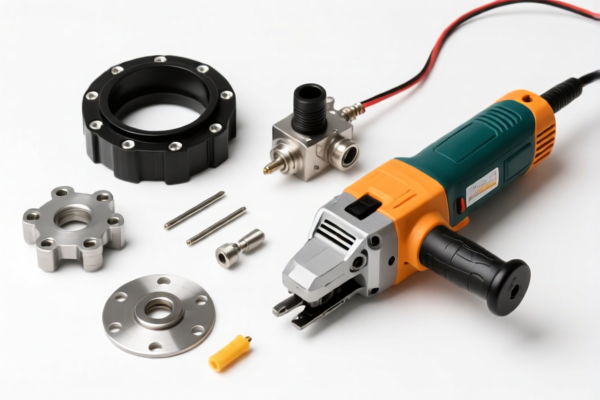
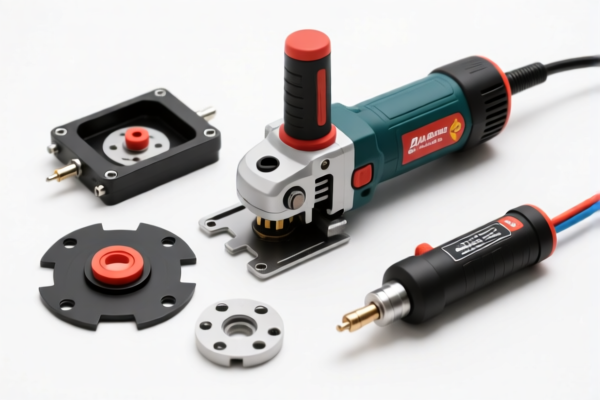
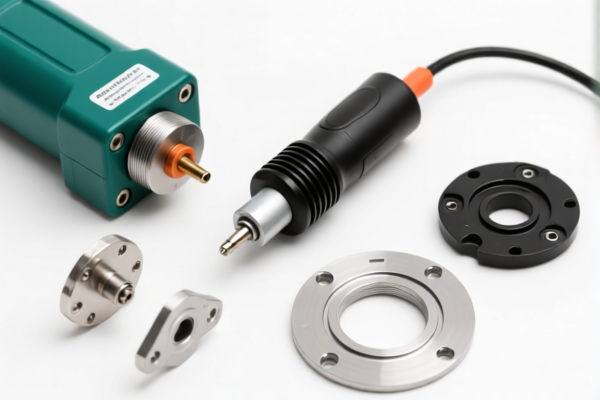
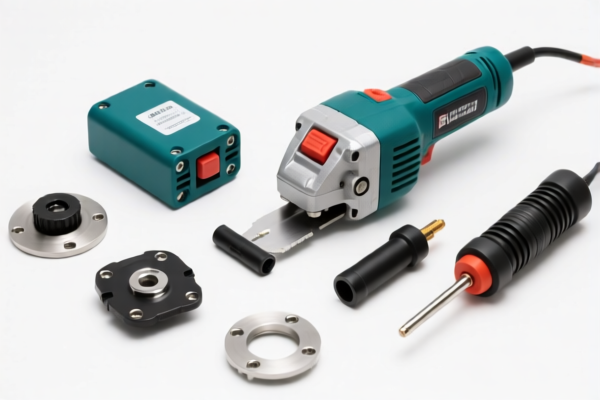
AI Analysis
⚡ Electrical Machine Parts (Motor Accessories & Components)
🌐 HS Code Reference & Customs Clearance Guide | 2026 Latest Tariff Analysis | Professional通关 Strategy
📌 I. Product Definition & Classification: What Are "Electrical Machine Parts"?
"Electrical Machine Parts" is a broad category typically referring to components designed specifically for motors, generators, or other electrical machinery. In international trade, these are generally classified under Chapter 85 (Electrical machinery and equipment).
The key distinction lies in the specific function and exclusivity of the part: 1. Motor-Specific Parts (HS 8503): Components designed exclusively for electric motors (e.g., armatures, commutators, specific bearings, cooling fans for motors). These often carry higher tariffs due to being "parts of motors." 2. General Mechanical Parts (HS 8483/8538): Parts that may be used in motors but are also compatible with general machinery (gears, shafts, general electrical controls). These fall under "parts of general mechanical appliances" or "parts of apparatus." 3. Fallback/Catch-all (8483.90.80.80): Used when the specific application is unclear, serving as a general "parts" category.
⚠️ Key Distinction Point:
- If the part is uniquely identifiable as belonging to a motor (e.g., a motor shaft with specific keyways) → Likely 8503.
- If the part is a general mechanical component (e.g., a standard gear or bolt) used in motors → Likely 8483 or 8538.
- If the part is an electrical control device (e.g., a relay box) → Likely 8538.
📦 II. HS Code Classification Details (2026 Latest Tariff Authority Comparison)
The following analysis is strictly based on the provided data context.
| HS Code | Product Description | Applicable Scenario | Tax Rate (Total) |
|---|---|---|---|
8503.00.95.20 |
Parts of Electric Motors | Matches "Motor Parts" purpose. No material conflict. Fits the "other parts" category for motors. | 88.0% |
8483.90.80.80 |
Other Parts of Mechanical Transmission | Fallback for "Parts/Components." No obvious conflict with transmission elements. Default tendency for non-specific parts. | 37.8% |
8483.90.30.00 |
Parts of Transmission Elements | Consistent with "transmission element parts." No material or form conflict. Reasonable inference for general parts. | 39.5% |
8503.00.75.00 |
Other Parts of Electric Motors | Parts category. No power/material specified. Default tendency for parts without conflict. | 41.5% |
8538.90.81.80 |
Parts of Apparatus | Parts category. No material specified. Default tendency for parts without material conflict. | 38.5% |
🔍 Critical Analysis:
- 8503.00.95.20 has the highest tax burden (88.0%). This is because it is classified directly under "Parts of Motors," which are subject to the highest cumulative duties.
- 8483.90.80.80 offers the lowest tax burden (37.8%). This is likely because it is treated as a general mechanical part ("Other"), which has a lower base tariff than specific motor parts.
- Misclassification Risk: Classifying a generic part as a "Motor Part" (8503) instead of a "General Part" (8483/8538) can increase your tax burden by ~50%.
💰 III. 2026 Latest Tariff Rate Detailed Explanation (Including Additional Taxes & Policy Add-ons)
✅ Applicable Country: United States (US)
✅ Origin: China (CN)
✅ Effective Time: 2025/2026 (Current Trade War Context)
🎯 1. 8503.00.95.20 —— Parts of Electric Motors (Highest Burden)
| Item | Content |
|---|---|
| Base Tariff | 3.0% |
| Section 301 Additional Tariff | +25.0% |
| Section 122 Tariff (Steel/Aluminum/Copper Products) | +50.0% |
| Total Tax Rate | 88.0% |
| Tax Calculation | CIF Value × 88.0% |
| De Minimis Exemption? | ❌ No (High value item) |
| Legal Basis Path | USITC:8503.00.95.20 → 301:25% → 122:50% |
📌 Explanation:
- This is the wor-case scenario for electrical parts.
- The 50% Section 122 Tariff applies if the part is made of steel, aluminum, or copper. Many motor parts (shafts, housings, windings) fall into this category.
- Combined with 301 (25%) and Base (3%), the total is 88%.
- Action: If your part is metal-based, expect this rate unless a valid exclusion or alternative classification is found.
🎯 2. 8483.90.80.80 —— Other Parts of Mechanical Transmission (Lowest Burden)
| Item | Content |
|---|---|
| Base Tariff | 2.8% |
| Section 301 Additional Tariff | +25.0% |
| Section 122 Tariff | Not specified in data (likely 0% or not applicable for this specific subcode in this context) |
| Total Tax Rate | 37.8% |
| Tax Calculation | CIF Value × 37.8% |
| De Minimis Exemption? | ❌ No |
| Legal Basis Path | USITC:8483.90.80.80 → 301:25% |
📌 Explanation:
- This code avoids the heavy Section 122 (50%) tariff, resulting in a significantly lower rate of 37.8%.
- It is considered a "fallback" category for parts that don't fit neatly into specific motor or transmission subcodes.
- Strategy: If the part can be reasonably argued as a "general mechanical part" rather than a "motor-specific part," this classification saves ~50% in taxes.
🎯 3. 8483.90.30.00 —— Parts of Transmission Elements
| Item | Content |
|---|---|
| Base Tariff | 4.5% |
| Section 301 Additional Tariff | +25.0% |
| Section 122 Tariff | +10% (Note: Data says "122 Clause Tariff 10%") |
| Total Tax Rate | 39.5% |
| Tax Calculation | CIF Value × 39.5% |
| Legal Basis Path | USITC:8483.90.30.00 → 301:25% → 122:10% |
📌 Explanation:
- Slightly higher than 8483.90.80.80 due to the 10% Section 122 add-on.
- Still much cheaper than the 8503 category.
🎯 4. 8503.00.75.00 —— Other Parts of Electric Motors
| Item | Content |
|---|---|
| Base Tariff | 6.5% |
| Section 301 Additional Tariff | +25.0% |
| Section 122 Tariff | +10% |
| Total Tax Rate | 41.5% |
| Legal Basis Path | USITC:8503.00.75.00 → 301:25% → 122:10% |
📌 Explanation:
- Another motor part classification. Higher base tariff (6.5%) than the general mechanical parts.
- Still subject to Section 122 (10%) if metal content is present.
🎯 5. 8538.90.81.80 —— Parts of Apparatus
| Item | Content |
|---|---|
| Base Tariff | 3.5% |
| Section 301 Additional Tariff | +25.0% |
| Section 122 Tariff | +10% |
| Total Tax Rate | 38.5% |
| Legal Basis Path | USITC:8538.90.81.80 → 301:25% → 122:10% |
📌 Explanation:
- Suitable for electrical control parts or apparatus components.
- Competitive rate at 38.5%, comparable to the lowest mechanical part rate.
🛠️ IV. Customs Clearance Practical Advice (Battle-Tested Pitfall Avoidance)
✅ 1. Documentation Checklist (Essential)
| Document | Required | Notes |
|---|---|---|
| Product Specification Sheet | ✔️ | Must clearly state: Function, Material, Compatibility (e.g., "For Motor Model X" vs. "General Mechanical Part"). |
| Material Certificate | ✔️ | Crucial for determining Section 122 applicability (Steel/Aluminum/Copper). |
| Circuit/Structure Diagram | ✔️ | Helps prove if it's a "Motor Part" (8503) or "General Part" (8483/8538). |
| Commercial Invoice | ✔️ | Description must be precise. Avoid vague terms like "Electrical Part." Use "Motor Bracket" or "Transmission Gear." |
| Origin Certificate | ✔️ | To determine country of origin (China triggers 301/122). |
✅ 2. Declaration Tips (Key Mantras)
🔥 "Clarify Function, Specify Material, Avoid 'Motor' If Possible!"
| Scenario | Correct Declaration | Wrong Declaration |
|---|---|---|
| Metal shaft for a motor | 8483.90.80.80 (General Part) |
8503.00.95.20 (Motor Part) → Tax Jump: 37.8% to 88% |
| Plastic casing for a motor | 8503.00.75.00 (Non-metal part) |
8503.00.95.20 (If metal tax applies) → Save 50% |
| Electrical Control Box | 8538.90.81.80 (Apparatus Part) |
Vague "Electrical Accessory" → Risk of Rejection |
| Gears in a motor assembly | 8483.90.30.00 (Transmission Part) |
8503.00.95.20 → Tax Jump: 39.5% to 88% |
✅ 3. Special Case Handling
| Situation | Handling Advice |
|---|---|
| Part is made of Non-Metal (Plastic/Ceramic) | Argue for 8503.00.95.20 but NO Section 122. However, data shows 88% for 8503.95.20, implying 122 is applied. Verify if your specific non-metal part can be cleared from 122. If not, consider 8538.90.81.80 (38.5%) if it fits "apparatus." |
| Part is General Mechanical (Gears, Shafts) | Push for 8483.90.80.80 (37.8%) or 8483.90.30.00 (39.5%). Provide evidence that it is sold as a general component, not exclusively for motors. |
| Part is Electrical Control | Use 8538.90.81.80 (38.5%). This is often a safer, lower-tax route for controllers, relays, and boxes. |
| High-Value Motor Specific Part | If it must be 8503.00.95.20 (88%), budget accordingly. Consider supply chain adjustments (e.g., final assembly in a non-China country) if volume is high. |
🌍 V. Global Market Comparison (2026 Latest)
| Country/Region | Recommended HS Code | Tariff (China Origin) | Certification | Notes |
|---|---|---|---|---|
| 🇺🇸 USA | 8483.90.80.80 |
37.8% | None | Lowest risk. Avoid 8503 if possible. |
| 🇺🇸 USA | 8503.00.95.20 |
88.0% | None | Highest risk. Only if no alternative. |
| 🇨🇳 China | 8503.00.95.20 |
~10-15% | CCC (if applicable) | Lower tariffs in China. |
| 🇪🇺 EU | 8503.00.00 |
~0-4% | CE | Lower tariffs in EU. No Section 301/122. |
| 🇦🇺 Australia | 8503.00.00 |
~5% | RCM | Moderate tariffs. |
📌 Conclusion:
- USA is the critical bottleneck. The 88% tariff on8503.00.95.20makes it economically unviable for many motor parts unless the margin is high.
- Strategy: Use8483.90.80.80(37.8%) or8538.90.81.80(38.5%) whenever technically feasible.
- Material Declaration: Clearly state non-metal materials to potentially avoid Section 122 if applicable to other codes.
📌 VI. Common Errors & Pitfall Guide (Lessons Learned)
❌ Error 1: Classifying a general gear as a "Motor Part" (8503).
👉 Consequence: Tax jumps from 37.8% to 88% → Loss of 50.2% in value.
❌ Error 2: Not specifying material (Steel vs. Plastic).
👉 Consequence: Customs may assume metal → Apply Section 122 (10% or 50%) → Unexpected tax increase.
❌ Error 3: Using vague terms like "Electrical Accessory" in Invoice.
👉 Consequence: Customs delays, reclassification, potential penalties.
✅ Correct Practice:
"Shaft, Stainless Steel, for General Purpose Motor, Part No. XYZ"
→ Argue for8483.90.80.80(37.8%) as it is a "General Mechanical Part.""Control Box for Industrial Equipment"
→ Use8538.90.81.80(38.5%).
🎯 VII. Conclusion: Professional Declaration, Cost Optimization!
🎯 Remember the Mantra:
🔹 "Function Over Form, Material Over Name!"
🔹 "8503 is 88%, 8483 is 38% – Choose Wisely!"
🔹 "If it's not exclusively a motor part, call it a General Part!"
📌 Pro Tip:
If your parts are exclusively for motors and made of metal, you may be stuck with 88%. Consider:
1. Re-engineering: Use non-metal materials (plastic/ceramic) if possible.
2. Subcontracting: Final assembly in a non-China country to avoid 301/122.
3. Advance Ruling: File an HS Code Ruling with US Customs before shipment to confirm the 37.8% classification is acceptable for your specific part.
📣 Immediate Action:
📞 Consult a Customs Broker: Provide detailed specs + material certs.
📄 File for Advance Ruling: Secure the 37.8% rate if possible.
🚀 Optimize Supply Chain: Reduce tariff burden by strategic classification.
✨ Professional Customs Clearance Starts with Precise Classification!
💼 Every Percent Saved is Pure Profit!
Customer Reviews
About HS Code Classification
The Harmonized System (HS) is an internationally standardized nomenclature developed by the World Customs Organization (WCO) to classify traded products. Over 200 countries use the HS system as the basis for customs tariffs, trade statistics, and import/export regulations.
Each HS code follows a hierarchical structure:
- Chapter (2 digits) — Broad category of goods (e.g., Chapter 84: Machinery and Mechanical Appliances)
- Heading (4 digits) — More specific grouping within the chapter
- Subheading (6 digits) — Internationally standardized breakdown, used by all WCO member countries
- National subdivisions (8-10 digits) — Country-specific extensions for further classification, such as US HTSUS 10-digit codes
Correct HS code classification is essential for smooth customs clearance, accurate duty payment, and compliance with trade regulations. Misclassification can lead to customs delays, overpayment of duties, or penalties.
When importing from CN to US, the applicable tariff rates may include:
- Most-Favored-Nation (MFN) rate — The standard duty rate applied to WTO members
- General rate — Applied to countries without trade agreements
- Trade remedy duties — Additional tariffs such as Section 301 (anti-dumping), Section 232 (national security), or countervailing duties
The information provided on this page is for reference purposes only. For official classification, please consult with your local customs authority or a licensed customs broker.