Electrical PVC Conduit
CN → US| HS Code | Tariff Rate | Origin | Destination | Doc |
|---|---|---|---|---|
| 3917230000 | 38.1% | CN | US | Official Doc |
| 3917220000 | 38.1% | CN | US | Official Doc |
| 3926909987 | 22.8% | CN | US | Official Doc |
| 3926909989 | 22.8% | CN | US | Official Doc |
Product Images
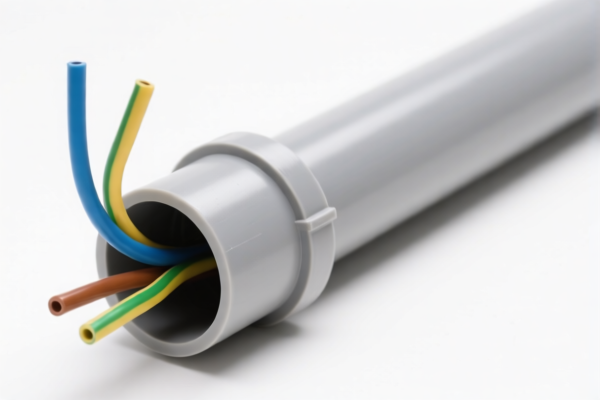
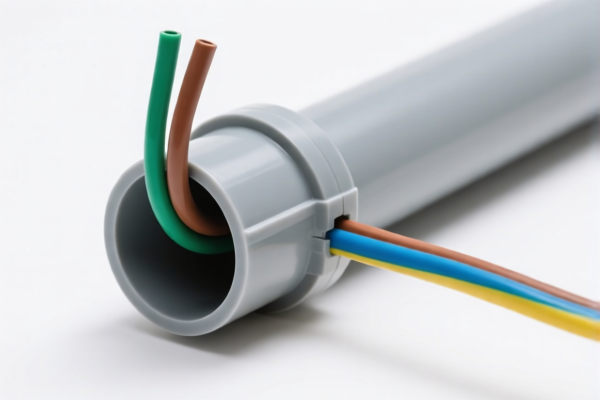
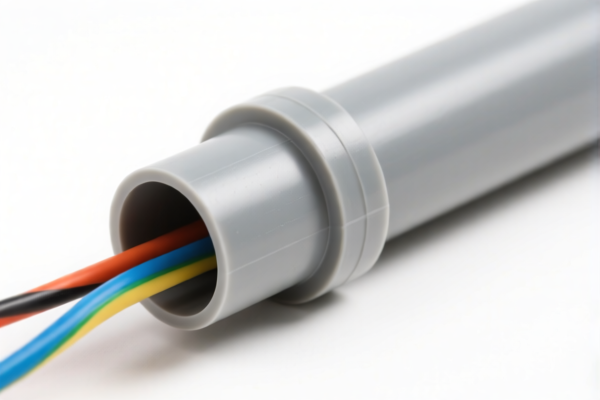
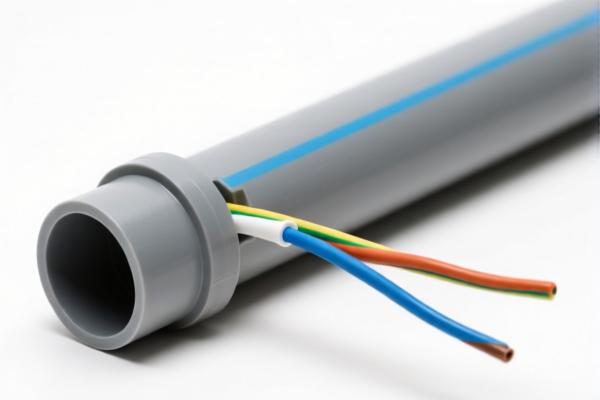
AI Analysis
🔌 Electrical PVC Conduit (电气用PVC导管)
🌐 HS Code Reference & Customs Clearance Guide | 2026 Latest Tariff Analysis | Professional Clearance Strategy
📌 I. Product Definition & Classification: What Exactly Is "Electrical PVC Conduit"?
Electrical PVC Conduit is a rigid or semi-rigid pipe made of Polyvinyl Chloride (PVC), primarily used to protect and route electrical wiring in building construction, industrial facilities, and infrastructure projects. In international trade, classification depends heavily on the material composition, physical form, and specific usage.
While commonly known as "plastic pipes," customs authorities scrutinize these goods closely because they can fall under different chapters depending on whether they are classified as generic plastic articles (Chapter 39) or specific industrial components.
⚠️ Key Distinction Points:
- If the product is strictly a rigid tube made of PVC and used for electrical purposes, it generally falls under Heading 3917 (Tubes, Pipes and Hoses).
- However, if customs authorities view the item as a general plastic article without specific structural characteristics of tubing, it may be misclassified under Heading 3926 (Other Articles of Plastics).
- Critical Note: Misclassification leads to significant tariff differences (38.1% vs. 22.8%).
📦 II. HS Code Classification Details (2026 Latest Tariff Authority Comparison)
Based on the provided data, there are four potential HS Code classifications for Electrical PVC Conduit. Below is the detailed breakdown:
| HS Code | Product Description | Applicable Scenario | Reason for Classification |
|---|---|---|---|
3917.23.00.00 |
PVC Conduit, Electrical Use, Rigid Tube | Standard electrical wiring protection | Material: PVC; Form: Conduit/Tube. Explicitly recognized as "Tube, Pipe" under Chapter 39. |
3917.22.00.00 |
PVC Conduit, Electrical Use, Hard Pipe | Industrial/Commercial Rigid Conduit | Material: PVC; Form: Hard Pipe. Fits the description of "Hard tubes of plastics" (Propylene polymers feature similarity in rigid structure). |
3926.90.99.87 |
PVC Conduit, General Plastic Article | Lower-tier Rigid Conduit | Material: PVC; Form: Conduit but classified as "Other plastic article." Used when specific tubing criteria under 3917 are not fully met or disputed. |
3926.90.99.89 |
PVC Conduit, General Plastic Article | General Purpose Plastic Fitting | Material: PVC; Form: Conduit/Accessory. No material/form conflict, but categorized as a generic plastic item rather than a primary tubing product. |
🔍 Key Insight:
- Chapter 3917 (3917.23.00.00&3917.22.00.00) is the correct classification for products explicitly defined as "Tubes, Pipes, or Hoses." - Chapter 3926 (3926.90.99.87&3926.90.99.89) represents a fallback or alternative classification where the item is viewed as a "Plastic Article" rather than a pure "Tube." - Risk: The difference in total tax burden between Chapter 3917 (38.1%) and Chapter 3926 (22.8%) is substantial (15.3% difference).
💰 III. 2026 Latest Tariff Rate Breakdown (Including Surtaxes & Policy Surcharges)
✅ Applicable Country: United States (US)
✅ Origin: China (CN)
✅ Effective Time: Current ongoing trade restrictions (Section 301, Section 122, etc.)
🎯 1. 3917.23.00.00 & 3917.22.00.00 —— PVC Conduit (Tube/Pipe Category)
These two codes share the same tax structure, as both fall under the same tariff treatment for PVC tubing.
| Item | Content |
|---|---|
| Base Tariff Rate | 3.1% (Most Favored Nation Rate) |
| Section 301 Surtax | +25.0% (Specific to Chinese-origin plastics/pipes under USITC lists) |
| Section 122 Surtax | +10.0% (Additional tariff under Section 122 for national security/defense related imports) |
| Total Tax Rate | 38.1% |
| Tax Calculation | CIF Value × 38.1% |
| De Minimis Exemption? | ❌ Not Eligible (Section 301 & 122 surcharges typically invalidate Section 321 de minimis benefits) |
| Legal Basis Path | HTSUS:3917.23.00.00 → Section 301: Footnote 9903.88.01 → Section 122: 19 USC 2252 |
📌 Explanation:
- The 3.1% is the standard base duty for plastic tubes/pipes. - The 25% is the standard Section 301 tariff for many plastic products from China. - The 10% is the Section 122 tariff, which applies to specific imported goods deemed necessary for national defense or infrastructure. - Total 38.1% is the effective landed cost multiplier for tariffs alone.
🎯 2. 3926.90.99.87 & 3926.90.99.89 —— PVC Conduit (General Plastic Article Category)
These two codes share the same tax structure, reflecting a lower base rate but still subject to surcharges.
| Item | Content |
|---|---|
| Base Tariff Rate | 5.3% (Higher base rate for "Other Articles of Plastic") |
| Section 301 Surtax | +7.5% (Reduced Section 301 rate for certain plastic articles, NOT the full 25%) |
| Section 122 Surtax | +10.0% (Applies equally to these plastic articles) |
| Total Tax Rate | 22.8% |
| Tax Calculation | CIF Value × 22.8% |
| De Minimis Exemption? | ❌ Not Eligible (Surcharges still apply) |
| Legal Basis Path | HTSUS:3926.90.99.87/89 → Section 301: Reduced Footnote → Section 122: 19 USC 2252 |
📌 Explanation:
- The 5.3% base rate is higher than the tubing rate (3.1%), BUT... - The Section 301 rate is only 7.5% (instead of 25%). This is a critical saving. - The Section 122 rate remains 10%. - Total 22.8% is significantly lower than the 38.1% from Chapter 3917. - Strategy: If your product description allows for classification under 3926 (e.g., if it's a fitting, connector, or non-standard pipe), this path saves 15.3% in tariffs.
🛠️ IV. Customs Clearance Practical Advice (Real-World Pitfall Guide)
✅ 1. Preparation Checklist (Non-negotiable Documents)
| Document | Required? | Explanation |
|---|---|---|
| ✅ Product Specification Sheet | ✔️ | Must clearly state: Material (PVC), Diameter, Wall Thickness, Pressure Rating, and "Electrical Use" purpose. |
| ✅ Technical Data Sheet (TDS) | ✔️ | Shows physical properties (rigidity, flame retardancy) to support classification as "Hard Tube" vs. "General Article." |
| ✅ Product Photos | ✔️ | Clear images showing ends, joints, and any printed markings (UL listing, ASTM standards). |
| ✅ Commercial Invoice | ✔️ | Must describe item accurately. Avoid generic terms like "Plastic Pipe." Use "Rigid Electrical PVC Conduit." |
| ✅ Country of Origin Certificate | ✔️ | Essential for determining Section 301 applicability. |
| ✅ UL/CSA Certification | ✔️ | Proof of electrical safety compliance. Required by US authorities for electrical conduit. |
✅ 2. Declaration Strategy (Critical Tips)
🔥 "Classify as Pipe, Save Money? Think Twice! Describe Accurately to Avoid Audits!"
| Scenario | Recommended HS Code | Risk Level | Reason |
|---|---|---|---|
| Standard Rigid PVC Conduit (ASTM D1785/D2470) | 3917.23.00.00 or 3917.22.00.00 |
🟡 Medium | Correct for tubes. High tax (38.1%). Must prove it's a "tube/pipe." |
| PVC Conduit Fittings/Connectors | 3926.90.99.87 or 3926.90.99.89 |
🟢 Low | Correct for accessories. Lower tax (22.8%). Do NOT declare fittings as "conduit." |
| Non-Standard Plastic Tubing | 3926.90.99.89 |
🟠 High | Risky. Customs may reject if it clearly functions as electrical conduit. |
| Mixed Shipment (Conduit + Fittings) | Split Declaration | 🔴 High | Must separate HS codes. Do not bundle under one code to save tax. |
📌 Warning:
- If you declare3926.90.99.89for a standard rigid conduit, Customs may audit and reclassify to3917.23.00.00, resulting in back taxes + penalties. - However, if the product is semi-rigid, flexible, or a specialized fitting,3926is a stronger defense.
✅ 3. Special Considerations
| Situation | Action |
|---|---|
| Section 122 Impact | Check if your specific import volume or value triggers Section 122 thresholds. The 10% surcharge is mandatory for most PVC electrical conduit from China. |
| Anti-Dumping Duties (AD/CVD) | Check if specific PVC resins or finished conduit have active AD/CVD cases. (Note: Current data shows no AD/CVD for PVC conduit, but verify annually). |
| FCC/UL Compliance | Electrical conduit must often meet NEC (National Electrical Code) standards. Non-compliance can lead to rejection even if HS Code is correct. |
🌍 V. Global Market Comparison (2026 Latest)
| Country/Region | Recommended HS Code | Tariff (China Origin) | Certification Required | Notes |
|---|---|---|---|---|
| 🇺🇸 USA | 3917.23.00.00 |
38.1% | UL/ETL, NEC Compliance | Highest tax due to Sec 301 + 122. |
| 🇺🇸 USA | 3926.90.99.89 |
22.8% | UL/ETL, NEC Compliance | Lower tax if classified as "Other Plastic Article." |
| 🇨🇳 China | 3917.23.00.00 |
6.5% | CCC (if applicable) | Export market: Lower duties. |
| 🇪🇺 EU | 3917.23.00 |
6.5% | CE, RoHS | No Section 301 equivalent. |
| 🇨🇦 Canada | 3917.23.00 |
0% (CUSMA) | CSA | Free trade under CUSMA if Canadian/Mexican origin. |
📌 Conclusion:
- USA is the most challenging market due to layered surcharges. - Strategic Classification: If the product design allows, argue for 3926 classification to save 15.3%. However, this requires strong technical justification that the item is not a standard "tube/pipe."
📌 VI. Common Mistakes & Pitfalls (Lessons Learned)
❌ Mistake 1: Declaring PVC Conduit as 3917.23.00.00 but failing to provide UL certification.
👉 Consequence: Customs holds shipment for safety verification → Delays + Storage fees.
❌ Mistake 2: Attempting to classify rigid conduit as 3926.90.99.89 solely to save tax.
👉 Consequence: Customs audit → Reclassification to 3917 → Back taxes of 15.3% + Penalties.
❌ Mistake 3: Ignoring Section 122.
👉 Consequence: Underpayment of 10% → Interest and fines upon detection.
✅ Correct Approach:
"Rigid PVC Electrical Conduit, ASTM D1785, UL Listed, 1-inch Diameter, Black Color, Model XYZ"
🎯 VII. Conclusion: Professional Classification, Cost Optimization, Risk Mitigation!
🎯 Key Takeaways:
🔹 "If it's a tube, it's 3917 (38.1%). If it's an accessory, it's 3926 (22.8%)."
🔹 "Section 122 adds 10% regardless of HS Code."
🔹 "Section 301 is the biggest variable: 25% for tubes vs. 7.5% for other plastic articles."
📌 Pro Tip:
If you are importing large volumes, consider a Binding Ruling Request to US Customs (CBP) to officially determine whether your specific product falls under 3917 or 3926. This provides legal certainty and protects against future audits.
📣 Immediate Action:
📞 Consult a licensed Customs Broker.
📄 Prepare technical specs proving material and form.
🧮 Calculate total landed cost using 38.1% (conservative) or 22.8% (if justified).
🚀 Clear Customs Smoothly, Minimize Taxes, Maximize Profit!
✨ Precision in Classification, Profit in Your Pocket!
💼 Every Percentage Point Counts in International Trade!
Customer Reviews
About HS Code Classification
The Harmonized System (HS) is an internationally standardized nomenclature developed by the World Customs Organization (WCO) to classify traded products. Over 200 countries use the HS system as the basis for customs tariffs, trade statistics, and import/export regulations.
Each HS code follows a hierarchical structure:
- Chapter (2 digits) — Broad category of goods (e.g., Chapter 84: Machinery and Mechanical Appliances)
- Heading (4 digits) — More specific grouping within the chapter
- Subheading (6 digits) — Internationally standardized breakdown, used by all WCO member countries
- National subdivisions (8-10 digits) — Country-specific extensions for further classification, such as US HTSUS 10-digit codes
Correct HS code classification is essential for smooth customs clearance, accurate duty payment, and compliance with trade regulations. Misclassification can lead to customs delays, overpayment of duties, or penalties.
When importing from CN to US, the applicable tariff rates may include:
- Most-Favored-Nation (MFN) rate — The standard duty rate applied to WTO members
- General rate — Applied to countries without trade agreements
- Trade remedy duties — Additional tariffs such as Section 301 (anti-dumping), Section 232 (national security), or countervailing duties
The information provided on this page is for reference purposes only. For official classification, please consult with your local customs authority or a licensed customs broker.