Electrical Resistors and Parts
CN → US| HS Code | Tariff Rate | Origin | Destination | Doc |
|---|---|---|---|---|
| 8533290000 | 35.0% | CN | US | Official Doc |
| 8534000095 | 35.0% | CN | US | Official Doc |
| 8533210090 | 35.0% | CN | US | Official Doc |
Product Images
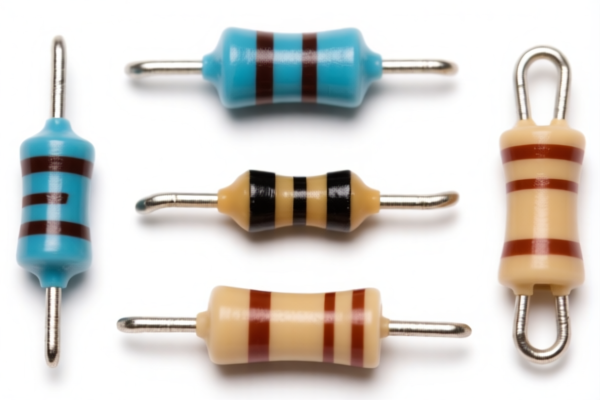
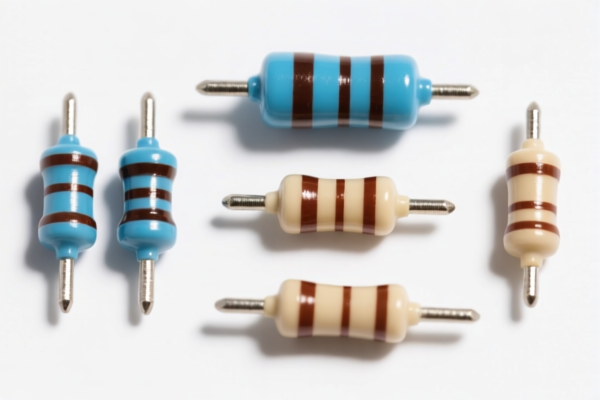
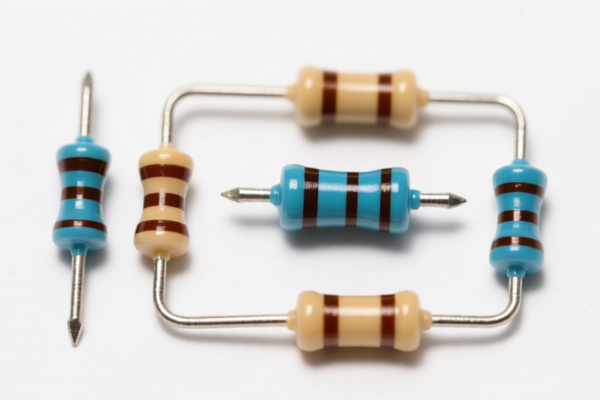
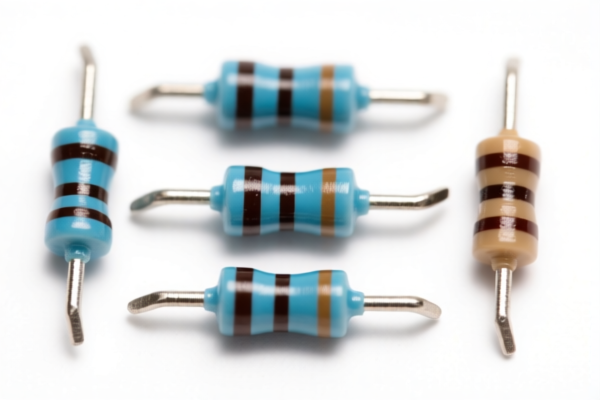
AI Analysis
⚡️ Electrical Resistors & Parts (电阻器及零件)
🌐 HS Code Reference & Customs Clearance Guide | 2026 Latest Tariff Analysis | Professional Strategy
📌 1. Product Definition & Classification: What Exactly Are "Electrical Resistors"?
In international trade, Electrical Resistors are passive electronic components that implement electrical resistance as a circuit element. They are critical for controlling current flow, dividing voltages, and terminating signals.
Depending on the manufacturing technology, form factor, and integration level, they fall into different categories under the Harmonized System (HS):
- Fixed Resistors (Bulk Components): Individual components (wire-wound, carbon film, metal film, ceramic composition) without complex circuit integration.
- Printed Resistors: Resistors printed directly onto printed circuit boards (PCBs) or integrated circuits.
- General "Other" Category: When specific characteristics (power rating, material) are unclear, or for specialized fixed resistors not covered by other specific subheadings.
⚠️ Key Distinction Point:
- If it is a standalone component (like a bead, chip, or wire) → It falls under Chapter 85 (Electrical Machinery); specifically 8533.
- If it is part of a Printed Circuit (printed trace) → It may fall under 8534 (Printed Circuits).
- If the exact type is not specified (e.g., power rating unknown) → A "catch-all" subheading in 8533 applies.
📦 2. HS Code Classification Details (2026 Latest Tariff Authority Comparison)
Based on the provided data, the following HS codes are relevant for Electrical Resistors. Note that all listed items incur a Total Tax Rate of 35.0% due to additional duties on Chinese-origin goods.
| HS Code | Product Description | Application Scenario | Key Characteristics |
|---|---|---|---|
8533.29.00.00 |
Electrical Resistors (Other Fixed Resistors) | General Fixed Resistors: When the resistor does not fit into specific wire-wound or carbon composition categories. | ✅ Standard electronic component |
8534.00.00.95 |
Printed Circuits (Other) | Printed Resistors: Resistors that are printed onto a substrate (PCB) rather than being discrete components. | ✅ Integrated on PCB |
8533.21.00.90 |
Fixed Resistors (Other) | General/Unspecified Resistors: The primary catch-all for fixed resistors when power rating or material is not explicitly defined for more specific subheadings. | ✅ Core name "Resistor", fallback rule |
🔍 Critical Reminder:
- Discrete vs. Integrated: If the resistor is a separate physical part (SMD chip, through-hole bead), it belongs to 8533. If it is a conductive trace on a board, it belongs to 8534.
- Uncertainty Rule: If you cannot confirm the wattage or material (e.g., "wire-wound" vs "metal oxide"), customs often applies the "Other" (90/95) subheadings as a default, leading to 8533.29.00.00 or 8533.21.00.90.
💰 3. 2026 Latest Tariff Rate Breakdown (Including Additional Duties & Policy Surcharges)
✅ Applicable Country: United States (US)
✅ Country of Origin: China (CN)
✅ Effective Time: Post-2025/2026 (Current Trade Environment)
For ALL the HS Codes listed above (8533.29.00.00, 8534.00.00.95, 8533.21.00.90), the tax structure is identical:
🎯 1. 8533.29.00.00 – Electrical Resistors (Other Fixed Resistors)
| Item | Detail |
|---|---|
| Base Tariff (MFN) | 0.0% |
| Section 301 Additional Duty | +25.0% (USITC Footnote 9903.88.01 equivalent for electronics) |
| Section 122 / IEEPA Surcharge | +10.0% (Targeted tariffs on Chinese electrical components) |
| Total Tax Rate | 35.0% |
| Tax Calculation | CIF Value × 35% |
| De Minimis Eligibility | ❌ Not Eligible (Section 301/122 duties generally invalidate de minimis exemptions for China) |
| Legal Basis Path | Base Tariff (0%) + Section 301 (25%) + Section 122 (10%) |
📌 Explanation:
- The 0% base rate reflects standard Most Favored Nation (MFN) treatment for electrical components.
- The 25% rate is the standard Section 301 tariff on Chinese electronics.
- The 10% rate represents additional policy surcharges (referred to as "Section 122" in your data, often aligned with IEEPA powers or specific trade remedies).
- Total: 35%. This is a significant cost factor. Importers must budget for this 35% duty on top of freight and insurance.
🎯 2. 8534.00.00.95 – Printed Circuits (Other)
| Item | Detail |
|---|---|
| Base Tariff | 0.0% |
| Section 301 Additional Duty | +25.0% |
| Section 122 / IEEPA Surcharge | +10.0% |
| Total Tax Rate | 35.0% |
| Tax Calculation | CIF Value × 35% |
| Legal Basis | Same as above. Printed circuits containing resistors are still subject to electronic component tariffs if they are finished PCBs or significant components. |
📌 Note:
- Even though this is a "Printed Circuit," if the primary function is resistive components or it is a specialized electronic part, it attracts the same 35% burden.
- Ensure the product is not classified as a "Complete Circuit Board with Assembly" which might have different duties, but based on the data, 35% is the fixed rate for this description.
🎯 3. 8533.21.00.90 – Fixed Resistors (Other)
| Item | Detail |
|---|---|
| Base Tariff | 0.0% |
| Section 301 Additional Duty | +25.0% |
| Section 122 / IEEPA Surcharge | +10.0% |
| Total Tax Rate | 35.0% |
| Legal Basis | Same as above. |
📌 Note:
- This is the "fallback" code. It is crucial for general inventory where specs are vague.
- Risk: If you use this code, customs may scrutinize the product more closely to ensure it doesn't fit a more specific (and potentially lower/higher duty) category. However, since all three options here have the same 35% rate, the risk is primarily classification accuracy rather than tariff savings.
🛠️ 4. Customs Clearance Practical Advice (Real-World Pitfall Avoidance)
✅ 1. Required Documentation Checklist
| Document | Mandatory? | Explanation |
|---|---|---|
| ✅ Commercial Invoice | ✔️ | Must clearly state "Electrical Resistor" or "Printed Circuit." Avoid vague terms like "Electronic Part." |
| ✅ Packing List | ✔️ | Detail the quantity and weight. |
| ✅ Product Specification Sheet | ✔️ | Critical: Include Wattage (W), Tolerance (±%), Resistance (Ω), and Type (SMD/Through-hole). This proves whether it fits 8533.21 or 8533.29. |
| ✅ Certificate of Origin (CO) | ✔️ | Required to verify Chinese origin for the 35% duty calculation. |
| ✅ Bill of Lading / Air Waybill | ✔️ | Standard shipping docs. |
✅ 2. Declaration Tips (Key Mantras)
🔥 "Be Specific, Be Accurate, Avoid Ambiguity!"
| Scenario | Correct Declaration | Wrong Action |
|---|---|---|
| Standard SMD Resistors | 8533.29.00.00 or 8533.21.00.90 |
Vague term "Resistor" without specs → Risk of audit. |
| Resistors on a PCB | 8534.00.00.95 |
Declaring as "Resistor" when it's a PCB → Misclassification. |
| Mixed Shipment | Separate lines for Discrete vs. PCB | Mixing all into one line item → Customs may assess highest duty or hold shipment. |
| Unclear Specs | Use 8533.29.00.00 (Catch-all) with detailed note |
Guessing specific wattage → If proven wrong, penalties apply. |
✅ 3. Special Handling
| Situation | Recommendation |
|---|---|
| OEM Private Label | Ensure the invoice lists the manufacturer's name and model number. |
| High-Power Resistors | If > 100W, ensure it's not classified as an industrial heating element (different HS). The provided data assumes electronic resistors. |
| Low-Value Shipments | De Minimis Exemption Failure: Due to Section 301 and Section 122 duties, shipments under $800 (US de minimis) MAY STILL BE SUBJECT TO DUTY if they are from China and classified under these HS codes. Do not assume tax-free entry. |
| Section 122 Specifics | The 10% surcharge is critical. Ensure your broker is aware of this "122 Clause" to avoid surprise bills. |
🌍 5. Global Market Comparison (2026 Context)
| Country/Region | Recommended HS Code | Estimated Duty (CN Origin) | Notes |
|---|---|---|---|
| 🇺🇸 USA | 8533.29.00.00 / 8534.00.00.95 |
35.0% (0% Base + 25% Sec 301 + 10% Sec 122) | High Barrier: 35% is steep. Plan margin accordingly. |
| 🇨🇳 China | 8533.20.00.00 |
~5-10% (Import Duty) | Lower import cost, but high export duty/tax considerations may apply. |
| 🇪🇺 EU | 8533.21 / 8533.29 |
0% | No additional Section 301/122 equivalents. Much cheaper entry. |
| 🇬🇧 UK | 8533.21 / 8533.29 |
0-2% | Post-Brexit tariffs are generally favorable for electronics. |
| 🇨🇦 Canada | 8533.21 / 8533.29 |
0% (CUSMA) | If originating in North America, duty-free. If China-origin, ~5-10%. |
📌 Conclusion:
- The US market is the most expensive due to the layered 35% tariff.
- EU and UK offer significantly better duty rates (0-2%).
- If shipping to the US, cost optimization is key. Consider if the resistors can be part of a larger assembly with a lower duty rate (though risky if audited).
📌 6. Common Errors & Pitfalls (Lessons Learned)
❌ Error 1: Ignoring the 10% Section 122 Surcharge
👉 Consequence: Unexpected 35% duty instead of 25%.
✅ Fix: Always check for "122 Clause" or "IEEPA" surcharges in your HS Code lookup.
❌ Error 2: Using 8534 for Discrete Resistors
👉 Consequence: Classification error. Discrete resistors are 8533. 8534 is for printed circuits.
✅ Fix: Physical check: Is it a separate bead/chip? → 8533. Is it a trace on a board? → 8534.
❌ Error 3: Assuming De Minimis ($800) applies
👉 Consequence: Goods seized or delayed because Section 301/122 duties override de minimis for China.
✅ Fix: File entry immediately, even for small samples, if value > $0 and origin is China.
❌ Error 4: Vague Description "Resistor"
👉 Consequence: Customs officer uses "Best Judgment" → May pick the highest duty code or request more info → Delay.
✅ Fix: Use specific descriptions: "SMD Resistor, 0603, 10kΩ, 1%, Carbon Film".
🎯 7. Conclusion: Professional Declaration Saves Money
🎯 Remember the Mantra:
🔹 "Base is Zero, but Add-ons are High!"
🔹 "0% + 25% + 10% = 35%. Plan for it!"
🔹 "Discrete is 8533, Printed is 8534. Don't Mix Them."
📌 Pro Tip:
If you are importing small quantities (<$800), consult your broker. While de minimis exists, Section 301/122 duties often require formal entry for Chinese goods. Do not rely on informal entry without confirmation.
📣 Immediate Action:
📞 Contact your Customs Broker: Provide the Datasheet and Origin.
📄 Verify HS Code: Confirm if it should be8533.29or8533.21based on specs.
💰 Budget 35% Duty: Ensure your landed cost calculation includes the full 35%.
✨ Professional Clearance Starts with Accurate Classification!
💼 Every Percent Counts in the US Market!
Customer Reviews
About HS Code Classification
The Harmonized System (HS) is an internationally standardized nomenclature developed by the World Customs Organization (WCO) to classify traded products. Over 200 countries use the HS system as the basis for customs tariffs, trade statistics, and import/export regulations.
Each HS code follows a hierarchical structure:
- Chapter (2 digits) — Broad category of goods (e.g., Chapter 84: Machinery and Mechanical Appliances)
- Heading (4 digits) — More specific grouping within the chapter
- Subheading (6 digits) — Internationally standardized breakdown, used by all WCO member countries
- National subdivisions (8-10 digits) — Country-specific extensions for further classification, such as US HTSUS 10-digit codes
Correct HS code classification is essential for smooth customs clearance, accurate duty payment, and compliance with trade regulations. Misclassification can lead to customs delays, overpayment of duties, or penalties.
When importing from CN to US, the applicable tariff rates may include:
- Most-Favored-Nation (MFN) rate — The standard duty rate applied to WTO members
- General rate — Applied to countries without trade agreements
- Trade remedy duties — Additional tariffs such as Section 301 (anti-dumping), Section 232 (national security), or countervailing duties
The information provided on this page is for reference purposes only. For official classification, please consult with your local customs authority or a licensed customs broker.