Electrical Switches and Relays
CN → US| HS Code | Tariff Rate | Origin | Destination | Doc |
|---|---|---|---|---|
| 8535300080 | 37.7% | CN | US | Official Doc |
| 8535300040 | 37.7% | CN | US | Official Doc |
| 8536509031 | 35.0% | CN | US | Official Doc |
| 8536490075 | 37.7% | CN | US | Official Doc |
| 8538908120 | 38.5% | CN | US | Official Doc |
| 8538908140 | 38.5% | CN | US | Official Doc |
Product Images
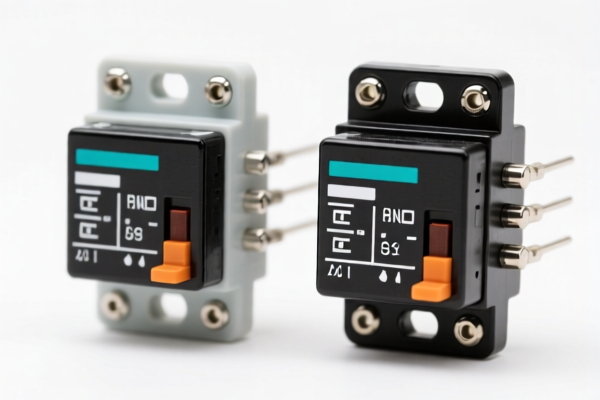
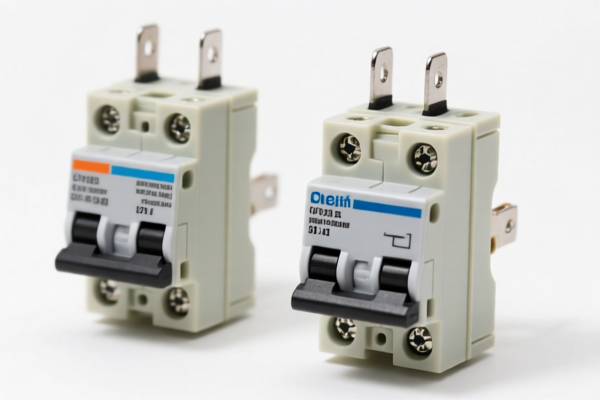
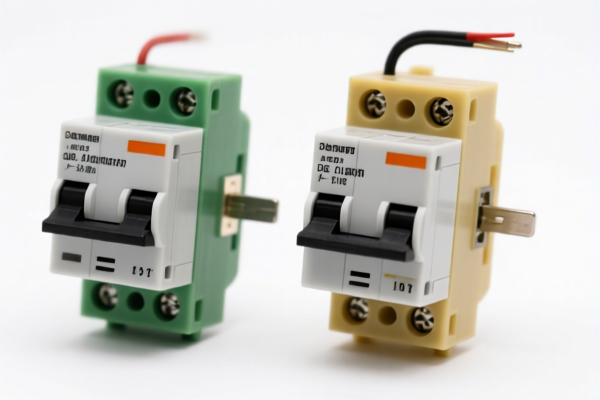
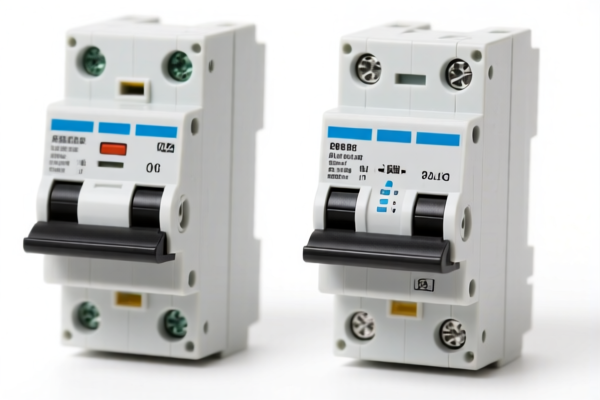
AI Analysis
⚡️ Electrical Switches & Relays (Voltage >1,000V & ≤1,000V)
🌐 HS Code Reference & Clearance Guide | 2026 Latest Tariff Analysis | Professional Entry Strategy
📌 I. Product Definition & Classification: Are You Switching the Right Circuit?
Electrical switches and relays are the nervous system of power distribution. In international trade, they are strictly divided by Voltage Level and Function. Misclassification leads to massive duty differences and customs delays.
High Voltage Apparatus (>1,000 V):
Isolating/Making-and-Breaking Switches: Large industrial switches used in substations or heavy machinery protection.
Knife Switches: Traditional open-air isolators.
Low Voltage Apparatus (≤1,000 V):
Push-Button Switches: Control circuits (rated ≤5A).
Relays: Electromechanical devices for signal switching.
Parts:* Contacts and components for the above apparatus.
⚠️ Key Distinction Point:
- If voltage exceeds 1,000V → Must use Chapter 8535 codes.
- If voltage does not exceed 1,000V → Must use Chapter 8536 codes.
- Parts (like metal contacts) have specific sub-headings under 8538 if they are exclusively for 8535/36/37 apparatus.
📦 II. HS Code Classification Details (2026 Latest Tariff Authority Comparison)
| HS Code | Product Description | Application Scenario | Voltage Level | Tax Rate (Total) |
|---|---|---|---|---|
8535.30.00.80 |
Isolating switches and make-and-break switches (Other) | Industrial substations, HV protection, generic high-voltage disconnectors | > 1,000 V | 0.0% |
8535.30.00.40 |
Isolating switches and make-and-break switches (Knife) | Traditional open-air isolators, HV manual switches | > 1,000 V | 0.0% |
8538.90.81.20 |
Parts for 8535/36/37 apparatus: Parts of automatic circuit breakers | Replacement parts for high-voltage breakers, internal components | Applicable to >1kV or ≤1kV | 0.0% |
8538.90.81.40 |
Parts for 8535/36/37 apparatus: Metal contacts | Wear parts, arcing contacts for switches/breakers | Applicable to >1kV or ≤1kV | 28.5% |
8536.50.90.31 |
Other switches (Push-button): Rated ≤5A, Momentary contact | Control panels, industrial buttons, low-voltage signaling | ≤ 1,000 V | 25.0% |
8536.49.00.75 |
Relays: Electromechanical, Other | Industrial control cabinets, automation systems, low-voltage switching | ≤ 1,000 V | 0.0% |
🔍 Focus Reminder:
- High Voltage (8535 series) generally enjoys 0% base duty.
- Low Voltage Components (8536/8538) often attract higher duties due to trade policies (e.g., Section 301).
- Metal Contacts (8538.90.81.40) are heavily taxed because they are considered critical components subject to additional levies.
💰 III. 2026 Latest Tariff Rate Breakdown (Including Surtaxes & Policy Add-ons)
✅ Applicable Country: China (CN) to USA (US)
✅ Effective Date: Current USITC & IEEPA schedules
✅ Note: Rates below reflect the Total Tax (Base + Surtax) as provided in the data.
🎯 1. High-Voltage Switches (8535.30.00.40 & 8535.30.00.80)
| Item | Content |
|---|---|
| HS Code | 8535.30.00.40 (Knife) / 8535.30.00.80 (Other) |
| Base Tariff | 0.0% |
| Surtax (Section 301/IEEPA) | 0.0% |
| Total Tariff | 0.0% |
| Tax Calculation | Duty-Free (CIF Value × 0%) |
| De Minimis Exemption | ✅ Yes (if value < $800) |
| Legal Basis Path | USITC:8535.30.00 → No Footnote surtax |
📌 Explanation:
- High-voltage isolating switches are not currently subject to the 25% Section 301 surtax or additional IEEPA levies in this specific sub-category.
- This is a duty-free entry point for HV equipment.
🎯 2. High-Voltage Parts: Automatic Circuit Breakers (8538.90.81.20)
| Item | Content |
|---|---|
| HS Code | 8538.90.81.20 |
| Base Tariff | 0.0% |
| Surtax | 0.0% |
| Total Tariff | 0.0% |
| Tax Calculation | Duty-Free |
| De Minimis Exemption | ✅ Yes (if value < $800) |
📌 Explanation:
- Parts specifically for automatic circuit breakers (not general contacts) are duty-free.
- Ensure the product description clearly states "Part for Automatic Circuit Breaker."
🎯 3. High-Voltage/Low-Voltage Parts: Metal Contacts (8538.90.81.40) ⚠️ HIGH DUTY
| Item | Content |
|---|---|
| HS Code | 8538.90.81.40 |
| Base Tariff | 3.5% |
| Surtax (Section 301) | +25.0% |
| Total Tariff | 28.5% |
| Tax Calculation | CIF Value × 28.5% |
| De Minimis Exemption | ❌ No (Surtax applies) |
| Legal Basis Path | USITC:8538.90.81.40 → FOOTNOTE:301_Surtax |
📌 Warning:
- Metal contacts are subject to the full 25% Section 301 surtax + 3.5% base rate.
- Do not classify general "switch parts" as metal contacts if they are assemblies; try to classify under broader "other parts" if possible (though8538.90.81.20is the only other specific part code listed here at 0%).
- If the item is a complete switch (not just contacts), it may fall under8536.50.90.31(25%) or8535(0%).
🎯 4. Low-Voltage Push-Button Switches (8536.50.90.31) ⚠️ HIGH DUTY
| Item | Content |
|---|---|
| HS Code | 8536.50.90.31 |
| Base Tariff | 0.0% |
| Surtax (Section 301) | +25.0% |
| Total Tariff | 25.0% |
| Tax Calculation | CIF Value × 25.0% |
| De Minimis Exemption | ❌ No |
| Legal Basis Path | USITC:8536.50.90.31 → FOOTNOTE:301_Surtax |
📌 Explanation:
- Push-buttons rated ≤5A are subject to the 25% surtax.
- Common in industrial control panels.
- Strategy: Check if the switch is rated >5A or is not a "momentary contact," as other sub-codes in 8536.50 might have different treatments (though data only provides this 25% code for push-buttons).
🎯 5. Low-Voltage Electromechanical Relays (8536.49.00.75)
| Item | Content |
|---|---|
| HS Code | 8536.49.00.75 |
| Base Tariff | 0.0% |
| Surtax | 0.0% |
| Total Tariff | 0.0% |
| Tax Calculation | Duty-Free |
| De Minimis Exemption | ✅ Yes (if value < $800) |
📌 Explanation:
- Electromechanical relays (non-solid-state) are currently duty-free.
- This is a significant cost advantage for relay imports.
- Ensure the description specifies "Electromechanical" to distinguish from solid-state relays which might have different classifications.
🛠️ IV. Clearance Practical Advice (Real-World Pitfall Guide)
✅ 1. Essential Documentation Checklist
| Document | Required? | Description |
|---|---|---|
| ✅ Product Datasheet | ✔️ | Must explicitly state Voltage Rating (>1kV or ≤1kV) and Current Rating. |
| ✅ Technical Drawing | ✔️ | Crucial for Parts (8538): Prove it is a "Part" and not a complete apparatus. |
| ✅ Material Composition | ✔️ | For Contacts (8538.90.81.40): Prove it is "Metal." |
| ✅ Commercial Invoice | ✔️ | Clearly describe item: e.g., "Electromechanical Relay, 120V AC, Not Automatic Circuit Breaker Part." |
| ✅ Origin Certificate | ✔️ | Required for surtax determination. |
✅ 2. Classification Strategy (Key Mantra)
🔥 “Voltage First, Part Second, Contact Tax Heavy!”
| Scenario | Correct HS Code | Duty Rate | Error Risk |
|---|---|---|---|
| High-Voltage Isolating Switch | 8535.30.00.xx |
0% | ✅ Safe |
| High-Voltage Circuit Breaker Part | 8538.90.81.20 |
0% | ✅ Safe |
| Metal Contacts (Any) | 8538.90.81.40 |
28.5% | ❌ High Cost |
| Low-Voltage Push Button (≤5A) | 8536.50.90.31 |
25% | ❌ High Cost |
| Low-Voltage Electromechanical Relay | 8536.49.00.75 |
0% | ✅ Safe |
| Low-Voltage Solid State Relay | Not in Data | Check Other Codes | ⚠️ Verify |
✅ 3. Special Cases Handling
| Situation | Handling Advice |
|---|---|
| Switch vs. Part | If it is a complete switch with housing/terminals, do not classify as "Part" (8538). Classify as Switch (8535 or 8536). Parts are only for internal components like contacts or coils. |
| Metal Contacts | If you are importing bulk copper/silver contacts, expect 28.5%. Consider if they can be classified as "Other parts" if they are not strictly "Metal contacts" (though difficult). |
| Relay Type | Ensure "Electromechanical" is stated. If it is a Solid State Relay (SSR), it may fall under a different code (e.g., 8536.50 or 8541) with different tax implications. |
| Voltage Rating | If voltage is borderline (e.g., 1,000V exactly), it falls under ≤1,000V (8536), not >1,000V (8535). This changes duty from 0% to 25% for switches! |
🌍 V. Global Market Clearance Comparison (2026 Latest)
| Country/Region | Recommended HS Code | Tariff (China Origin) | Certification | Notes |
|---|---|---|---|---|
| 🇺🇸 USA | 8535.30.00.80 / 8536.49.00.75 |
0% | UL, NEMA | Low voltage switches (8536.50) face 25%. |
| 🇺🇸 USA | 8538.90.81.40 (Contacts) |
28.5% | UL | High duty on components. |
| 🇨🇳 China | 8535.30.00 |
~5-7% | CCC | Lower base rates, no 301 surtax for imports into China. |
| 🇪🇺 EU | 8536.50 / 8536.41 |
0% (Most) | CE, RoHS | No general surtax. |
| 🇯🇵 Japan | 8536.50 / 8536.41 |
0-3% | PSE | Generally low tariffs. |
📌 Conclusion:
- The USA is the most complex market due to Section 301 Surtaxes.
- High-Voltage Equipment and Relays are duty-free in the US.
- Low-Voltage Switches (Push-buttons) and Metal Contacts are heavily taxed (25-28.5%).
📌 VI. Common Errors & Pitfall Guide (Blood & Tears Lessons)
❌ Error 1: Classifying a Complete High-Voltage Switch as a Part (8538).
👉 Consequence: If classified as a part, it might miss the "Switch" heading protection. However, if classified as 8538.90.81.40 (Contacts) by mistake for a whole switch, you might pay 28.5% instead of 0%. Always use the complete apparatus heading first.
❌ Error 2: Misstating Voltage for Low-Voltage Switches.
👉 Consequence: A switch rated at 1,001V should go to 8535 (0%), but if mislabeled as 999V, it goes to 8536.50.90.31 (25%). Always verify nameplate voltage.
❌ Error 3: Calling "Relays" "Switches" or vice versa.
👉 Consequence: Relays (8536.49) are 0%. Push-button switches (8536.50) are 25%. Misclassification costs 25% duty.
❌ Error 4: Ignoring "Metal Contacts" Surcharge.
👉 Consequence: Importing bulk contacts for repairs? You pay 28.5%. Plan your BOM (Bill of Materials) cost accordingly.
✅ Correct Practice:
"High Voltage Isolating Switch, 15kV, Air-Break Type, Model HV-15" →
8535.30.00.40(0%)
"Low Voltage Push-Button Switch, 24VDC, Momentary, ≤5A" →8536.50.90.31(25%)
"Electromechanical Relay, 120VAC, 10A, DIN Rail" →8536.49.00.75(0%)
🎯 VII. Conclusion: Precise Classification Saves Millions!
🎯 Remember the Mantra:
🔹 "High Voltage & Relays: Free Ride!"
🔹 "Low Voltage Switches & Contacts: Pay the Price (25-28.5%)."
🔹 "Check Voltage Limit: 1,000V is the Line!"
📌 Pro Tip:
If you are importing switches for industrial automation, try to use Relays (
8536.49.00.75) for signal switching instead of Push-Button Switches (8536.50.90.31) if possible, to save 25%.
For High Voltage projects, ensure all isolators are declared as8535to enjoy 0% duty.
📣 Immediate Action:
📞 Consult Customs Broker with Datasheets showing exact Voltage and Current.
📝 Apply for Pre-Ruling if your product is borderline (e.g., exactly 1,000V).
🚀 Optimize Your Supply Chain: Use duty-free codes where possible!
✨ Professional Clearance Starts with Accurate Classification!
💼 Your Bottom Line Depends on the Last Digit of the HS Code!
Customer Reviews
About HS Code Classification
The Harmonized System (HS) is an internationally standardized nomenclature developed by the World Customs Organization (WCO) to classify traded products. Over 200 countries use the HS system as the basis for customs tariffs, trade statistics, and import/export regulations.
Each HS code follows a hierarchical structure:
- Chapter (2 digits) — Broad category of goods (e.g., Chapter 84: Machinery and Mechanical Appliances)
- Heading (4 digits) — More specific grouping within the chapter
- Subheading (6 digits) — Internationally standardized breakdown, used by all WCO member countries
- National subdivisions (8-10 digits) — Country-specific extensions for further classification, such as US HTSUS 10-digit codes
Correct HS code classification is essential for smooth customs clearance, accurate duty payment, and compliance with trade regulations. Misclassification can lead to customs delays, overpayment of duties, or penalties.
When importing from CN to US, the applicable tariff rates may include:
- Most-Favored-Nation (MFN) rate — The standard duty rate applied to WTO members
- General rate — Applied to countries without trade agreements
- Trade remedy duties — Additional tariffs such as Section 301 (anti-dumping), Section 232 (national security), or countervailing duties
The information provided on this page is for reference purposes only. For official classification, please consult with your local customs authority or a licensed customs broker.