Electrical Wire
CN → US| HS Code | Tariff Rate | Origin | Destination | Doc |
|---|---|---|---|---|
| 7413005000 | 87.0% | CN | US | Official Doc |
| 7413001000 | 88.0% | CN | US | Official Doc |
| 8544429010 | 87.6% | CN | US | Official Doc |
| 8544429090 | 87.6% | CN | US | Official Doc |
Product Images
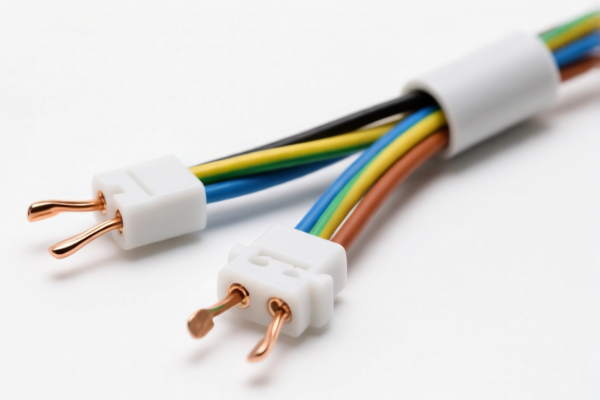
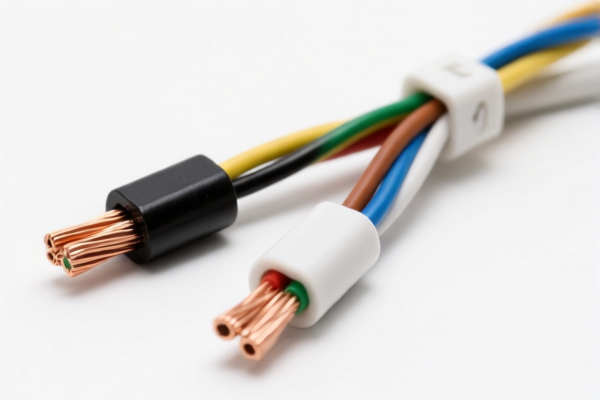


AI Analysis
⚡ Electrical Wire (Copper Conductors & Cables)
🌐 HS Code Master Guide & Customs Strategy | 2026 Tariff Analysis | 100% Compliance Blueprint
📌 I. Product Definition: What Exactly is "Electrical Wire"?
In international trade, "Electrical Wire" is a broad term that triggers highly specific classification rules based on insulation status and voltage. Misclassification here is a major red flag for customs, leading to massive fines or shipment seizures.
There are two distinct pathways for copper wire classification:
- Uninsulated Wire/Cables: Bare copper strands used for specific industrial applications.
- Classification: 7413.00.50.00 or 7413.00.10.00
- Insulated Wire/Cables: Wires with polymer insulation, used for power transmission, charging, or household use (Voltage ≤ 1000V).
- Classification: 8544.42.90.10 or 8544.42.90.90
⚠️ CRITICAL DISTINGUISHING FACTOR:
- Is there insulation?
❌ NO (Bare copper, braided) → Go to Chapter 74 (Copper) → Huge Tax (87-88%).
✅ YES (Plastic/rubber coating, voltage rated) → Go to Chapter 85 (Electrical Machinery) → Huge Tax (87.6%).
- Does it have a connector?
- No connector (loose wire) → 8544.42.90.10
- Has a connector (plug/end) → 8544.42.90.90
📦 II. HS Code Breakdown (2026 Tariff Authority)
Based on the latest data, here is the precise mapping for Electrical Wire:
| HS Code | Product Description | Scenario Match | Tax Rate |
|---|---|---|---|
| 7413.00.50.00 | Uninsulated Copper Wire/Cables (Other categories) | Bare copper strands, no polymer coating. "Other" category. | 87.0% |
| 7413.00.10.00 | Copper Cables/Braided Products (Specific Material/Shape) | Specific form of copper cable/braided wire. | 88.0% |
| 8544.42.90.10 | Insulated Conductors / Extension Cords (≤1000V, No Connector) | Power cords, charging cables without plugs, insulated wires. | 87.6% |
| 8544.42.90.90 | Insulated Conductors with Connectors (≤1000V) | Power cords, charging cables WITH plugs/connectors. | 87.6% |
🔍 Key Insight:
- 7413 Series: Pure Copper goods. If the wire is bare or un-insulated, it is treated as a metal commodity, attracting the highest tariff tiers.
- 8544 Series: Electrical goods. Even with insulation, these attract massive surcharges due to specific trade policies (122 Section).
- The "Connector" Split: The difference between.10and.90in the 8544 series is the physical presence of a connector. Do not guess; if there is a plug, it is.90.
💰 III. 2026 Tariff Breakdown (The "122 Section" Trap)
✅ Target Market: United States (US)
✅ Origin: China (CN)
✅ Status: EXTREMELY HIGH TAX RISK (Active 122 Section, 301 & IEEPA)
All electrical wires listed below suffer from a "Perfect Storm" of tariffs: 1. Base Duty (MFN) 2. Section 301 Add-on (25%) 3. "122 Section" Add-on (50% for Steel, Aluminum, Copper Products)
🎯 1. HS Code 7413.00.50.00 & 7413.00.10.00 (Uninsulated Copper)
The highest risk category for bare copper wire.
| Tax Component | Rate | Source / Policy |
|---|---|---|
| Base Duty | 2.0% - 3.0% | Standard MFN Rate |
| Section 301 Add-on | +25.0% | "China Specific" Tariff |
| "122 Section" Add-on | +50.0% | Steel, Aluminum, Copper Products |
| Total Tax | 87.0% - 88.0% | Total Effective Rate |
📌 The "122 Section" Explanation:
This is a 50% surcharge specifically targeting Copper products (Section 122 of the 301 Tariff). It applies on top of the 25% 301 tariff.
Calculation: $Base (2\%) + 301 (25\%) + 122 (50\%) \approx 87\%$ (The slight variance is due to compound calculation nuances).
Result: Copper wires are taxed nearly 100% if un-insulated.
🎯 2. HS Code 8544.42.90.10 & 8544.42.90.90 (Insulated Wire)
The standard for power/charging cables.
| Tax Component | Rate | Source / Policy |
|---|---|---|
| Base Duty | 2.6% | Standard MFN Rate |
| Section 301 Add-on | +25.0% | "China Specific" Tariff |
| "122 Section" Add-on | +50.0% | Steel, Aluminum, Copper Products |
| Total Tax | 87.6% | Total Effective Rate |
📌 Why 87.6%?
Even though the base duty is slightly higher (2.6%) due to the "Electrical Machinery" classification, the 50% 122 Section surcharge still applies because the conductor is Copper.
Result: Insulated copper wires also face an ~88% tax burden.⚠️ Crucial Warning:
There are NO de minimis exemptions for these codes. The 122 Section explicitly covers copper. Every single shipment will be hit with this 50% surcharge.
🛠️ IV. Customs Clearance Strategy (Survival Guide)
✅ 1. Documentation Checklist (Mandatory)
| Document | Requirement | Why it Matters |
|---|---|---|
| Technical Data Sheet | ✔️ | Must explicitly state "Copper Conductor" + "Insulation Material". |
| Photographs | ✔️ | Clear shot of cross-section (to prove insulation vs. bare wire). |
| Bill of Materials (BOM) | ✔️ | Breakdown of Copper %, Insulation %, and Connector Material. |
| Application Proof | ✔️ | Proof that the wire is used for ≤1000V (to stay in 8544, not 7413). |
| Certificate of Origin | ✔️ | To verify China origin (triggering the 122 Section). |
✅ 2. Declaration Tactics (Critical for Accuracy)
🔥 Golden Rule: "Insulation is King, Copper is Queen, Connectors Define Sub-class."
| Scenario | Correct HS Code | Declaration Phrase | Risk if Wrong |
|---|---|---|---|
| Bare Copper Wire | 7413.00.10.00 or .50 |
"Bare Copper Stranded Wire, Uninsulated" | Risk: 88% Tax. No Insulation = No 8544 |
| Power Cord (No Plug) | 8544.42.90.10 |
"Insulated Power Wire, Voltage ≤1000V, No Connector" | Risk: 87.6% Tax. |
| Charging Cable (With Plug) | 8544.42.90.90 |
"Charging Cable with Connector, 5V/1000V" | Risk: 87.6% Tax. |
| High Voltage (>1000V) | NOT LISTED | "Over 1000V" | DO NOT USE 8544.42. Will be rejected. |
📌 Avoid the "Split" Trap:
Do NOT try to declare "Copper" and "Insulation" separately to save tax. Customs will view the wire as a single product. If it has insulation, it must go to 8544. If it is bare, it must go to 7413.
✅ 3. Special Case Handling
| Situation | Strategy |
|---|---|
| "Is the wire Aluminum?" | If the conductor is Aluminum, the 50% Copper 122 Section tax does not apply (unless it has aluminum cladding/steel). Check the BOM! |
| "Is it Copper-Clad Aluminum?" | If the core is Aluminum but copper-coated, Customs may still classify under Copper rules. Get a pre-ruling. |
| "Can I use De Minimis?" | NO. The 122 Section explicitly blocks de minimis exemptions for these copper/electrical products. |
🌍 V. Market Comparison (US vs. Other)
| Region | Typical Base Duty | 122 Section / 301 Add-on | Total Effective Rate |
|---|---|---|---|
| 🇺🇸 USA | 2.6% | +25% +50% | ~88% |
| 🇨🇳 China | 0% | N/A | 0% |
| 🇪🇺 EU | 0% | N/A | 0% (If not China origin) |
| 🇯🇵 Japan | 0% | N/A | 0% (If not China origin) |
📌 Conclusion:
Only the US imposes this massive 122 Section tax on Copper Wire.
If you are exporting to the US, the tax structure is non-negotiable. You cannot avoid the 50% surcharge unless you source from a country other than China (e.g., Vietnam, Mexico) and can prove Substantial Transformation (not just assembly).
📌 VI. Common Errors & Pitfalls (Don't Let This Happen to You!)
❌ Error 1: "It's just a wire, not a machine."
👉 Reality: Insulated wire is a "part" of electrical machinery, but the classification rule is specific to Chapter 85.
👉 Consequence: Wrong code → Audits + Back Taxes + Penalties.
❌ Error 2: "It's Aluminum, so no 122 Section."
👉 Reality: If the product contains Copper (even as a conductor or cladding) and originates from China, the 122 Section often still applies.
👉 Consequence: 50% Tax Surprise at the border.
❌ Error 3: Confusing "Uninsulated" (7413) with "Insulated" (8544).
👉 Reality: 7413 is for Bare copper. 8544 is for Insulated.
👉 Consequence: 7413 has slightly lower base tax but 88% total. 8544 has 87.6%. The difference is negligible, but the description must match perfectly to avoid rejection.
✅ Correct Strategy:
"Declare the Voltage, Insulation Status, and Presence of Connectors exactly as they appear on the physical product. Do not guess."
🎯 VII. Final Verdict: The "Copper Tax" is Here to Stay
🎯 The Reality Check:
Exporting Electrical Wire made of Copper from China to the US in 2026 will cost you an additional ~87.6% - 88% in taxes.
- Base: 2-3%
- 301: 25%
- 122 (Copper): 50%
💡 Strategic Recommendation:
1. Price Adjustment: You must factor this ~88% cost into your landed cost immediately.
2. Supply Chain Shift: If possible, source Aluminum wire (if technically feasible) or move assembly to Mexico/Vietnam (to bypass the 122 Section).
3. Pre-Ruling: Always file a Section 301/122 Pre-Ruling with CBP before shipping if there is any doubt about the material composition.
📣 Call to Action:
🚀 Don't let the 50% Copper Tax destroy your margins.
🛡️ Verify Material Composition → Choose Correct HS Code → File Pre-Ruling → Ship with Confidence.
✨ Expert Tip: The "122 Section" is the new normal for Copper. Adapt or lose.
💼 Your bottom line depends on this classification.
Customer Reviews
About HS Code Classification
The Harmonized System (HS) is an internationally standardized nomenclature developed by the World Customs Organization (WCO) to classify traded products. Over 200 countries use the HS system as the basis for customs tariffs, trade statistics, and import/export regulations.
Each HS code follows a hierarchical structure:
- Chapter (2 digits) — Broad category of goods (e.g., Chapter 84: Machinery and Mechanical Appliances)
- Heading (4 digits) — More specific grouping within the chapter
- Subheading (6 digits) — Internationally standardized breakdown, used by all WCO member countries
- National subdivisions (8-10 digits) — Country-specific extensions for further classification, such as US HTSUS 10-digit codes
Correct HS code classification is essential for smooth customs clearance, accurate duty payment, and compliance with trade regulations. Misclassification can lead to customs delays, overpayment of duties, or penalties.
When importing from CN to US, the applicable tariff rates may include:
- Most-Favored-Nation (MFN) rate — The standard duty rate applied to WTO members
- General rate — Applied to countries without trade agreements
- Trade remedy duties — Additional tariffs such as Section 301 (anti-dumping), Section 232 (national security), or countervailing duties
The information provided on this page is for reference purposes only. For official classification, please consult with your local customs authority or a licensed customs broker.