Electro Sensitive Paper Base Paper Sheet
CN → US| HS Code | Tariff Rate | Origin | Destination | Doc |
|---|---|---|---|---|
| 4810136000 | 35.0% | CN | US | Official Doc |
| 4810146000 | 35.0% | CN | US | Official Doc |
Product Images
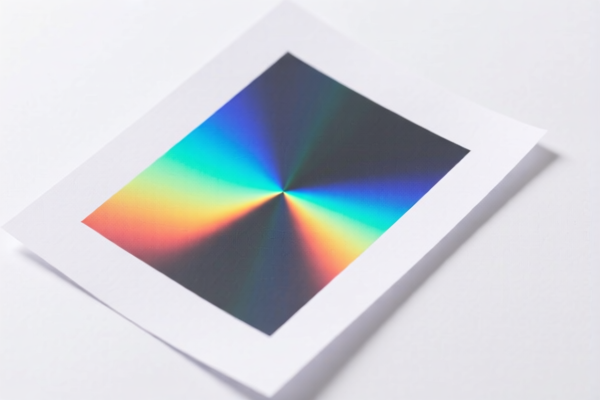

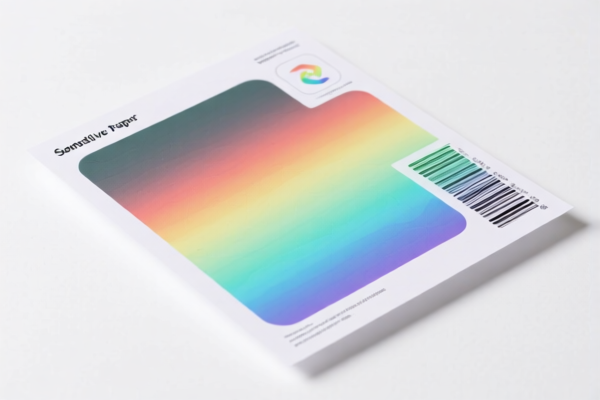
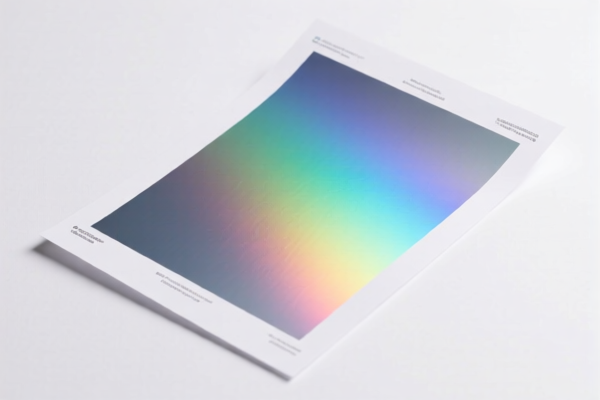
AI Analysis
📸 Electro-Sensitive Photo Paper Base (Photographic Sensitizable Paper)
🌐 HS Code Reference & Customs Clearance Guide | 2026 Latest Tariff Analysis | Professional Entry Strategies
📌 I. Product Definition & Classification: Do You Truly Understand "Electro-Sensitive Paper Base"?
Electro-sensitive paper base (often referred to as "photo paper base" or "sensitizable paper") is the foundational substrate for photographic materials. It consists of paper or paperboard coated with kaolin (China clay) or other inorganic substances, potentially with a binder, but without any other coating that would constitute a finished photographic layer. It is designed to be sensitized (chemically treated) for use in photography later.
In international trade, the classification hinges on two critical factors: 1. Format: Is it in rolls or rectangular sheets? 2. Size (if sheets): Does it exceed 435 mm (width) or 297 mm (height) when unfolded?
⚠️ Critical Distinction:
- If the paper is in rolls, it falls under 4810.13.60.00.
- If the paper is in sheets where one side ≤ 435 mm AND the other side ≤ 297 mm (A4 or smaller), it falls under 4810.14.60.00.
- Note: Sheets larger than these dimensions typically fall under different subheadings not covered in this specific dataset, often attracting higher duties or different regulatory scrutiny.
📦 II. HS Code Classification Details (2026 Latest Tariff Authority Comparison)
| HS Code | Product Description | Application Scenario | Format/Size Constraint |
|---|---|---|---|
4810.13.60.00 |
Paper & Paperboard, Kaolin-Coated, Sensitizable for Photography, In Rolls | Industrial photo processing, large-format printing rolls, uncut rolls | ✅ Rolls Only |
4810.14.60.00 |
Paper & Paperboard, Kaolin-Coated, Sensitizable for Photography, In Sheets (≤435x297mm) | Consumer photo paper (A4/Letter size), small-format cutting | ✅ Sheets ≤ 435mm x 297mm |
🔍 Key Reminder:
- Both codes refer to "Basic paper to be sensitized". This means the paper has not yet been coated with light-sensitive silver salts or emulsions. It is merely the base. - If the paper is already sensitized (ready-to-use photo paper), it would likely fall under Chapter 37 (Photographic Goods), which is a different tariff structure. - The specific size limit (435mm x 297mm) is the strict boundary between these two subheadings. Exceeding this size changes the HS code entirely.
💰 III. 2026 Latest Tariff Rate Breakdown (Detailed Tax Clauses)
✅ Applicable Country: United States (US)
✅ Origin: China (CN)
✅ Effective Date: Current enforcement includes Additional Tariffs (Section 301)
🎯 1. 4810.13.60.00 —— Electro-Sensitive Paper Base (In Rolls)
| Item | Content |
|---|---|
| Base Tariff Rate | 0.0% (ad valorem) |
| Additional Tariff (Section 301) | +25.0% |
| Total Tariff Rate | 25.0% |
| Tax Calculation | CIF Value × 25% |
| De Minimis Eligibility | ❌ Not Eligible (Usually, paper products > $800 may be subject to scrutiny, but technically de minimis exists for low-value shipments. However, for commercial imports, this is fully taxable). |
| Legal Basis Path | HTSUS: 4810.13.60.00 → Section 301 Footnote: 9903.88.01 (Paper Products) |
📌 Explanation:
- The 0% base rate reflects the low duty preference for certain paper products. - The 25% additional tariff is applied under US Trade Law Section 301, targeting specific Chinese imports, including paper and paperboard products. - Total Effective Duty: 25%. This is a significant cost factor for bulk roll imports.
🎯 2. 4810.14.60.00 —— Electro-Sensitive Paper Base (In Sheets ≤ 435x297mm)
| Item | Content |
|---|---|
| Base Tariff Rate | 0.0% (ad valorem) |
| Additional Tariff (Section 301) | +25.0% |
| Total Tariff Rate | 25.0% |
| Tax Calculation | CIF Value × 25% |
| De Minimis Eligibility | ❌ Not Eligible (Same as above; commercial shipments are fully taxed). |
| Legal Basis Path | HTSUS: 4810.14.60.00 → Section 301 Footnote: 9903.88.01 (Paper Products) |
📌 Note:
- Despite the different physical format (sheets vs. rolls), the tariff treatment is identical at 25%. - This code is strictly for small-format sheets (e.g., A4, Letter, or smaller). - If you import sheets larger than 435mm x 297mm, you cannot use this code, and the tariff may differ.
🛠️ IV. Customs Clearance Practical Advice (Battle-Tested Pitfall Avoidance)
✅ 1. Required Documentation Checklist (Non-Negotiable)
| Document | Mandatory? | Description |
|---|---|---|
| ✅ Commercial Invoice | ✔️ | Must clearly state: "Paper and paperboard, coated with kaolin, not sensitized, for photographic use". Avoid vague terms like "Printing Paper". |
| ✅ Packing List | ✔️ | Detail quantity (rolls/sheets), weight, and dimensions. |
| ✅ Product Specification Sheet | ✔️ | Confirm: No light-sensitive emulsion. Only kaolin/coating. |
| ✅ Certificate of Origin | ✔️ | To verify Chinese origin and confirm Section 301 applicability. |
| ✅ Bill of Lading / Air Waybill | ✔️ | Standard shipping documents. |
✅ 2. Declaration Tips (Key Mnemonics)
🔥 “Specify ‘Not Sensitized’, State ‘Kaolin-Coated’, Format Matters!”
| Scenario | Correct Declaration | Wrong Approach |
|---|---|---|
| Rolls | HS: 4810.13.60.00, Description: "Photo paper base, rolls, kaolin-coated, NOT sensitized" |
Describing as "Photo Paper" (implies sensitized) → Wrong Chapter 37 |
| Small Sheets | HS: 4810.14.60.00, Description: "Photo paper base, sheets ≤435x297mm, kaolin-coated, NOT sensitized" |
Describing as "A4 Copy Paper" → Wrong Chapter 48 (Different subheading) |
| Large Sheets (>435x297mm) | Check Other HS Codes (Not in this dataset) | Using 4810.14.60.00 → Customs Rejection/Fine |
| Already Sensitized | Chapter 37 Codes (e.g., 3701.99.60) | Using 4810... → Misclassification Penalty |
✅ 3. Special Circumstances Handling
| Situation | Handling Advice |
|---|---|
| Mixed Shipments (Rolls + Sheets) | Separate Entries! Declare rolls under 4810.13.60.00 and sheets under 4810.14.60.00. Mixing them causes confusion and delays. |
| Unfinished/Blank Stock | Emphasize "To Be Sensitized" in the description. If the customs officer suspects it’s ready-to-print, they may reclassify it, leading to delays. |
| Kaolin Content | Ensure the description mentions "Kaolin (China Clay)". If it’s coated with other substances, the HS code might change (e.g., if coated with other inorganic substances, check if it still fits 4810.1x). |
| Origin Labeling | Clearly mark "Product of China" on the packaging and documents to ensure the 25% additional tariff is correctly applied (and not mistaken for a different origin with lower duties). |
🌍 V. Global Market Comparison (2026 Update)
| Country/Region | Recommended HS Code | Tariff Rate | Certification Notes | Remarks |
|---|---|---|---|---|
| 🇺🇸 USA | 4810.13.60.00 / 4810.14.60.00 |
25% (Total) | None specific for paper | High duty due to Section 301. |
| 🇨🇳 China | 4810.13.60 / 4810.14.60 | 5% - 10% (Import) | N/A | Domestic production is common. |
| 🇪🇺 EU | 4810.13 / 4810.14 | 6.5% - 12% | CE (if applicable) | No additional Section 301-like tariffs. |
| 🇬🇧 UK | 4810.13 / 4810.14 | 6.5% - 12% | UKCA | Post-Brexit tariff structure similar to EU. |
| 🇯🇵 Japan | 4810.13 / 4810.14 | 6.0% - 8.0% | JIS Standards | Competitive market, moderate tariffs. |
📌 Conclusion:
- The US is the most expensive market for these goods due to the flat 25% additional tariff. - Paper product tariffs are generally low in non-US markets (6-12%), making the US a high-cost destination for Chinese-sourced base paper.
📌 VI. Common Errors & Pitfall Guide (Lessons Learned)
❌ Error 1: Describing the product as "Finished Photo Paper"
👉 Consequence: Customs may reclassify under Chapter 37 (Photographic Goods), which has different duties and regulatory requirements (e.g., potential environmental controls on silver content).
❌ Error 2: Ignoring Sheet Size Limits for 4810.14.60.00
👉 Consequence: If sheets are 440mm wide, using this code is illegal. Must use a different subheading, potentially with different duty rates or trade restrictions.
❌ Error 3: Failing to specify "Not Sensitized"
👉 Consequence: Ambiguity leads to manual inspection. Customs may detain the cargo to verify if it contains light-sensitive chemicals, causing delivery delays.
❌ Error 4: Not accounting for the 25% Additional Duty in Costing
👉 Consequence: Profit margins are wiped out. The 0% base rate is misleading; the real cost is 25%.
✅ Correct Declaration Example:
"PAPER AND PAPERBOARD, COATED ON ONE SIDE WITH KAOLIN, NOT SENSITIZED, IN ROLLS, FOR PHOTOGRAPHIC USE, MODEL XYZ, CHINA ORIGIN"
🎯 VII. Conclusion: Precision in Classification Saves Money!
🎯 Remember the Mantra:
🔹 "Rolls = 4810.13, Small Sheets = 4810.14, Big Sheets = Check Elsewhere!"
🔹 "Not Sensitized is Key, Kaolin Coating is Must, 25% Duty is Real!"
📌 Pro Tip:
If you are importing large-format sheets (>435x297mm), please consult a customs broker for the correct HS code (likely 4810.19.x.x), as it is not included in this specific dataset and may have different duty implications.
📣 Immediate Action:
📞 Verify Sheet Dimensions before shipping.
📄 Use Exact Description: "Kaolin-Coated, Not Sensitized, Base Paper".
💼 Budget for 25% Duty on US imports.
✨ Professional clearance starts with accurate classification!
💼 Your cost efficiency depends on the HS Code!
Customer Reviews
About HS Code Classification
The Harmonized System (HS) is an internationally standardized nomenclature developed by the World Customs Organization (WCO) to classify traded products. Over 200 countries use the HS system as the basis for customs tariffs, trade statistics, and import/export regulations.
Each HS code follows a hierarchical structure:
- Chapter (2 digits) — Broad category of goods (e.g., Chapter 84: Machinery and Mechanical Appliances)
- Heading (4 digits) — More specific grouping within the chapter
- Subheading (6 digits) — Internationally standardized breakdown, used by all WCO member countries
- National subdivisions (8-10 digits) — Country-specific extensions for further classification, such as US HTSUS 10-digit codes
Correct HS code classification is essential for smooth customs clearance, accurate duty payment, and compliance with trade regulations. Misclassification can lead to customs delays, overpayment of duties, or penalties.
When importing from CN to US, the applicable tariff rates may include:
- Most-Favored-Nation (MFN) rate — The standard duty rate applied to WTO members
- General rate — Applied to countries without trade agreements
- Trade remedy duties — Additional tariffs such as Section 301 (anti-dumping), Section 232 (national security), or countervailing duties
The information provided on this page is for reference purposes only. For official classification, please consult with your local customs authority or a licensed customs broker.