Electro Sensitive Paper Base Roll
CN → US| HS Code | Tariff Rate | Origin | Destination | Doc |
|---|---|---|---|---|
| 4811908030 | 35.0% | CN | US | Official Doc |
| 4811908050 | 35.0% | CN | US | Official Doc |
Product Images
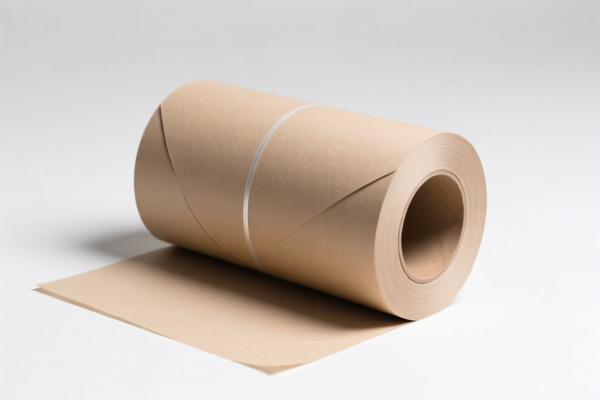
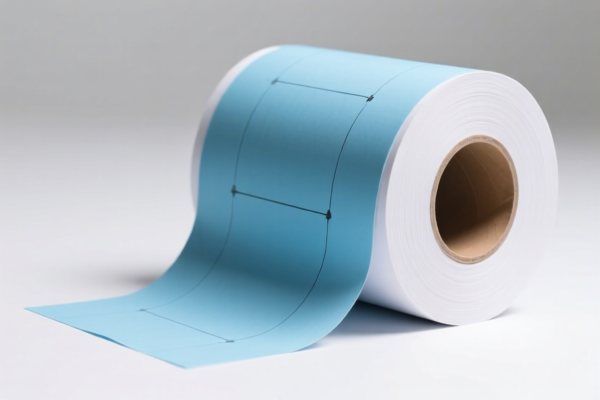
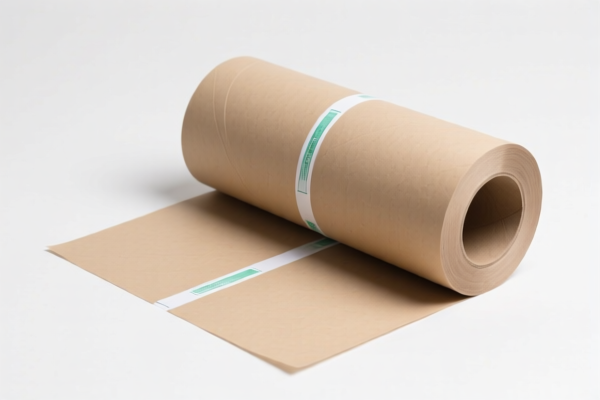
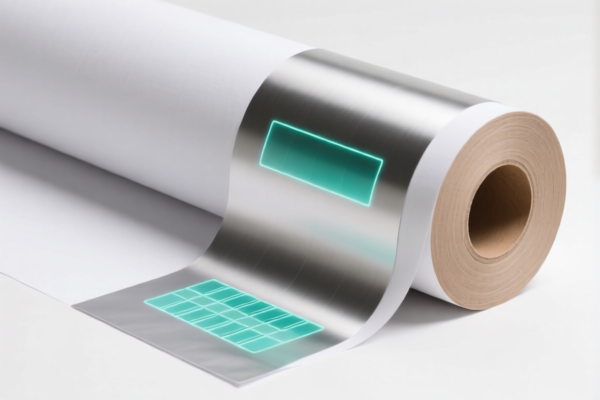
AI Analysis
📄 Electro-Sensitive Paper Base Roll (Direct Thermal Coated Paper)
🌐 HS Code Reference & Customs Clearance Guide | 2026 Latest Tariff Analysis | Professional Clearance Strategy
📌 I. Product Definition & Classification: What Exactly is "Electro-Sensitive Paper Base Roll"?
In international trade, Electro-Sensitive Paper (commonly known as Direct Thermal Paper) refers to a specific type of paper, paperboard, cellulose wadding, or webs of cellulose fibers. It is characterized by being coated, impregnated, covered, surface-colored, surface-decorated, or printed.
It is crucial to distinguish this product from other paper goods based on its physical form and weight: * Form Factor: It must be in the form of rolls or rectangular (including square) sheets of any size. * Exclusions: It explicitly excludes goods described in headings 4803 (Tissue paper, toilet paper, etc.), 4809 (Carbon paper, self-copy paper, etc.), or 4810 (Paper with coating of animal or vegetable fats, oils, or waxes). * Specific Sub-category: Within the data provided, the classification focuses on products weighing over 30 g/m².
⚠️ Key Distinction Point:
- If the paper is in strips/rolls >15cm width OR sheets with one side >36cm and other >15cm, AND weighs >30 g/m² → It falls under specific sub-headings like 4811.90.80.30 (Direct Thermal Coated) or 4811.90.80.50 (Other).
- If the weight is ≤30 g/m², these specific HS codes do not apply (though not listed in DATA, they would fall under different sub-categories).
- Crucial: The data explicitly highlights "Direct Thermal Coated Paper" (4811.90.80.30) and "Other" (4811.90.80.50) for weights over 30 g/m².
📦 II. HS Code Classification Details (2026 Latest Tariff Authority Comparison)
| HS Code | Product Description | Weight Condition | Application Scenario | Tax Rate (US) |
|---|---|---|---|---|
4811.90.80.30 |
Direct Thermal Coated Paper | Weighing over 30 g/m² | Thermal receipt paper, fax paper, POS rolls, label bases | 25.0% |
4811.90.80.50 |
Other Paper (Non-Thermal Specific) | Weighing over 30 g/m² | Other coated/printed paper (non-thermal), decorative paper, high-weight specialty paper | 25.0% |
🔍 Important Note:
- Both HS codes listed in the provided data carry the same total tax rate of 25.0%.
- The primary difference lies in the technical specification: 4811.90.80.30 is specifically for Direct Thermal Coated Paper. If your product is NOT thermal but is still coated/impregnated/printed paper >30 g/m², it may fall under 4811.90.80.50 ("Other").
- Misclassification Risk: Declaring "Other" paper when it is actually "Direct Thermal" does not lower the tax rate in this specific dataset (both are 25%), but it may lead to customs audits regarding product description accuracy.
💰 III. 2026 Latest Tariff Rate Breakdown (Detailed Tax Clause Explanation)
✅ Applicable Country: United States (US)
✅ Origin: China (CN) (Implied by "Additional Tax" structure in typical trade data, though not explicitly stated in snippet, the "25% additional tax" strongly suggests US Section 301 tariffs on Chinese goods)
✅ Effective Time: Current (2026 Context)
🎯 1. 4811.90.80.30 —— Direct Thermal Coated Paper (>30 g/m²)
| Item | Content |
|---|---|
| Base Tariff Rate | 0.0% (ad valorem) |
| Additional Tariff (Section 301) | +25.0% |
| Total Tax Rate | 25.0% |
| Tax Calculation | CIF Value × 25% |
| De Minimis Exemption | ❌ Not Applicable (High-value threshold usually applies, but paper rolls are often commercial cargo) |
| Legal Basis Path | HTSUS:4811.90.80.30 → Section 301 Tariffs |
📌 Explanation:
- The Base Tariff of 0% means there is no standard customs duty for this paper category under normal MFN (Most Favored Nation) treatment.
- The 25% Additional Tax is the critical cost driver. This is likely due to US Section 301 tariffs on Chinese-manufactured paper products.
- Total Liability: For every $10,000 CIF value, you pay $2,500 in duties.
🎯 2. 4811.90.80.50 —— Other Paper (>30 g/m²)
| Item | Content |
|---|---|
| Base Tariff Rate | 0.0% |
| Additional Tariff (Section 301) | +25.0% |
| Total Tax Rate | 25.0% |
| Tax Calculation | CIF Value × 25% |
| De Minimis Exemption | ❌ Not Applicable |
| Legal Basis Path | HTSUS:4811.90.80.50 → Section 301 Tariffs |
📌 Note:
- The tax structure is identical to the thermal paper code.
- Ensure your product description matches the actual coating/processing to avoid classification disputes.
🛠️ IV. Customs Clearance Practical Advice (Real-World Pitfall Avoidance)
✅ 1. Preparation Checklist (Must-Have Documents)
| Document | Mandatory? | Description |
|---|---|---|
| ✅ Product Specification Sheet | ✔️ | Must specify: Weight (g/m²), Coating Type (Thermal/Other), Width, Core Size, Material Basis (Cellulose). |
| ✅ Commercial Invoice | ✔️ | Must clearly state "Electro-Sensitive Paper" or "Direct Thermal Paper," NOT just "Paper" or "Cardboard." |
| ✅ Packing List | ✔️ | Detail roll dimensions, weight per roll, and total pieces. |
| ✅ Certificate of Origin | ✔️ | To verify origin (China vs. other countries) for tariff eligibility. |
| ✅ Coating/Processing Declaration | ✔️ | Proof of whether it is "Direct Thermal" or "Other" coated. |
✅ 2. Declaration Tips (Key Mnemonic)
🔥 "Weight Over 30, Roll Width Over 15, Thermal vs. Other, Tax 25% Is Clear!"
| Scenario | Correct Declaration | Incorrect Action |
|---|---|---|
| Direct Thermal Paper (>30 g/m²) | HS: 4811.90.80.30 |
Misdeclare as 4811.90.80.50 (No tax benefit, but risk of audit) |
| Other Coated Paper (>30 g/m²) | HS: 4811.90.80.50 |
Declare as 4803 (Tissue) → Denied (Heading Exclusion) |
| Paper ≤30 g/m² | Not Listed in DATA | Do NOT use 4811.90.80.30 or .50 → Use correct sub-heading for lighter paper |
| Paper Sheets (<36cm x 15cm) | Not Listed in DATA | These dimensions are excluded from this specific entry |
✅ 3. Special Handling
| Situation | Advice |
|---|---|
| Mixed Shipments | If you have both thermal and non-thermal paper, separate the HS codes in the customs entry to avoid blanket inspections. |
| Origin Diversification | If the paper is not from China (e.g., Vietnam, USA, Brazil), the 25% Additional Tariff may not apply. Verify with customs broker for potential 0% rate. |
| Roll Dimensions | Ensure rolls are >15 cm wide. If rolls are narrower, they may fall under a different heading (e.g., 4811.40 or 4811.59). |
🌍 V. Global Market Comparison (2026 Context)
| Country/Region | Recommended HS Code | Tariff (China Origin) | Notes |
|---|---|---|---|
| 🇺🇸 USA | 4811.90.80.30 / .50 |
25.0% | High tariff due to Section 301 |
| 🇨🇳 China | 4811.90.80 |
0%~5% | Import duty varies; no Section 301 |
| 🇪🇺 EU | 4811.90 |
0% | Many paper products have 0% MFN duty |
| 🇬🇧 UK | 4811.90 |
0% | Post-Brexit, many paper goods remain low duty |
📌 Conclusion:
- The 25% tariff is a US-specific penalty on Chinese goods.
- For non-US markets, the cost is significantly lower.
- Supply Chain Advice: Consider sourcing from non-China origins if exporting to the US, or factor the 25% cost into pricing.
📌 VI. Common Mistakes & Pitfall Guide
❌ Mistake 1: Declaring "Paper" without specifying "Coated" or "Thermal"
👉 Consequence: Customs may reject the declaration or re-classify to a higher-tariff category.
❌ Mistake 2: Ignoring the Weight (>30 g/m²) and Dimensions
👉 Consequence: If the paper is lighter or in smaller sheets, it falls outside this HS code, leading to misclassification penalties.
❌ Mistake 3: Assuming "Direct Thermal" and "Other" have different tax rates in this dataset
👉 Consequence: Both are 25%. Don't waste time trying to find a "cheaper" code within this data block; focus on accurate description.
❌ Mistake 4: Not verifying Origin
👉 Consequence: If the paper is from Vietnam but declared as "China," and you benefit from a tariff, you face fraud charges. If it's from China but declared as "Vietnam," it gets blocked.
✅ Correct Approach:
"Direct Thermal Paper Roll, Width 100mm, Weight 50g/m², Basis: Wood Pulp, HS: 4811.90.80.30, Origin: China"
🎯 VII. Conclusion: Professional Declaration, Cost Optimization!
🎯 Remember the Mnemonic:
🔹 "Over 30 Grams, Roll Width Over 15, Thermal or Other, 25 Percent Duty!"
🔹 "Base Tax Zero, Additional Tax Seven, Total 25, Check Origin First!"
📌 Pro Tip:
- If your product is <30 g/m², do NOT use these codes. Contact your customs broker for the correct lighter-weight HS code.
- If your product is NOT from China, the 25% additional tax may be waived. Verify with your customs broker using the Product Origin Certificate.
📣 Immediate Action:
📞 Consult a Licensed Customs Broker
📄 Provide Full Technical Specs (Weight, Coating, Dimensions)
🚀 Accurate HS Code = Smooth Clearance = Predictable Costs!
✨ Professional Clearance Starts with Precise Classification!
💼 Your Cost, Calculated Precisely.
Customer Reviews
About HS Code Classification
The Harmonized System (HS) is an internationally standardized nomenclature developed by the World Customs Organization (WCO) to classify traded products. Over 200 countries use the HS system as the basis for customs tariffs, trade statistics, and import/export regulations.
Each HS code follows a hierarchical structure:
- Chapter (2 digits) — Broad category of goods (e.g., Chapter 84: Machinery and Mechanical Appliances)
- Heading (4 digits) — More specific grouping within the chapter
- Subheading (6 digits) — Internationally standardized breakdown, used by all WCO member countries
- National subdivisions (8-10 digits) — Country-specific extensions for further classification, such as US HTSUS 10-digit codes
Correct HS code classification is essential for smooth customs clearance, accurate duty payment, and compliance with trade regulations. Misclassification can lead to customs delays, overpayment of duties, or penalties.
When importing from CN to US, the applicable tariff rates may include:
- Most-Favored-Nation (MFN) rate — The standard duty rate applied to WTO members
- General rate — Applied to countries without trade agreements
- Trade remedy duties — Additional tariffs such as Section 301 (anti-dumping), Section 232 (national security), or countervailing duties
The information provided on this page is for reference purposes only. For official classification, please consult with your local customs authority or a licensed customs broker.