Electro sensitive paper for research
CN → US| HS Code | Tariff Rate | Origin | Destination | Doc |
|---|---|---|---|---|
| 4823906700 | 35.0% | CN | US | Official Doc |
| 4811904090 | 35.0% | CN | US | Official Doc |
| 4802201000 | 35.0% | CN | US | Official Doc |
| 4823908680 | 35.0% | CN | US | Official Doc |
| 4811908050 | 35.0% | CN | US | Official Doc |
Product Images
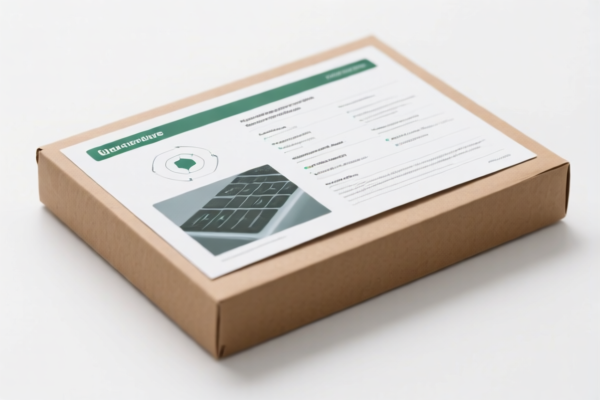
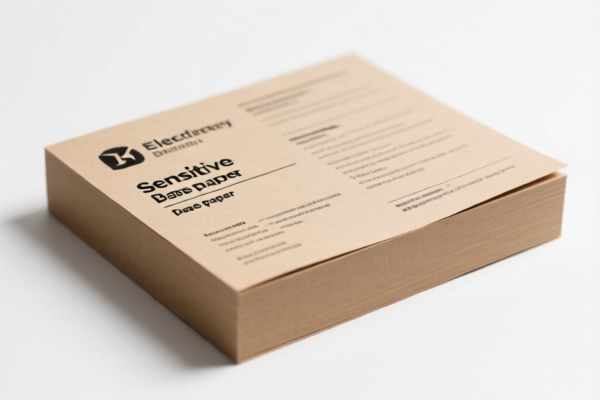
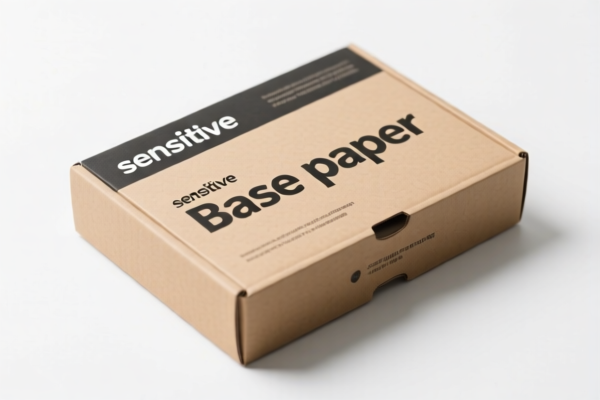
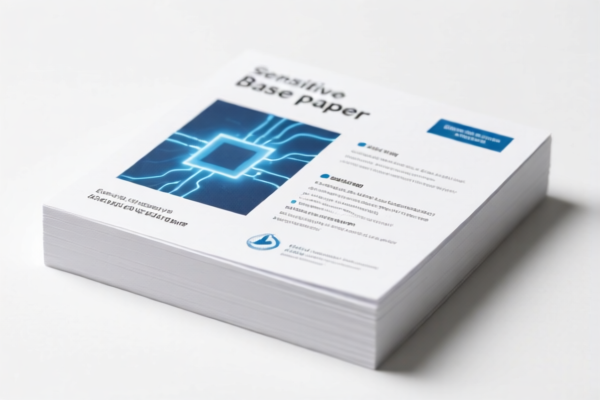
AI Analysis
📄 Electro-sensitive Paper for Research (Research-Grade Functional Paper)
🌐 HS Code Reference & Customs Clearance Guide | 2026 Latest Tariff Analysis | Professional Entry Strategy 📌 I. Product Definition & Classification: What is "Electro-sensitive Paper"?
"Electro-sensitive paper" (often referred to as electrochromic paper, conductive paper, or functional reactive paper) is a specialized material used primarily in scientific research, prototyping, and educational experiments. It reacts to electrical stimuli, changing color, conductivity, or physical state.
In international trade classification, the key determinant is the material base and processing method. Since the prompt specifies "Paper Base" (纸基), it fundamentally falls under Chapter 48 (Paper and Paperboard).
Key Distinction: * Not an Electronic Component: It is not a circuit board (Chapter 85) or a semiconductor device. * Not a Chemical Product: It is not pure chemical powders or liquids (Chapter 29/38), but a manufactured paper good with surface treatment. * Functional Coating: The "electro-sensitive" property comes from a coating or impregnation process applied to the paper substrate.
⚠️ Critical Classification Logic: * If the paper is coated or impregnated to provide specific functions (like conductivity or electro-sensitivity) and does not fall under specific coated paper headings (e.g., thermal paper, self-copy paper), it often falls into "Other" subheadings within Chapter 48. * However, if a specific heading explicitly mentions "Electro-sensitive paper," it takes precedence.
📦 II. HS Code Classification Breakdown (2026 Official Tariff)
Based on the provided data, here are the four potential HS Codes for "Electro-sensitive paper for research," ranked by classification logic:
| HS Code | Product Description / Logic | Key Matching Feature | Research Grade Relevance |
|---|---|---|---|
| 4802.20.10.00 | Electro-sensitive Paper (Specific Heading) | Direct match: The classification explicitly lists "Electro-sensitive paper." | ✅ Best Match: Directly corresponds to the item name. No ambiguity. |
| 4811.90.80.50 | Other Coated/Impregnated Paper | Matches "Paper Base" + "Functional Coating" (Electro-sensitive treatment). | ✅ Strong Match: "Research grade" implies it's not standard thermal paper (excluded). Fits "Other" coated category. |
| 4811.90.40.90 | Other Paper/Board Articles (Coated/Impregnated) | Matches "Paper Base" + "Other" category. | ✅ Alternative: Valid if the specific coating doesn't fit 4811.90.80, but still a coated paper product. |
| 4823.90.67.00 | Other Paper/Cellulose Fiber Articles | Matches "Paper Base" + "Other" (General paper goods). | ⚠️ Broad Category: Used as a fallback if no coating-specific heading applies. "Paper base" is the primary driver. |
| 4823.90.86.80 | Other Paper/Cellulose Fiber Articles (Cut to size) | Matches "Paper Base" + "Other" + "Cut to size" logic. | ⚠️ Fallback: Similar to above, relies on the "no material conflict" logic for paper-based items. |
🔍 Expert Note: * 4802.20.10.00 is the most precise because it specifically names "Electro-sensitive paper". * Codes like 4811 and 4823 rely on the "Paper Base" attribute and the "Other" (兜底) logic because the electro-sensitive treatment is considered a surface modification or functional addition to the paper substrate. * All classifications confirm no material conflict (i.e., it is not plastic or metal-based, so it stays in Chapter 48).
💰 III. 2026 Latest Tariff Rate Details (Including Surtaxes & Policies)
✅ Applicable Country: United States (US) ✅ Country of Origin: China (CN) ✅ Effective Date: November 10, 2025 (and subsequent imports)
🎯 All Classified Codes Share the Same Tax Structure
For all the HS Codes listed above (4802, 4811, 4823), the tariff structure is identical due to the "Paper Base" origin and current US trade policies.
| Item | Content |
|---|---|
| Base Tariff Rate | 0.0% (Ad Valorem) |
| USITC Surtax (Section 301) | +25.0% (Based on USITC Footnotes for Chinese goods) |
| IEEPA Surtax | +10.0% (Targeting China/HK products under International Emergency Economic Powers Act) |
| Total Effective Tariff Rate | 35.0% |
| Tax Calculation | CIF Value × 35% |
| De Minimis Eligibility | ❌ Not Eligible (Deny De Minimis for these categories under current 122-clause rules) |
| Legal Basis Path | IEEPA:9903.01.25 → IEEPA:9903.01.24 → USITC:4802/4811/4823 → FOOTNOTE:9903.XX.XX |
📌 Explanation: * "Base Tariff 0%": Paper products generally have low base duties. * "USITC 25%": This is the standard Section 301 surcharge for many Chinese industrial goods. * "IEEPA 10%": This is an additional surcharge specifically targeting Chinese imports, effective from late 2025. * Total 35%: This is a significant cost factor. Even though it's "paper," the functional treatment and origin trigger high tariffs. * "122 Clause": Refers to specific customs enforcement clauses that may further restrict or tax certain functional paper imports from China.
🛠️ IV. Customs Clearance Practical Advice (Real-World Pitfall Guide)
✅ 1. Required Documentation Checklist (Mandatory)
| Document | Must Provide? | Explanation |
|---|---|---|
| ✅ Product Specification Sheet | ✔️ | Must clearly state: "Electro-sensitive," "Research Use," "Paper Base Material." |
| ✅ Composition Analysis | ✔️ | Proof that >50% of the surface treatment is on a paper substrate (not plastic/film). |
| ✅ Product Photos | ✔️ | Show the texture, coating, and any labels indicating "Research Grade" or "Non-commercial Sample." |
| ✅ Commercial Invoice | ✔️ | Must explicitly mention "For Research Pur Only" to help justify classification under 4802/4811. |
| ✅ Packing List | ✔️ | Itemize quantities clearly. Avoid mixing with electronic components. |
✅ 2. Declaration Strategy (Key Tips)
🔥 "Declare Material, Not Just Function"
| Scenario | Correct Declaration | Wrong Practice |
|---|---|---|
| Pure Paper with Electro-coating | "Electro-sensitive Paper, Paper Base, for Research" | "Electronic Component" → Wrong Chapter (85) |
| Mixed Material (Paper + Plastic) | If plastic > paper, may shift to Chapter 39/42. | Declare as "Paper" when it's composite → Misclassification Risk |
| Sample for R&D | Mark as "Sample for Testing" to potentially reduce inspection rate. | Declare as "Commercial Sale" → Higher Scrutiny |
| Using HS Code 4802.20.10.00 | Highlight "Electro-sensitive" in description. | Use generic "Paper" code → Audit trigger |
✅ 3. Special Cases
| Case | Handling Advice |
|---|---|
| Small Quantities (Samples) | Even for small research samples, the 35% tariff applies if shipped under commercial invoice. No de minimis exemption. |
| Pre-shipment Inspection | Be prepared for a physical inspection to verify the "Paper Base" claim. Customs may cut open a sample to check layers. |
| Origin Labeling | Ensure every sheet/package is marked "Made in China" to avoid origin fraud accusations. |
🌍 V. Global Market Comparison (2026 Latest)
| Country/Region | Recommended HS Code | Tariff (China Origin) | Certification | Notes |
|---|---|---|---|---|
| 🇺🇸 USA | 4802.20.10.00 |
35% (0% + 25% + 10%) | None specific | High tariff; strict "Paper Base" verification. |
| 🇨🇳 China | 4802.20.10.00 |
5% (Import Duty) | GB Standards | Domestic research use is cheaper. |
| 🇪🇺 EU | 4823.90.67.00 |
4.5% - 6.5% | CE (if applicable) | Lower tariffs than US; focus on chemical safety (REACH). |
| 🇯🇵 Japan | 4823.90.67.00 |
3.2% - 5.0% | JIS Standards | Moderate tariffs; requires safety data sheets (SDS) for coated papers. |
📌 Conclusion: * USA is the most expensive market due to the 35% total tariff. * EU and Japan are more favorable in terms of tariff rates but may have stricter chemical safety regulations (REACH in EU, Chemical Substances Control Law in Japan) for the electro-sensitive coating.
📌 VI. Common Mistakes & Pitfalls (Lessons Learned)
❌ Mistake 1: Classifying as "Electronic Device" (Chapter 85) 👉 Consequence: If found to be paper-based, penalties + back taxes. Paper is Chapter 48.
❌ Mistake 2: Ignoring the "10% IEEPA Surtax" 👉 Consequence: Underestimating landed cost by 10%. Total cost is 35%, not 25%.
❌ Mistake 3: Claiming "De Minimis" Exemption 👉 Consequence: Rejection. Paper products from China are not eligible for $800 de minimis exemption under current 122 clauses.
❌ Mistake 4: Vague Description ("Special Paper") 👉 Consequence: Customs delays for classification review. Always use "Electro-sensitive Paper" or "Coated Paper for Research."
✅ Correct Approach:
"Electro-sensitive Paper, Paper Base, Coated with Functional Chemicals, For Research Use Only, HS Code 4802.20.10.00, Origin: China"
🎯 VII. Conclusion: Professional Classification for Cost Efficiency
🎯 Key Takeaways:
🔹 "Paper Base is King": As long as the substrate is paper, Chapter 48 applies. 🔹 "35% is the Real Cost": Do not budget for just 0% or 25%. Include the IEEPA 10% surtax. 🔹 "Documentation is Key": Prove the "Paper Base" and "Research Purpose" to avoid misclassification penalties.
📌 Pro Tip: If your research paper contains conductive inks or active electronic components embedded in it, consult a customs broker immediately. The classification might shift to Chapter 85 or 38, changing the tariff structure entirely.
📣 Immediate Action:
📞 Contact a Licensed Customs Broker: Provide the SDS (Safety Data Sheet) of the coating. 🚀 Apply for Advance Ruling: If importing large volumes, request a binding classification ruling from US Customs (CBP) to lock in the HS Code and avoid surprises.
✨ Professional Customs Clearance Starts with Accurate Classification! 💼 Your Cost Saving Starts with the Right HS Code!
Customer Reviews
About HS Code Classification
The Harmonized System (HS) is an internationally standardized nomenclature developed by the World Customs Organization (WCO) to classify traded products. Over 200 countries use the HS system as the basis for customs tariffs, trade statistics, and import/export regulations.
Each HS code follows a hierarchical structure:
- Chapter (2 digits) — Broad category of goods (e.g., Chapter 84: Machinery and Mechanical Appliances)
- Heading (4 digits) — More specific grouping within the chapter
- Subheading (6 digits) — Internationally standardized breakdown, used by all WCO member countries
- National subdivisions (8-10 digits) — Country-specific extensions for further classification, such as US HTSUS 10-digit codes
Correct HS code classification is essential for smooth customs clearance, accurate duty payment, and compliance with trade regulations. Misclassification can lead to customs delays, overpayment of duties, or penalties.
When importing from CN to US, the applicable tariff rates may include:
- Most-Favored-Nation (MFN) rate — The standard duty rate applied to WTO members
- General rate — Applied to countries without trade agreements
- Trade remedy duties — Additional tariffs such as Section 301 (anti-dumping), Section 232 (national security), or countervailing duties
The information provided on this page is for reference purposes only. For official classification, please consult with your local customs authority or a licensed customs broker.