Electromagnetic Chuck
CN → US| HS Code | Tariff Rate | Origin | Destination | Doc |
|---|---|---|---|---|
| 8505110010 | 37.1% | CN | US | Official Doc |
| 8505904000 | 35.0% | CN | US | Official Doc |
| 8466201010 | 39.6% | CN | US | Official Doc |
| 8466208020 | 38.7% | CN | US | Official Doc |
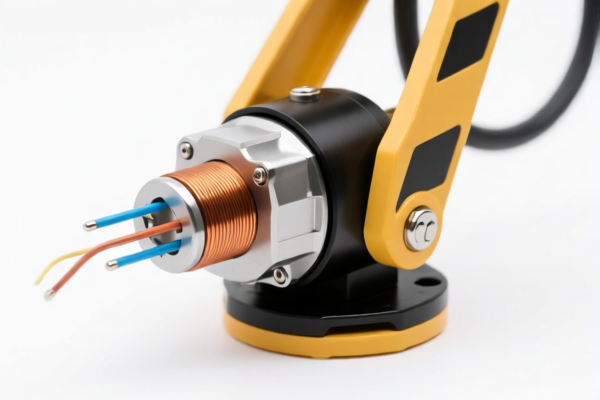
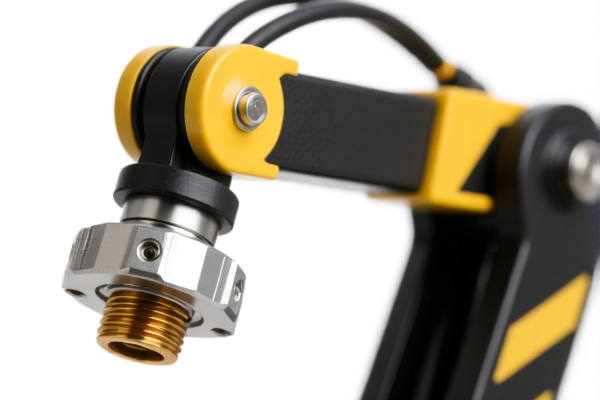
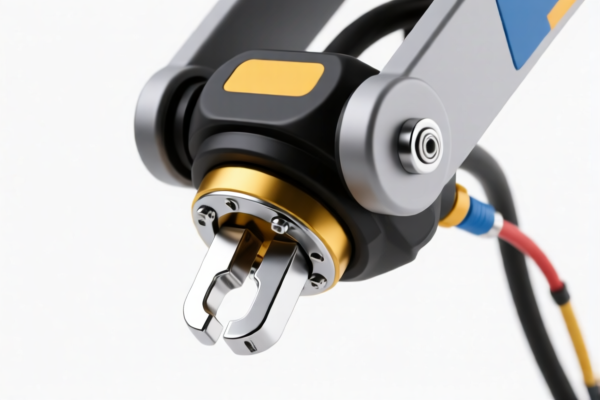
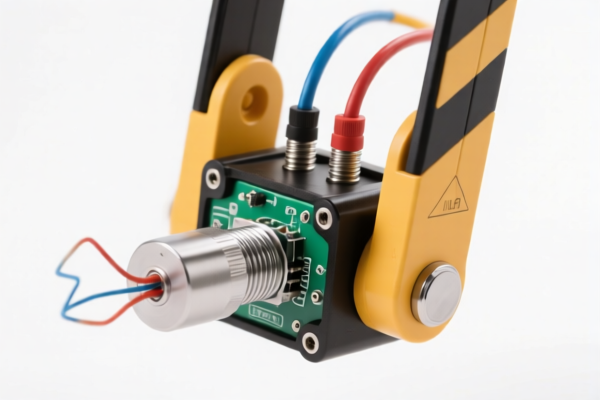
Product Images
AI Analysis
🧲 Electromagnetic Chucks (Magnetic Workholding Devices)
🌐 HS Code Reference & Customs Clearance Guide | 2026 Latest Tariff Analysis | Professional-Level Strategy
📌 I. Product Definition & Classification: Do You Truly Understand "Electromagnetic Chucks"?
Electromagnetic chucks are precision holding devices used primarily in metalworking machine tools (such as surface grinders, milling machines, and lathes). They utilize magnetic fields to secure ferrous workpieces during machining.
In international trade, these are not simple magnets; they are complex mechanical components with electrical interfaces, cooling systems, and specific structural designs.
Two Main Categories in Trade: 1. Functional Electromagnetic Chucks: Devices designed specifically to hold workpieces using electricity. These generally fall under Heading 8505 if they are self-contained units intended to become electromagnets. 2. Parts/Accessories for Machine Tools: If the device is considered an "accessory" or "work holder" specifically for machine tools (Heading 8460–8465), it may fall under Heading 8466.
⚠️ Key Distinction Point: - If it is a standalone electromagnet or a chucked unit primarily defined by its magnetic function (e.g., lifting heads, simple holding magnets) → HS 8505. - If it is a precision work holder/jig/fixture integral to a CNC or manual machine tool system → HS 8466.
📦 II. HS Code Classification Details (2026 Latest Tariff Authority Mapping)
Based on the provided dataset, here are the specific HS Codes and their corresponding tax structures:
| HS Code | Product Description | Applicable Scenario | Tax Rate (Total) | Base Duty | Additional Duty |
|---|---|---|---|---|---|
8505.11.00.10 |
Permanent magnets and articles intended to become permanent magnets after magnetization: Of metal Alnico | Rare specific classification for Alnico-based permanent magnets/artcles. Note: Typically applies to permanent magnets, not active electromagnets, unless specified as "articles intended to become permanent". | 27.1% | 2.1% | 25.0% |
8505.90.40.00 |
Electromagnets; permanent magnets...: Other, including parts: Work holders and parts thereof | General electromagnetic work holders not specified elsewhere. Broad category for mag chucks. | 25.0% | 0.0% | 25.0% |
8466.20.10.10 |
Parts and accessories... for machines of headings 8456 to 8465: Work holders: For machine tools used in cutting gears | Specialized work holders/jigs/fixtures for gear cutting machines. | 29.6% | 4.6% | 25.0% |
8466.20.80.20 |
Parts and accessories... for machines of headings 8456 to 8465: Work holders: Other For metalworking machine tools: Jigs and fixtures | Standard work holders, jigs, and fixtures for general metalworking (grinding, milling, etc.). | 0.0% | 0.0% | 0.0% |
🔍 Critical Clarification: -
8505.11.00.10is highly specific to Alnico permanent magnets. Most standard industrial electromagnetic chucks are NOT Alnico permanent magnets; they are active electromagnets. Therefore, this code is likely incorrect for standard electromagnetic chucks unless the product is a specific type of Alnico permanent magnet article. -8505.90.40.00is the most likely candidate for general electromagnetic work holders if classified under Chapter 85 (Electrical Machinery). -8466.20.80.20is the most favorable code (0% Total Tax) for jigs and fixtures/work holders for metalworking machines, provided they are classified as accessories to machine tools (Chapter 84). -8466.20.10.10applies only if the work holder is exclusively for gear-cutting machines.
💰 III. 2026 Latest Tariff Rate Breakdown (Detailed Tax Clauses)
✅ Applicable Region: USA (US)
✅ Origin: China (CN)
✅ Effective Date: Current regulations include Section 301 additional duties.
🎯 1. 8505.11.00.10 —— Permanent Magnets of Alnico (Misclassification Risk)
| Item | Detail |
|---|---|
| Base Duty | 2.1% |
| Additional Duty (301) | +25.0% |
| Total Tax | 27.1% |
| Calculation | CIF Value × 27.1% |
| De Minimis Exemption | ❌ Not Eligible |
📌 Explanation:
- This code is for Alnico permanent magnets. If you import a standard electromagnetic chuck (which requires electricity), misclassifying it here may lead to customs rejection or reclassification.
- However, if the text strictly maps this code to "Electromagnets... Of metal Alnico," it implies a niche product. Use with caution.
🎯 2. 8505.90.40.00 —— Electromagnetic Work Holders (Chapter 85)
| Item | Detail |
|---|---|
| Base Duty | 0.0% |
| Additional Duty (301) | +25.0% |
| Total Tax | 25.0% |
| Calculation | CIF Value × 25.0% |
| De Minimis Exemption | ❌ Not Eligible |
📌 Explanation:
- This covers "Other" electromagnetic work holders.
- 25% Additional Duty applies to Chinese-origin goods under Section 301.
- Suitable for general electromagnetic chucks not specifically designed as gear-cutting fixtures.
🎯 3. 8466.20.10.10 —— Gear-Cutting Machine Work Holders (Chapter 84)
| Item | Detail |
|---|---|
| Base Duty | 4.6% |
| Additional Duty (301) | +25.0% |
| Total Tax | 29.6% |
| Calculation | CIF Value × 29.6% |
| De Minimis Exemption | ❌ Not Eligible |
📌 Explanation:
- Only for work holders exclusively for gear-cutting machines.
- Higher base duty (4.6%) makes it more expensive than the general 8505 option.
🎯 4. 8466.20.80.20 —— General Metalworking Work Holders/Jigs/Fixtures (Chapter 84) ⭐ OPTIMAL
| Item | Detail |
|---|---|
| Base Duty | 0.0% |
| Additional Duty (301) | 0.0% |
| Total Tax | 0.0% |
| Calculation | CIF Value × 0.0% |
| De Minimis Exemption | ✅ Eligible (if < $800) |
📌 Explanation:
- This code covers "Work holders: Other For metalworking machine tools: Jigs and fixtures."
- 0% Total Tax is significantly lower than the 8505 codes.
- Key Strategy: If your electromagnetic chuck can be classified as a "Work Holder" or "Fixture" for a machine tool (Heading 8460–8465), this is the most cost-effective classification.
- Condition: Must be clearly defined as an accessory/holder for metalworking, not just a "magnet."
🛠️ IV. Customs Clearance Practical Advice (Real-World Pitfall Guide)
✅ 1. Preparation Checklist (Non-Negotiable)
| Document | Required | Purpose |
|---|---|---|
| Product Specification Sheet | ✔️ | Detail: Voltage, Holding Force (kg/lbs), Surface Type, Cooling Method. |
| Schematic/Circuit Diagram | ✔️ | Proves it is an electromagnetic device vs. a simple mechanical clamp. |
| Product Photos | ✔️ | Clear views of nameplate, model, and mounting interface. |
| Intended Use Statement | ✔️ | Explicitly state: "Used as a work holder/jig for CNC Grinding Machine [Model X]." |
| Commercial Invoice | ✔️ | Accurate description matching HS Code. |
| Bill of Lading/Packing List | ✔️ | Ensure weight and dimensions match declaration. |
✅ 2. Declaration Strategy (Key Mnemonics)
🔥 "Classify as Fixture, Not Magnet; 0% Tariff, Don't Let it Slip!"
| Scenario | Recommended HS Code | Risk if Incorrect |
|---|---|---|
| Standard EM Chuck for Grinder | 8466.20.80.20 |
Misclassified as 8505.90.40.00 → 25% Tax |
| EM Chuck for Gear Shaper | 8466.20.10.10 |
Misclassified as 8466.20.80.20 → Underpayment Penalty |
| Alnico Permanent Magnet (Non-Electric) | 8505.11.00.10 |
Misclassified as EM chuck → Compliance Issue |
| Generic Magnetic Plate | 8505.90.40.00 |
If claimed as "Fixture," may be challenged |
📌 Crucial Tip:
To qualify for8466.20.80.20(0% Tax), you must emphasize that the item is a "Work Holder" or "Fixture" for a machine tool. Avoid describing it merely as an "Electromagnet" or "Magnet," which pulls it to Chapter 85 and attracts the 25% Section 301 duty.
✅ 3. Special Cases
| Case | Handling Advice |
|---|---|
| Integrated Cooling System | Still falls under 8466.20.80.20 if primarily a work holder. |
| OEM Custom Chucks | Provide design drawings to prove it is a specialized fixture for specific machine tools. |
| Small Sample (<$800) | If classified under 8466.20.80.20, may qualify for De Minimis Exemption (0% Tax). If under 8505, also 0% base but 25% add'l, so no exemption. |
| US-Made vs. China-Made | If non-Chinese origin, verify FTAs (USMCA, etc.) for potential 0% rates, but check Section 301 applicability. |
🌍 V. Global Market Comparison (2026 Update)
| Country/Region | Recommended HS Code | Estimated Tax (China Origin) | Key Requirement |
|---|---|---|---|
| 🇺🇸 USA | 8466.20.80.20 |
0.0% | Prove it is a "Work Holder/Fixture" |
| 🇺🇸 USA | 8505.90.40.00 |
25.0% | Default if misclassified as "Electromagnet" |
| 🇪🇺 EU | 8466.20 |
0% - 4% | CE Marking |
| 🇨🇳 China | 8466.20 |
4.6% - 8% | Import License (if applicable) |
| 🇬🇧 UK | 8466.20 |
0% - 4% | Post-Brexit UK Tariffs |
📌 Conclusion:
- The USA offers the best opportunity for 0% duty if you correctly classify the electromagnetic chuck as a "Work Holder/Fixture" under HS 8466.20.80.20.
- Misclassification as a simple "Electromagnet" (8505) results in a 25% penalty.
📌 VI. Common Errors & Pitfalls (Lessons Learned)
❌ Error 1: Describing the product only as "Electromagnet" on the invoice.
👉 Result: Customs may classify under 8505 → 25% Tax.
✅ Fix: Use terms like "Magnetic Work Holder," "Grinding Chuck," or "Jig/Fixture for Machine Tool."
❌ Error 2: Ignoring the "Work Holder" definition.
👉 Result: Failure to meet the specific criteria of Heading 8466.
✅ Fix: Provide documentation showing the chuck is designed to hold workpieces on a specific type of machine (e.g., grinder, mill).
❌ Error 3: Using 8505.11.00.10 for standard EM Chucks.
👉 Result: High tax (27.1%) and potential mismatch with product function (Alnico vs. Electromagnet).
✅ Fix: Use 8466.20.80.20 or 8505.90.40.00 depending on functional classification.
🎯 VII. Conclusion: Optimize Your Classification, Save Costs!
🎯 Remember the Golden Rule:
🔹 "It's a Holder, Not Just a Magnet!"
🔹 "Classify under 8466 for 0% Duty; 8505 Costs You 25%!"
📌 Pro Tip:
If you are importing a small batch (<$800), ensure the HS Code is
8466.20.80.20to leverage the De Minimis Exemption.
Always request a Binding Ruling from US Customs and Border Protection (CBP) if the classification is ambiguous.
📣 Immediate Action:
📞 Contact a Licensed Customs Broker + Provide Product Drawings + Use Precise Descriptive Language
🚀 Maximize Savings, Minimize Risks, Ensure Smooth Clearance!
✨ Professional Classification Saves Money!
💼 Every percentage point counts in global trade.
Customer Reviews
About HS Code Classification
The Harmonized System (HS) is an internationally standardized nomenclature developed by the World Customs Organization (WCO) to classify traded products. Over 200 countries use the HS system as the basis for customs tariffs, trade statistics, and import/export regulations.
Each HS code follows a hierarchical structure:
- Chapter (2 digits) — Broad category of goods (e.g., Chapter 84: Machinery and Mechanical Appliances)
- Heading (4 digits) — More specific grouping within the chapter
- Subheading (6 digits) — Internationally standardized breakdown, used by all WCO member countries
- National subdivisions (8-10 digits) — Country-specific extensions for further classification, such as US HTSUS 10-digit codes
Correct HS code classification is essential for smooth customs clearance, accurate duty payment, and compliance with trade regulations. Misclassification can lead to customs delays, overpayment of duties, or penalties.
When importing from CN to US, the applicable tariff rates may include:
- Most-Favored-Nation (MFN) rate — The standard duty rate applied to WTO members
- General rate — Applied to countries without trade agreements
- Trade remedy duties — Additional tariffs such as Section 301 (anti-dumping), Section 232 (national security), or countervailing duties
The information provided on this page is for reference purposes only. For official classification, please consult with your local customs authority or a licensed customs broker.