Electromagnetic Coupler and Clutch
CN → US| HS Code | Tariff Rate | Origin | Destination | Doc |
|---|---|---|---|---|
| 8543709860 | 37.6% | CN | US | Official Doc |
| 8543706000 | 35.0% | CN | US | Official Doc |
| 8483604040 | 37.8% | CN | US | Official Doc |
| 8483608000 | 37.8% | CN | US | Official Doc |
| 8505200000 | 38.1% | CN | US | Official Doc |
Product Images
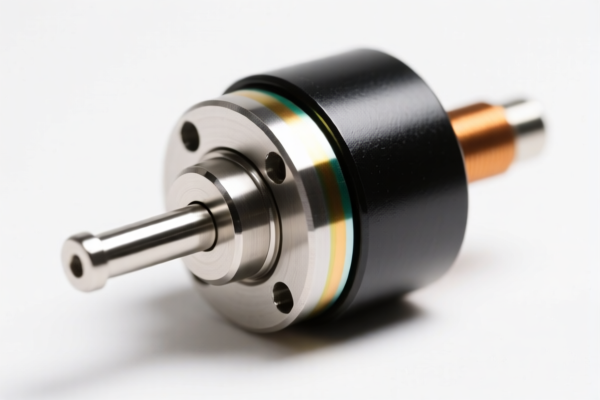
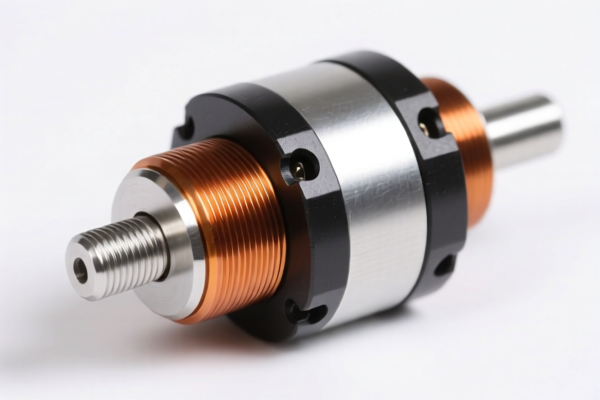
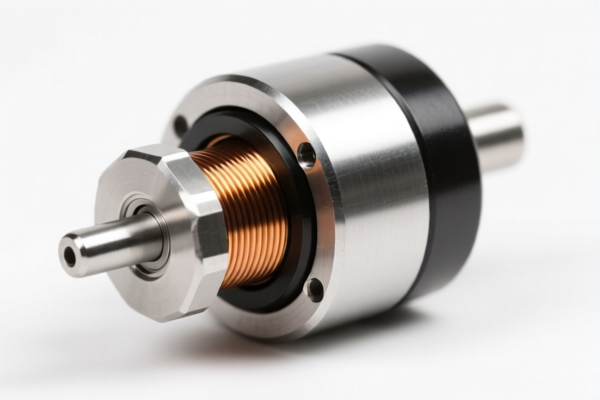
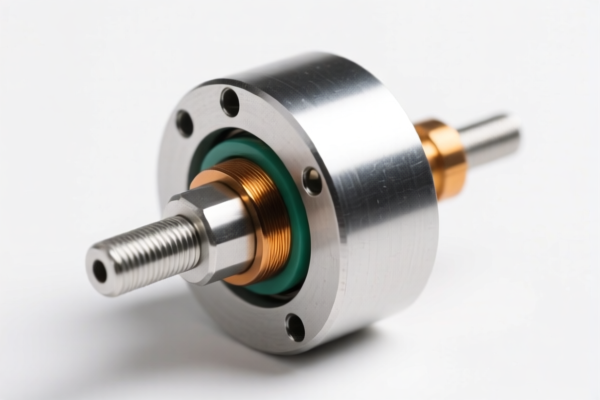
AI Analysis
⚡ Electromagnetic Couplers & Clutches: The Ultimate HS Code & Customs Clearance Guide
🌐 HS Code Reference & Clearance Strategy | 2026 Latest Tariff Analysis | Professional Compliance Strategy
📌 I. Product Definition & Classification: Do You Truly Understand "Electromagnetic Clutches"?
Electromagnetic Couplers and Clutches are critical transmission components used to engage or disengage power transfer via magnetic force, rather than mechanical friction. In international trade, their classification depends heavily on whether they are viewed as standalone electromagnetic devices or mechanical shaft coupling components.
Core Distinction:
As Electromagnetic Devices: If the device’s primary function is defined by its electromagnetic action (e.g., specific control circuits, signal processing integration), it may fall under Chapter 85 (Electrical Machinery).
As Mechanical Transmissions: If the device is primarily a mechanical component (coupling/clutch) activated by electricity, it often falls under Chapter 84 (Machinery/Transmission Parts).
⚠️ Key Classification Point:
- If the product is described as a generic "electromagnetic device" without specific mechanical coupling details → Chapter 85
- If the product is explicitly a "clutch" or "shaft coupling" activated electromagnetically → Chapter 84
- If the product matches the specific definition of an "electromagnetic clutch" in legal notes → 8505.20
📦 II. HS Code Classification Details (2026 Latest Tariff Authority Comparison)
Based on the provided data, here are the five possible HS Code classifications with their corresponding tax rates and logical justifications:
| HS Code | Product Description | Logical Justification for Classification | Total Tax Rate | Tax Breakdown |
|---|---|---|---|---|
8543.70.98.60 |
Other Electric Machines & Apparatus (Independent Function) | Classified as an independent electromagnetic device under "Other Machines & Apparatus" in 8543.70.98.60. | 37.6% | Base: 2.6% Section 301: 25.0% Section 122: 10.0% |
8543.70.60.00 |
Electromagnetic Drive Apparatus (Network/Device Connected) | Classified as electromagnetic drive apparatus designed for connection to equipment/networks. | 35.0% | Base: 0.0% Section 301: 25.0% Section 122: 10.0% |
8483.60.40.40 |
Shaft Couplings (Electromagnetic Coupler Category) | The term "Coupler" maps to Shaft Couplings; "Electromagnetic Coupler" is treated as a type of coupling. | 37.8% | Base: 2.8% Section 301: 25.0% Section 122: 10.0% |
8483.60.80.00 |
Clutches & Shaft Couplings (Other Clutches) | The term "Clutch" directly matches Clutches & Shaft Couplings; categorized as "Other Clutches." | 37.8% | Base: 2.8% Section 301: 25.0% Section 122: 10.0% |
8505.20.00.00 |
Electromagnetic Couplings & Clutches | Exact Match: "Electromagnetic Coupler" and "Clutch" perfectly align with the definition of electromagnetic couplings/clutches. | 38.1% | Base: 3.1% Section 301: 25.0% Section 122: 10.0% |
🔍 Critical Insight:
-8505.20.00.00is the most precise legal fit for "Electromagnetic Couplers/Clutches," despite having the highest total tax rate (38.1%).
-8543.70.60.00offers the lowest total tax rate (35.0%) but requires strict justification that the device is a "network-connected electromagnetic drive apparatus" rather than a simple mechanical clutch.
-8483codes rely on interpreting the product as a mechanical component (clutch/coupling) rather than an electrical device.
💰 III. 2026 Latest Tariff Rate Details (Including Surtaxes & Policy Add-ons)
✅ Applicable Country: United States (US)
✅ Origin: China (CN)
✅ Effective Date: From November 10, 2025 (for subsequent imports)
🎯 1. 8543.70.98.60 — Other Electric Machines & Apparatus
| Item | Content |
|---|---|
| Base Rate | 2.6% (ad valorem) |
| USITC Surtax (Section 301) | +25.0% |
| IEEPA Surtax (Section 122) | +10.0% (Targeting China/HK products) |
| Total Rate | 37.6% |
| Tax Calculation | CIF Value × 37.6% |
| De Minimis Exemption | ❌ Not Applicable (deny_de_minimis) |
| Legal Path | USITC:8543.70.98.60 → FOOTNOTE:Section 301 → IEEPA:Section 122 |
📌 Explanation:
- This classification treats the product as a general "electromagnetic device."
- The 25% Section 301 tax is applied due to its origin.
- The 10% Section 122 tax is a specific additional levy on certain Chinese imports.
🎯 2. 8543.70.60.00 — Electromagnetic Drive Apparatus (Network Connected)
| Item | Content |
|---|---|
| Base Rate | 0.0% |
| USITC Surtax (Section 301) | +25.0% |
| IEEPA Surtax (Section 122) | +10.0% |
| Total Rate | 35.0% |
| Tax Calculation | CIF Value × 35.0% |
| De Minimis Exemption | ❌ Not Applicable |
| Legal Path | IEEPA:Section 122 → USITC:8543.70.60.00 → FOOTNOTE:Section 301 |
📌 Note:
- This is the lowest tax option among the choices.
- Risk: Customs may reject this if the product does not clearly function as a "network-connected drive apparatus." Justification must emphasize electronic control/interface capabilities over mechanical transmission.
🎯 3. 8483.60.40.40 & 8483.60.80.00 — Clutches & Shaft Couplings
| Item | Content |
|---|---|
| Base Rate | 2.8% |
| USITC Surtax (Section 301) | +25.0% |
| IEEPA Surtax (Section 122) | +10.0% |
| Total Rate | 37.8% |
| Tax Calculation | CIF Value × 37.8% |
| De Minimis Exemption | ❌ Not Applicable |
📌 Explanation:
- These codes fall under Chapter 84 (Machinery).
-8483.60.40.40: Focuses on "Electromagnetic Couplers" as a type of coupling.
-8483.60.80.00: Focuses on "Clutches" as "Other Clutches."
- Both have the same total tax rate (37.8%). The choice depends on whether the product is more accurately described as a "coupler" or a "clutch" in technical documentation.
🎯 4. 8505.20.00.00 — Electromagnetic Couplings & Clutches
| Item | Content |
|---|---|
| Base Rate | 3.1% |
| USITC Surtax (Section 301) | +25.0% |
| IEEPA Surtax (Section 122) | +10.0% |
| Total Rate | 38.1% |
| Tax Calculation | CIF Value × 38.1% |
| De Minimis Exemption | ❌ Not Applicable |
| Legal Path | USITC:8505.20.00.00 → FOOTNOTE:Section 301 → IEEPA:Section 122 |
📌 Critical Point:
- This is the most legally accurate classification for "Electromagnetic Couplers/Clutches."
- It has the highest total tax rate (38.1%) but the lowest risk of classification disputes.
- Use this if the product’s primary identity is an electromagnetic clutch/coupler, regardless of cost.
🛠️ IV. Customs Clearance Practical Advice (Real-World Pitfall Guide)
✅ 1. Required Documentation Checklist
| Document | Required? | Description |
|---|---|---|
| ✅ Product Specification Sheet | ✔️ | Must detail operating principle (electromagnetic vs. mechanical), voltage, torque, speed. |
| ✅ Technical Diagrams | ✔️ | Circuit diagrams vs. mechanical drawings to support HS Code choice. |
| ✅ Product Photos (Label) | ✔️ | Clear view of model number, brand, input/output specs. |
| ✅ Commercial Invoice | ✔️ | Must use precise terminology matching the HS Code chosen (e.g., "Electromagnetic Clutch" vs. "Coupling Device"). |
| ✅ Packing List | ✔️ | List all components; avoid splitting a single functional unit. |
| ✅ Third-Party Test Report | ✔️ | FCC, CE, RoHS (if applicable) to prove compliance. |
✅ 2. Declaration Strategy (Key Mantra)
🔥 "Match the Function, Not Just the Name!"
| Scenario | Correct Declaration | Wrong Approach | Consequence |
|---|---|---|---|
| Product is primarily a mechanical clutch activated by magnet | 8483.60.80.00 or 8483.60.40.40 |
Declare as 8505.20 (Electrical) |
Potential dispute over classification accuracy. |
| Product is an electronic controller with coupling function | 8543.70.60.00 |
Declare as 8483.60 (Mechanical) |
May face higher taxes if deemed electrical, or lower if deemed mechanical but incorrectly classified. |
| Product is a standard electromagnetic clutch | 8505.20.00.00 |
Declare as 8543.70 (General) |
Safest legal route, but highest tax (38.1%). |
| Product is a network-connected drive module | 8543.70.60.00 |
Declare as 8505.20 |
Lowest tax (35.0%) if justification is strong. |
✅ 3. Special Considerations
| Situation | Advice |
|---|---|
| OEM Custom Products | Provide customer design specs to prove intent (e.g., is it a clutch or a drive?). |
| Hybrid Devices | If the device has both electrical control and mechanical coupling, emphasize the primary function. |
| High-Value Shipments | Consider applying for a Binding Ruling from US Customs to lock in the HS Code and avoid future disputes. |
| Origin Marking | Ensure "Made in China" is clearly marked on the product and packaging to trigger Section 122 taxes. |
🌍 V. Global Market Comparison (2026 Latest)
| Country/Region | Recommended HS Code | Total Tax Rate (China Origin) | Key Certification | Note |
|---|---|---|---|---|
| 🇺🇸 USA | 8505.20.00.00 (Safest) or 8543.70.60.00 (Cheapest) |
35.0% – 38.1% | FCC, UL | Highest complexity due to Section 301 & 122. |
| 🇨🇳 China | 8505.20.00.00 or 8483.60 |
~0-5% | CCC | Lower taxes, simpler clearance. |
| 🇪🇺 EU | 8483.60 (Couplings/Clutches) |
~0% (if CE compliant) | CE, RoHS | Treats as mechanical parts. |
| 🇬🇧 UK | 8483.60 |
~0% | UKCA | Similar to EU post-Brexit. |
| 🇯🇵 Japan | 8483.60 |
~0% | PSE, JIS | Prefers mechanical classification. |
📌 Conclusion:
- The USA is the most challenging market for electromagnetic clutches due to layered surtaxes.
- Cost Optimization: If the product’s design allows, justify classification under8543.70.60.00to save 3.1% in total tax.
- Compliance Safety: If in doubt, use8505.20.00.00to avoid penalties and delays.
📌 VI. Common Mistakes & Pitfall Guide (Lessons Learned)
❌ Mistake 1: Declaring an electromagnetic clutch as a generic "motor part" (8503.00)
👉 Result: Customs reclassifies to 8505.20 or 8483.60 → Audit + Penalties.
❌ Mistake 2: Splitting a clutch and its controller into separate shipments
👉 Result: Each part may be taxed separately, or the controller might be deemed essential and included in the main tax → Inefficient.
❌ Mistake 3: Using vague terms like "Magnetic Device" on the invoice
👉 Result: Customs lacks clarity → Delay in Release.
❌ Mistake 4: Ignoring Section 122 taxes
👉 Result: Underpayment of duties → Back Taxes + Interest.
✅ Correct Practice:
"Electromagnetic Clutch, Model XYZ, 24V DC, for Industrial Automation, FCC Certified"
HS Code:8505.20.00.00(or8543.70.60.00if justified)
🎯 VII. Conclusion: Professional Declaration for Cost & Compliance
🎯 Remember the Mantra:
🔹 "Electromagnetic? Check 8505. Mechanical? Check 8483. Networked? Check 8543!"
🔹 "Tax Savings: 35% (8543.70.60) vs. Safety: 38.1% (8505.20)"
🔹 "Section 301 (+25%) and Section 122 (+10%) apply to ALL Chinese-origin electromagnetic/machinery imports."
📌 Pro Tip:
If your product has a unique electronic interface, argue for 8543.70.60.00 to reduce taxes.
If it is a standard industrial clutch, use 8505.20.00.00 for maximum compliance safety.
Always apply for an Advance Ruling (CBP Ruling) if the shipment value is high.
📣 Immediate Action:
📞 Consult a licensed customs broker
📄 Prepare detailed technical specs
🚀 Secure your HS Code and clear your goods efficiently!
✨ Professional clearance starts with precise classification!
💼 Every percentage point of tax matters!
Customer Reviews
About HS Code Classification
The Harmonized System (HS) is an internationally standardized nomenclature developed by the World Customs Organization (WCO) to classify traded products. Over 200 countries use the HS system as the basis for customs tariffs, trade statistics, and import/export regulations.
Each HS code follows a hierarchical structure:
- Chapter (2 digits) — Broad category of goods (e.g., Chapter 84: Machinery and Mechanical Appliances)
- Heading (4 digits) — More specific grouping within the chapter
- Subheading (6 digits) — Internationally standardized breakdown, used by all WCO member countries
- National subdivisions (8-10 digits) — Country-specific extensions for further classification, such as US HTSUS 10-digit codes
Correct HS code classification is essential for smooth customs clearance, accurate duty payment, and compliance with trade regulations. Misclassification can lead to customs delays, overpayment of duties, or penalties.
When importing from CN to US, the applicable tariff rates may include:
- Most-Favored-Nation (MFN) rate — The standard duty rate applied to WTO members
- General rate — Applied to countries without trade agreements
- Trade remedy duties — Additional tariffs such as Section 301 (anti-dumping), Section 232 (national security), or countervailing duties
The information provided on this page is for reference purposes only. For official classification, please consult with your local customs authority or a licensed customs broker.