Electromagnetic Lock
CN → US| HS Code | Tariff Rate | Origin | Destination | Doc |
|---|---|---|---|---|
| 8301406030 | 23.2% | CN | US | Official Doc |
| 8301106080 | 23.6% | CN | US | Official Doc |
| 8301406030 | 23.2% | CN | US | Official Doc |
| 8301106080 | 23.6% | CN | US | Official Doc |
| 8301406030 | 23.2% | CN | US | Official Doc |
Product Images
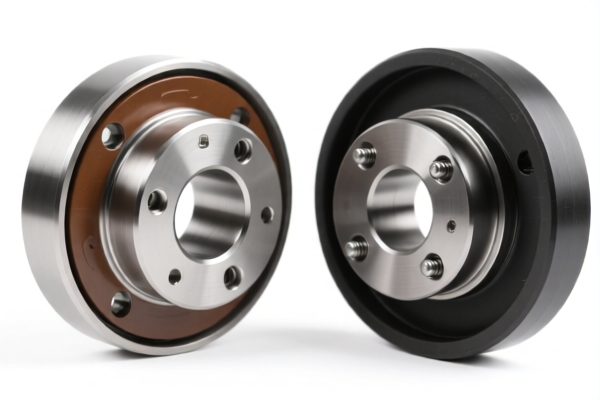
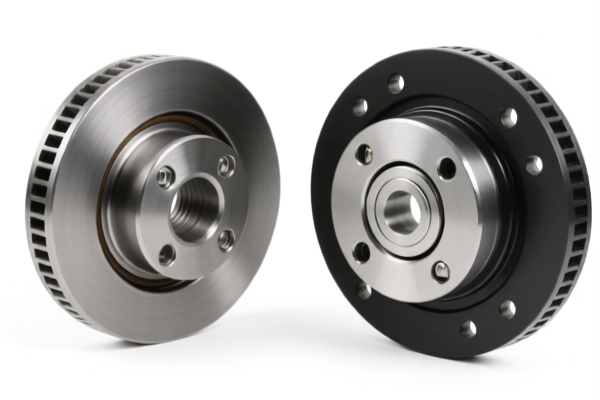
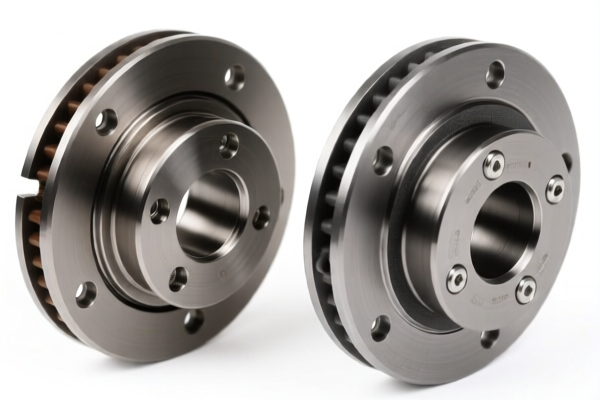
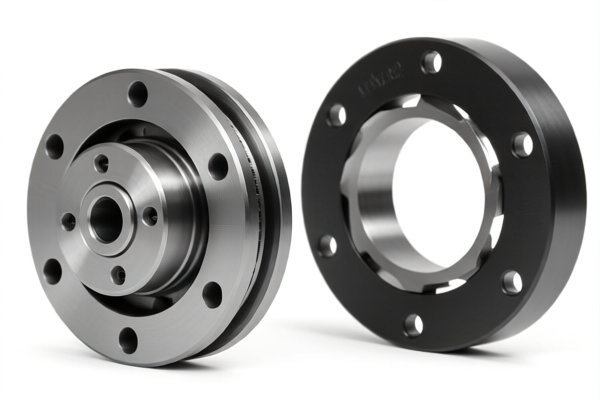
AI Analysis
🔒 Electromagnetic Lock (Magnetic Lock)
🌐 HS Code Reference & Customs Clearance Guide | 2026 Latest Tariff Analysis | Professional Clearance Strategy
📌 I. Product Definition & Classification: Do You Really Understand "Magnetic Locks"?
Electromagnetic Locks, commonly known as "Magnetic Locks" or "Maglocks," are electronic security devices that secure doors using powerful electromagnetic forces. In international trade, they are classified under Chapter 83 (Miscellaneous Manufactured Articles), specifically as Locks (8301).
Key Classification Logic: 1. Function: They are locking devices, falling under the "Locks" category. 2. Material: Based on common sense and industry standards, the core housing, armature plate, and internal components are primarily made of ferrous metals (iron/steel). Plastic components are minor and do not change the essential character. 3. Type: They are typically "other locks" (not key-operated in the traditional mechanical sense, but electrically operated).
⚠️ Critical Distinction:
- If the lock is made of base metal (iron, steel, brass, etc.) → It falls under 8301.
- If it were entirely made of plastic (extremely rare for security maglocks) → It might fall elsewhere, but this is not the standard case.
- Sub-category: Most maglocks are classified as "Other locks" (8301.40) rather than "Padlocks" (8301.10), though some customs authorities may accept the Padlock code (8301.10) as a "catch-all" if specific "Other Locks" definitions are ambiguous. Both codes in the data below are highly relevant.
📦 II. HS Code Classification Details (2026 Latest Tariff Authority对照)
| HS Code | Product Description | Application Scenario | Material Basis |
|---|---|---|---|
8301.40.60.30 |
Other locks, of base metal | Standard electromagnetic locks for doors, cabinets, and security gates | ✅ Base Metal (Iron/Steel) |
8301.10.60.80 |
Padlocks, of base metal | Used as a "catch-all" for electronic locks if "Other Locks" is deemed inapplicable; relies on common sense of metal construction | ✅ Base Metal (Iron/Steel) |
🔍 Key Analysis from Data:
- Code8301.40.60.30: The most direct match. "Magnetic Lock" is a type of lock. It is made of base metal (implied by common sense and functional necessity for strength). It fits the "Other locks" description.
- Code8301.10.60.80: Also a strong candidate. Some customs systems classify electronic locks under padlocks if they are standalone units. The summary notes that since the name doesn't exclude specific structures, and it's made of metal, it fits the "Other" category under Padlocks.
- Conflict Resolution: If unsure,8301.40.60.30is generally more accurate for "Other Locks," but8301.10.60.80is often accepted due to the "base metal" characteristic. Both are valid potential classifications, but the tax rates differ slightly.
💰 III. 2026 Latest Tariff Rate Breakdown (Including Surcharges & Policy Add-ons)
✅ Applicable Country: United States (US)
✅ Origin: China (CN)
✅ Effective Date: Current rates apply (including Section 301 and Section 122 tariffs)
🎯 1. HS Code 8301.40.60.30 — Other Locks, of Base Metal
| Item | Content |
|---|---|
| Base Tariff | 5.7% (ad valorem) |
| Section 301 Surcharge | +7.5% (List 4B / 2024 Adjustments) |
| Section 122 Tariff | +10% (Specific to certain security/access control items from China) |
| Total Tax Rate | 23.2% |
| Tax Calculation | CIF Value × 23.2% |
| De Minimis Exemption? | ❌ NO (Section 301 and 122 tariffs apply; low-value shipments are NOT exempt from these specific surcharges) |
| Legal Basis Path | USITC:8301.40.60.30 → SECTION301:8301.40.60.30 → SECTION122:8301.40.60.30 |
📌 Explanation:
- The 5.7% is the standard Most Favored Nation (MFN) rate for base metal locks.
- The 7.5% is the additional tariff from the Trade Act of 1974, Section 301 (targeting Chinese goods).
- The 10% is the additional tariff under Section 122 (often applied to specific security or strategic items, or as a specific line item surcharge).
- Total: 23.2% is a significant cost factor.
🎯 2. HS Code 8301.10.60.80 — Padlocks, of Base Metal
| Item | Content |
|---|---|
| Base Tariff | 6.1% (ad valorem) |
| Section 301 Surcharge | +7.5% (List 4B / 2024 Adjustments) |
| Section 122 Tariff | +10% (Specific to certain security/access control items from China) |
| Total Tax Rate | 23.6% |
| Tax Calculation | CIF Value × 23.6% |
| De Minimis Exemption? | ❌ NO (Same as above) |
| Legal Basis Path | USITC:8301.10.60.80 → SECTION301:8301.10.60.80 → SECTION122:8301.10.60.80 |
📌 Note:
- This code has a slightly higher base rate (6.1% vs 5.7%), leading to a 0.4% higher total tax.
- However, if customs officials are uncertain about "Other Locks" vs. "Padlocks," this code is often used as a safe, material-based fallback.
- Recommendation: If the lock is clearly a door-mounted magnetic lock,8301.40.60.30is technically more precise. But if you want to minimize risk of rejection, consult a broker on which code their specific port prefers.
🛠️ IV. Customs Clearance Practical Advice (Real-World Pitfall Guide)
✅ 1. Required Documentation Checklist (Must-Have)
| Document | Required | Explanation |
|---|---|---|
| ✅ Product Specification Sheet | ✔️ | Must clearly state: "Electromagnetic Lock," "Voltage: 12V/24V DC," "Hold Force: XXX lbs." |
| ✅ Product Photos | ✔️ | Clear images showing the magnet body, armature plate, and wiring. Must show metal construction. |
| ✅ Commercial Invoice | ✔️ | Describe as "Electromagnetic Lock, Base Metal, Model XYZ." Avoid vague terms like "Security Device." |
| ✅ HS Code Justification | ✔️ | Include a brief note: "Made of base metal (iron/steel), classified as Other Locks under 8301.40." |
| ✅ Certificate of Origin (CO) | ✔️ | If applicable for preferential treatment in other markets (not US). |
| ✅ Section 301/122 Tariff Acknowledgment | ✔️ | Confirm awareness of additional duties. |
✅ 2. Declaration Tips (Key Mantra)
🔥 "Metal Body, Electronic Mind, 8301, Don't Bind!"
| Scenario | Correct Declaration | Wrong Practice |
|---|---|---|
| Standard Maglock | 8301.40.60.30 |
Misdeclare as "Electronics" → 0% base but high risk of reclassification + penalties |
| Maglock with Plastic Housing | Still 8301.40.60.30 (Base Metal Character) |
Declare as "Plastic Parts" → Incorrect, will be rejected |
| Complete Access Control System | Split: Lock as 8301.40.60.30, Controller as 8537.10.00.00 |
Bundle everything as one item → Complex valuation issues |
| Small Sample/Shipment | Declare accurately | Rely on De Minimis ($800) to avoid tariffs → FAILS for Section 301/122 items |
⚠️ Critical Warning:
- De Minimis (Section 321) does NOT apply to goods subject to Section 301 or Section 122 tariffs.
- Even if the value is under $800, you MUST pay the 23.2%-23.6% tax.
- Do not try to split shipments to stay under $800 to avoid taxes; CBP tracks this and may seize goods.
✅ 3. Special Cases Handling
| Scenario | Handling Advice |
|---|---|
| OEM/White Label Locks | Ensure the invoice reflects the actual manufacturer or "Made in China." No origin laundering. |
| Lock + Power Supply Unit | Declare separately: Lock (8301.40.60.30) and PSU (8504.40.00.00). Different tax rates apply to PSU. |
| High-Security Maglocks | If labeled "Anti-Tamper" or "Biometric," still classify as Lock if the primary function is locking. |
| U.S. Assembled from Chinese Parts | If substantial transformation occurs in the US, origin may change, but Section 301 may still apply to the Chinese content. Consult a trade lawyer. |
🌍 V. Global Market Comparison (2026 Latest)
| Country/Region | Recommended HS Code | Tariff Rate | Certification | Notes |
|---|---|---|---|---|
| 🇺🇸 USA | 8301.40.60.30 |
23.2% | UL, FCC (if electronic) | High tariff due to 301/122 |
| 🇨🇳 China | 8301.40.60.30 |
~6-10% | CCC | No surcharges for import into China |
| 🇪🇺 EU | 8301.40.00 |
0-2.7% | CE, RoHS | No major surcharges |
| 🇬🇧 UK | 8301.40.00 |
0-2.7% | UKCA | Post-Brexit rules apply |
| 🇦🇺 Australia | 8301.40.00 |
5% | SAA | No Section 301 equivalent |
📌 Conclusion:
- The USA is the only major market with these high surcharges (23.2%+).
- Export to EU/UK/Asia is significantly cheaper in terms of tariffs.
- For US shipments, cost planning must include the 23.2% tax burden.
📌 VI. Common Errors & Pitfall Guide (Blood & Tears Lessons)
❌ Mistake 1: Claiming De Minimis for maglocks under $800
👉 Consequence: Goods held at border, back-taxed with interest, and potential fines.
👉 Reason: Section 301 and 122 tariffs are not exempt from de minimis.
❌ Mistake 2: Declaring as "Parts of Access Control Systems" (8537)
👉 Consequence: Incorrect classification. If deemed a lock, reclassified to 8301 + back taxes.
👉 Reason: Primary function is locking, not just control.
❌ Mistake 3: Ignoring Section 122 Tariff
👉 Consequence: Underpayment by 10%. CBP audit will find this.
👉 Reason: Section 122 applies to specific "other" items, including some security hardware.
✅ Correct Approach:
"Electromagnetic Lock, Base Metal, 12V DC, Model ML-100, Made in China"
- HS:8301.40.60.30
- Tax: 23.2%
- Ready for CBP inspection.
🎯 VII. Conclusion: Professional Declaration, Cost Control, Efficiency!
🎯 Remember the Mantra:
🔹 "Magnetic Locks are Locks, Not Just Electronics!"
🔹 "23.2% Tax is Real, De Minimis is NOT!"
🔹 "Base Metal is Key, Declare Accurately!"
📌 Pro Tip:
If you are importing large volumes, consider:
1. Advance Ruling (CBP Ruling): Apply for a formal classification ruling to lock in the HS Code and tax rate.
2. Supply Chain Adjustment: If possible, source maglocks from non-China countries (e.g., Vietnam, India) to avoid Section 301/122 tariffs.
3. Bonded Warehouse: Use a foreign trade zone (FTZ) to defer or reduce duties if re-exporting.
📣 Take Action Now:
📞 Contact a Licensed Customs Broker + Provide Product Specs + Confirm HS Code
🚀 Ensure Your Electromagnetic Locks Clear Customs Smoothly, on Time, and Without Surprises!
✨ Professional Clearance Starts with Precise Classification!
💼 Every Dollar Saved in Tariffs is Pure Profit!
Customer Reviews
About HS Code Classification
The Harmonized System (HS) is an internationally standardized nomenclature developed by the World Customs Organization (WCO) to classify traded products. Over 200 countries use the HS system as the basis for customs tariffs, trade statistics, and import/export regulations.
Each HS code follows a hierarchical structure:
- Chapter (2 digits) — Broad category of goods (e.g., Chapter 84: Machinery and Mechanical Appliances)
- Heading (4 digits) — More specific grouping within the chapter
- Subheading (6 digits) — Internationally standardized breakdown, used by all WCO member countries
- National subdivisions (8-10 digits) — Country-specific extensions for further classification, such as US HTSUS 10-digit codes
Correct HS code classification is essential for smooth customs clearance, accurate duty payment, and compliance with trade regulations. Misclassification can lead to customs delays, overpayment of duties, or penalties.
When importing from CN to US, the applicable tariff rates may include:
- Most-Favored-Nation (MFN) rate — The standard duty rate applied to WTO members
- General rate — Applied to countries without trade agreements
- Trade remedy duties — Additional tariffs such as Section 301 (anti-dumping), Section 232 (national security), or countervailing duties
The information provided on this page is for reference purposes only. For official classification, please consult with your local customs authority or a licensed customs broker.