Electromagnetic Radiation Detector
CN → US| HS Code | Tariff Rate | Origin | Destination | Doc |
|---|---|---|---|---|
| 9022294000 | 10.0% | CN | US | Official Doc |
| 9030100000 | 35.0% | CN | US | Official Doc |
| 9031499000 | 35.0% | CN | US | Official Doc |
| 9031808085 | 10.0% | CN | US | Official Doc |
| 9030890100 | 35.0% | CN | US | Official Doc |
Product Images
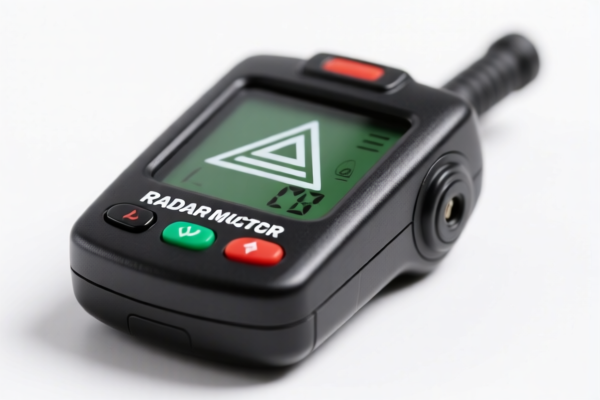
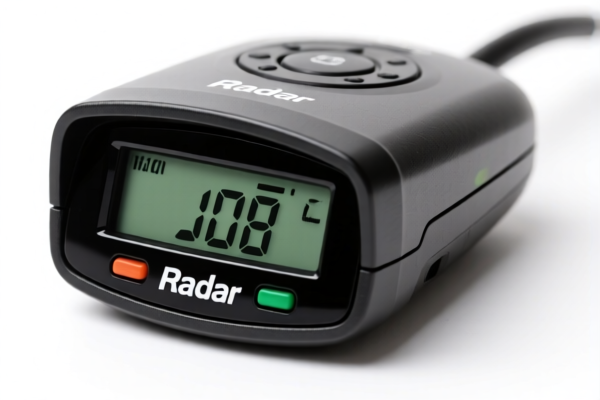


AI Analysis
⚡ Electromagnetic Radiation Detector (EMRD)
🌐 HS Code Reference & Customs Clearance Guide | 2026 Latest Tariff Analysis | Professional Compliance Strategy
📌 I. Product Definition & Classification: Understanding "Electromagnetic Radiation Detectors"
An Electromagnetic Radiation Detector (EMRD) is a specialized instrument used to measure, monitor, or detect the presence of electromagnetic fields or ionizing radiation. In international trade, these devices are often classified under Chapter 90 (Optical, photographic, cinematographic, measuring, checking, precision, medical or surgical instruments), but the specific subheading depends heavily on the detection principle (e.g., non-ionizing EM fields vs. ionizing radiation like X-rays/gamma rays).
⚠️ Key Distinction:
- If the device detects non-ionizing electromagnetic radiation (e.g., RF, microwaves, general EMF) → It often falls under 9031 (Other measuring/checking instruments) or 9022 (Medical/physical/chemical analysis instruments).
- If the device detects ionizing radiation (X-rays, Gamma rays, Alpha/Beta particles) → It falls under 9022 (Specifically for ionizing radiation).
- Crucial Note: Misclassification between "General EMF" and "Ionizing Radiation" can lead to drastic tariff differences due to Section 301 and IEEPA tariffs.
📦 II. HS Code Classification Details (2026 Latest Tariff Authority对照)
Based on the provided data, here are the four possible classifications for Electromagnetic Radiation Detectors:
| HS Code | Product Description & Logic | Tariff Rate (Total) | Tax Breakdown |
|---|---|---|---|
| 9031.49.90.00 | Electromagnetic Radiation Detector (Non-Ionizing) Classified as an optical/other measuring instrument. Used for general EM detection, consistent with "Other optical instruments." |
35.0% | Base: 0.0% Section 301: 25.0% IEEPA (Sec 122): 10% |
| 9031.80.80.85 | Other Measuring/Checking Instruments General purpose detector not specified elsewhere. Fits the "Other" category for measurement devices. |
10.0% | Base: 0.0% Section 301: 0.0% IEEPA (Sec 122): 10% |
| 9030.89.01.00 | Ionizing Radiation Detector Detects Alpha, Beta, Gamma, X-rays, or Cosmic rays. High consistency with "measurement of ionizing radiation." |
35.0% | Base: 0.0% Section 301: 25.0% IEEPA (Sec 122): 10% |
| 9022.29.80.00 | Radiation Detection Apparatus (Ionizing) Device operating on ionizing radiation principles. Fits "Other apparatus using ionizing radiation." |
35.0% | Base: 0.0% Section 301: 25.0% IEEPA (Sec 122): 10% |
| 9022.29.40.00 | Radiation Detection Apparatus (Ionizing - Specific) Device utilizing ionizing radiation principles. Specific subheading for certain radiation tools. |
10.0% | Base: 0.0% Section 301: 0.0% IEEPA (Sec 122): 10% |
🔍 Critical Insight:
- Two Distinct Tariff Paths:
1. High Tariff Path (35%): Applies to codes9031.49.90.00,9030.89.01.00, and9022.29.80.00. These incur the 25% Section 301 duty PLUS the 10% IEEPA duty.
2. Low Tariff Path (10%): Applies to codes9031.80.80.85and9022.29.40.00. These only incur the 10% IEEPA duty, avoiding the 25% Section 301 penalty.
- Why the Difference? The 25% Section 301 tariff applies to specific manufacturing categories. If your EMRD is classified under certain "optical/measuring" or "specific radiation" subheadings, it triggers Section 301. However, other "general" or specific "ionizing" subheadings may be exempt from Section 301 but still subject to IEEPA.
💰 III. 2026 Latest Tariff Rate Breakdown (Detailed Policy Analysis)
✅ Applicable Country: USA (US)
✅ Origin: China (CN)
✅ Effective Date: Current regulations apply (Note: IEEPA 10% is ongoing; Section 301 25% is active for covered items).
🎯 1. High Tariff Scenario: 35% Total (Codes: 9031.49.90.00, 9030.89.01.00, 9022.29.80.00)
| Item | Content |
|---|---|
| Base MFN Rate | 0.0% |
| Section 301 Duty (FTN 9903.88.01) | +25.0% Applies to specific measuring/optical instruments and certain radiation apparatus. |
| IEEPA Section 122 Duty | +10.0% Applied to all Chinese-origin goods listed in the IEEPA tariff schedule. |
| Total Effective Rate | 35.0% |
| Tax Calculation | CIF Value × 35% |
| De Minimis Exemption | ❌ NO (Section 301 and IEEPA duties are not eligible for de minimis exemption under current enforcement). |
| Legal Path | USITC:9031.49.90.00 → FOOTNOTE:9903.88.01 (+25%) + IEEPA:9903.01.24 (+10%) |
📌 Explanation:
- The 25% Section 301 is the major cost driver here. It targets strategic industries, including advanced measurement and radiation detection equipment.
- The 10% IEEPA is an additional layer on top, specifically for Chinese imports.
- Result: A $10,000 shipment incurs $3,500 in duties.
🎯 2. Low Tariff Scenario: 10% Total (Codes: 9031.80.80.85, 9022.29.40.00)
| Item | Content |
|---|---|
| Base MFN Rate | 0.0% |
| Section 301 Duty | 0.0% These specific subheadings are NOT listed under the 25% Section 301 tariff list. |
| IEEPA Section 122 Duty | +10.0% Still applies as it is a broad Chinese-origin tariff. |
| Total Effective Rate | 10.0% |
| Tax Calculation | CIF Value × 10% |
| De Minimis Exemption | ❌ NO (IEEPA duties are generally not exempt). |
| Legal Path | USITC:9031.80.80.85 → IEEPA:9903.01.24 (+10%) |
📌 Explanation:
- These codes represent "Other" measuring instruments or specific ionizing radiation devices that are exempt from Section 301.
- Result: A $10,000 shipment incurs only $1,000 in duties.
- Strategy: If your product qualifies for these subheadings, the savings are 25% of the CIF value.
🛠️ IV. Customs Clearance Practical Advice (Avoid Pitfalls)
✅ 1. Documentation Checklist (Must-Haves)
| Document | Required? | Description |
|---|---|---|
| ✅ Product Specification Sheet | ✔️ | Must clearly state: Detection range, frequency, type of radiation (EM vs. Ionizing), and detection principle. |
| ✅ Technical Manual/Principle Description | ✔️ | Explain how it works. Is it detecting non-ionizing EMF (e.g., cell towers) or ionizing radiation (e.g., X-rays)? This is key for HS Code selection. |
| ✅ Product Photos | ✔️ | Clear images of the device, display screen, and any labels showing model/specs. |
| ✅ Commercial Invoice | ✔️ | Must accurately describe the product. Avoid vague terms like "Detector." Use "Electromagnetic Field Meter" or "X-Ray Radiation Detector." |
| ✅ Certificate of Origin (CO) | ✔️ | Essential for verifying Chinese origin and applying IEEPA/Section 301 rates. |
| ✅ FCC ID (if applicable) | ✔️ | If the device emits RF signals, FCC compliance is mandatory for entry. |
✅ 2. Classification Strategy (Key Tips)
🔥 "Identify the Radiation Type, Choose the Code, Save the Tariff!"
| Scenario | Recommended HS Code | Tariff | Why? |
|---|---|---|---|
| General EMF Meter (Non-ionizing, e.g., for 5G, power lines) | 9031.80.80.85 |
10% | "Other" measuring instruments often escape Section 301. |
| Optical/EM Hybrid Detector | 9031.49.90.00 |
35% | Classified under "Other optical instruments," which may trigger Section 301. |
| X-Ray/Gamma Ray Detector (Ionizing) | 9022.29.40.00 |
10% | Specific ionizing radiation codes may be exempt from Section 301. |
| Other Ionizing Radiation Detector | 9022.29.80.00 |
35% | "Other" ionizing apparatus may still trigger Section 301 depending on exact subheading interpretation. |
| Alpha/Beta/Gamma/Cosmic Ray Detector | 9030.89.01.00 |
35% | Specific mention of ionizing radiation types triggers Section 301. |
⚠️ Warning:
- Do NOT assume all "Radiation Detectors" are the same.
- Non-ionizing (EMF) vs. Ionizing (X-Ray/Gamma) is the primary differentiator.
- Even within the same chapter, one decimal place change can mean a 25% tariff difference.
✅ 3. Special Cases
| Situation | Advice |
|---|---|
| OEM Custom Detectors | Provide design documents to prove the intended use. If it’s a specialized tool for industrial safety (non-ionizing), argue for 9031.80.80.85. |
| Dual-Use Devices | If a device detects both EMF and Ionizing radiation, customs may classify it based on its primary function. Document the primary use case clearly. |
| Low-Value Shipments | Even if under $800 (de minimis), IEEPA duties (10%) may still apply if enforced strictly. Consult your broker. |
🌍 V. Global Market Comparison (2026)
| Country/Region | Recommended HS Code | Total Tariff (China Origin) | Key Certification | Notes |
|---|---|---|---|---|
| 🇺🇸 USA | Varies (See above) | 10% or 35% | FCC (for EMF), NRTL (for safety) | Critical: Section 301 applies to 35% cases. |
| 🇨🇳 China | 9031 or 9022 series | 0% - 5% | CCC | Domestic trade has lower barriers. |
| 🇪🇺 EU | 9031 or 9022 series | 0% - 4.5% | CE Marking, RoHS | No Section 301 equivalent. |
| 🇬🇧 UK | 9031 or 9022 series | 0% - 4.5% | UKCA Marking | Post-Brexit rules may vary. |
📌 Conclusion:
- The USA is the most complex market due to Section 301 and IEEPA.
- Optimizing HS Code selection can save 25% of the product value in duties.
📌 VI. Common Mistakes & Pitfalls (Lessons Learned)
❌ Mistake 1: Classifying an X-Ray Detector as a General EMF Meter
👉 Consequence: Misdeclaration. Customs may reclassify it to 9030.89.01.00 (35%) or penalize for fraud.
❌ Mistake 2: Assuming all "Detectors" are exempt from Section 301
👉 Consequence: Unexpected $3,500 duty on a $10,000 shipment. Many measuring instruments are still targeted.
❌ Mistake 3: Vague Description "Radiation Detector"
👉 Consequence: Customs holds the shipment for further review, causing delays and storage fees.
✅ Correct Practice:
"Electromagnetic Field Meter, Non-Ionizing, Frequency Range 10kHz-40GHz, Model XYZ, for Industrial Safety Compliance"
OR
"Digital X-Ray Dosimeter, Ionizing Radiation Detector, Range 0.1-100 mSv, Model ABC"
🎯 VII. Conclusion: Professional Classification, Cost Savings
🎯 Remember the Mantra:
🔹 "Ionizing vs. Non-Ionizing, Check the 25%, Don't Guess the 10%!"
🔹 "Code 9031.80 or 9022.29.40 can save you 25%!"
📌 Pro Tip:
If your product is a non-ionizing EMF detector, strongly consider arguing for 9031.80.80.85 to avoid the 25% Section 301 tariff.
If it is an ionizing radiation detector, check if 9022.29.40.00 applies, which also avoids Section 301.
📣 Immediate Action:
📞 Consult a Customs Broker to review your technical specs.
📄 Request an Advance Ruling from US Customs if unsure.
🚀 Optimize your HS Code to reduce landed costs by up to 25%.
✨ Precision in Classification is Profitability!
💼 Don't let a 0.0% vs 25.0% difference cost you your margin!
Customer Reviews
About HS Code Classification
The Harmonized System (HS) is an internationally standardized nomenclature developed by the World Customs Organization (WCO) to classify traded products. Over 200 countries use the HS system as the basis for customs tariffs, trade statistics, and import/export regulations.
Each HS code follows a hierarchical structure:
- Chapter (2 digits) — Broad category of goods (e.g., Chapter 84: Machinery and Mechanical Appliances)
- Heading (4 digits) — More specific grouping within the chapter
- Subheading (6 digits) — Internationally standardized breakdown, used by all WCO member countries
- National subdivisions (8-10 digits) — Country-specific extensions for further classification, such as US HTSUS 10-digit codes
Correct HS code classification is essential for smooth customs clearance, accurate duty payment, and compliance with trade regulations. Misclassification can lead to customs delays, overpayment of duties, or penalties.
When importing from CN to US, the applicable tariff rates may include:
- Most-Favored-Nation (MFN) rate — The standard duty rate applied to WTO members
- General rate — Applied to countries without trade agreements
- Trade remedy duties — Additional tariffs such as Section 301 (anti-dumping), Section 232 (national security), or countervailing duties
The information provided on this page is for reference purposes only. For official classification, please consult with your local customs authority or a licensed customs broker.