Electronic Apparatus
CN → US| HS Code | Tariff Rate | Origin | Destination | Doc |
|---|---|---|---|---|
| 8544429090 | 87.6% | CN | US | Official Doc |
| 8542900000 | 60.0% | CN | US | Official Doc |
| 8542390090 | 60.0% | CN | US | Official Doc |
| 8544499000 | 38.9% | CN | US | Official Doc |
| 8541590040 | 10.0% | CN | US | Official Doc |
Product Images
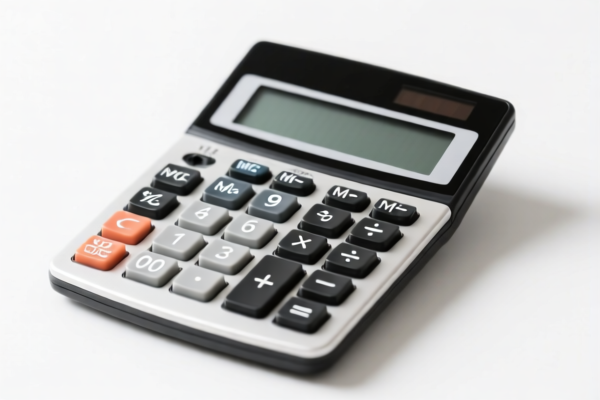
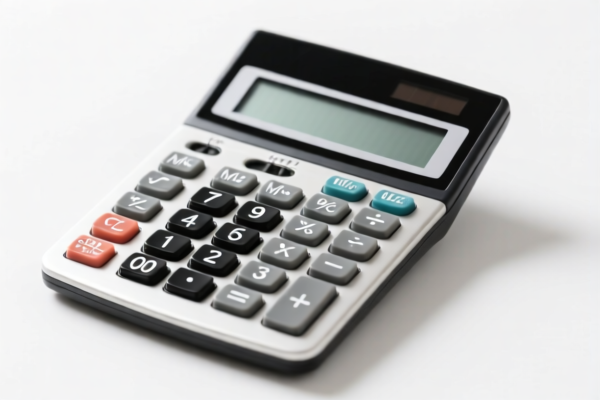
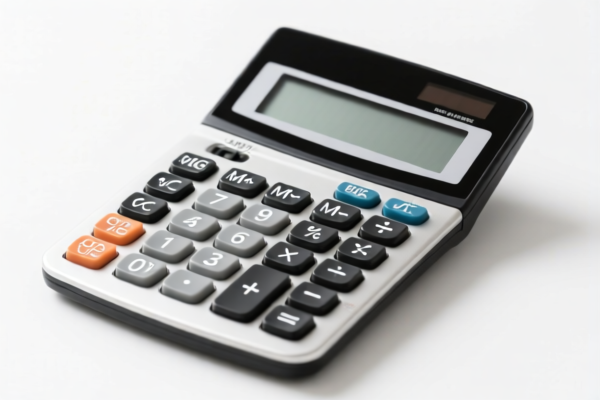
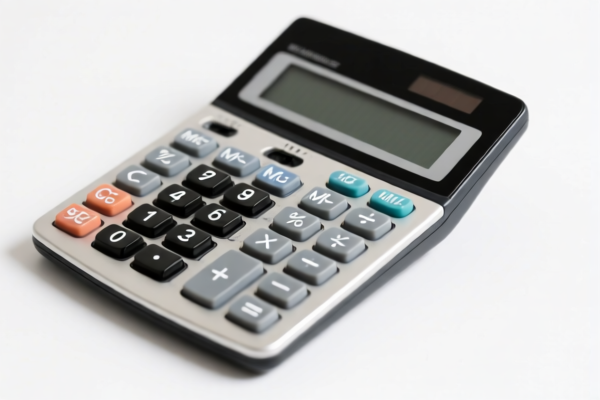
AI Analysis
⚡ Electronic Apparatus: Strategic HS Code Classification & Customs Clearance Guide (2026)
🌐 HS Code Reference & Customs Clearance Strategy | Latest Tariff Analysis | Professional Compliance Protocol
📌 I. Product Definition & Classification: Decoding "Electronic Apparatus"
"Electronic Apparatus" is a broad, generic term in international trade that requires precise classification based on function, composition, and end-use. Misclassification can lead to severe tariff penalties, especially under US Section 301 and IEEPA sanctions targeting Chinese goods.
Below, we break down five potential HS Code classifications for generic "Electronic Apparatus," explaining why each applies, the corresponding tax burden, and critical customs advice.
⚠️ Key Warning:
Generic terms like "Electronic Apparatus" are red flags for Customs. You must specify:
- Is it a conductor? (HS 8544)
- Is it an integrated circuit/component? (HS 8542)
- Is it a diode/transistor? (HS 8541)
Failure to specify leads to misclassification penalties.
📦 II. HS Code Classification Matrix & Tariff Breakdown
| HS Code | Summary Description | Total Tax Rate | Tax Composition (China Origin → US) | Legal Basis |
|---|---|---|---|---|
8544.42.90.90 |
Parts for electronic equipment; catch-all category for other wires/cables | 87.6% | Base: 2.6% Add-on: 25% 122 Clause (Steel/Alu/Cu): 50% |
USITC 8544.42.90.90 + 301/122 Clauses |
8542.90.00.00 |
Parts of electronic integrated circuits & modules | 60.0% | Base: 0.0% Add-on: 50% 122 Clause: 10% |
USITC 8542.90.00.00 + 301 Clause |
8542.39.00.90 |
Other electronic integrated circuits/components | 60.0% | Base: 0.0% Add-on: 50% 122 Clause: 10% |
USITC 8542.39.00.90 + 301 Clause |
8544.49.90.00 |
Other electric conductors; not specifically provided for | 38.9% | Base: 3.9% Add-on: 25% 122 Clause: 10% |
USITC 8544.49.90.00 + 301 Clause |
8541.59.00.40 |
Diodes, transistors, & similar semiconductors; other | 10.0% | Base: 0.0% Add-on: 0.0% 122 Clause: 10% |
USITC 8541.59.00.40 + Minimal Sanctions |
💰 III. Detailed Tax Analysis & Legal Framework
🎯 1. 8544.42.90.90 – The Highest Risk Category
Why it applies:
- This code is a "catch-all" for wires, cables, and other conductors used in electronic equipment that do not fit more specific subheadings (e.g., fiber optics, coaxial cables).
- If your "Electronic Apparatus" is a wiring harness, cable assembly, or connector, it likely falls here.
Tax Breakdown:
- Base Tariff: 2.6%
- Section 301 Add-on: 25%
- Section 122 Clause (Steel/Aluminum/Copper): 50%
- Total: 87.6%
📌 Critical Insight:
- The 50% Section 122 tariff applies if the conductors contain significant amounts of steel, aluminum, or copper.
- This is the most expensive classification. Avoid this unless absolutely necessary.
- Compliance Tip: If the product is a simple cable with minimal metal content, argue for a lower subheading or reclassify as a component (8542).
🎯 2. 8542.90.00.00 & 8542.39.00.90 – Integrated Circuit Components
Why it applies:
- These codes cover parts of integrated circuits (ICs) and semiconductor devices.
- If your "Electronic Apparatus" is a chip, module, PCB with mounted components, or semiconductor wafer, it belongs here.
- 8542.90.00.00 is for parts/modules; 8542.39.00.90 is for other ICs.
Tax Breakdown:
- Base Tariff: 0.0%
- Section 301 Add-on: 50%
- Section 122 Clause: 10%
- Total: 60.0%
📌 Critical Insight:
- The 50% Section 301 tariff is standard for most Chinese-made electronics.
- No base duty, but the add-on is punitive.
- Compliance Tip: Ensure the product is clearly defined as an IC or semiconductor component, not a finished device. If it’s a finished board, consider8542.90.00.00.
🎯 3. 8544.49.90.00 – Other Electric Conductors
Why it applies:
- This is a residual category for electric conductors not specified elsewhere (e.g., specialized cables, insulated wiring).
- If your "Electronic Apparatus" is a wiring assembly that doesn’t fit 8544.42, it may fall here.
Tax Breakdown:
- Base Tariff: 3.9%
- Section 301 Add-on: 25%
- Section 122 Clause: 10%
- Total: 38.9%
📌 Critical Insight:
- Lower risk than8544.42but still high.
- Compliance Tip: Provide technical specs showing the conductor type (e.g., PVC-insulated, copper core) to justify this code over the catch-all.
🎯 4. 8541.59.00.40 – Diodes & Transistors (Lowest Risk)
Why it applies:
- This code covers semiconductor devices like diodes, transistors, and similar components.
- If your "Electronic Apparatus" is a discrete semiconductor part, it may qualify.
Tax Breakdown:
- Base Tariff: 0.0%
- Section 301 Add-on: 0.0%
- Section 122 Clause: 10%
- Total: 10.0%
📌 Critical Insight:
- Lowest tariff in the list!
- Compliance Tip: Ensure the product is clearly a discrete component (e.g., "NPN Transistor") and not a module. If it’s a module, it will be reclassified to8542(60%).
🛠️ IV. Customs Clearance Strategy & Best Practices
✅ 1. Documentation Requirements
To avoid misclassification, provide:
| Document | Purpose |
|---|---|
| Technical Datasheet | Define if it’s a conductor, IC, or semiconductor. |
| Circuit Diagram | Prove it’s a component, not a finished device. |
| Bill of Materials (BOM) | List all materials (e.g., copper, steel, plastic) to assess Section 122 applicability. |
| Product Photos | Show form factor (e.g., chip, cable, board). |
| Country of Origin Certificate | Confirm China origin for tariff application. |
✅ 2. Classification Strategy
- Avoid "Electronic Apparatus" as a generic description. Use precise terms:
- ✅ "Copper Wire Harness, PVC Insulated" →
8544.42.90.90 - ✅ "IC Module, SMD Type" →
8542.90.00.00 -
✅ "NPN Transistor, TO-92 Package" →
8541.59.00.40 -
Prioritize Low-Tariff Codes:
- If your product is a semiconductor, aim for
8541.59.00.40(10%). - If it’s a component, argue for
8542(60%) over8544(87.6%).
✅ 3. Special Case Handling
- Section 122 Clause (Steel/Alu/Cu):
- If your product contains >50% copper or aluminum, the 50% add-on applies.
-
Mitigation: Use alternative materials (e.g., aluminum-coated steel) or reclassify as a non-metallic component.
-
De Minimis Exemption:
- ❌ Not applicable for these HS Codes. All shipments are subject to full tariffs.
🌍 V. Global Market Comparison (2026)
| Country | Recommended HS Code | Tariff (China Origin) | Notes |
|---|---|---|---|
| 🇺🇸 USA | 8541.59.00.40 |
10% | Lowest risk; best for semiconductors. |
| 🇪🇺 EU | 8541.59.00.40 |
0% (if classified as component) | No Section 301/122 clauses. |
| 🇨🇳 China | 8541.59.00.40 |
0% | Domestic trade has no export tariffs. |
| 🇯🇵 Japan | 8541.59.00.40 |
0% | Low tariffs for electronic components. |
📌 Conclusion:
- The US market is the most punitive for electronic apparatus from China.
- Prioritize8541.59.00.40for semiconductors to minimize costs.
- Avoid8544.42.90.90unless unavoidable.
📌 VI. Common Errors & Pitfalls
❌ Error 1: Using "Electronic Apparatus" as the product name.
👉 Result: Customs may classify as 8544.42.90.90 (87.6%) due to lack of specificity.
❌ Error 2: Misclassifying a cable as an IC.
👉 Result: Tariff drops from 87.6% to 60%, but penalties for misdeclaration apply.
❌ Error 3: Ignoring Section 122 Clause.
👉 Result: If copper content is high, expect an additional 50% tariff.
✅ Correct Approach:
"SMD NPN Transistor, 2N3904, TO-92, China Origin" →
8541.59.00.40(10%)
🎯 VII. Conclusion: Precision in Classification Saves Millions
🎯 Key Takeaways:
1. Be Specific: Never use "Electronic Apparatus" in declarations.
2. Prioritize Low-Tariff Codes: Aim for 8541.59.00.40 (10%) for semiconductors.
3. Avoid Catch-Alls: 8544.42.90.90 (87.6%) is the most expensive.
4. Document Everything: Provide datasheets, BOMs, and photos to justify classification.
📣 Action Items:
- ✅ Review BOM for metal content (Section 122).
- ✅ Specify product type in commercial invoices.
- ✅ Consult a customs broker for pre-classification rulings.
✨ Professional Clearance Starts with Precise Classification!
💼 Minimize Risk, Maximize Profit – Get Your HS Code Right Today!
Customer Reviews
About HS Code Classification
The Harmonized System (HS) is an internationally standardized nomenclature developed by the World Customs Organization (WCO) to classify traded products. Over 200 countries use the HS system as the basis for customs tariffs, trade statistics, and import/export regulations.
Each HS code follows a hierarchical structure:
- Chapter (2 digits) — Broad category of goods (e.g., Chapter 84: Machinery and Mechanical Appliances)
- Heading (4 digits) — More specific grouping within the chapter
- Subheading (6 digits) — Internationally standardized breakdown, used by all WCO member countries
- National subdivisions (8-10 digits) — Country-specific extensions for further classification, such as US HTSUS 10-digit codes
Correct HS code classification is essential for smooth customs clearance, accurate duty payment, and compliance with trade regulations. Misclassification can lead to customs delays, overpayment of duties, or penalties.
When importing from CN to US, the applicable tariff rates may include:
- Most-Favored-Nation (MFN) rate — The standard duty rate applied to WTO members
- General rate — Applied to countries without trade agreements
- Trade remedy duties — Additional tariffs such as Section 301 (anti-dumping), Section 232 (national security), or countervailing duties
The information provided on this page is for reference purposes only. For official classification, please consult with your local customs authority or a licensed customs broker.