Electronic Coated Paper Gasket
CN → US| HS Code | Tariff Rate | Origin | Destination | Doc |
|---|---|---|---|---|
| 4823906000 | 35.0% | CN | US | Official Doc |
| 4823908000 | 35.0% | CN | US | Official Doc |
| 8532250010 | 35.0% | CN | US | Official Doc |
| 3926904510 | 38.5% | CN | US | Official Doc |
Product Images
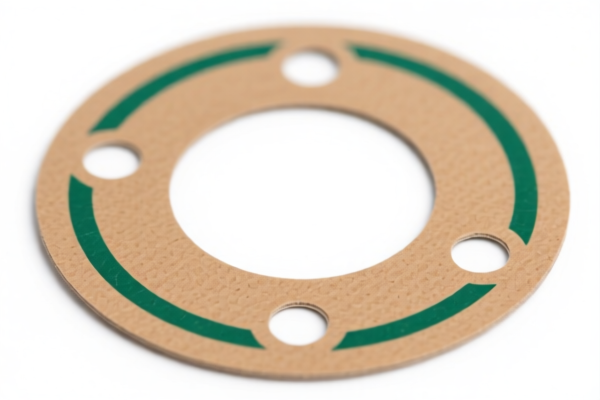
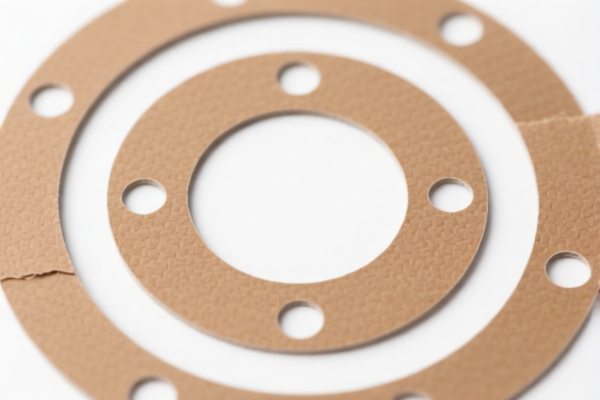
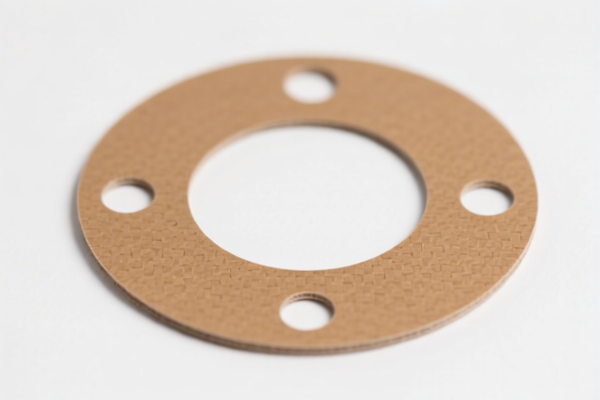
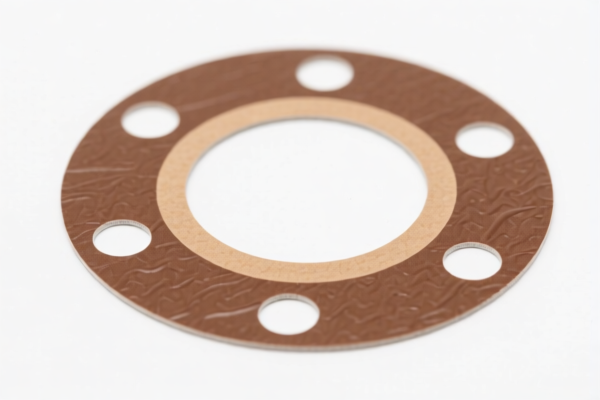
AI Analysis
🛡️ Electronic Coated Paper Gasket (Seals, Washers, & Insulators)
🌐 HS Code Reference & Clearance Guide | 2026 Latest Tariff Analysis | Professional Customs Strategy
📌 I. Product Definition & Classification: What is an "Electronic Coated Paper Gasket"?
An Electronic Coated Paper Gasket is a specialized sealing or insulating component used in electrical and electronic assemblies. It is not merely a "paper gasket" but a composite article where the paper base is treated with resins, plastics, or other coatings to provide electrical insulation, moisture resistance, or compression properties.
In international trade, these items are often confused between Chapter 48 (Paper Products) and Chapter 85 (Electrical Machinery/Parts). The correct classification depends on: 1. Function: Is it acting as a structural seal/gasket (Chapter 48) or an electrical component part (Chapter 85)? 2. Material: Is the paper merely the substrate, or is it impregnated/coated significantly to change its nature? 3. Specificity: Does it fall under specific subheadings for capacitors or general seals?
⚠️ Key Distinction Point:
- If the item is primarily a seal/gasket (used to prevent leakage or provide spacing) and is made of paper/plastic composites → It often falls under 4823 or 3926.
- If the item is specifically a part of a capacitor (e.g., dielectric material or terminal seal for AC/DC services) → It may fall under 8532.
- Crucial Note: The provided data shows a split. Some "coated paper" seals are classified under 4823 (High Tax), while specific capacitor parts are under 8532 (High Tax), and some plastic-based seals are under 3926 (Zero Tax). You must match your specific product composition to the correct HS Code.
📦 II. HS Code Classification Details (2026 Latest Tariff Reference)
Based on the provided data, here are the relevant HS Codes for electronic-related paper/plastic gaskets and seals.
| HS Code | Product Description | Material Composition | Tax Rate (Total) |
|---|---|---|---|
4823.90.60.00 |
Other articles of paper pulp/paper: Gaskets, washers, and other seals | Coated Paper or Paperboard | 25.0% |
4823.90.80.00 |
Other articles of paper pulp/paper: Gaskets, washers, and other seals | Other (Not specifically coated paper, or general paper articles) | 25.0% |
8532.25.00.10 |
Electrical capacitors, fixed; Parts: Dielectric of paper/plastics, AC service <300V | Capacitor Parts (Paper/Plastic dielectric) | 25.0% |
3926.90.45.10 |
Other articles of plastics: Gaskets, washers, and other seals (O-Rings) | Plastics (e.g., Rubberized Plastic, Polymer Composite) | 0.0% |
🔍 Critical Analysis:
-4823.90.60.00is the most direct match for "Coated Paper Gaskets". Despite being "electronic" in usage, if the primary material is paper (even coated), it often stays in Chapter 48 unless specifically defined as a capacitor part.
-8532.25.00.10is specific to Capacitor Parts. If your "coated paper gasket" is actually the dielectric layer or a terminal seal integral to a capacitor's function, this might be the correct code. However, it still carries a 25% tax.
-3926.90.45.10is the ONLY Zero-Tax option listed. This applies to Plastic seals (e.g., O-rings made of synthetic rubber or polymer). If your "paper gasket" is actually a plastic-coated fabric or synthetic polymer seal marketed as "paper-like" or used in similar electronic sealing applications, you MUST verify if it qualifies as "Plastics" under Chapter 39. If it is purely cellulose-based paper, it does NOT qualify for 0%.
💰 III. 2026 Tariff Rate Detailed Explanation
✅ Applicable Country: United States (US)
✅ Origin: China (CN)
✅ Effective Date: November 10, 2025 (and subsequent imports)
🎯 1. 4823.90.60.00 & 4823.90.80.00 — Paper Gaskets/Seals
| Item | Content |
|---|---|
| Base Tariff | 0.0% (ad valorem) |
| USITC Additional Tariff | +25.0% (Section 301 Measures) |
| Total Tax Rate | 25.0% |
| Tax Calculation | CIF Value × 25% |
| De Minimis Exemption | ❌ Not Eligible (Deny De Minimis) |
| Legal Basis | Section 301 Tariff List for Paper Articles |
📌 Explanation:
- Even though the base tariff is 0%, the 25% Section 301 additional duty applies to almost all paper products from China.
- Cost Impact: For a $10,000 shipment, you pay $2,500 in duties.
- Risk: Misclassifying a paper gasket as a plastic one (0%) to avoid this 25% tax is considered fraud if the material is indeed paper-based.
🎯 2. 8532.25.00.10 — Capacitor Parts (Paper/Plastic Dielectric)
| Item | Content |
|---|---|
| Base Tariff | 0.0% |
| USITC Additional Tariff | +25.0% |
| Total Tax Rate | 25.0% |
| Tax Calculation | CIF Value × 25% |
| De Minimis Exemption | ❌ Not Eligible |
📌 Explanation:
- Electrical components from China are heavily scrutinized. While they are "electrical parts," they are still subject to the 25% tariff if not specifically exempted (which most are not).
- This code is narrower. If your product is a general gasket and not a capacitor part, using this code may lead to classification errors and audits.
🎯 3. 3926.90.45.10 — Plastic Gaskets/O-Rings (ZERO TAX OPTION)
| Item | Content |
|---|---|
| Base Tariff | 0.0% |
| USITC Additional Tariff | 0.0% |
| Total Tax Rate | 0.0% |
| Tax Calculation | $0 |
| De Minimis Exemption | ❌ (N/A, as tax is 0%) |
📌 Strategic Insight:
- This is the ideal classification IF your product allows it.
- If your "Electronic Coated Paper Gasket" is actually made of polymer-based materials, silicone-coated fabric, or synthetic rubber, you should argue for Chapter 39.
- Verification: Check the Material Safety Data Sheet (MSDS). If the primary component is not cellulose paper, but a plastic/polymer, use3926.90.45.10.
- Warning: Do not force this classification if the product is 100% paper. Customs may reject it and assess the 25% tax plus penalties.
🛠️ IV. Customs Clearance Practical Advice (Avoiding Pitfalls)
✅ 1. Preparation Checklist (Must-Haves)
| Document | Required? | Purpose |
|---|---|---|
| ✅ Material Composition Sheet | ✔️ | Crucial! Proves whether the "paper" is actually cellulose (Ch 48) or a polymer/composite (Ch 39). |
| ✅ Product Images (Cross-section) | ✔️ | Shows if it’s solid plastic, layered paper, or fabric. |
| ✅ Usage Description | ✔️ | Is it a seal/gasket (4823/3926) or a capacitor part (8532)? |
| ✅ Commercial Invoice | ✔️ | Must accurately describe the item. Do not use vague terms like "Electronic Part." Use "Coated Paper Gasket" or "Plastic O-Ring." |
| ✅ Certificate of Origin | ✔️ | To verify origin and ensure correct tariff application. |
✅ 2. Classification Strategy (The "Golden Rule")
🔥 "Material Dictates Code, Function Supports It."
| Scenario | Recommended HS Code | Tax | Reason |
|---|---|---|---|
| Product is pure paper, coated with resin | 4823.90.60.00 |
25% | It is a paper article. |
| Product is a capacitor dielectric/seal | 8532.25.00.10 |
25% | It is a specific electrical part. |
| Product is plastic/rubber/synthetic polymer | 3926.90.45.10 |
0% | It is a plastic article. |
| Product is mixed material (Paper + Plastic) | Consult Expert | Risk | If plastic coating is significant, argue for Ch 39. If paper is core, Ch 48. |
✅ 3. Common Mistakes & Penalties
❌ Mistake 1: Calling a paper gasket a "Plastic Seal" to get 0% tax.
👉 Consequence: Customs audit → Back duties ($2,500 per $10k) + Penalties + Loss of credibility.
❌ Mistake 2: Calling a capacitor part a "General Gasket" (4823).
👉 Consequence: While the tax rate is similar (25%), it may trigger electrical compliance audits (FCC/UL) because it’s misdeclared.
❌ Mistake 3: Ignoring the "Coated" aspect.
👉 Tip: If the coating makes the item more plastic-like than paper-like, provide chemical analysis. The Essential Character test determines the chapter.
🌍 V. Global Market Comparison (2026)
| Market | Recommended HS Code | Tariff (China Origin) | Note |
|---|---|---|---|
| 🇺🇸 USA | 3926.90.45.10 (if plastic) or 4823.90.60.00 (if paper) |
0% (Plastic) vs 25% (Paper) | Critical Decision Point! |
| 🇪🇺 EU | 4823.90 or 3926.90 |
0% - 6.5% | No Section 301-like tariffs. Lower risk. |
| 🇨🇳 China | 4823.90 |
5% - 10% | Standard import tax. |
📌 Conclusion:
The US market is the most critical. The difference between 0% and 25% is massive.
- If you can legitimately classify your product as Plastic (Ch 39), do it.
- If it is truly Paper (Ch 48), budget for the 25% tariff.
📌 VI. Actionable Recommendations
- Analyze Material: Get the MSDS or Bill of Materials. Is the base fiber cellulose (Paper) or polymer (Plastic)?
- Verify Function: Is it just a spacer/seal (Gasket) or part of a capacitor?
- Apply for Advance Ruling: If your product is on the borderline (e.g., paper core with thick plastic coating), request a Customs Ruling from US CBP before shipping. This locks in the 0% or 25% classification legally.
- Supplier Communication: Ask your manufacturer: "Is this gasket made of cellulose paper or synthetic polymer?" Their answer dictates the HS Code.
🎯 VII. Final Verdict
📝 For "Electronic Coated Paper Gasket":
- If 100% Paper → Use4823.90.60.00→ Tax: 25%
- If Plastic/Composite (arguable) → Use3926.90.45.10→ Tax: 0%
- If Capacitor Part → Use8532.25.00.10→ Tax: 25%💡 Pro Tip:
"Paper is 25%, Plastic is 0%. Prove it’s Plastic to Save Money!"
But only if the material composition supports it. Accuracy is key to avoiding customs seizures.
✨ Precise Classification = Lower Duties = Higher Profit!
💼 Consult a Licensed Customs Broker to confirm the material composition before shipment.
Customer Reviews
About HS Code Classification
The Harmonized System (HS) is an internationally standardized nomenclature developed by the World Customs Organization (WCO) to classify traded products. Over 200 countries use the HS system as the basis for customs tariffs, trade statistics, and import/export regulations.
Each HS code follows a hierarchical structure:
- Chapter (2 digits) — Broad category of goods (e.g., Chapter 84: Machinery and Mechanical Appliances)
- Heading (4 digits) — More specific grouping within the chapter
- Subheading (6 digits) — Internationally standardized breakdown, used by all WCO member countries
- National subdivisions (8-10 digits) — Country-specific extensions for further classification, such as US HTSUS 10-digit codes
Correct HS code classification is essential for smooth customs clearance, accurate duty payment, and compliance with trade regulations. Misclassification can lead to customs delays, overpayment of duties, or penalties.
When importing from CN to US, the applicable tariff rates may include:
- Most-Favored-Nation (MFN) rate — The standard duty rate applied to WTO members
- General rate — Applied to countries without trade agreements
- Trade remedy duties — Additional tariffs such as Section 301 (anti-dumping), Section 232 (national security), or countervailing duties
The information provided on this page is for reference purposes only. For official classification, please consult with your local customs authority or a licensed customs broker.