Electronic Component Cleaner
CN → US| HS Code | Tariff Rate | Origin | Destination | Doc |
|---|---|---|---|---|
| 3814005090 | 41.0% | CN | US | Official Doc |
| 3814002000 | 41.5% | CN | US | Official Doc |
| 8479899585 | 37.5% | CN | US | Official Doc |
Product Images
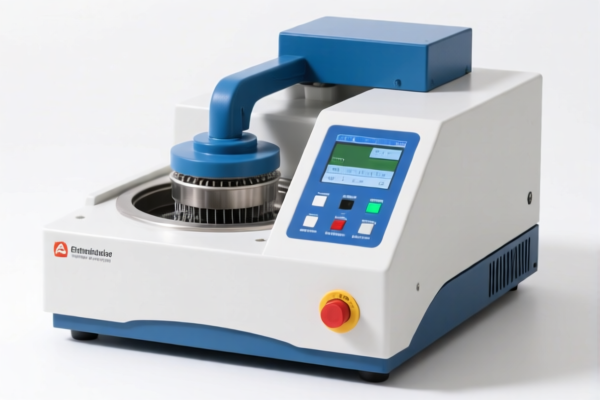
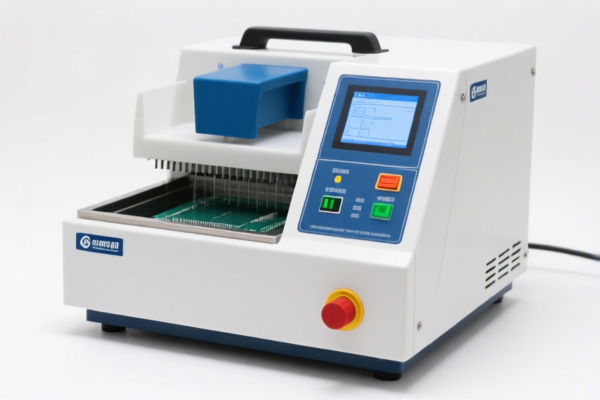
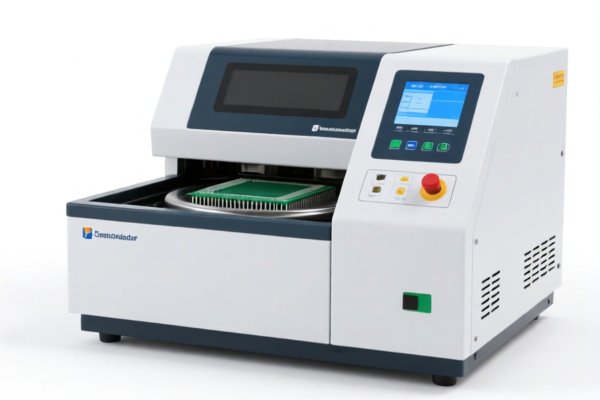
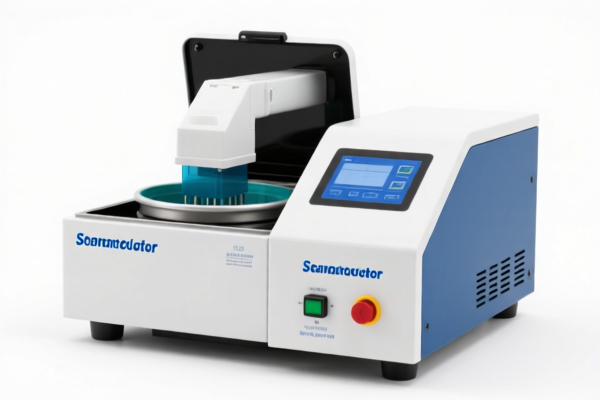
AI Analysis
🧪 Electronic Component Cleaner (Degreaser & Flux Remover)
🌐 HS Code Reference & Customs Clearance Guide | 2026 Latest Tariff Analysis | Professional Clearance Strategy
📌 I. Product Definition & Classification: Do You Know What "Electronic Component Cleaner" Really Is?
Electronic component cleaners, often referred to as organic composite solvents, thinners, or prepared paint/varnish removers, are chemical formulations designed to remove flux residues, oils, greases, and contaminants from printed circuit boards (PCBs) and electronic assemblies.
In international trade, the classification depends entirely on the chemical composition and aromatic content:
Category A: High Aromatic Content (>25% by weight)
Formulations containing significant amounts of aromatic substances (e.g., toluene, xylene, ethyl benzene, or modified aromatic hydrocarbons). These are often used for heavy-duty cleaning of industrial components.
Category B: Other Composite Solvents/Thinner (Not Elsewhere Specified)
Formulations that do not meet the >25% aromatic threshold or are mixtures not specifically listed elsewhere. This includes many common isopropyl alcohol (IPA) blends, ester-based cleaners, or hydrocarbon-based cleaners that fall into the "Other" category.
⚠️ Key Distinction Point:
- If the product contains >25% by weight of aromatic substances → It falls under 3814.00.20.00.
- If it is a composite solvent/thinner but does not meet the >25% aromatic criteria, or is a generic "other" mixture → It falls under 3814.00.50.90.
📦 II. HS Code Classification Details (2026 Latest Tariff Authority Comparison)
| HS Code | Product Description | Applicable Scenario | Aromatic Content |
|---|---|---|---|
3814.00.20.00 |
Organic composite solvents and thinners; Prepared paint or varnish removers: Containing more than 25 percent by weight of one or more aromatic or modified aromatic substances | Industrial flux removers, heavy-duty degreasers with high aromatic content | ✅ >25% |
3814.00.50.90 |
Organic composite solvents and thinners, not elsewhere specified or included; Prepared paint or varnish removers: Other Other | Generic electronic cleaners, low-aromatic blends, IPA-based cleaners, "Other" unspecified mixtures | ❌ ≤25% or Unspecified |
8479.89.95.85 |
Machines and mechanical appliances...: Other Ultrasonic cleaning devices | Note: If the "cleaner" refers to the machine (ultrasonic cleaner), not the chemical liquid. This code is for the device, not the chemical. | N/A |
🔍 Critical Reminder:
- Ensure you are classifying the chemical liquid, not the cleaning machine.
- If importing the ultrasonic cleaning tank/device, use 8479.89.95.85.
- If importing the cleaning fluid, use 3814.00.xxxxx.
- Misclassification between chemical and equipment is a common customs error leading to delays.
💰 III. 2026 Latest Tariff Rate Details (Including Surcharges & Policy Add-ons)
✅ Applicable Country: United States (US)
✅ Origin: China (CN)
✅ Effective Date: From November 10, 2025 (for subsequent imports)
🎯 1. 3814.00.50.90 —— Other Organic Composite Solvents & Thinners
| Item | Content |
|---|---|
| Base Duty Rate | 6.0% (Ad Valorem) |
| USITC Surcharge (Section 301) | +25.0% |
| IEEPA Surcharge | +0.0% (No additional IEEPA surcharge applied to this specific subheading in the provided data) |
| Total Effective Tax Rate | 31.0% |
| Tax Calculation | CIF Value × 31.0% |
| De Minimis Eligibility | ❌ Not Eligible (Deemed taxable due to high rate and chemical nature) |
| Legal Basis Path | USITC:3814.00.50.90 → SECTION301:FOOTNOTE |
📌 Explanation:
- The 6% base tariff is the standard MFN rate for "Other" composite solvents.
- The +25% Section 301 surcharge applies to a broad range of Chinese-origin chemical products and solvents.
- Total 31% is a significant cost factor. Importers must verify the exact aromatic content to ensure this is the correct code; if misclassified as >25% aromatic, the rate changes drastically.
🎯 2. 3814.00.20.00 —— Containing >25% Aromatic Substances
| Item | Content |
|---|---|
| Base Duty Rate | 0.0% (Ad Valorem) |
| USITC Surcharge (Section 301) | +0.0% |
| IEEPA Surcharge | +0.0% |
| Total Effective Tax Rate | 0.0% |
| Tax Calculation | $0 (No duty) |
| De Minimis Eligibility | ⚠️ Check Specific Regulations (Often chemicals are exempt from de minimis for other reasons, but duty-wise it is 0%) |
| Legal Basis Path | USITC:3814.00.20.00 |
📌 Explanation:
- Surprisingly Low Duty: This subheading has a 0% base rate and 0% additional surcharge in the provided dataset.
- Why? Tariff schedules can be complex. Often, specific aromatic mixtures may fall under exemptions or different legal structures than "other" solvents.
- Critical Risk: If you declare a product as3814.00.20.00(0% tax) but the aromatic content is actually <25%, customs will reclassify it to3814.00.50.90and charge 31% + penalties.
- Verification is Mandatory: You must have a Certificate of Analysis (COA) proving the aromatic content is indeed >25%.
🎯 3. 8479.89.95.85 —— Ultrasonic Cleaning Devices (Machine, Not Chemical)
| Item | Content |
|---|---|
| Base Duty Rate | 0.0% |
| USITC Surcharge | +0.0% |
| IEEPA Surcharge | +0.0% |
| Total Effective Tax Rate | 0.0% |
| Tax Calculation | $0 |
| De Minimis Eligibility | ⚠️ Check for consumer electronics/special machinery rules |
| Legal Basis Path | USITC:8479.89.95.85 |
📌 Explanation:
- If your product is the ultrasonic cleaner machine, it is duty-free in this classification.
- Do not confuse the machine with the chemical fluid.
🛠️ IV. Customs Clearance Practical Advice (Real-World Pitfall Guide)
✅ 1. Preparation Checklist (Non-negotiable)
| Document | Required | Explanation |
|---|---|---|
| ✅ Certificate of Analysis (COA) | ✔️ | Most Critical: Must specify the percentage by weight of aromatic substances. Without this, customs cannot distinguish between 3814.00.20.00 (0%) and 3814.00.50.90 (31%). |
| ✅ Safety Data Sheet (SDS) | ✔️ | Required for hazardous material handling. Classify under DOT/IMO regulations. |
| ✅ Product Formula/Composition | ✔️ | Breakdown of all ingredients and their percentages. |
| ✅ Commercial Invoice | ✔️ | Clearly state: "Electronic Component Cleaner, Liquid, HS Code 3814.00.XX.XX". |
| ✅ Bill of Lading | ✔️ | Ensure description matches invoice. |
✅ 2. Declaration Tips (Key Rules)
🔥 "Check Aromatics, Avoid the 31% Trap!"
| Scenario | Correct Declaration | Common Mistake |
|---|---|---|
| Product has >25% Aromatics | 3814.00.20.00 (0% Tax) |
Declaring as "Other" (50.90) → Unnecessarily paying 31% |
| Product has <25% Aromatics | 3814.00.50.90 (31% Tax) |
Declaring as 20.00 → Smuggling/Undervaluation Risk, huge penalties |
| Product is Ultrasonic Machine | 8479.89.95.85 (0% Tax) |
Declaring as "Solvent" → Wrong code, delays |
| Mixed Shipment (Chemical + Machine) | Split Line Items | Combining into one line → Confusion, risk of full inspection |
✅ 3. Special Case Handling
| Situation | Handling Advice |
|---|---|
| Flux Remover for PCBs | Most flux removers are hydrocarbon or ester-based. Check COA. If aromatic <25%, expect 31% tax. |
| Industrial Degreaser | Often high aromatic. Verify >25% to claim 0% rate. |
| Isopropyl Alcohol (IPA) Based | Usually falls under "Other" (50.90) if not purely alcohol (which might be 2905). Expect 31% tax unless specific exemptions apply. |
| Customs Audit Risk | Customs may request lab testing if COA is ambiguous. Provide third-party lab reports if possible. |
🌍 V. Global Main Market Clearance Comparison (2026 Latest)
| Country/Region | Recommended HS Code | Tariff (China Origin) | Certification Required | Notes |
|---|---|---|---|---|
| 🇺🇸 USA | 3814.00.50.90 or 3814.00.20.00 |
0% or 31% (See above) | SDS, DOT Hazmat | High scrutiny on aromatic content. 31% is significant for "Other" solvents. |
| 🇨🇳 China | 3814.00.20.00 |
1% (Approx.) | None specific | Low import duty. |
| 🇪🇺 EU | 3814.00.20 or 3814.00.90 |
0% - 3.5% | REACH Compliance | REACH registration is mandatory for chemical substances in EU. |
| 🇯🇵 Japan | 3814.00.00.00 |
2.5% - 6% | Fire Service Act | Check for flammable liquid regulations. |
📌 Conclusion:
- The USA offers a unique split: 0% for high-aromatic (>25%) and 31% for others. This creates a strong incentive to accurately classify and potentially adjust formulation if feasible.
- EU and Japan generally do not have the same sharp dichotomy or Section 301 surcharges, but REACH (EU) is a major compliance hurdle.
📌 VI. Common Errors & Pitfall Guide (Lessons Learned from Tears)
❌ Mistake 1: Assuming all "cleaners" are the same.
👉 Consequence: Declaring 3814.00.50.90 (31%) for a product that qualifies as 3814.00.20.00 (0%) results in overpayment. Or worse, declaring 20.00 for a low-aromatic product results in seizure and fines.
❌ Mistake 2: Ignoring the Aromatic Percentage.
👉 Consequence: Without a COA proving >25% aromatic, Customs will default to the higher tax rate (3814.00.50.90 at 31%).
❌ Mistake 3: Confusing Chemical with Machine.
👉 Consequence: Shipping ultrasonic cleaners with chemical codes or vice versa leads to demurrage fees, inspections, and clearance delays.
❌ Mistake 4: Not Checking Hazmat Requirements.
👉 Consequence: Electronic cleaners are often flammable liquids. Missing proper SDSD/UN packaging leads to shipping rejection by carriers and customs holds.
✅ Correct Approach:
"Electronic Component Cleaner, Liquid, Water-Based/Organic, Aromatic Content: [X]%, HS Code 3814.00.[XX], UN 1993 (Flammable Liquid), SDS Attached."
🎯 VII. Conclusion: Precision Classification Saves Money!
🎯 Remember the Mantra:
🔹 "Check Aromatics: >25% is 0%, <25% is 31%. Don't Guess, Provide Proof!"
🔹 "Machine vs. Chemical: Separate Them, Or Pay the Price."
📌 Pro Tip:
If your formulation is close to the 25% aromatic threshold, consider adjusting the formula to either safely cross above 25% (to save 31% tax) or clearly stay below with robust documentation. Consult a chemical regulatory expert.
📣 Immediate Action:
📞 Contact your freight forwarder and provide the COA.
🚀 Ensure your Commercial Invoice explicitly states the HS Code and "Aromatic Content %".
💡 Get a Pre-Ruling if the formulation is complex.
✨ Professional Clearance, Starts with Accurate Classification!
💼 Your Margin Depends on Your HS Code!
Customer Reviews
About HS Code Classification
The Harmonized System (HS) is an internationally standardized nomenclature developed by the World Customs Organization (WCO) to classify traded products. Over 200 countries use the HS system as the basis for customs tariffs, trade statistics, and import/export regulations.
Each HS code follows a hierarchical structure:
- Chapter (2 digits) — Broad category of goods (e.g., Chapter 84: Machinery and Mechanical Appliances)
- Heading (4 digits) — More specific grouping within the chapter
- Subheading (6 digits) — Internationally standardized breakdown, used by all WCO member countries
- National subdivisions (8-10 digits) — Country-specific extensions for further classification, such as US HTSUS 10-digit codes
Correct HS code classification is essential for smooth customs clearance, accurate duty payment, and compliance with trade regulations. Misclassification can lead to customs delays, overpayment of duties, or penalties.
When importing from CN to US, the applicable tariff rates may include:
- Most-Favored-Nation (MFN) rate — The standard duty rate applied to WTO members
- General rate — Applied to countries without trade agreements
- Trade remedy duties — Additional tariffs such as Section 301 (anti-dumping), Section 232 (national security), or countervailing duties
The information provided on this page is for reference purposes only. For official classification, please consult with your local customs authority or a licensed customs broker.