Electronic Components (HS Code 8543200000)
CN → US| HS Code | Tariff Rate | Origin | Destination | Doc |
|---|---|---|---|---|
| 8541590080 | 60.0% | CN | US | Official Doc |
| 8543709860 | 37.6% | CN | US | Official Doc |
| 8543200000 | 35.0% | CN | US | Official Doc |
| 8542390090 | 60.0% | CN | US | Official Doc |
Product Images
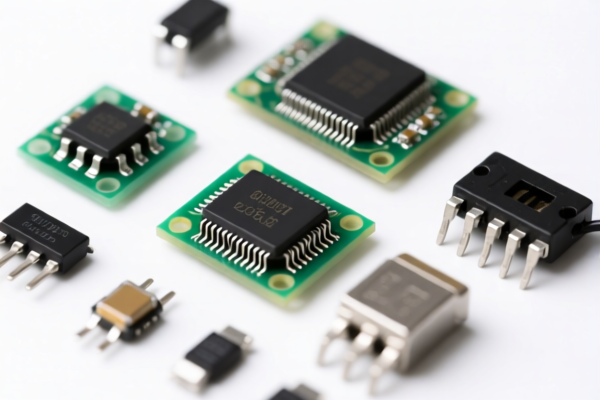
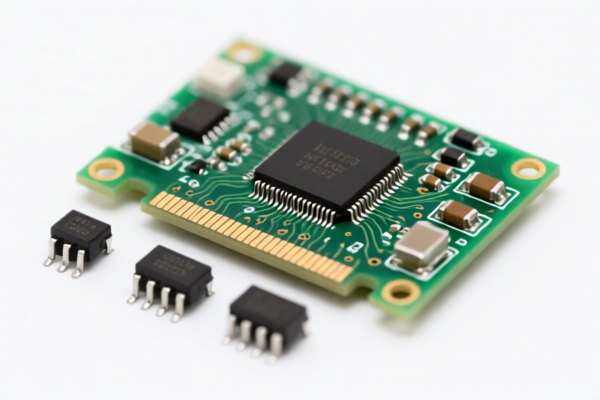
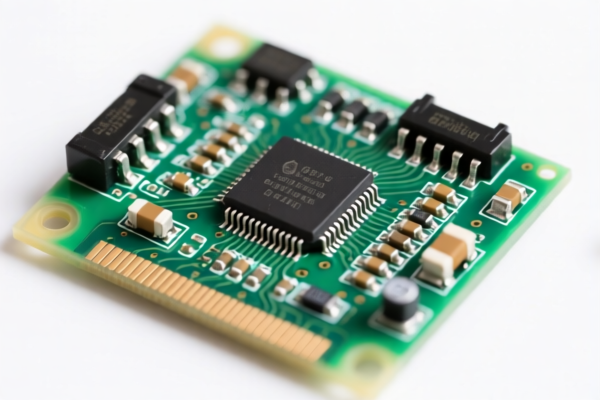
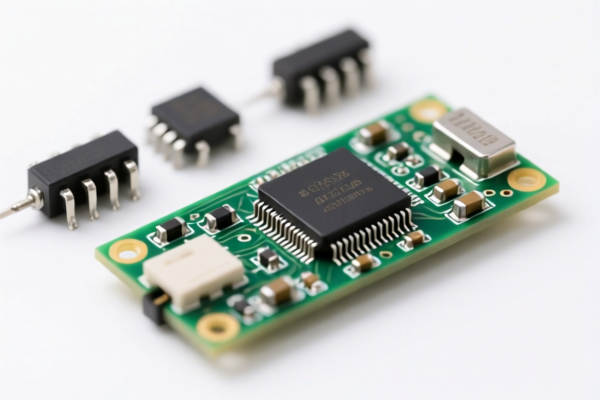
AI Analysis
⚡ Electronic Components (HS Code 8543.20.00.00)
🌐 HS Code Reference & Customs Clearance Guide | 2026 Latest Tariff Analysis | Professional Clearance Strategy
📌 1. Product Definition & Classification: What are "Signal Generators"?
Electronic components, specifically those classified under 8543.20.00.00, refer primarily to Signal Generators (or apparatus for generating electrical signals). These are specialized electronic devices used to create specific waveforms (sine, square, triangular, etc.) for testing, measurement, and calibration purposes in laboratories, industrial control, and R&D environments.
In international trade, they are distinct from simple passive components (like resistors or capacitors) because they are active apparatuses capable of producing electrical signals.
⚠️ Key Distinction Point:
- If the device is a Signal Generator, oscilloscope, or specialized testing apparatus that generates signals → Classified under 8543.20.00.00.
- If the device is a microchip, transistor, or diode without complex signal generation functions → It falls under 8541.59.00.80 or 8542.39.00.90.
- If the device is a general-purpose electronic module not specifically defined elsewhere → It may fall under 8543.70.98.60.
📦 2. HS Code Classification Details (2026 Latest Tariff Authority Comparison)
Based on the provided data, here are the possible classifications for "Electronic Components" depending on their specific functional attributes:
| HS Code | Product Description | Applicable Scenario | Function Attribute |
|---|---|---|---|
8543.20.00.00 |
Signal Generators & Apparatus for Generating Electrical Signals | Lab testers, R&D tools, industrial calibration equipment | ✅ Active Signal Generation (Primary candidate for this specific code) |
8541.59.00.80 |
Other Semiconductor Devices | Discrete semiconductors, diodes, transistors | ✅ Semiconductor Material Attribute |
8542.39.00.90 |
Electronic Integrated Circuits (Other) | Complex ICs, processors, memory chips | ✅ Integrated Circuit Function |
8543.70.98.60 |
Other Machines & Apparatus | General electronic devices not elsewhere specified | ✅ General Electronic Function |
🔍 Focus Point:
- The prompt specifically highlights8543.20.00.00. This code is for Signal Generators.
- If your "Electronic Component" is a Signal Generator or a device that produces electrical signals for testing, this is the most accurate classification.
- Warning: Do not misclassify a Signal Generator as a simple semiconductor (8541) or generic IC (8542). The function determines the code.
💰 3. 2026 Latest Tariff Rate Breakdown (Including Surcharges & Policy Add-ons)
✅ Applicable Country: United States (US)
✅ Country of Origin: China (CN)
✅ Effective Date: From November 10, 2025 (and subsequent imports)
🎯 1. 8543.20.00.00 —— Signal Generators / Electronic Testing Apparatus
| Item | Content |
|---|---|
| Base Tariff | 0% (Ad valorem) |
| Section 301 Surcharge (USITC) | +25% |
| Section 122/IEEPA Surcharge | +10% (Targeting China/HK products) |
| Total Tariff Rate | 35.0% |
| Tax Calculation | CIF Value × 35% |
| De Minimis Exemption Eligible? | ❌ NO (deny_de_minimis) |
| Legal Basis Path | USITC:8543.20.00.00 → SECTION301:25% → IEEPA:10% |
📌 Explanation:
- Although the base tariff for electronic testing equipment is 0%, the Section 301 tariff (+25%) and the IEEPA surcharge (+10%) apply to Chinese-origin goods.
- Total Duty: 35%. This is significantly lower than the 60% rate for semiconductors (8541), making 8543.20.00.00 a potentially more cost-effective classification if the product qualifies as a signal generator.
- No De Minimis Exemption: Small shipments (under $800) cannot avoid this duty if the value is high or if customs flags it as a restricted good.
🛠️ 4. Customs Clearance Practical Advice (Real-World Pitfall Guide)
✅ 1. Required Documentation Checklist (All are Mandatory)
| Document | Must Provide? | Notes |
|---|---|---|
| ✅ Product Specification Sheet | ✔️ | Must clearly state "Signal Generator," frequency range, waveform types. |
| ✅ Circuit Diagram / Functional Block Diagram | ✔️ | Proves the device generates signals (active), not just passive components. |
| ✅ Product Photos (including Nameplate) | ✔️ | Show model number, input/output ports, and certifications. |
| ✅ Test Reports | ✔️ | FCC, CE, RoHS certifications are standard for electronic test equipment. |
| ✅ Commercial Invoice | ✔️ | Must describe as "Electronic Signal Generator for Testing," not generic "Component." |
| ✅ Packing List | ✔️ | Detail all accessories (probes, cables, cases). |
✅ 2. Declaration Tips (Key Mantra)
🔥 "Function Defines Code, Don't Misclassify!"
| Scenario | Correct Declaration | Wrong Practice |
|---|---|---|
| Device generates test signals | 8543.20.00.00 (35% Duty) |
Misclassify as 8541 (60% Duty) → Overpay 25% |
| Device is a bare microchip | 8542.39.00.90 (60% Duty) |
Misclassify as 8543 → Underpay & Risk Penalty |
| Device is a generic module | 8543.70.98.60 (37.6% Duty) |
Generic description → Customs Detention |
📌 Critical Note:
- If your product is a Signal Generator, explicitly declare it as such.
- Using generic terms like "Electronic Component" or "Module" may trigger customs audits.
- The 35% rate for8543.20.00.00is 25% lower than the 60% rate for semiconductors. Correct classification can save significant money.
✅ 3. Special Case Handling
| Scenario | Handling Advice |
|---|---|
| OEM Signal Generators | Provide customer order + design specs to prove functional identity. |
| Bundled Kits (Generator + Probes) | Declare as a complete set under 8543.20.00.00. Do not split-probe parts. |
| Software-Defined Generators | Still 8543.20.00.00 if the hardware generates the signal. |
| Origin Misdeclaration | Do not claim "Made in Vietnam" if assembled in China. US Customs will verify via Bill of Lading and factory audits. |
🌍 5. Global Market Clearance Comparison (2026 Latest)
| Country/Region | Recommended HS Code | Tariff Rate | Certification | Notes |
|---|---|---|---|---|
| 🇺🇸 USA | 8543.20.00.00 |
35% (China Origin) | FCC + RoHS | Base 0% + 301 (25%) + IEEPA (10%) |
| 🇨🇳 China | 8543.20.00.00 |
0% - 5% | CCC (if applicable) | No additional surcharges |
| 🇪🇺 EU | 8543.20.00.00 |
0% (if under FTAs) | CE + RoHS | Generally low duty for test equipment |
| 🇬🇧 UK | 8543.20.00.00 |
0% - 4% | UKCA | Post-Brexit rules apply |
📌 Conclusion:
- The USA imposes a 35% total tariff on Chinese-made signal generators.
- This is favorable compared to 60% for semiconductors, but still significant.
- European and Asian markets generally offer much lower or zero tariffs for this equipment.
📌 6. Common Errors & Pitfall Guide (Lessons Learned)
❌ Error 1: Classifying a Signal Generator as a "Semiconductor" (8541)
👉 Consequence: Duty jumps from 35% to 60%. Overpayment!
❌ Error 2: Declaring as "General Electronic Equipment" (8543.70.98.60)
👉 Consequence: Duty is 37.6%. While close, 8543.20.00.00 is the precise match for signal generators. Misclassification can lead to customs delays for re-evaluation.
❌ Error 3: Omitting the "Signal Generation" Function in Description
👉 Consequence: Customs may classify it under a higher-duty general basket. Always specify "Signal Generator" or "Apparatus for Generating Electrical Signals."
❌ Error 4: Ignoring Section 122/IEEPA Surcharges
👉 Consequence: Budgeting only for the 301 tariff (25%) and forgetting the additional 10% leads to unpaid duties at entry.
✅ Correct Declaration Example:
"Electronic Signal Generator, Model XYZ, Frequency Range 1MHz-1GHz, Used for Circuit Testing, FCC Certified, Made in China"
🎯 7. Conclusion: Precise Classification for Cost Savings
🎯 Remember the Mantra:
🔹 "Signal Generators go to 8543.20.00.00 (35%).
🔹 "Semiconductors go to 8541/8542 (60%).
🔹 "Don't mix them up! Saving 25% duty matters!"
📌 Pro Tip:
- If your product is a complex electronic module that doesn't fit neatly into Signal Generators, consider 8543.70.98.60 (37.6%).
- Always request a Pre-Ruling (Advance Ruling) from US Customs and Border Protection (CBP) if your product is borderline.
- For high-value shipments, calculate the 35% duty into your cost structure to ensure profitability.
📣 Immediate Action:
📞 Contact a licensed customs broker.
📤 Provide product datasheets highlighting Signal Generation capabilities.
🚀 Classify correctly, clear customs faster, and protect your margins!
✨ Professional Customs Clearance Starts with Accurate HS Codes!
💼 Every dollar saved in duties is profit earned!
Customer Reviews
About HS Code Classification
The Harmonized System (HS) is an internationally standardized nomenclature developed by the World Customs Organization (WCO) to classify traded products. Over 200 countries use the HS system as the basis for customs tariffs, trade statistics, and import/export regulations.
Each HS code follows a hierarchical structure:
- Chapter (2 digits) — Broad category of goods (e.g., Chapter 84: Machinery and Mechanical Appliances)
- Heading (4 digits) — More specific grouping within the chapter
- Subheading (6 digits) — Internationally standardized breakdown, used by all WCO member countries
- National subdivisions (8-10 digits) — Country-specific extensions for further classification, such as US HTSUS 10-digit codes
Correct HS code classification is essential for smooth customs clearance, accurate duty payment, and compliance with trade regulations. Misclassification can lead to customs delays, overpayment of duties, or penalties.
When importing from CN to US, the applicable tariff rates may include:
- Most-Favored-Nation (MFN) rate — The standard duty rate applied to WTO members
- General rate — Applied to countries without trade agreements
- Trade remedy duties — Additional tariffs such as Section 301 (anti-dumping), Section 232 (national security), or countervailing duties
The information provided on this page is for reference purposes only. For official classification, please consult with your local customs authority or a licensed customs broker.