Electronic Components and Parts
CN → US| HS Code | Tariff Rate | Origin | Destination | Doc |
|---|---|---|---|---|
| 8536908585 | 85.0% | CN | US | Official Doc |
| 8542900000 | 60.0% | CN | US | Official Doc |
| 8542390090 | 60.0% | CN | US | Official Doc |
| 8544429090 | 87.6% | CN | US | Official Doc |
Product Images
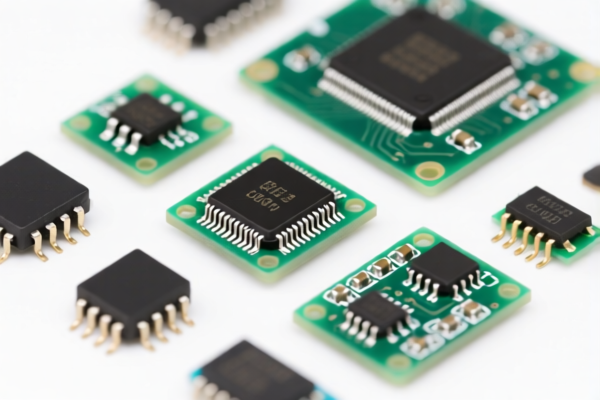
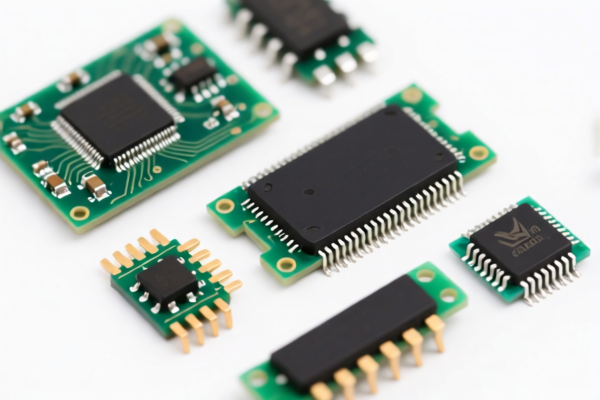
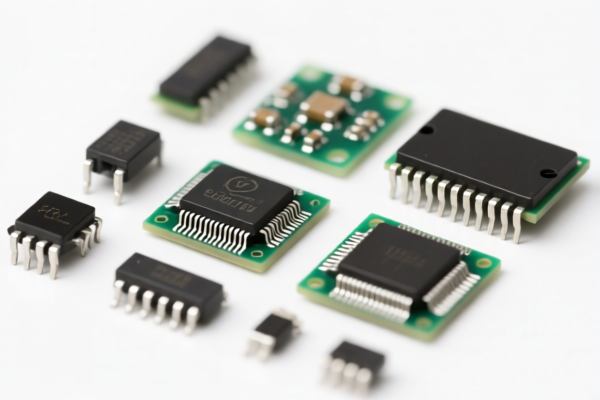
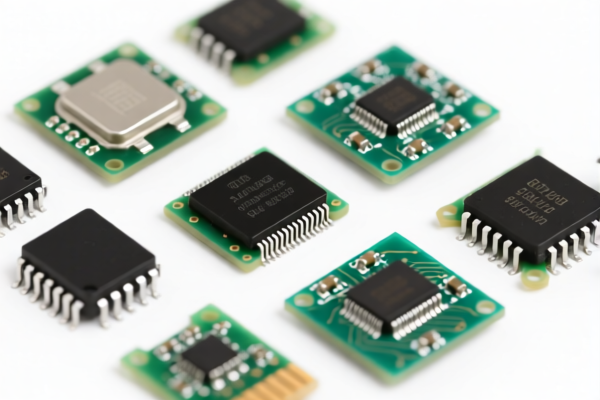
AI Analysis
⚡️ Electronic Components and Parts (电子零部件和组件)
🌐 HS Code Reference & Customs Clearance Guide | 2026 Latest Tariff Analysis | Professional Clearance Strategy
📌 I. Product Definition: What Are "Electronic Components and Parts"?
"Electronic Components and Parts" is a broad, generic term covering everything from microchips and circuit boards to connectors and protective housings. In international trade, this ambiguity is the #1 cause of classification errors. The correct HS Code depends entirely on function, integration level, and material composition.
⚠️ Critical Distinction:
- If it’s a standalone electronic assembly (e.g., a finished connector or housing) → Likely 8536 or 8544.
- If it’s a sub-component of an integrated circuit (IC) → Likely 8542.
- If it’s a generic "other" part with no specific electrical function → Likely 8544.
📦 II. HS Code Classification Matrix (2026 Latest Tariff Data)
Based on the provided dataset, here are the 4 most likely HS Code classifications for "Electronic Components and Parts," ranked by relevance and risk.
| HS Code | Product Description | Matching Logic (Why this Code?) | Total Tax Rate (China to US) |
|---|---|---|---|
8536.90.85.85 |
Electrical apparatus for switching or protecting electrical circuits | Matches "components" as electrical equipment/accessories. Assumes form factor aligns with "other equipment" for electrical connection/protection. | 85.0% |
8542.90.00.00 |
Parts of electronic integrated circuits | Matches "components/parts" as IC accessories. Highest specificity match for "parts" in electronic form. | 60.0% |
8542.39.00.90 |
Other electronic integrated circuits/components | Matches "components/assemblies" as parts/components under "Other" fallback. Default for generic electronic parts. | 60.0% |
8544.42.90.90 |
Other insulated wire, cable, and other insulated electrical conductors | Matches "parts" as generic electrical components under "Other" fallback. Assumes no material conflict. | 87.6% |
🔍 Key Insight:
- 8542 codes (60% tax) are favorable if your part is strictly related to integrated circuits (ICs) (e.g., chip carriers, IC testers, IC housings).
- 8536/8544 codes (85-87.6% tax) apply if the item is a standalone electrical accessory (e.g., connectors, insulated wires, general-purpose housings).
- Misclassification Risk: Declaring an IC part as a general component under 8544 will result in higher tax (87.6%) or customs audits.
💰 III. 2026 Tariff Rate Breakdown (US Market | Origin: China)
✅ Applicable Country: United States (US)
✅ Origin: China (CN)
✅ Effective Date: 2025/2026 Tariff Schedule
🎯 1. 8536.90.85.85 – Highest Risk: 85.0%
| Item | Detail |
|---|---|
| Base Duty | 0.0% |
| Section 301 Add-on | +25.0% |
| Section 232 Add-on | +50.0% (Steel/Aluminum/Copper Products) |
| Total Tax | 85.0% |
| De Minimis Eligibility | ❌ NO |
| Legal Basis | USITC:8536.90.85.85 + 232 Footnote + 301 Footnote |
📌 Explanation:
- If the component contains steel, aluminum, or copper (e.g., connector pins, housing), it triggers the 50% Section 232 tariff.
- Combined with 25% Section 301, total tax reaches 85%.
- High Risk: Customs will scrutinize material composition.
🎯 2. 8542.90.00.00 – IC-Related Parts: 60.0%
| Item | Detail |
|---|---|
| Base Duty | 0.0% |
| Section 301 Add-on | +50.0% |
| Total Tax | 60.0% |
| De Minimis Eligibility | ❌ NO |
| Legal Basis | USITC:8542.90.00.00 + 301 Footnote (50%) |
📌 Explanation:
- This code carries a 50% Section 301 tariff (higher than 25% due to IC strategic importance).
- No Section 232 applies (unless made of steel/aluminum, which is rare for IC parts).
- Best Case: If your part is truly an IC accessory, this is the most accurate and tax-optimized code.
🎯 3. 8542.39.00.90 – Generic Electronic Components: 60.0%
| Item | Detail |
|---|---|
| Base Duty | 0.0% |
| Section 301 Add-on | +50.0% |
| Total Tax | 60.0% |
| De Minimis Eligibility | ❌ NO |
| Legal Basis | USITC:8542.39.00.90 + 301 Footnote (50%) |
📌 Explanation:
- Same tariff structure as8542.90.00.00.
- Used for other electronic components not specifically IC-related but falling under "electronic apparatus."
- Safe Fallback: If unsure if it’s IC-specific, this is a common fallback, but riskier if proven to be a general electrical part.
🎯 4. 8544.42.90.90 – Generic Electrical Conductors/Parts: 87.6%
| Item | Detail |
|---|---|
| Base Duty | 2.6% |
| Section 301 Add-on | +25.0% |
| Section 232 Add-on | +50.0% (Steel/Aluminum/Copper) |
| Total Tax | 87.6% |
| De Minimis Eligibility | ❌ NO |
| Legal Basis | USITC:8544.42.90.90 + 232 Footnote + 301 Footnote |
📌 Explanation:
- This code applies to insulated wires, cables, and similar conductors.
- Highest Tax: Combines base duty, 301, and 232 tariffs.
- Use Only If: The part is literally an insulated electrical conductor (e.g., wire harnesses, connector cables).
- Warning: Do not use this for general "parts" unless they are wire/cable-based.
🛠️ IV. Customs Clearance Practical Guide (Avoiding Pitfalls)
✅ 1. Required Documentation Checklist
| Document | Required? | Purpose |
|---|---|---|
| ✅ Product Specification Sheet | ✔️ | Defines function, material, and integration level. |
| ✅ Circuit Diagram/Block Diagram | ✔️ | Proves if it’s an IC part (8542) or general electrical part (8536/8544). |
| ✅ Material Composition Report | ✔️ | Critical to avoid Section 232 (50%) tariff. If steel/aluminum/copper content >50%, 232 applies. |
| ✅ Product Photos (Label & Connector) | ✔️ | Visual proof of form factor. |
| ✅ Commercial Invoice | ✔️ | Must clearly state "Electronic Component, Model XYZ", NOT generic "parts". |
| ✅ Packing List | ✔️ | Shows if parts are shipped separately or assembled. |
✅ 2. Classification Strategy: How to Choose the Right Code?
🔥 Rule of Thumb:
"Is it an IC part? → 8542 (60%). Is it a wire/cable? → 8544 (87.6%). Is it a general electrical accessory? → 8536 (85%)."
| Scenario | Recommended HS Code | Tax Rate | Reason |
|---|---|---|---|
| IC Housing, Test Fixture, Wafer Carrier | 8542.90.00.00 |
60% | Directly related to integrated circuits. |
| Generic PCB Assembly, Non-IC Chip | 8542.39.00.90 |
60% | Falls under "Other electronic components." |
| Wire Harness, Insulated Cable, Connector Pin | 8544.42.90.90 |
87.6% | Classified as insulated conductors. |
| Switch, Fuse, General Electrical Housing | 8536.90.85.85 |
85.0% | Classified as electrical apparatus. |
✅ 3. Special Considerations
| Situation | Action |
|---|---|
| Component contains Steel/Aluminum/Copper | Expect 50% Section 232 tariff. Total tax may reach 85-87.6%. |
| Mixed Shipment (IC Parts + General Parts) | Separate HS Codes on invoice. Do not lump under one code to avoid penalties. |
| De Minimis (Section 321) Claim | ❌ Not Eligible. All codes above have total tax >8%, so de minimis ($800) does not apply. |
| Origin Non-China (e.g., Vietnam, Mexico) | Apply for IEEPA Exemption or USMCA Tariff. Tax may drop to 0-5%. |
🌍 V. Global Market Comparison (2026)
| Market | Recommended HS Code | Typical Tax (China Origin) | Key Certification |
|---|---|---|---|
| 🇺🇸 USA | 8542.90.00.00 |
60.0% | FCC, UL, RoHS |
| 🇨🇳 China | 8542.90.00.00 |
0-5% | CCC (if applicable) |
| 🇪🇺 EU | 8542.90.00.00 |
0-4% | CE, RoHS, REACH |
| 🇯🇵 Japan | 8542.90.00.00 |
0-3% | PSE, JIS |
📌 Conclusion:
- USA imposes the highest tariffs due to Section 301 and 232.
- EU/JP/CN are low-tax markets if compliant with local standards.
- Supply Chain Strategy: Consider sourcing or assembling in Vietnam/Mexico to avoid US tariffs.
📌 VI. Common Mistakes & How to Avoid Them
❌ Mistake 1: Declaring IC parts as "General Electronic Parts" under 8544.42.90.90
👉 Consequence: Tax jumps from 60% → 87.6%. Customs may audit material composition.
❌ Mistake 2: Ignoring Section 232 (Steel/Aluminum/Copper)
👉 Consequence: If the component contains metal, you may face additional 50% tariff. Always check material content.
❌ Mistake 3: Using "Parts" as the Product Description
👉 Consequence: Customs will reject vague descriptions. Use "Electronic IC Part, Model XYZ" or "Insulated Wire, Model ABC".
✅ Correct Approach:
"Electronic Integrated Circuit Part, Plastic Housing, Model XYZ, Non-Metallic"
→ HS Code:8542.90.00.00→ Tax: 60%
🎯 VII. Pro Tips for Cost Optimization
- Get an Advance Ruling (CBP Ruling): Submit product specs to US Customs for official HS Code classification. Cost: ~$1,000. Saves thousands in potential penalties.
- Material Substitution: If possible, use non-ferrous, non-aluminum materials to avoid Section 232 tariffs.
- Supply Chain Diversification: Assemble or source from Vietnam, Mexico, or Thailand to access USMCA/IEEPA Exemptions.
- Accurate Documentation: Provide detailed technical specs and material breakdowns to prevent customs audits.
📣 Final Recommendation
🔹 "Know Your Part’s Function & Material: IC? → 60%. Wire? → 87.6%. Mixed? → Separate Codes."
🔹 "US Tariffs are High: Plan Ahead, Get Rulings, Diversify Supply Chain."
🚀 Professional clearance starts with precise classification!
💼 Every percentage point saved is pure profit!
Customer Reviews
About HS Code Classification
The Harmonized System (HS) is an internationally standardized nomenclature developed by the World Customs Organization (WCO) to classify traded products. Over 200 countries use the HS system as the basis for customs tariffs, trade statistics, and import/export regulations.
Each HS code follows a hierarchical structure:
- Chapter (2 digits) — Broad category of goods (e.g., Chapter 84: Machinery and Mechanical Appliances)
- Heading (4 digits) — More specific grouping within the chapter
- Subheading (6 digits) — Internationally standardized breakdown, used by all WCO member countries
- National subdivisions (8-10 digits) — Country-specific extensions for further classification, such as US HTSUS 10-digit codes
Correct HS code classification is essential for smooth customs clearance, accurate duty payment, and compliance with trade regulations. Misclassification can lead to customs delays, overpayment of duties, or penalties.
When importing from CN to US, the applicable tariff rates may include:
- Most-Favored-Nation (MFN) rate — The standard duty rate applied to WTO members
- General rate — Applied to countries without trade agreements
- Trade remedy duties — Additional tariffs such as Section 301 (anti-dumping), Section 232 (national security), or countervailing duties
The information provided on this page is for reference purposes only. For official classification, please consult with your local customs authority or a licensed customs broker.