Electronic Connector
CN → US| HS Code | Tariff Rate | Origin | Destination | Doc |
|---|---|---|---|---|
| 8538908160 | 38.5% | CN | US | Official Doc |
| 8536694010 | 35.0% | CN | US | Official Doc |
| 8538908140 | 38.5% | CN | US | Official Doc |
| 8544429010 | 87.6% | CN | US | Official Doc |
| 8544429090 | 87.6% | CN | US | Official Doc |
Product Images
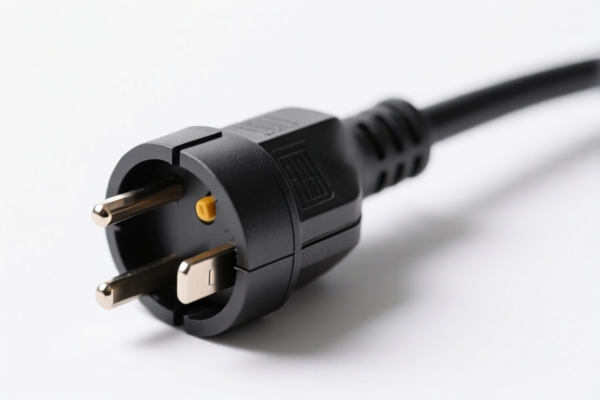
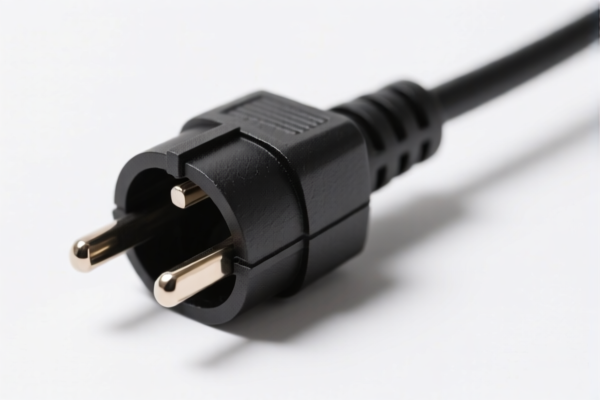
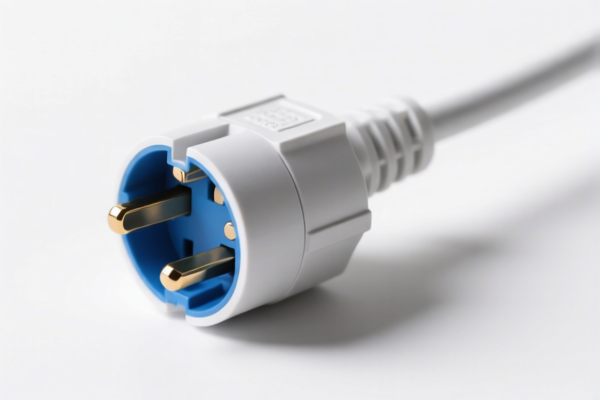
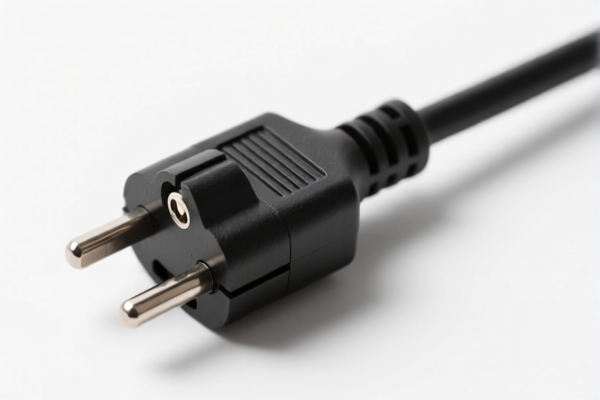
AI Analysis
🔌 Electronic Connectors (Cable & Coaxial Types)
🌐 HS Code Reference & Customs Clearance Guide | 2026 Latest Tariff Analysis | Professional Clearance Strategy
📌 I. Product Definition & Classification: What Exactly is an "Electronic Connector"?
Electronic connectors are critical components for establishing electrical connections between cables, devices, or circuit boards. In international trade, they are often misclassified due to their diverse forms. Based on the provided data, these connectors fall into two main categories:
- Stand-alone Connectors / Parts: Devices that serve as accessories or parts for switchgear, control panels, or other electrical apparatus (e.g., standard cable connectors, coaxial connectors without full assembly).
- Insulated Conductors with Connectors: Cables or wires that already have connectors attached at the ends, functioning as ready-to-use electrical transmission lines.
⚠️ Key Distinction Point:
- If the product is a discrete component (e.g., a single connector piece, housing, or contact set) intended to be installed into a larger system → Likely Chapter 85.38 (Parts) or 85.36 (Switchgear parts).
- If the product is a wire/cable assembly where the connector is integral to the wire’s function as a conductor → Likely Chapter 85.44 (Insulated Wires/Cables).
📦 II. HS Code Classification Details (2026 Latest Tariff Authority Comparison)
| HS Code | Product Description | Application Scenario | Key Feature |
|---|---|---|---|
8538.90.81.60 |
Cable Connectors (Parts): Parts of switchgear and control gear. | Used as spare parts or components for industrial switchboards/control panels. | Matches "Other parts" for switchgear; functional matching with control panels. |
8536.69.40.10 |
Coaxial Connectors: Connectors functionally identical to coaxial types. | Telecommunications, RF equipment, video signal transmission. | Generic name matching; functional consistency with coaxial cables. |
8538.90.81.40 |
Cable Connectors (Electrical): Parts of electrical connection devices. | Internal wiring connections, PCB mounting, heavy-duty electrical joints. | Contains metal contact structures; classified as parts of electrical connection apparatus. |
8544.42.90.10 |
Insulated Conductors with Connectors (Specific Metal): Wires with connectors, steel/aluminum/copper variants. | Pre-wired assemblies where the wire is the primary conductive element. | Form characteristic: "Wires, cables... fitted with connectors." High penalty due to base metal type. |
8544.42.90.90 |
Insulated Conductors with Connectors (General):兜底 (Catch-all) for insulated conductors with connectors. | General-purpose pre-wired cable assemblies. | Fits the residual category for "Insulated conductors... fitted with connectors." |
🔍 Critical Reminder:
- Discrete Connectors (screw-in, snap-fit, plug/socket halves) generally belong in 8536 or 8538.
- Wire Assemblies (USB cables, Ethernet cables, power cords with plugs) belong in 8544.
- Misclassifying a pre-wired cable as a "connector" can lead to significant duty discrepancies (e.g., 35% vs. 87.6%).
💰 III. 2026 Latest Tariff Rate Breakdown (Including Surcharges & Policy Add-ons)
✅ Applicable Country: United States (US)
✅ Origin: China (CN)
✅ Effective Date: Current rates apply (including Section 301 and 122/IEEPA measures)
🎯 1. 8538.90.81.60 & 8538.90.81.40 —— Parts of Switchgear/Control Panels
| Item | Detail |
|---|---|
| Base Tariff | 3.5% |
| Section 301 Surcharge | +25.0% |
| Section 122 / IEEPA Surcharge | +10.0% |
| Total Tariff | 38.5% |
| Tax Calculation | CIF Value × 38.5% |
| De Minimis Exemption | ❌ Not Applicable (Deny de minimis for China-origin goods under these codes) |
| Legal Basis Path | Base: 3.5% → Section 301: 25% → 122 Clause: 10% |
📌 Explanation:
- These codes are classified as "parts" of electrical machinery.
- The 38.5% total rate is aggressive due to the cumulative effect of the base tariff and two layers of trade war surcharges (25% + 10%).
- Risk: If declared incorrectly as "general electronics," you may face penalties.
🎯 2. 8536.69.40.10 —— Coaxial Connectors
| Item | Detail |
|---|---|
| Base Tariff | 0.0% |
| Section 301 Surcharge | +25.0% |
| Section 122 / IEEPA Surcharge | +10.0% |
| Total Tariff | 35.0% |
| Tax Calculation | CIF Value × 35.0% |
| De Minimis Exemption | ❌ Not Applicable |
| Legal Basis Path | Base: 0% → Section 301: 25% → 122 Clause: 10% |
📌 Note:
- While the base tariff is 0%, the 35% total remains high due to the 35% combined surcharge.
- This code is specific to coaxial connectors. Using it for standard RJ45 or USB connectors may trigger customs audits.
🎯 3. 8544.42.90.10 & 8544.42.90.90 —— Insulated Conductors with Connectors
| Item | Detail |
|---|---|
| Base Tariff | 2.6% |
| Section 301 Surcharge | +25.0% |
| Section 122 / IEEPA Surcharge | +10.0% |
| Base Metal Surcharge (Steel/Aluminum/Copper) | +50.0% (If applicable) |
| Total Tariff | 87.6% (Standard) ~137.6% (If Base Metal Surcharge Applies) |
| Tax Calculation | CIF Value × 87.6% (or higher) |
| De Minimis Exemption | ❌ Not Applicable |
| Legal Basis Path | Base: 2.6% → Section 301: 25% → 122 Clause: 10% → Base Metal: 50% |
📌 Warning:
- This is the highest tariff category.
- The 50% additional surcharge for "Steel, Aluminum, Copper products" may apply depending on the specific material composition of the connector or wire.
- Why so high? These are treated as "finished electrical goods" rather than parts, attracting the full brunt of all trade restrictions.
- Example: A USB-C cable with a copper connector and wire will likely fall here, incurring 87.6% or more.
🛠️ IV. Customs Clearance Operational Advice (Practical Pitfall Avoidance)
✅ 1. Documentation Checklist (Non-negotiable)
| Document | Required? | Description |
|---|---|---|
| ✅ Product Specification Sheet | ✔️ | Must clearly state: "Connector Type (Coaxial/RJ45/etc.)", "Material (Plastic/Metal)", "Intended Use". |
| ✅ Technical Drawing / Schematic | ✔️ | Critical to prove if it is a stand-alone part (8536/8538) or a wire assembly (8544). |
| ✅ Product Photos | ✔️ | Show the connector in isolation vs. attached to a cable. |
| ✅ Commercial Invoice | ✔️ | Description must match HS Code logic (e.g., "Coaxial Connector" vs. "USB Cable Assembly"). |
| ✅ Country of Origin Certificate | ✔️ | Mandatory for calculating Section 301 and 122 duties. |
✅ 2. Classification Strategy (Key Mantras)
🔥 "Part vs. Product: Wire Defines the Code!"
| Scenario | Correct HS Code | Incorrect Code | Consequence |
|---|---|---|---|
| Stand-alone Connector (e.g., a single BNC plug) | 8536.69.40.10 |
8544.42.90.90 |
Overpaying by ~52% (35% vs 87.6%) |
| Stand-alone Connector (Switchgear part) | 8538.90.81.60 |
8544.42.90.90 |
Overpaying by ~49% (38.5% vs 87.6%) |
| Pre-wired Cable (e.g., HDMI cable) | 8544.42.90.90 |
8538.90.81.60 |
Under-declaration! Customs will assess back-duties + penalties. |
| Wire with Copper Connector | 8544.42.90.10 (or 90) |
8536... |
Risk of 50% additional surcharge misclassification. |
✅ 3. Special Cases Handling
| Situation | Handling Advice |
|---|---|
| OEM Custom Connectors | Provide client design specs to prove they are "parts" for a specific machine, supporting 8538 classification. |
| Mixed Packages | If a box contains both wires and standalone connectors, declare separately. Do not lump them. |
| Material Composition | If the connector housing is plastic but contacts are copper, ensure the "base metal" rule is understood. For 8544, the wire insulation + connector assembly is key. |
| Low-Value Shipments | Even for small values, de minimis exemptions do not apply to China-origin goods under these HS codes. Factor the full ~35-88% into your cost. |
🌍 V. Global Market Clearance Comparison (2026)
| Market | Recommended HS Code | Est. Duty Rate | Key Requirement | Note |
|---|---|---|---|---|
| 🇺🇸 USA | 8536/8538 |
35% - 38.5% | Section 301 + 122 Clause | High risk, high cost. |
| 🇺🇸 USA | 8544 |
87.6% + | Base Metal Surcharge Possible | Avoid if possible; extremely expensive. |
| 🇨🇳 China | 8536/8544 |
0% - 5% | CCC Certification (if applicable) | No trade war surcharges. |
| 🇪🇺 EU | 8536 |
0% - 2.7% | CE Marking | No additional anti-dumping duties for connectors typically. |
| 🇬🇧 UK | 8536 |
0% - 2.7% | UKCA Marking | Post-Brexit rules apply, but lower than US. |
📌 Conclusion:
- USA is the most punitive market for electronic connectors, with rates ranging from 35% to nearly 90%.
- Strategy: If possible, source connectors from non-China origins (e.g., Vietnam, Mexico) to avoid Section 301/122 surcharges.
- Cost Management: For US-bound goods, try to classify as 8536/8538 (Parts) if structurally feasible, as they are ~50% cheaper than 8544 (Conductors).
📌 VI. Common Mistakes & Pitfall Guide (Blood-Teachings)
❌ Mistake 1: Declaring a USB Cable as a "Connector"
👉 Result: Customs reclassifies to 8544.42.90.90 → Duty jumps from 35% to 87.6%. You pay the difference + penalties.
👉 Fix: Declare as "Insulated Wire Fitted with Connector."
❌ Mistake 2: Declaring a Standalone BNC Connector as part of 8544
👉 Result: Overpaying by ~52%.
👉 Fix: Declare as 8536.69.40.10 (Coaxial Connector).
❌ Mistake 3: Ignoring the 122 Clause (10%)
👉 Result: Underestimating landed cost. Many traders only calculate the 25% Section 301.
👉 Fix: Always add 10% to the base + 301 total for China-origin goods in these categories.
❌ Mistake 4: Missing the Base Metal Surcharge on 8544
👉 Result: If the wire/conductor involves steel/aluminum/copper heavily, the 50% add-on applies.
👉 Fix: Verify material composition carefully.
🎯 VII. Conclusion: Professional Declaration, Cost Savings!
🎯 Remember the Mantra:
🔹 "Parts are 35-38%, Wires are 87%+! Don't mix them up!"
🔹 "301 is 25%, 122 is 10%, Total is High! Plan your supply chain!"
🔹 "Coaxial is 8536, Cable is 8544. Know the difference!"
📌 Pro Tip:
If your electronic connectors are originating from Vietnam, Mexico, or Malaysia, you may be eligible for IEEPA Exemptions or reduced tariffs.
Recommendation:
📞 Apply for a Pre-Ruling (Advance Ruling) from US Customs (CBP) for complex assemblies.
🚀 Optimize your BOM (Bill of Materials) to see if a part can be classified as8536(35%) instead of8544(87.6%).
📣 Immediate Action:
📋 Audit your current HS Codes for connectors.
💸 Calculate the 52% duty difference between8536and8544.
🚀 Ensure your invoices clearly describe the function and form to avoid customs flags.
✨ Professional Customs Clearance Starts with Accurate Classification!
💼 Every percentage point saved is pure profit!
Customer Reviews
About HS Code Classification
The Harmonized System (HS) is an internationally standardized nomenclature developed by the World Customs Organization (WCO) to classify traded products. Over 200 countries use the HS system as the basis for customs tariffs, trade statistics, and import/export regulations.
Each HS code follows a hierarchical structure:
- Chapter (2 digits) — Broad category of goods (e.g., Chapter 84: Machinery and Mechanical Appliances)
- Heading (4 digits) — More specific grouping within the chapter
- Subheading (6 digits) — Internationally standardized breakdown, used by all WCO member countries
- National subdivisions (8-10 digits) — Country-specific extensions for further classification, such as US HTSUS 10-digit codes
Correct HS code classification is essential for smooth customs clearance, accurate duty payment, and compliance with trade regulations. Misclassification can lead to customs delays, overpayment of duties, or penalties.
When importing from CN to US, the applicable tariff rates may include:
- Most-Favored-Nation (MFN) rate — The standard duty rate applied to WTO members
- General rate — Applied to countries without trade agreements
- Trade remedy duties — Additional tariffs such as Section 301 (anti-dumping), Section 232 (national security), or countervailing duties
The information provided on this page is for reference purposes only. For official classification, please consult with your local customs authority or a licensed customs broker.