Electronic Mosquito Killer
CN → US| HS Code | Tariff Rate | Origin | Destination | Doc |
|---|---|---|---|---|
| 8509805095 | 14.2% | CN | US | Official Doc |
| 8509805080 | 14.2% | CN | US | Official Doc |
| 9405418440 | 38.9% | CN | US | Official Doc |
| 9405490000 | 38.9% | CN | US | Official Doc |
Product Images
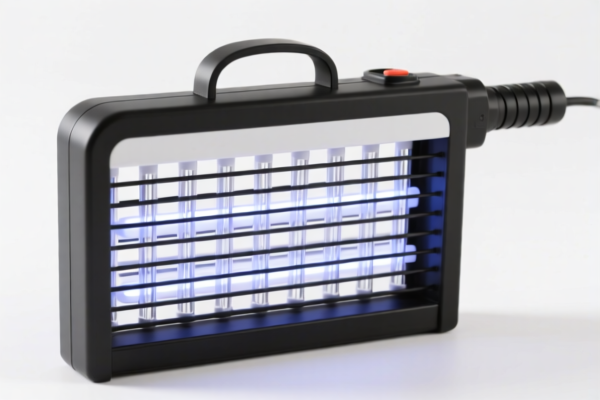
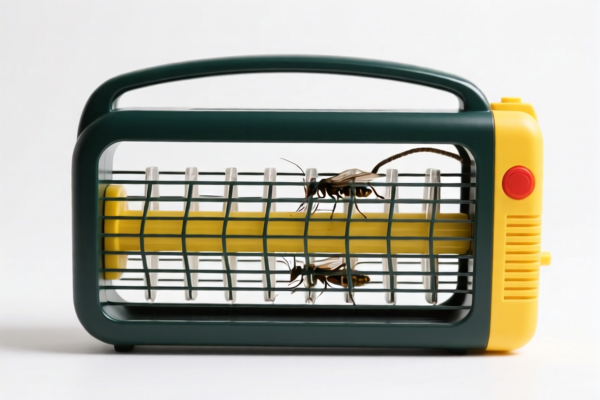
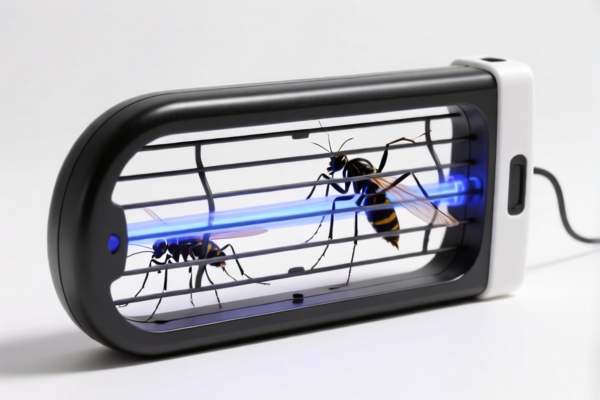
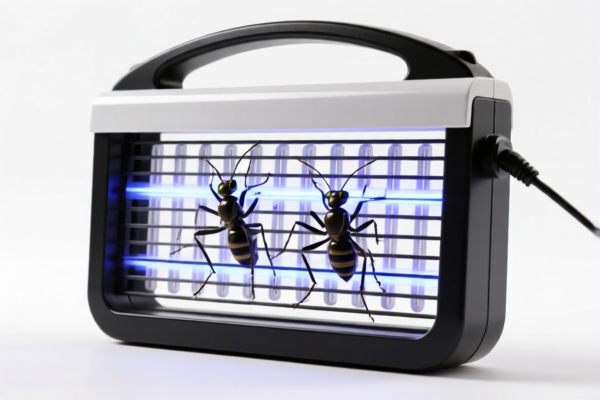
AI Analysis
🦟 Electronic Mosquito Killer (Lamps & Traps)
🌐 HS Code Reference & Customs Clearance Guide | 2026 Latest Tariff Analysis | Professional Clearance Strategy
📌 I. Product Definition & Classification: Do You Really Understand "Mosquito Killers"?
Electronic Mosquito Killers are devices designed to attract and eliminate mosquitoes using light, heat, or electricity. In international trade, the classification depends heavily on whether the device is primarily viewed as a home appliance (with its own motor/circuit) or a lighting fixture (emitting light for illumination/attraction). This distinction drastically affects the tariff burden.
⚠️ Key Distinction Point:
- If the device is classified under Chapter 85 (Electrical Machinery & Equipment): It is viewed as a "household appliance" with integrated motors or circuits. → Lower Tariff (14.2%).
- If the device is classified under Chapter 94 (Furniture/Lighting): It is viewed as an "electric lamp or lighting fitting." → Higher Tariff (38.9%).
📦 II. HS Code Classification Details (2026 Latest Tariff Authority Comparison)
| HS Code | Product Description | Application Scenario | Tariff Category | Total Tax |
|---|---|---|---|---|
8509.80.50.95 |
Other household appliances with self-contained electric motor or circuit (Not toothbrushes, can openers, humidifiers) | Standard UV mosquito zappers, plug-in traps | 🏠 Household Appliance | 14.2% |
8509.80.50.80 |
Other appliances with self-contained motor/circuit control (Electronic/Electrical products) | Smart mosquito traps, ionizing devices | 🏠 Household Appliance | 14.2% |
9405.41.84.40 |
Electric lamps and lighting fittings (Including searchlights and spotlights) | Mosquito lamps primarily categorized as "lighting fixtures" due to UV light emission | 💡 Lighting Fixture | 38.9% |
9405.49.00.00 |
Other electric lamps and lighting fittings (Specific use category) | Generic UV mosquito lamps classified under "other lighting" | 💡 Lighting Fixture | 38.9% |
🔍 Key Reminder:
- Chapter 85 Codes (8509.80.50.xx) are generally preferred if the device has a zapping mechanism (high-voltage grid) or a trapping mechanism (fan/suction), as these are functional appliances rather than just illumination devices.
- Chapter 94 Codes (9405.4x.xx) are often used if the device is primarily a glue-board UV lamp or purely aesthetic, as customs may view the "light" as the primary function.
- Misclassification Risk: Declaring a high-voltage zap lamp as a "lighting fixture" (9405) will result in a ~25% higher tax burden compared to the appliance classification (8509).
💰 III. 2026 Latest Tariff Rate Detailed Explanation (Including Surcharges, Policy Add-ons)
✅ Applicable Country: United States (US)
✅ Origin: China (CN)
✅ Effective Date: From November 10, 2025 (including subsequent imports)
🎯 1. 8509.80.50.95 & 8509.80.50.80 —— Household Appliances (Mosquito Killers)
| Item | Content |
|---|---|
| Base Tariff | 4.2% (Ad Valorem) |
| Section 301 Surcharge | 0.0% (No additional 301 tariff for these specific subheadings in the provided data) |
| Section 122 Tariff | +10% (Specific surcharge applicable) |
| Total Tariff | 14.2% |
| Tax Calculation | CIF Value × 14.2% |
| De Minimis Eligibility | ❌ Not Eligible (High likelihood of denial due to origin/surcharge rules, though not explicitly stated as "deny_de_minimis" in the prompt, high tariffs usually complicate small shipments) |
| Legal Basis Path | Base Tariff 4.2% + Section 122 10% = 14.2% |
📌 Explanation:
- The 14.2% rate is significantly more favorable than the lighting classification.
- The 10% Section 122 tariff is a specific additional duty.
- There is no 301 Section tariff (25%) applied to these specific HS codes in this dataset, which is a crucial advantage over other electronics.
🎯 2. 9405.41.84.40 & 9405.49.00.00 —— Lighting Fixtures (Mosquito Lamps)
| Item | Content |
|---|---|
| Base Tariff | 3.9% (Ad Valorem) |
| Section 301 Surcharge | +25.0% (High tariff rate under Section 301) |
| Section 122 Tariff | +10% (Specific surcharge applicable) |
| Total Tariff | 38.9% |
| Tax Calculation | CIF Value × 38.9% |
| De Minimis Eligibility | ❌ Not Eligible |
| Legal Basis Path | Base Tariff 3.9% + Section 301 25% + Section 122 10% = 38.9% |
📌 Explanation:
- The 38.9% rate is extremely high, driven largely by the 25% Section 301 tariff.
- Even though the base tariff (3.9%) is slightly lower than the appliance base (4.2%), the 301 surcharge makes this classification 2.7x more expensive than the appliance classification.
- Conclusion: Avoid Classifying as9405if possible.
🛠️ IV. Customs Clearance Practical Advice (Battle-Hardened Pitfall Guide)
✅ 1. Documentation Checklist (Non-Negotiable)
| Document | Must Provide | Description |
|---|---|---|
| ✅ Product Spec Sheet | ✔️ | Must clearly state: "Mosquito Killer/Trap," voltage, power, and mechanism (Zap vs. UV Light). |
| ✅ Circuit Diagram/Structure | ✔️ | To prove presence of motor/circuit (supports 8509 classification). |
| ✅ Product Photos (Nameplate) | ✔️ | Clear view of model, brand, input/output parameters. |
| ✅ Third-Party Test Report | ✔️ | UL, CE, FCC (if applicable). Note: UV lamps may require additional safety certs. |
| ✅ Commercial Invoice | ✔️ | Description must be precise: "Electronic Mosquito Killer, Household Appliance, Model XYZ." |
| ✅ Packing List | ✔️ | List all components. Do not split lamps and traps if they are sold as one unit. |
✅ 2. Declaration Tips (Key Mantra)
🔥 "Zap is Appliance, Light is Fixture; 8509 is Cheap, 9405 is Pain!"
| Scenario | Correct Declaration | Incorrect Action |
|---|---|---|
| UV Zap Lamp (Grid) | 8509.80.50.95 (Appliance) |
Declare as 9405.41.84.40 (Lighting) → Save 24.7% Tax |
| UV Glue Lamp (No Grid) | 9405.49.00.00 (Likely Lighting) |
Try to declare as Appliance → Risk of Rejection & Penalty |
| Smart Mosquito Trap (Fan) | 8509.80.50.80 (Appliance) |
Declare as Lighting → Save 24.7% Tax |
| Accessory (Power Cord Only) | Separate HS Code (if applicable) | Include in main HS → May alter duty calculation |
✅ 3. Special Circumstances Handling
| Situation | Handling Advice |
|---|---|
| Hybrid Devices (Light + Trap) | Emphasize the trap/zap function in documentation. If the primary purpose is elimination (motor/circuit), argue for 8509. |
| OEM/ODM Products | Provide customer PO and design drawings. Avoid generic "Mosquito Lamp" on invoice; use specific functional description. |
| Battery-Operated vs. Plug-in | Both can fall under 8509 if they have self-contained circuits. Ensure battery specs are clear. |
| UV Light Only (No Trap) | If it’s just a bulb that attracts bugs but doesn’t kill them (glue board), 9405 may be the only correct code. Accept the 38.9% cost or redesign. |
🌍 V. Global Main Market Comparison (2026 Latest)
| Country/Region | Recommended HS Code | Tariff (China Origin) | Certification Requirements | Notes |
|---|---|---|---|---|
| 🇺🇸 USA | 8509.80.50.95 |
14.2% | FCC + UL/ETL | Avoid 9405 (38.9%) |
| 🇨🇳 China | 8509.80.50.95 |
~10-13% | CCC + RoHS | Domestic trade may differ |
| 🇪🇺 EU | 8509.80.50.95 |
0-4% | CE + RoHS | Low tariffs, high compliance |
| 🇬🇧 UK | 8509.80.50.95 |
0-4% | UKCA + RoHS | Post-Brexit rules apply |
| 🇨🇦 Canada | 8509.80.50.95 |
0-6% | CSA | No Section 301 equivalent |
📌 Conclusion:
- USA is the most critical market for tariff optimization.
- Classification as8509saves ~25% tax compared to9405.
- Always prioritize the functional mechanism (motor/circuit for killing) over the emission source (UV light) to secure the lower tax rate.
📌 VI. Common Errors & Pitfall Guide (Blood & Tears Lessons)
❌ Error 1: Calling the product "UV Light" or "Bug Zapper Light" on the Invoice
👉 Consequence: Customs views it as Lighting (9405) → 38.9% Tax instead of 14.2%.
❌ Error 2: Providing only photos of the light, hiding the circuit board
👉 Consequence: Customs cannot verify it’s an appliance → Forced into 9405 or held for examination.
❌ Error 3: Ignoring Section 122 Tariff
👉 Consequence: Even if 8509 is accepted, forgetting the 10% surcharge leads to underpayment and penalties.
✅ Correct Practice:
"Electronic Mosquito Killer, Household Appliance, AC 120V, with High-Voltage Grid, Model XYZ, FCC Certified"
🎯 VII. Conclusion: Professional Declaration, Save Time & Money!
🎯 Remember the Mantra:
🔹 "Appliance (8509): 14.2% | Lighting (9405): 38.9% | Difference is 24.7%!"
🔹 "Don't let the Light blind you to the Motor's value!"
📌 Pro Tip:
If your product has a fan, suction trap, or high-voltage grid, insist on 8509.80.50.95 or 8509.80.50.80.
If it is purely a UV tube for glue boards, prepare for 9405.49.00.00 and factor in the higher cost.
Apply for a Pre-Classification Ruling (CROS) if unsure to avoid post-entry audits.
📣 Immediate Action:
📞 Contact a professional broker + Provide Circuit Diagrams + Declare as Household Appliance
🚀 Let your Mosquito Killer pass smoothly, save 25% tax, and boost profits!
✨ Professional Clearance Starts with Accurate Classification!
💼 Every cent saved is pure profit!
Customer Reviews
About HS Code Classification
The Harmonized System (HS) is an internationally standardized nomenclature developed by the World Customs Organization (WCO) to classify traded products. Over 200 countries use the HS system as the basis for customs tariffs, trade statistics, and import/export regulations.
Each HS code follows a hierarchical structure:
- Chapter (2 digits) — Broad category of goods (e.g., Chapter 84: Machinery and Mechanical Appliances)
- Heading (4 digits) — More specific grouping within the chapter
- Subheading (6 digits) — Internationally standardized breakdown, used by all WCO member countries
- National subdivisions (8-10 digits) — Country-specific extensions for further classification, such as US HTSUS 10-digit codes
Correct HS code classification is essential for smooth customs clearance, accurate duty payment, and compliance with trade regulations. Misclassification can lead to customs delays, overpayment of duties, or penalties.
When importing from CN to US, the applicable tariff rates may include:
- Most-Favored-Nation (MFN) rate — The standard duty rate applied to WTO members
- General rate — Applied to countries without trade agreements
- Trade remedy duties — Additional tariffs such as Section 301 (anti-dumping), Section 232 (national security), or countervailing duties
The information provided on this page is for reference purposes only. For official classification, please consult with your local customs authority or a licensed customs broker.